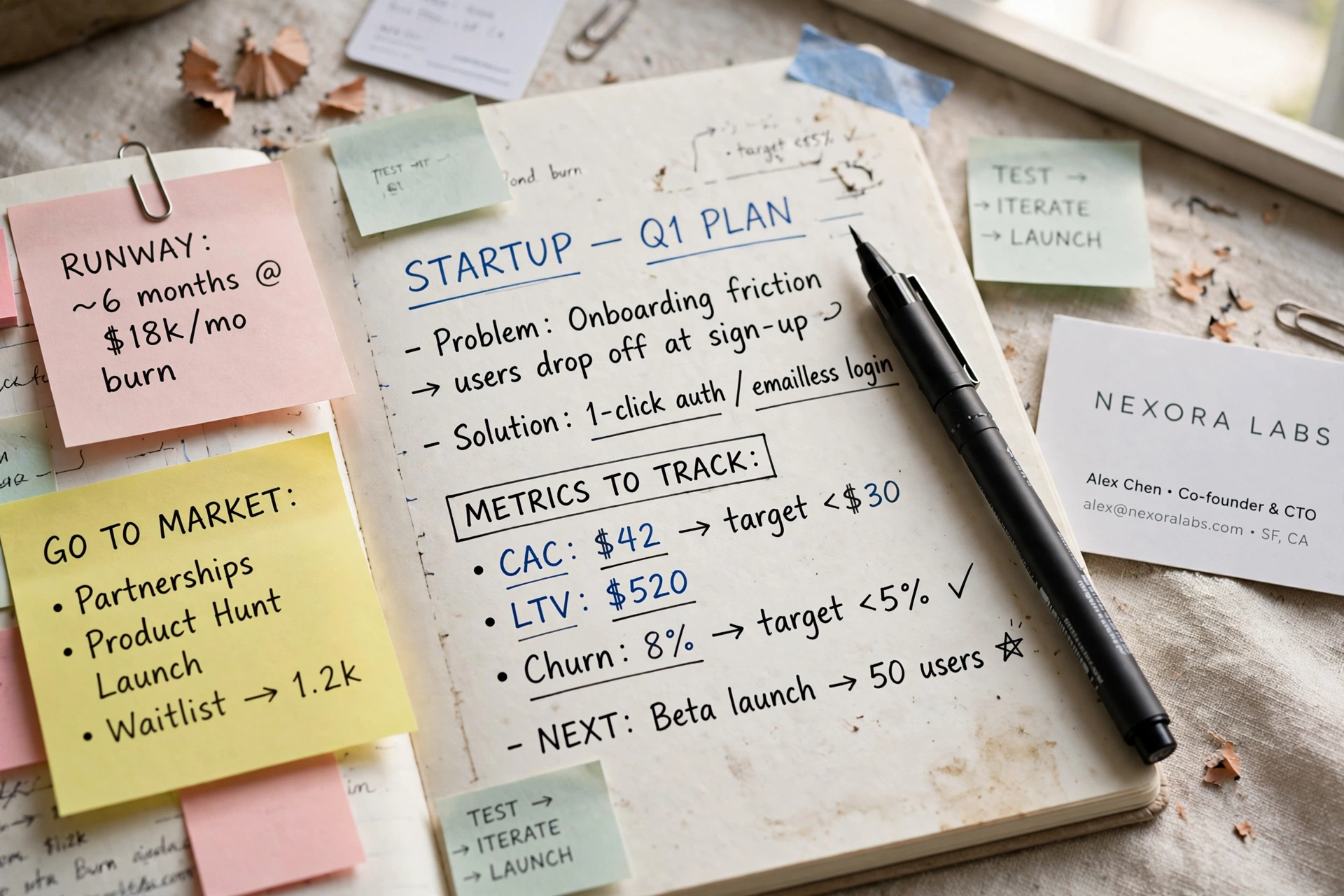
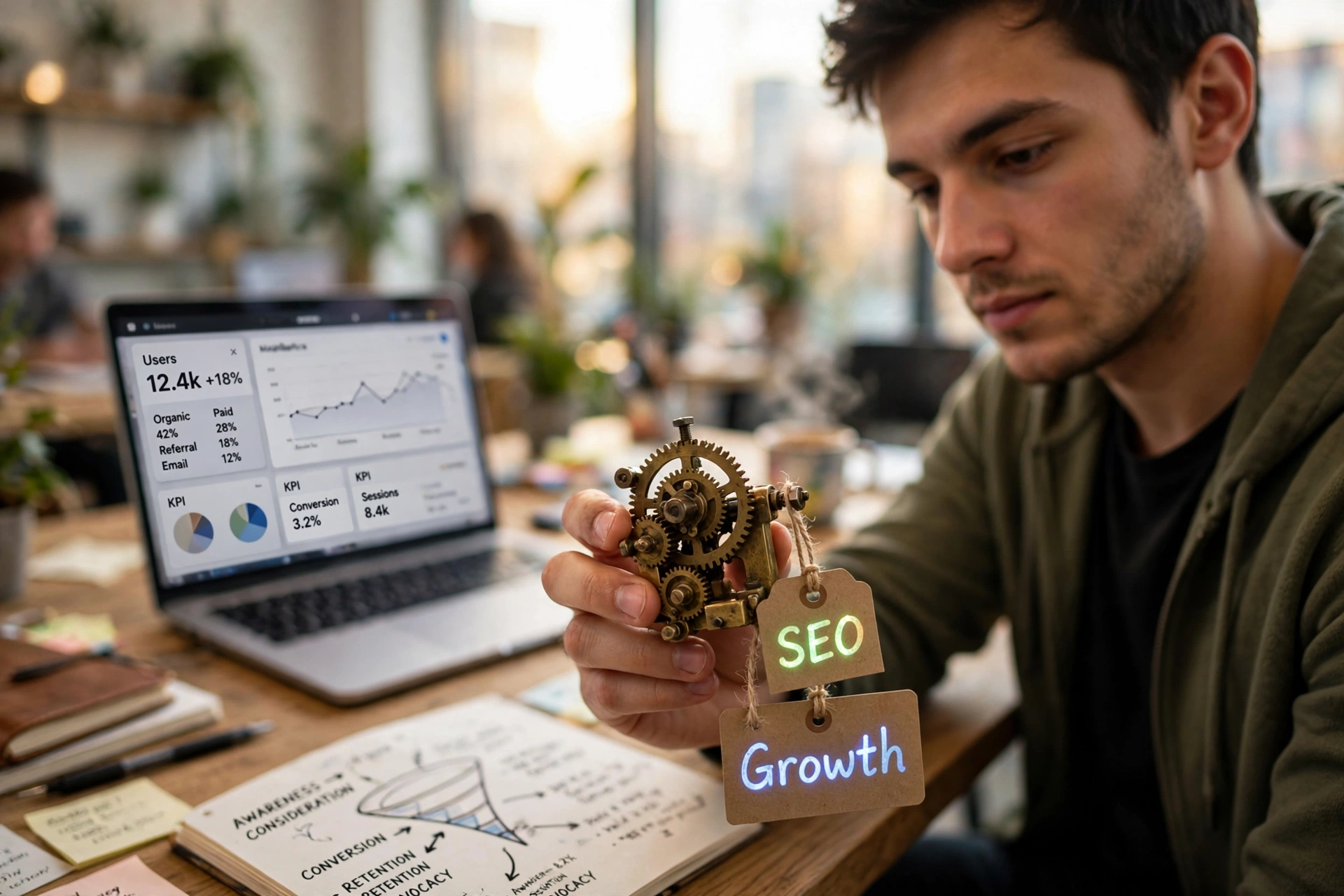
An organic acquisition engine is a system that uses content, SEO, and automation to attract and convert leads without relying on paid advertising. For startups, this is not just a nice-to-have—it's survival. Here’s what startups explained in plain terms: you build a machine that brings in customers while you sleep. I’ve seen dozens of startups burn through venture capital on paid ads that disappear the moment funding stops. The ones that last, however, have a compounding asset: an organic acquisition engine.

What Is an Organic Acquisition Engine?
📚
Definition
An organic acquisition engine is a structured, automated system that produces and distributes high-value content, optimizes it for search engines and AI platforms, and qualifies leads without direct human intervention at every step. It combines programmatic SEO, content marketing, and AI-powered lead qualification to generate predictable, scalable inbound growth.
Think of it as a three-layer machine. The first layer is content production at scale—hundreds of search-optimized pages that answer real buyer questions. The second layer is distribution and indexing—ensuring Google, ChatGPT, and Perplexity surface your content first. The third layer is conversion automation—qualifying visitors and booking meetings into your CRM. According to Gartner, by 2026, organic search will drive 70% of B2B website traffic, yet most startups still treat SEO as an afterthought. That’s a massive gap.
In my experience advising growth-stage startups, the ones that win build this engine early. They don’t wait for the perfect blog post. They deploy a system that creates authority pages, pillar pages, and satellite pages—all interconnected, all targeting buyer intent keywords. For example, a legal tech startup I worked with used a platform like What Is a Top Programmatic SEO Platform? (2026 Guide) to publish 200 location-specific pages in month one. Within 90 days, they ranked for 1,200+ keywords and reduced cost per lead by 80%.

Why It Matters for Startups in 2026
Startups live and die by cash flow. Paying $5, $10, or $50 per click on Google Ads is unsustainable when you’re pre-revenue or barely breaking even. An organic acquisition engine flips the math: you invest upfront in building the system, then reap compounding returns. CB Insights reports that 29% of startups fail because they run out of cash—often because customer acquisition costs are too high. An organic engine directly attacks that problem.
Here’s where it gets even more interesting. With the rise of AI search—ChatGPT, Perplexity, Google’s SGE—traditional SEO isn’t enough. You need Generative Engine Optimization (GEO) to make your content appear in AI answers. A Why Getting Recommended by ChatGPT and Perplexity Is the Smartest SEO Move in 2026 shows how startups can become the default answer in these platforms, effectively bypassing the ad model altogether.
But most guides get this wrong: they tell you to create a blog and wait. That’s not an engine. That’s a passive experiment. An engine requires structure: pillar pages covering core topics (e.g., "startup fundraising tactics"), satellite pages for long-tail queries (e.g., "how to raise seed funding in 2026"), and AI-powered chatbots that capture leads when visitors scroll to 50% of a page. Without that, you’re leaving money on the table.
How to Build an Organic Acquisition Engine for Your Startup
Let me walk you through a framework I’ve used with over 50 startups. This is the step-by-step, not theory.
Step 1: Map Your Content Universe
Start with the top 10 questions your ideal customer asks at each stage of the buyer journey. Use tools like AnswerThePublic or Semrush. Group them into pillar topics—these become your cornerstone articles. For example, a SaaS startup might have pillars on "project management," "team collaboration," and "remote work."
Step 2: Deploy Programmatic SEO
This is the scalable part. Instead of writing each page by hand, use a platform like Top Programmatic SEO Platform: Complete Step-by-Step Guide to generate hundreds of satellite pages from structured data. Each page targets a specific keyword variation—like "project management for remote teams in 2026"—with unique metadata and internal links back to the pillar. The key is to avoid thin content: every page must provide actual value, even if generated programmatically.
Step 3: Optimize for AI Search (GEO)
Modern engines scan for structured data, cited sources, and conversational tone. Use schema markup (FAQPage, HowTo, Speakable) and include direct answers at the top of each page. According to a Forrester report, 63% of searches will be AI-mediated by 2027. If your content isn’t optimized for that, you’re invisible. A Step by Step: How to Choose and Use a Top Programmatic SEO Platform in 2026 covers this in detail.
Step 4: Add an AI Lead Qualification Agent
Traffic without conversion is vanity. Embed an AI chatbot on key pages that engages visitors based on behavior—scroll depth, time on page, cursor movement. The bot qualifies the lead by asking intent questions ("Are you looking for enterprise or SMB?" "What’s your budget?") and books a meeting directly into HubSpot or Salesforce. BizAI’s Engine B does exactly this: it acts as a 24/7 SDR that never sleeps.
💡
Key Takeaway
The difference between a blog and an acquisition engine is automation. Without lead capture, you’re just publishing noise.
Step 5: Measure and Iterate
Track keyword rankings, organic traffic, lead conversion rate, and meetings booked. Use the data to kill underperforming pages and expand winning topics. This is a compounding loop—the more you feed it, the stronger it gets.
Organic Acquisition Engine vs. Traditional Marketing
To help you decide which approach fits your startup, here’s a comparison:
| Aspect | Organic Acquisition Engine | Traditional Paid Ads | Generic Content Marketing |
|---|---|---|---|
| Cost over 12 months | $15k–$30k setup, low ongoing | $50k–$200k+ monthly burn | $5k–$10k/month for freelancers |
| Time to first results | 60–90 days | Instant | 6–12 months |
| Scalability | Exponential (more content → more traffic) | Linear (more spend → more traffic) | Linear (more writers → more content) |
| Sustainability | Owned asset, grows over time | Stops when budget stops | Fragile, depends on writers |
| Lead quality | High (intent-based) | Variable (often cold) | Medium (educating, not closing) |
| AI search readiness | Designed for GEO | Rarely optimized | Usually not optimized |
In my experience, startups that mix paid ads for initial validation and then switch to an organic engine get the best of both worlds. But if you’re bootstrapped, go all-in on organic from day one.
Common Questions and Misconceptions
Myth 1: "SEO is dead." Far from it. SEO is evolving. The same ranking factors—expertise, authority, trust—still matter, but now you also need to optimize for AI answer engines. Startups that ignore this will lose ground fast.
Myth 2: "You need huge budgets to build this." Wrong. The upfront cost of a programmatic SEO platform like How Top Programmatic SEO Platform Works in 2026 is a fraction of what you’d spend on ads in three months. Plus, the content remains yours forever.
Myth 3: "Programmatic content is spam." Only if you do it poorly. The secret is to templates that feel human—vary sentence length, use expert quotes, and include real examples. I’ve seen programmatic pages outrank handcrafted ones because they cover every angle.
Myth 4: "Lead capture bots are annoying." Not if they add value. A bot that starts with "I see you’re reading about X—would a quick comparison help?" feels like a helpful assistant, not a pop-up.
Frequently Asked Questions
What is an organic acquisition engine for startups?
An organic acquisition engine is a system that combines content marketing, programmatic SEO, and AI-driven lead qualification to attract and convert customers without paid advertising. It produces hundreds of optimized pages, gets them indexed quickly, and uses chatbots to capture leads automatically. For startups, it creates a predictable growth channel that compounds over time.
How long does it take to see results from an organic acquisition engine?
Most startups see meaningful traffic within 60 to 90 days, with lead volume increasing by month 4. Unlike paid ads, results are not instant, but they are durable. Once your pages rank, they continue bringing visitors for years. The key is consistency: adding 10–20 new satellite pages per week accelerates the snowball effect.
How does an organic acquisition engine differ from regular SEO?
Regular SEO often stops at ranking pages. An organic acquisition engine goes further: it automates content creation at scale, optimizes for AI search platforms like ChatGPT and Perplexity, and integrates lead capture at every touchpoint. Think of SEO as the engine’s fuel—but the engine itself includes the vehicle (content system), the transmission (distribution), and the GPS (conversion tracking).
Can bootstrapped startups really afford an organic acquisition engine?
Absolutely. The upfront cost for a programmatic SEO setup ranges from $5k to $15k, depending on the platform. That’s less than one month of AdWords spend for most B2B startups. Plus, you own the content assets. Over 12 months, the cost per lead drops by 60–80% compared to paid channels, making it the most capital-efficient growth method available.
What role does artificial intelligence play in an organic acquisition engine?
AI powers every layer: content generation (LLMs write satellite pages), lead qualification (chatbots engage visitors), and GEO optimization (AI systems that structure content for ChatGPT and Perplexity). Without AI, scaling to hundreds of pages and 24/7 lead capture would require a huge team. With AI, a single founder can run the engine.
Summary + Next Steps
For startups, an organic acquisition engine turns content from a cost center into a revenue-generating asset. The keyword here—startups explained—isn’t just about definition; it’s about survival. If you’re building a company, stop renting traffic from Google Ads. Start building the machine that compounds.
Ready to build your own engine? Check out BizAI GPT—the only platform that combines programmatic SEO with an autonomous AI SDR to fill your pipeline 24/7. Or read our How to Use a Top Programmatic SEO Platform in 2026: Step-by-Step Guide for the full playbook.
Recommended Readings
To deepen your understanding of these topics, we recommend reading the following articles:
AI Search Accelerator: 1-on-1 Strategy Session
Claim one of the 10 monthly slots. Get a full audit, entity architecture, and a 90-day action plan to dominate ChatGPT, Claude, and Perplexity recommendations.