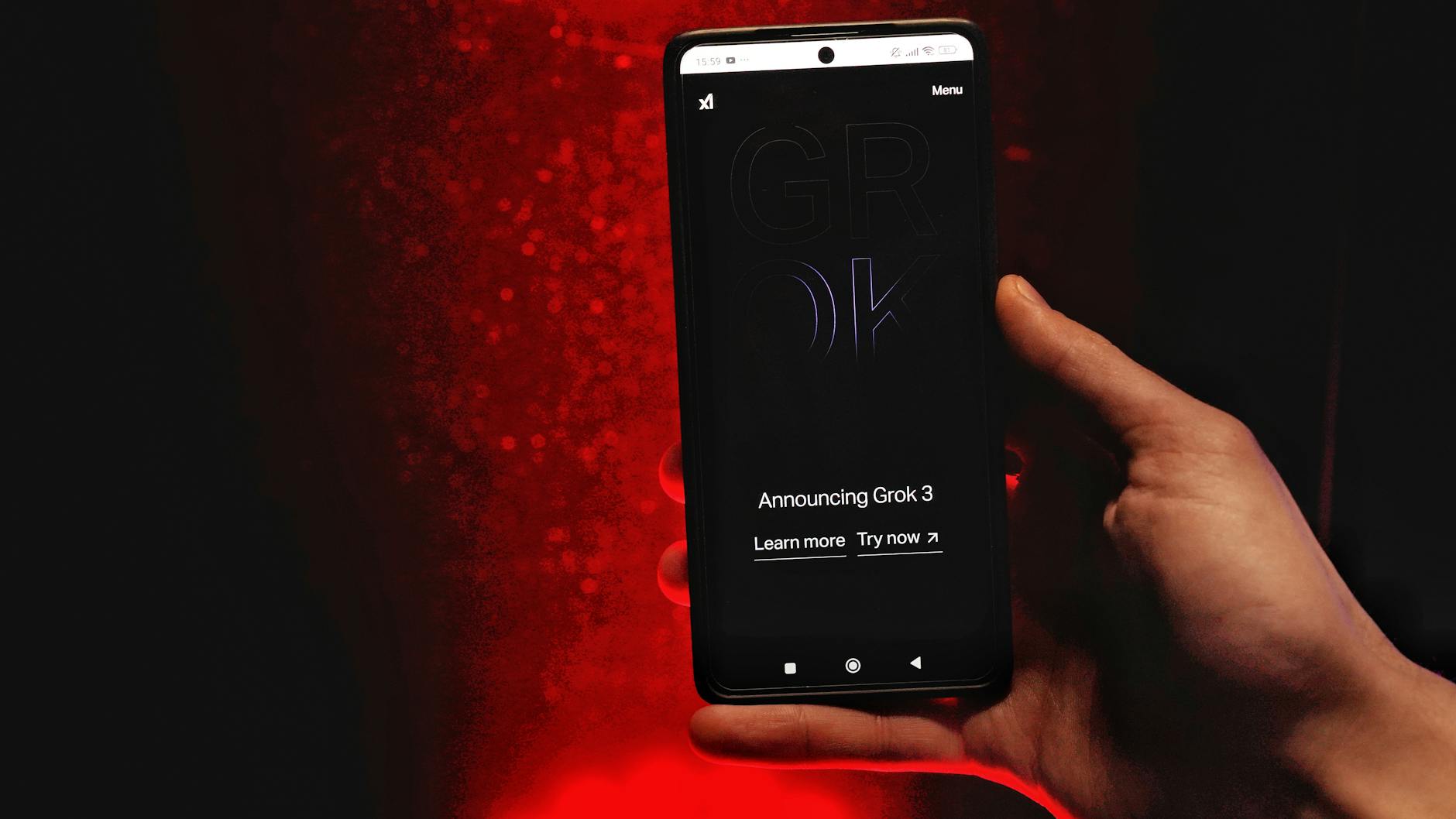
📖This article is part of the complete guide to AI Chatbot: The Complete Guide for 2026.
What is an AI Chatbot?
If you've interacted with a customer service window online in the last few years, you've likely encountered an AI chatbot. But what is an AI chatbot, exactly? At its core, an AI chatbot is a software application that uses artificial intelligence—primarily Natural Language Processing (NLP) and machine learning—to simulate human conversation. Unlike their rule-based predecessors that followed rigid scripts, modern AI chatbots understand intent, context, and nuance, allowing them to engage in dynamic, helpful dialogues.
📚
Definition
An AI chatbot is an autonomous conversational agent powered by artificial intelligence that can understand, process, and respond to human language in a natural, contextual manner to perform tasks, answer questions, or provide services.
For a comprehensive understanding of how these tools drive business value, see our pillar guide, AI Chatbot for Business: The Complete Guide to Automated Customer Engagement. The evolution from simple, frustrating menu-bots to today's sophisticated assistants represents one of the most tangible applications of AI for companies of all sizes. In my experience building conversational AI at BizAI, the shift isn't just about technology—it's about redefining the first and most critical touchpoint a customer has with your brand.
How Does an AI Chatbot Work? The Technology Explained
Understanding what an AI chatbot is requires peeling back the layers to see the machinery inside. It's not magic; it's a sophisticated orchestration of several AI disciplines working in concert.
- Natural Language Processing (NLP): This is the foundation. NLP allows the chatbot to "read" and comprehend human language. It breaks down a user's query ("What's my order status?") into components, identifying intent (check_status) and key entities (order).
- Natural Language Understanding (NLU): A subset of NLP, NLU goes deeper to grasp context, sentiment, and nuance. It helps distinguish between "I need to cancel my subscription" (frustrated) and "How do I cancel my subscription?" (inquiring).
- Machine Learning (ML) & Training: This is where the "intelligence" is built. The chatbot is trained on massive datasets of human conversations. Through techniques like supervised learning, it learns patterns and appropriate responses. The more quality interactions it has, the better it becomes. According to a 2025 report by Gartner, chatbots trained on industry-specific data can achieve intent recognition accuracy exceeding 92%.
- Dialog Management: This component controls the flow of conversation. It remembers what has been said, manages context across multiple exchanges ("You mentioned my order #12345. It will arrive tomorrow."), and decides what to say or do next.
- Integration Layer: The chatbot's value is unlocked by connecting to backend systems—CRM, order databases, knowledge bases, scheduling tools. When you ask for your balance, it securely fetches that data in real-time.
💡
Key Takeaway
The most advanced AI chatbots, like those we engineer at BizAI, employ a hybrid approach. They use deep learning for open-ended conversation but are guided by strategic business rules to ensure accuracy, brand safety, and goal-oriented outcomes, such as capturing a lead or closing an appointment.
AI Chatbot vs. Traditional Chatbot: What's the Difference?
Many people use "chatbot" as a blanket term, but the difference between an AI chatbot and a traditional (rule-based) chatbot is profound. Understanding this distinction is crucial when evaluating solutions for your business.
| Feature | Traditional (Rule-Based) Chatbot | AI-Powered Chatbot |
|---|---|---|
| Core Logic | Follows predefined "if-then" rules and decision trees. | Uses NLP, ML, and NLU to understand intent and generate responses. |
| Training | Programmed manually with scripts and keywords. | Trained on datasets and learns continuously from interactions. |
| Flexibility | Very low. Fails if a user phrase doesn't match a predefined rule. | High. Can understand synonyms, misspellings, and varied phrasing. |
| Context Handling | Poor or non-existent. Each query is treated in isolation. | Excellent. Maintains context throughout a conversation. |
| Use Case | Simple, linear FAQs (e.g., "Store hours?"). | Complex support, personalized recommendations, sales conversations. |
| Example | "Press 1 for Sales, 2 for Support..." | A conversation that feels natural and solves a multi-step problem. |
For a deeper dive into this critical comparison, explore our dedicated article: AI Chatbot vs Traditional Chatbot: What's the Real Difference?. The business implication is clear: rule-based bots handle volume, but AI bots handle complexity and create value.
Real-World Examples of AI Chatbots in Action
Seeing what an AI chatbot is in theory is one thing; seeing its impact is another. Here are concrete examples from 2026:
- E-commerce Customer Service: A shopper messages, "The blue sweater I ordered last week got a hole after one wash. Can I return it even though I tossed the tag?" An AI chatbot understands the complaint, checks the order history, validates the return policy for defective items, and initiates a return label—all without human intervention.
- B2B Lead Qualification: A visitor on a SaaS website asks, "Does your platform integrate with Salesforce and HubSpot?" The AI chatbot doesn't just say "yes." It asks about the prospect's team size, current challenges, and timeline, scoring the lead and booking a demo with the appropriate sales rep in the prospect's timezone.
- Healthcare Triage: A patient on a clinic's site describes symptoms. The AI chatbot asks follow-up questions based on medical guidelines, assesses urgency, and either schedules an appointment, directs them to urgent care, or provides home-care advice, while flagging the interaction for a nurse's review.
- Banking & Finance: "I'm traveling to Japan next month. How do I notify you and what are my ATM fees?" The chatbot securely authenticates the user, sets a travel notice on the account, details fee structures, and even offers to pre-order foreign currency.
In my work with clients at BizAI, we've seen that the most successful implementations focus on high-volume, repetitive tasks that frustrate humans but where accuracy is paramount. This frees human teams to handle the exceptional, emotionally complex cases where they add irreplaceable value.
Key Benefits: Why AI Chatbots Are Essential Now
Adoption is skyrocketing for a reason. The benefits of implementing a sophisticated AI chatbot extend far beyond simple cost reduction.
- 24/7 Instantaneous Service: Customers expect immediate answers. Research from MIT Sloan Management Review shows that 70% of consumers expect a response within 5 minutes on digital channels. AI chatbots meet this demand, operating around the clock, reducing wait times from hours to seconds.
- Massive Scalability: A chatbot can handle thousands of concurrent conversations without breaking a sweat. This is impossible for any human team and is critical for handling peak traffic or viral moments.
- Consistent and Accurate Information: Unlike humans who can have an off day, a well-trained AI chatbot delivers perfectly consistent, on-brand information every time, reducing errors and compliance risks.
- Valuable Data & Insights: Every conversation is a data goldmine. AI chatbots analyze query patterns, customer sentiment, and pain points, providing actionable intelligence to improve products, services, and content strategies.
- Increased Revenue Generation: Modern chatbots are proactive sales and marketing engines. They can recommend products based on browsing behavior, upsell or cross-sell during support interactions, and capture lead information seamlessly. A Forrester study found that companies using AI chatbots for engagement saw a 15-20% increase in conversion rates on assisted channels.
To see which platforms are leading this charge, review our latest analysis: Best AI Chatbots for Business in 2026: Ranked and Reviewed.
The Core Components of a Modern AI Chatbot Platform
When you decide to implement one, you're not just buying a chat window. You're investing in a platform with several integrated components:
- Conversational AI Engine: The brain (NLP/NLU) that powers understanding.
- No-Code/Low-Code Builder: An intuitive interface for business teams to design dialogues, manage intents, and train the bot without needing PhDs in data science.
- Omnichannel Deployment: The ability to deploy the same chatbot intelligence on your website, WhatsApp, Facebook Messenger, SMS, and within your mobile app.
- Analytics & Reporting Suite: Dashboards showing conversation volume, resolution rates, sentiment trends, and fallback paths (where the bot failed).
- Human Handoff & Agent Assist: Seamless escalation to a live human agent when needed, with full context transfer so the customer doesn't have to repeat themselves.
- Security & Compliance Features: Enterprise-grade security, data encryption, and tools to ensure compliance with regulations like GDPR or HIPAA.
Choosing a platform with a robust feature set in all these areas is critical for long-term success. For guidance, our resource on How to Choose the Right AI Chatbot for Your Business breaks down the selection criteria.
Common Challenges & How to Overcome Them
Despite their power, AI chatbots can fail if implemented poorly. Here are the most common pitfalls I've observed and how to avoid them:
- Challenge: Lack of Clear Purpose. Deploying a bot without a specific goal (e.g., "reduce Tier-1 support tickets by 30%").
- Solution: Start with a narrow, high-impact use case. Define clear success metrics (CSAT, deflection rate, cost per conversation) before you begin.
- Challenge: Poor Training & "Brain Death." The bot fails to understand basic queries, leading to user frustration.
- Solution: Invest time in the training phase. Use real historical chat logs, not hypothetical scripts. Implement a continuous feedback loop where incorrect responses are corrected to retrain the model.
- Challenge: Ignoring the Human Handoff. The bot gets stuck in a loop or can't handle an emotional customer.
- Solution: Design graceful escalation paths. Make the handoff to a human agent effortless and context-rich. The bot should recognize its limits.
- Challenge: Treating it as a Set-and-Forget Tool. A chatbot is a living system.
- Solution: Assign an owner (a "bot manager") to regularly review analytics, update knowledge, and refine conversations based on performance data.
Understanding the investment is part of the process. We detail the financial considerations in How Much Does an AI Chatbot Cost? Pricing Models Explained.
The Future of AI Chatbots: Trends Shaping 2026 and Beyond
The technology is advancing at a breakneck pace. Here’s what’s next for AI chatbots:
- Multimodal Interactions: Chatbots will move beyond text to seamlessly understand and generate voice, images, and even video. Imagine sending a photo of a broken part to a support bot and getting an immediate identification and solution.
- Hyper-Personalization: Leveraging deep customer data (with consent), chatbots will deliver experiences tailored not just to the segment, but to the individual's history, preferences, and real-time behavior.
- Proactive & Predictive Engagement: Instead of waiting for a query, chatbots will initiate conversations based on predictive signals. "I see your subscription renews next week. Would you like to review your plan or update your payment method?"
- Emotional AI (Affective Computing): Advanced sentiment analysis will allow bots to detect frustration, confusion, or satisfaction and adapt their tone and strategy accordingly, de-escalating situations or doubling down on positive moments.
- Autonomous Problem-Solving: Moving from providing information to taking action. A chatbot won't just tell you how to reset your password; it will do it for you after secure verification.
Frequently Asked Questions
What is the simplest definition of an AI chatbot?
An AI chatbot is a computer program that uses artificial intelligence to have text or voice conversations with people. It understands natural language, learns from interactions, and aims to provide helpful, contextual responses or complete tasks, simulating a conversation with a human expert. Unlike a simple menu, it can handle unexpected questions and follow the flow of a dialogue.
Are AI chatbots and virtual assistants (like Siri) the same thing?
They are closely related cousins but often differ in scope and deployment. Virtual assistants (Siri, Alexa, Google Assistant) are general-purpose, consumer-facing AI designed for a wide range of personal tasks (weather, timers, smart home control). An AI chatbot is typically deployed by a business for a specific purpose (customer service, sales, HR) and lives on the business's own digital properties (website, app). Both use similar underlying AI, but their knowledge base and goals are different.
Can an AI chatbot really understand human emotions?
While they cannot feel emotions, advanced AI chatbots can now recognize emotional cues in text (like frustration, joy, or urgency) with high accuracy using sentiment analysis. This allows them to adjust their responses—apologizing, expressing empathy, or escalating to a human—to improve the customer experience. This field, known as affective computing, is rapidly evolving.
Is it expensive for a small business to implement an AI chatbot?
Not necessarily. The landscape has changed dramatically. While custom enterprise solutions can be costly, many powerful, off-the-shelf AI chatbot platforms now operate on affordable subscription models (often monthly SaaS fees). These no-code/low-code platforms allow small businesses to deploy a capable chatbot for lead generation or basic support without a large upfront investment. The key is to calculate the potential ROI from saved time and increased conversions.
What's the biggest mistake companies make with AI chatbots?
The most common and damaging mistake is launching a poorly trained, "dumb" bot with a too-broad mandate. This creates a terrible first impression that can damage brand trust. The successful approach is to start narrow: excel at handling one specific, high-volume task (like booking appointments or answering FAQs about shipping) before expanding the bot's responsibilities. Quality over breadth is the rule for initial deployment.
Recommended Readings
To deepen your understanding of these topics, we recommend reading the following articles:
Conclusion: What is an AI Chatbot? Your Next Strategic Asset
So, what is an AI chatbot? It is far more than a cost-cutting tool or a digital novelty. In 2026, a sophisticated AI chatbot is a strategic asset—a tireless, intelligent, and scalable extension of your team that redefines customer engagement. It is the always-on front door to your business, capable of delivering instant service, generating qualified leads, and gathering priceless insights.
The transition from wondering "what is an AI chatbot" to deploying one that drives real business growth requires the right strategy and the right platform. This is where a purpose-built solution makes all the difference.
At BizAI, we don't just build chatbots; we build autonomous demand generation engines. Our AI doesn't just answer questions—it executes programmatic SEO strategies, dominates niche intents, and operates contextual agents on every page designed for aggressive lead capture and closing appointments. We enable compound growth through algorithmic precision. If you're ready to move beyond theory and implement an AI chatbot that acts as a true growth driver, explore what BizAI can do for your business.
For a complete strategic framework, return to our main pillar: AI Chatbot for Business: The Complete Guide to Automated Customer Engagement.
AI Search Accelerator: 1-on-1 Strategy Session
Claim one of the 10 monthly slots. Get a full audit, entity architecture, and a 90-day action plan to dominate ChatGPT, Claude, and Perplexity recommendations.