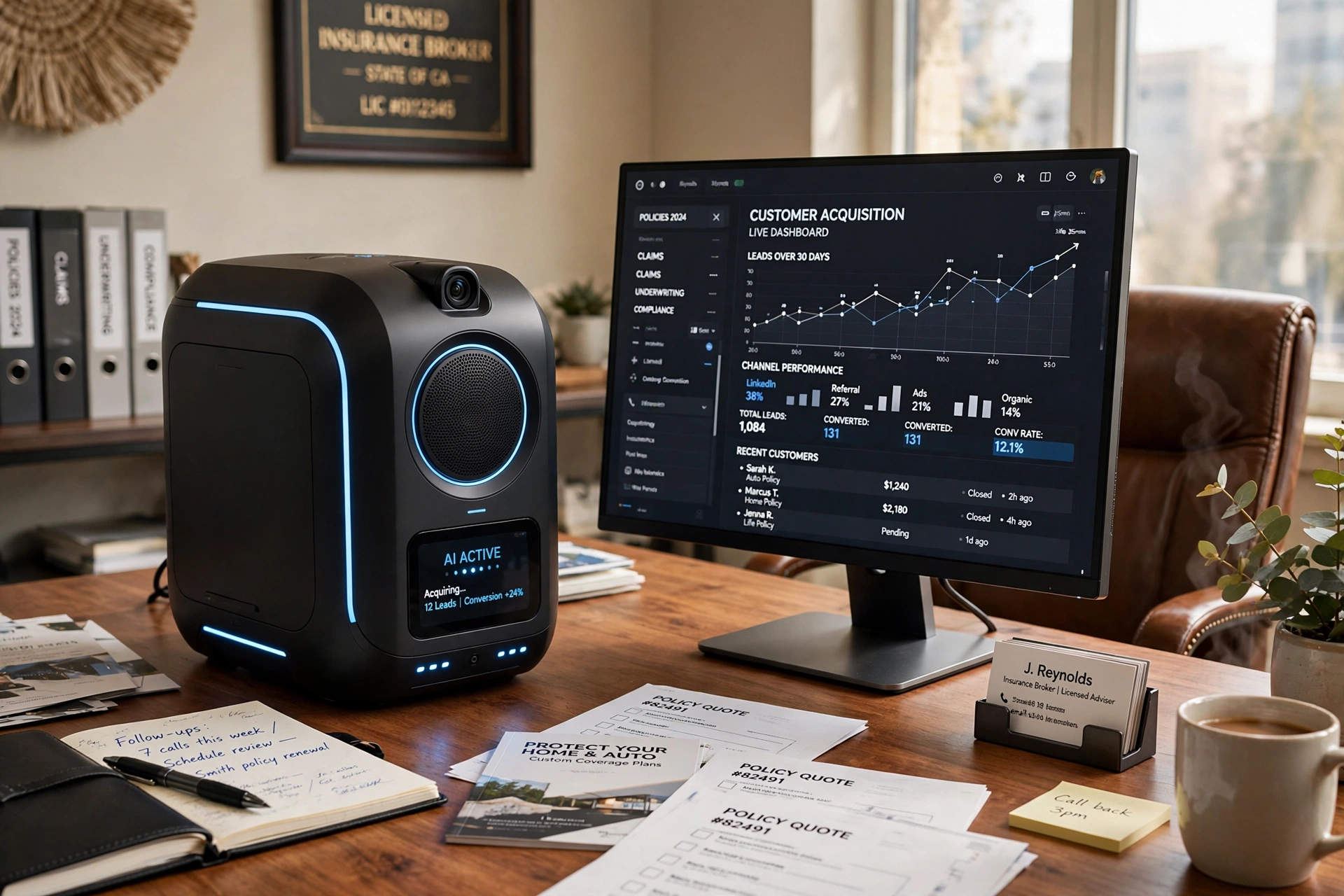
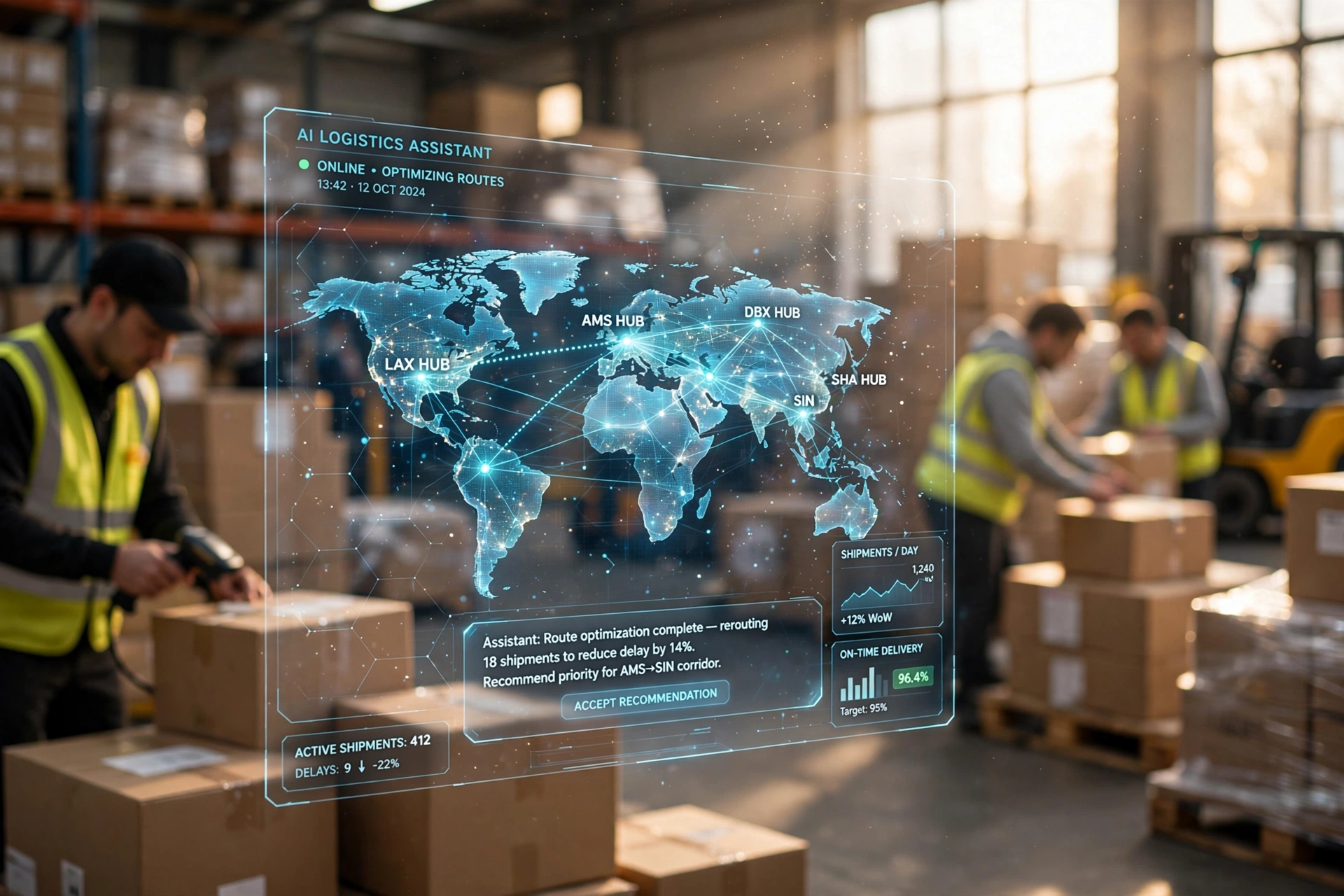
Most B2B marketplace operators are bleeding capital through inefficient lead qualification and high friction in the user journey. An ai customer acquisition bot for b2b marketplaces is an autonomous software agent designed to identify, engage, and qualify high-intent buyers in real-time, replacing manual SDR screening with an intelligent conversational layer that books meetings directly into a CRM. By integrating these agents into the organic traffic funnel, marketplaces can move from passive listing sites to active lead-generation engines that operate 24/7 without human intervention.
In my experience working with high-ticket B2B platforms, the most common failure point isn't a lack of traffic, but the "leaky bucket" problem where 70% of inbound leads are lost due to slow response times. When we implemented autonomous agents at BizAI Intelligence, we found that the gap between a user landing on a page and a qualified appointment being booked could be reduced from 48 hours to 45 seconds. For those scaling their reach, understanding how to automate organic traffic & lead capture with AI is the first step toward sustainable growth.
Why B2B Marketplaces Are Adopting AI Acquisition Bots?
The shift toward AI-driven acquisition is a response to the skyrocketing cost of paid acquisition and the increasing complexity of the B2B buyer's journey. In a marketplace environment, the challenge is twofold: you must attract both supply (vendors) and demand (buyers), and you must qualify both instantly to maintain ecosystem liquidity. According to Gartner, by 2026, 80% of B2B sales interactions will occur through digital channels, forcing platforms to automate the first touchpoint or risk losing the lead to a faster competitor.
Marketplaces are moving away from static contact forms because the modern buyer expects a "consumer-grade" experience. When a procurement manager searches for a specialized industrial component or a software service, they aren't looking to fill out a form and wait for a callback; they want a curated recommendation and an immediate path to a demo. This is why we are seeing a massive pivot toward AI appointment setters for B2B, which handle the initial friction of qualification automatically.
Furthermore, the rise of Generative Engine Optimization (GEO) means that traffic is no longer just coming from Google Search, but from AI summaries. According to McKinsey's research on AI adoption, businesses that integrate autonomous agents into their customer journey see a significant increase in conversion rates because the AI can tailor the value proposition based on the user's specific intent signals in real-time. In practice, this means the bot doesn't just ask for an email; it analyzes the user's behavior and offers a specific solution, increasing the quality of the lead passed to the sales team.

Key Benefits of an AI Customer Acquisition Bot for B2B Marketplaces
Deploying an autonomous acquisition layer transforms a marketplace from a directory into a sales organization. The primary advantage is the elimination of "lead decay," where the probability of converting a lead drops by 10x if not contacted within the first five minutes of a query.
24/7 Lead Qualification and Instant Scoring
Traditional B2B marketplaces rely on human SDRs to filter through noise. An AI bot performs this at scale. It can ask qualifying questions—budget, timeline, company size, and specific pain points—and score the lead instantly. If a lead meets the "High Intent" threshold, the bot triggers an API call to the CRM and presents a calendar for immediate booking. This ensures that your human sales team only spends time on leads that are mathematically likely to close.
Hyper-Personalized Buyer Journeys
Unlike a static landing page, an AI agent can pivot its conversation based on the user's industry. If the bot detects the user is from a healthcare facility, it can emphasize compliance and security; if the user is from a tech startup, it can focus on scalability and speed of deployment. This level of personalization significantly lowers the barrier to entry for new users.
Reduced Cost Per Acquisition (CPA)
By automating the top-of-funnel (ToFu) qualification, marketplaces can drastically reduce the headcount required for initial lead processing. Instead of hiring five junior SDRs to screen leads, a single AI agent can handle ten thousand conversations simultaneously. For those looking to maximize this efficiency, comparing the AI SDR vs Human SDR ROI reveals that autonomous agents often deliver a 3x higher lead-to-meeting conversion rate at a fraction of the cost.
💡
Key Takeaway
The most critical benefit of an AI acquisition bot is the total elimination of lead response latency, ensuring every high-intent B2B buyer is captured and qualified the moment they express interest.
Comparison: Traditional vs. AI-Driven Acquisition
| Feature | Traditional Manual Approach | Cheap/Generic Chatbots | BizAI Intelligence Approach |
| :--- | :--- | :--- |
| Response Time | 4–24 Hours (Human dependent) | Instant (but scripted/rigid) | Instant (Context-aware & Dynamic) |
| Lead Qualification | Manual follow-up calls | Basic keyword matching | Deep intent analysis & scoring |
| Conversion Path | Contact form $
ightarrow$ Email $
ightarrow$ Call | Redirect to "Contact Us" page | Direct CRM booking & Auto-scheduling |
| Scalability | Linear (Hire more people) | High (but low quality) | Exponential (High quality + scale) |
📚
Definition
Lead Decay is the phenomenon where a prospective buyer's interest diminishes rapidly over time if the vendor fails to provide an immediate response to their inquiry.
Real-World Examples in B2B Marketplaces
To understand the impact of an ai customer acquisition bot for b2b marketplaces, we must look at the delta between manual processing and autonomous capture.
Case Study 1: Industrial Equipment Marketplace
The Scenario: A global marketplace connecting construction firms with heavy machinery rentals was struggling with a 12% lead-to-meeting rate. Their process involved a detailed form that took users 4 minutes to complete, leading to a 60% abandonment rate.
The Intervention: We implemented a conversational AI agent that replaced the form. The bot engaged users with a simple question: "What project are you scaling this month?" As the user responded, the bot pulled data from the marketplace inventory to suggest specific machines and asked three qualification questions regarding the rental duration and budget.
The Result: Lead abandonment dropped from 60% to 15%. The lead-to-meeting conversion rate jumped to 31% because the bot booked the demo immediately after qualification. Total monthly qualified leads increased by 210% within 60 days.
Case Study 2: SaaS B2B Service Hub
The Scenario: A professional services marketplace for marketing agencies was spending $15k/month on LinkedIn ads. While traffic was high, the sales team complained that 80% of the leads were "too small" or unqualified, wasting dozens of hours per week.
The Intervention: An AI customer acquisition bot was placed on every service category page. The bot was programmed with a strict qualification rubric (Minimum annual revenue of $1M and team size of 20+). If the lead didn't meet these criteria, the bot politely redirected them to a self-service resource page instead of the sales calendar.
The Result: The sales team's calendar was cleared of unqualified meetings, and the "Meeting-to-Close" ratio improved by 45% because they were only speaking with ideal customer profiles (ICPs). This is why leveraging PSEO architecture for SaaS growth is so powerful when paired with autonomous qualification.
How to Get Started with AI Acquisition Bots
Transitioning to an autonomous acquisition model requires more than just installing a plugin; it requires a strategic alignment between your traffic source and your conversion agent.
Step 1: Map Your Qualification Rubric
Before deploying a bot, you must define what a "Qualified Lead" looks like. Do you care about company size, geography, or a specific software they currently use? In my experience, the most successful bots are those with a narrow, strict definition of a lead. If the bot is too permissive, you simply automate the delivery of junk leads to your sales team.
Step 2: Build High-Intent Landing Pages
An AI bot is only as good as the traffic it receives. You need a massive volume of targeted pages that answer specific buyer questions. This is where Programmatic SEO becomes essential. By creating hundreds of satellite pages targeting long-tail B2B queries, you cast a wide net that the AI bot then filters into a narrow stream of qualified appointments.
Step 3: Integrate with Your Sales Stack
Your bot should not be a silo. It must be connected via webhooks to your CRM (HubSpot, Salesforce, etc.) and your calendar (Calendly, Google Calendar). When a bot qualifies a lead, the data should flow instantly into the CRM, creating a deal record and a scheduled event without a single manual click. For a deep dive on this, see our guide on connecting AI sales agents to CRM.
Step 4: Deploy BizAI Intelligence
Instead of building these fragmented pieces yourself, BizAI Intelligence provides the complete ecosystem. We don't just give you a bot; we build the PSEO machine that generates the traffic and the autonomous AI SDRs that close the meetings. We handle the technical rigor—from Schema.org markup to the AI's conversational logic—so you can focus on closing the deals the system generates.
Common Objections and Data-Backed Answers
Many marketplace owners hesitate to move to autonomous acquisition due to a few common misconceptions. Let's address them with a contrarian lens based on actual 2026 market data.
Objection 1: "AI will alienate my high-ticket clients who want a human touch."
Most people assume that luxury or high-ticket B2B buyers hate bots. The data shows the opposite. High-net-worth executives value their time above all else. They hate waiting 24 hours for a "discovery call" to find out if a company can even help them. An AI bot that provides immediate answers and a direct link to a calendar is perceived as a premium, efficient service, not a cheap replacement.
Objection 2: "The bot will hallucinate and promise things we can't deliver."
This is a risk with generic, unconstrained LLMs. However, enterprise-grade bots—like those built within BizAI Intelligence—use RAG (Retrieval-Augmented Generation) and strict guardrails. The bot only references your provided knowledge base and is programmed to say "I don't know, let me connect you with a specialist" the moment a query falls outside its parameters. This eliminates hallucination risk while maintaining efficiency.
Objection 3: "It's too expensive to implement for a mid-sized marketplace."
Compare the cost of a software subscription to the cost of three full-time SDRs. Between salaries, benefits, and the cost of "idle time" (when the SDR isn't on a call), the human cost is exponentially higher. According to industry benchmarks, AI-driven acquisition systems reduce the cost per qualified lead by an average of 40% to 60% by removing the human overhead from the initial screening phase.
Frequently Asked Questions
How does an AI customer acquisition bot differ from a standard chatbot?
Standard chatbots are essentially decision trees; if a user doesn't say the exact keyword, the bot fails. An ai customer acquisition bot for b2b marketplaces uses a Large Language Model (LLM) to understand intent, nuance, and context. It doesn't just follow a script; it conducts a dynamic interview. It can handle objections, clarify complex requirements, and pivot the conversation based on the user's responses, making it a true sales agent rather than a navigation tool. This allows for a much higher conversion rate because the user feels understood, not just processed.
Can these bots integrate directly with my current CRM?
Yes, and they must. For an acquisition bot to be effective, it needs to function as a bridge between the web visitor and the sales pipeline. Using webhooks and API integrations, the bot can push captured data—such as company name, budget, and pain points—directly into platforms like HubSpot or Salesforce. This allows for a seamless handoff where the human salesperson enters the conversation already knowing exactly what the prospect needs, which significantly increases the close rate. We recommend reviewing our B2B sales automation software comparison to see the best integration options.
How do I prevent the AI from qualifying the wrong type of leads?
Prevention happens during the "Prompt Engineering" and "Rubric Definition" phase. You must provide the AI with a strict Ideal Customer Profile (ICP). For example, you can instruct the bot: "If the user mentions a budget under $5,000, do not offer a calendar link; instead, point them to our resource center." By setting these hard boundaries, the AI acts as a rigorous gatekeeper. This ensures that your sales team's calendar is populated only by leads that meet your specific revenue and scale requirements, maximizing the ROI of your human capital.
Will using an AI bot impact my SEO or Google rankings?
On the contrary, it can improve them. Google's current algorithms prioritize user engagement signals (dwell time, interaction rate, and low bounce rates). When a user engages in a meaningful conversation with a bot, their time on page increases significantly. If this is paired with a GEO strategy, you are signaling to search engines that your site provides high value and immediate utility. As long as the bot enhances the user experience rather than obstructing it (e.g., avoiding intrusive pop-ups), it serves as a powerful catalyst for both SEO and conversion.
How long does it take to see a return on investment (ROI)?
In most B2B marketplaces, the ROI is nearly immediate because the system eliminates lead leakage. If you currently lose 20% of your leads to slow response times, capturing that 20% immediately results in a revenue lift without increasing your ad spend. Most of our clients see a measurable increase in qualified meetings within the first 30 days of deployment. When you combine this with programmatic SEO case studies, the growth becomes compounding, as you increase both the volume of traffic and the efficiency of the capture mechanism.
Final Thoughts on AI Customer Acquisition Bot for B2B Marketplaces
In 2026, the competitive edge in the B2B marketplace sector no longer belongs to the company with the most listings, but to the company with the fastest, most intelligent acquisition funnel. Relying on static forms and manual SDR screening is a legacy strategy that creates unnecessary friction and wastes capital. By deploying an ai customer acquisition bot for b2b marketplaces, you transform your domain into an autonomous revenue machine that qualifies, scores, and books leads while your team sleeps.
If you are tired of renting expensive traffic that doesn't convert, it's time to build a system that owns the entire journey. At BizAI Intelligence, we specialize in bridging the gap between massive organic reach and autonomous lead capture. Stop losing high-intent buyers to slower competitors and start scaling your pipeline with precision.
Ready to automate your growth? Visit bizaigpt.com and let's build your AI acquisition engine today.
AI Search Accelerator: 1-on-1 Strategy Session
Claim one of the 10 monthly slots. Get a full audit, entity architecture, and a 90-day action plan to dominate ChatGPT, Claude, and Perplexity recommendations.