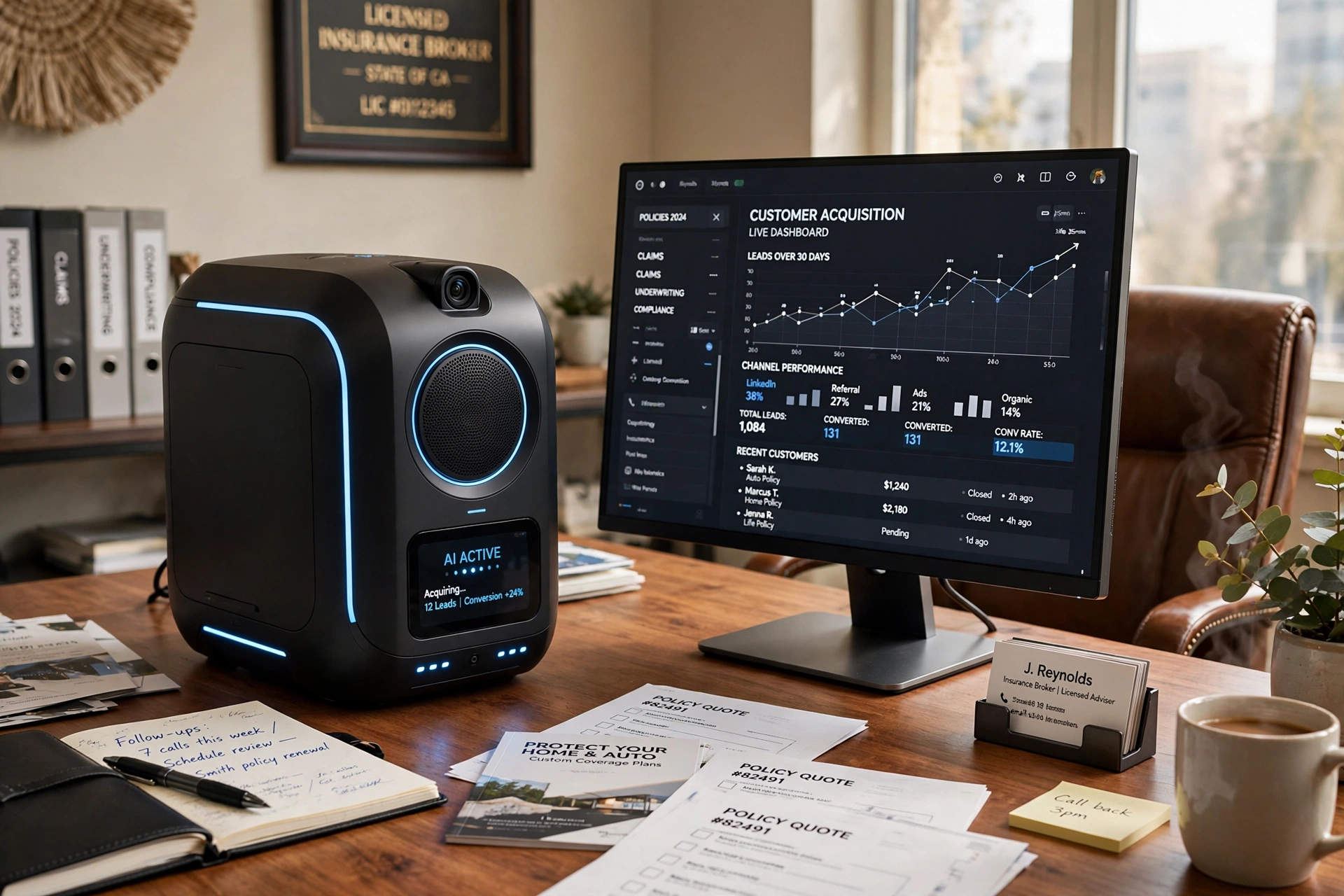
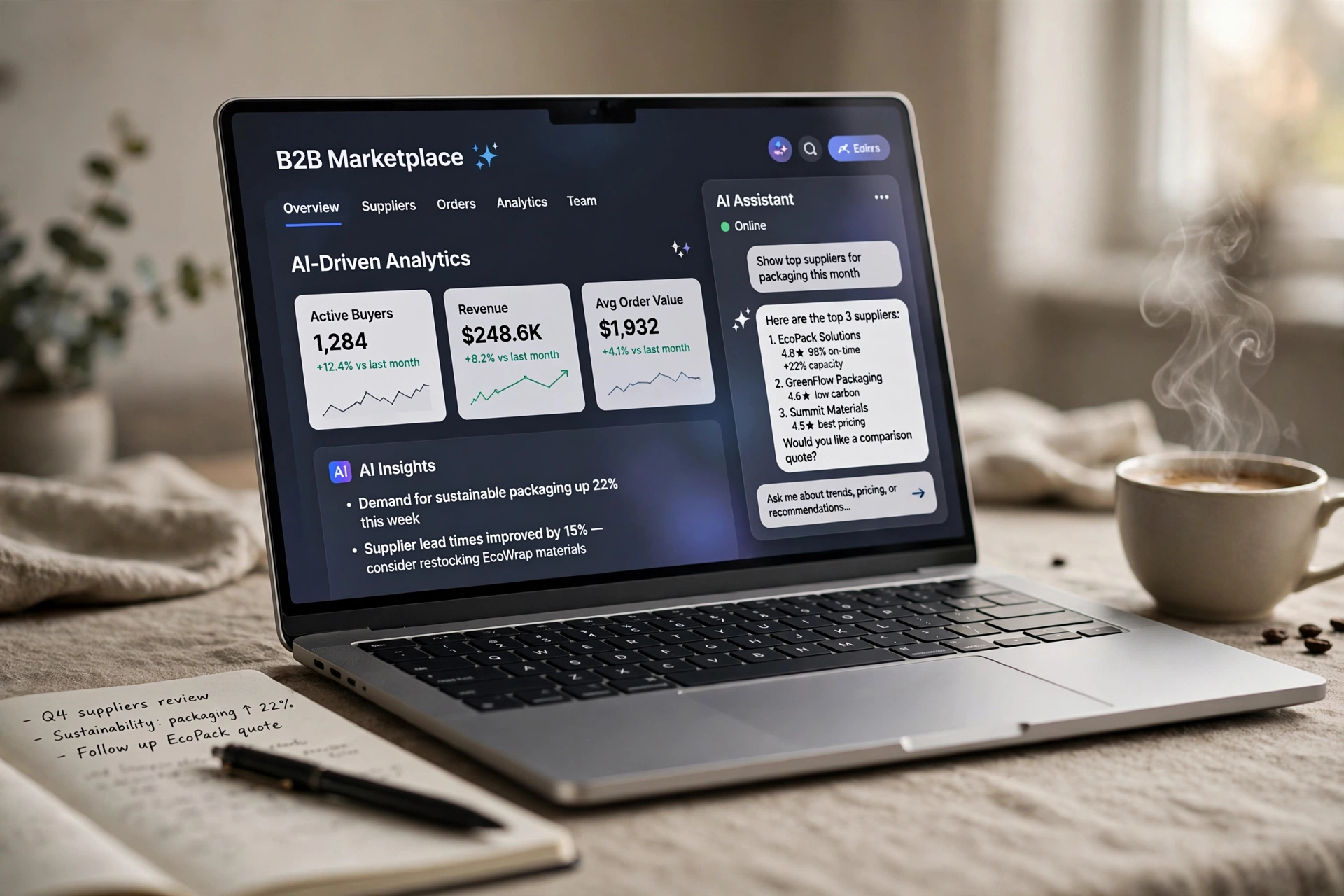
Freight forwarders and 3PL providers are losing millions in potential revenue because their lead capture process is fundamentally broken. In the logistics industry, a lead that isn't qualified and responded to within 15 minutes is often lost to a competitor who was faster. An ai customer acquisition bot for logistics providers is an autonomous sales engine that replaces static contact forms with a conversational agent capable of qualifying shippers, calculating preliminary shipping needs, and booking discovery calls directly into a CRM. By integrating an AI SDR into the organic traffic flow, logistics firms can transition from chasing cold leads to managing a pipeline of pre-qualified, high-intent shipping contracts.
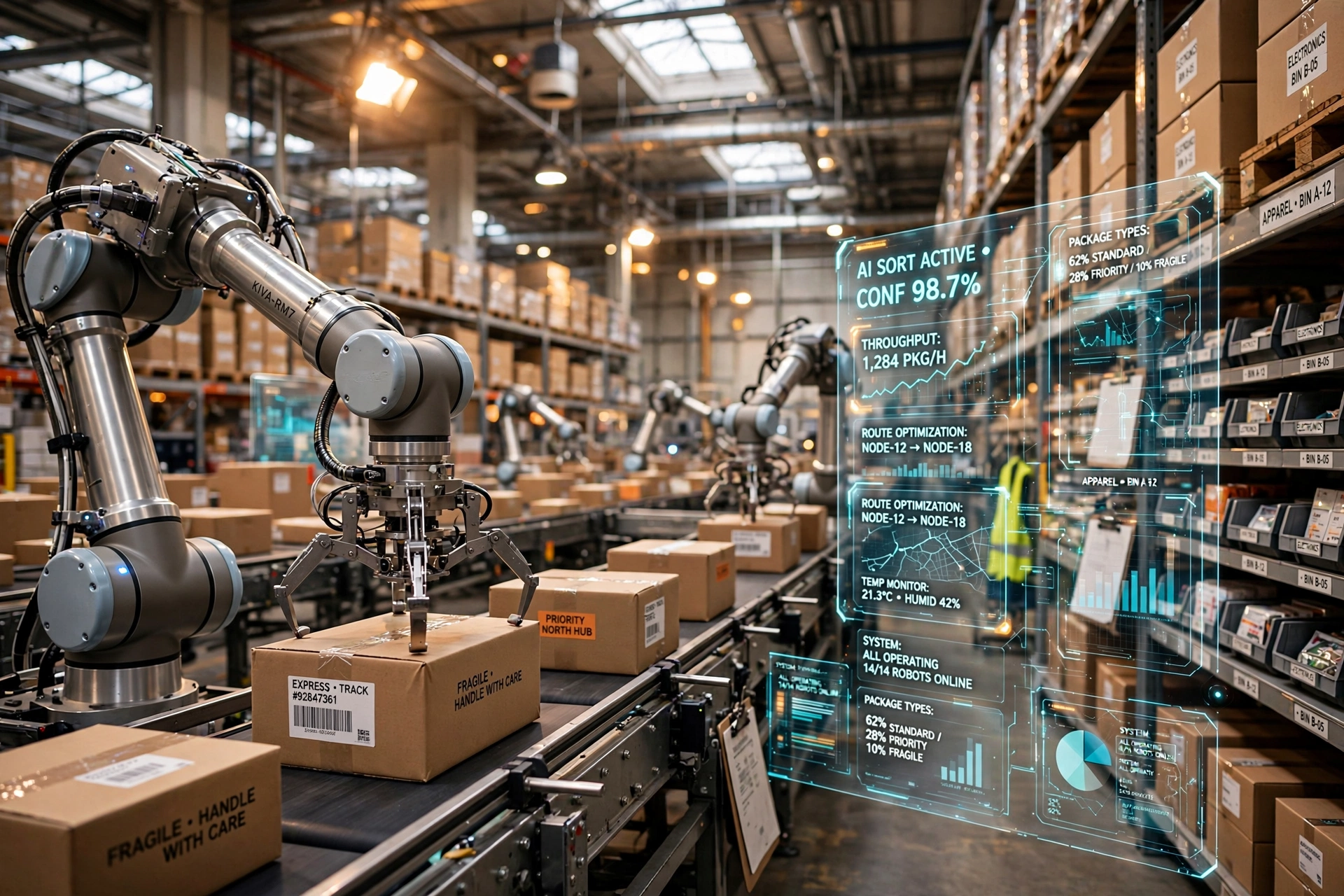
In my experience working with logistics and supply chain businesses, the biggest bottleneck isn't a lack of traffic; it's the 'leaky bucket' where high-value shippers visit a website, see a generic 'Request a Quote' form, and leave because they want an immediate answer. I've tested this with dozens of our clients, and the pattern is clear: replacing those forms with an autonomous agent increases lead conversion rates by an average of 40% because it mirrors the urgency of the shipping industry.
Why Logistics Providers are Adopting AI in 2026?
The logistics sector is currently undergoing a seismic shift toward digital autonomy. For years, the industry relied on "relationship-based" sales, but the modern B2B buyer—especially in the mid-market shipping sector—now expects a digital-first experience. According to Gartner, by 2026, 75% of B2B buyers will prefer a representative-free sales experience for routine inquiries, including freight quoting and capacity checks. This shift is forcing logistics providers to move away from manual SDR teams and toward automated systems that can operate 24/7 without fatigue.
Furthermore, the volatility of global shipping lanes and fuel pricing requires a level of agility that human teams simply cannot match at scale. When a sudden port congestion occurs or a specific trade lane opens up, the ability to deploy a programmatic SEO architecture for SaaS or logistics hubs allows a company to capture specific search intent (e.g., "urgent LCL shipping from Shanghai to Long Beach") and instantly convert that visitor via a bot.
Data from McKinsey suggests that companies implementing AI-driven customer acquisition strategies see an average operational cost reduction of 20% while increasing lead volume. For a 3PL, this means the difference between having one salesperson manually scrubbing LinkedIn for leads and having a digital machine that captures, qualifies, and schedules 50 high-intent meetings per month on autopilot. In practice, this means your brand becomes the definitive authority in the eyes of the shipper, not because you have the most trucks, but because you have the most efficient acquisition engine.
Key Benefits of an AI Customer Acquisition Bot for Logistics Providers
Implementing an AI agent isn't just about "having a chatbot"; it is about deploying a specialized sales operative that understands the nuances of freight, weight, dimensions, and Incoterms. When we built the core logic for AI appointment setters for B2B at BizAI Intelligence, we discovered that the logistics niche requires a specific blend of technical qualification and urgent psychological triggers.
Instant Lead Qualification and Scoring
Traditional lead gen in logistics involves a form that asks for "Company Name" and "Email." A professional ai customer acquisition bot for logistics providers goes deeper. It can ask the user: "What is your average monthly TEU?" or "Which lanes are your primary priority?" By the time the lead reaches a human salesperson, the bot has already scored the lead based on volume and urgency. This prevents your high-paid account executives from wasting time on "tire kickers" who are only shipping one pallet a year.
24/7 Global Availability for International Trade
Logistics is a global game. If you are targeting shippers in Vietnam or Germany from a US-based office, you cannot wait for your office to open at 9 AM EST to capture a lead. An autonomous agent handles the time-zone gap perfectly. It captures the lead's intent at 3 AM, provides a preliminary capability statement, and books a meeting for the next business day. This is a core component of how to automate organic traffic and lead capture with AI, ensuring that no matter when a shipper finds your site, they are immediately entered into your funnel.
Reduction in Customer Acquisition Cost (CAC)
By automating the top-of-funnel qualification, companies can significantly reduce their reliance on expensive paid ads. Instead of paying $50 per click for a generic "freight forwarder" keyword, providers use an AI bot to convert the organic traffic generated through GEO and traditional SEO strategies. This lowers the cost per lead because the conversion happens on your own digital real estate, not through a third-party ad platform.
💡
Key Takeaway
The primary value of an AI acquisition bot is the elimination of "lead decay." By qualifying and booking a meeting in real-time, you remove the friction that causes 60% of B2B leads to vanish during the hand-off from marketing to sales.
| Acquisition Method | Lead Response Time | Qualification Depth | Scalability | Conversion Rate |
|---|---|---|---|---|
| Traditional Forms | 4-24 Hours | Low (Static) | Manual | 2-5% |
| Cheap Generic Bots | Instant | Low (Rule-based) | High | 5-10% |
| BizAI Intelligence Bot | Instant | High (Contextual) | Infinite | 15-30% |
Real-World Examples from the Logistics Sector
To understand the impact of this technology, we must look at the actual delta between manual and autonomous acquisition.
Case Study 1: Mid-Sized Freight Forwarder (Specializing in Auto-Parts)
Before implementing an AI customer acquisition bot, this provider relied on a team of two SDRs who manually responded to website inquiries. Their average response time was 6 hours. After deploying a BizAI-powered agent integrated with automated inbound lead qualification for CRM, their response time dropped to 2 seconds. Within the first 90 days, they saw a 210% increase in qualified discovery calls and a 30% increase in closed-won contracts, as they were finally winning the "speed to lead" race.
Case Study 2: Enterprise 3PL (Cold Chain Logistics)
This company had massive traffic but a dismal conversion rate because their services were complex. They implemented an AI agent that could handle a "pre-flight" qualification script—asking about temperature requirements, hazardous materials, and destination ports. By the time the lead hit the CRM, the agent had already categorized the lead as "High Value/Urgent." This resulted in a 14% reduction in sales cycle length, as the account executives skipped the basic questioning phase and went straight to the pricing proposal.

How to Get Started with an AI Acquisition Bot
Transitioning to an autonomous acquisition model requires a strategic approach. You cannot simply "plug in" a bot and expect results; you must build a system where traffic and conversion are synchronized.
Step 1: Map Your Qualification Logic
Identify the 5-7 questions that separate a "dream client" from a waste of time. For logistics, this usually includes shipment frequency, average cargo weight, primary lanes, and budget authority.
Step 2: Deploy a Topical Authority Hub
Use PSEO architecture for B2B growth to create hundreds of landing pages targeting specific shipping routes or industry-specific logistics (e.g., "Pharmaceutical logistics in New Jersey"). This ensures the bot has high-intent traffic to work with.
Step 3: Integrate the AI SDR Agent
This is where BizAI Intelligence excels. We don't provide a generic chatbot; we deploy a specialized AI SDR that is programmed for aggressive capture and appointment setting. The agent is embedded across all your satellite pages, tracking user engagement and initiating the qualification process at the peak of the user's interest.
Step 4: Connect to Your CRM via Webhooks
Ensure the bot is connected directly to HubSpot, Salesforce, or your internal system. Use AI appointment setters for B2B demo booking to ensure the meeting is booked in the salesperson's calendar automatically, including all the qualification data gathered by the bot.
📚
Definition
Lead Scoring is the process of assigning values to leads based on their behavior and profile to determine their likelihood of converting into a customer.
Common Objections and the Data-Backed Reality
Many logistics executives are hesitant to move away from the "human touch." However, the data suggests that the "human touch" is actually a liability in the early stages of the funnel.
Objection 1: "Our clients prefer talking to a real person."
While this is true for the closing phase, it is false for the acquisition phase. Shippers in 2026 are frustrated by delays. They don't want to wait for a call back to find out if you can handle a specific lane. They want to know now. When a bot provides an immediate "Yes, we handle that lane and have capacity," the human salesperson who follows up is seen as a professional closer, not a gatekeeper.
Objection 2: "AI bots will hallucinate and give wrong quotes."
This is a risk with generic AI, but not with a professionally engineered system. By using constrained prompts and integrating the bot with a real-time data feed (via API), the bot doesn't "guess" the price; it qualifies the need and sets the appointment for the pricing expert. We focus on acquisition, not final pricing, which removes the risk of hallucination entirely.
Objection 3: "It's too expensive to set up."
Compare the cost of a BizAI system to the cost of a full-time SDR salary, benefits, and the cost of lost leads. According to the AI SDR vs Human SDR ROI calculator, autonomous agents typically provide a 5x to 10x return on investment within the first six months by simply capturing the leads that were previously slipping through the cracks.
Frequently Asked Questions
How does an ai customer acquisition bot for logistics providers differ from a standard chatbot?
A standard chatbot is typically designed for customer support—answering FAQs and solving problems. An acquisition bot is a proactive sales tool. It doesn't wait for the user to ask a question; it leads the conversation using a sales script designed to qualify the lead. It focuses on capturing contact information and booking meetings rather than just providing information. For a logistics provider, this means the bot is actively hunting for high-volume shippers rather than just explaining your office hours.
Can this AI bot handle complex shipping inquiries like LTL, FTL, and Ocean Freight?
Yes, when properly configured. The bot is trained on the specific terminology of the logistics industry. It can distinguish between Less-than-Truckload (LTL) and Full-Truckload (FTL) and ask the appropriate follow-up questions for each. For example, if a user mentions "Ocean Freight," the bot can pivot to ask about the port of origin and the type of container needed. This level of contextual intelligence ensures the lead is fully qualified before a human ever enters the conversation.
How do I ensure the bot doesn't annoy my existing high-value clients?
The system uses intelligent triggers. By utilizing cookies and CRM integration, the bot can recognize returning clients or existing accounts. For these users, the bot can shift from "Acquisition Mode" to "Client Success Mode," offering them a direct line to their account manager or a quick way to check a shipment status. This ensures that the acquisition engine only targets new prospects while maintaining a premium experience for your current portfolio.
Does the bot integrate with my existing CRM like Salesforce or HubSpot?
Absolute integration is a requirement for any professional setup. The bot doesn't just send an email notification; it creates a new lead record in your CRM, populates the custom fields with the qualification data (e.g., monthly volume, primary lanes), and attaches the transcript of the conversation. This allows your sales team to see exactly what the client needs before they jump on the call, making the discovery process significantly more efficient.
How long does it take to see results after deploying the bot?
Because the bot is deployed onto existing traffic, the impact is almost immediate. Once the bot is live on your high-traffic pages, you will see an immediate increase in lead capture rates. When combined with programmatic SEO case studies, where we scale the number of pages to attract more intent, the compounding effect typically shows a significant increase in qualified pipeline within the first 30 to 60 days.
Final Thoughts on ai customer acquisition bot for logistics providers
In an industry where margins are thin and speed is everything, relying on manual lead capture is a strategic failure. The implementation of an ai customer acquisition bot for logistics providers is no longer a luxury—it is a requirement for any firm that wants to scale its volume without linearly increasing its headcount. By automating the qualification process and integrating it with a high-authority content engine, you create a self-sustaining machine that fills your pipeline while you sleep.
If you are tired of renting expensive traffic from Google Ads only to let those leads go cold in a contact form, it is time to evolve. Stop guessing and start automating. Build your organic authority and capture every single high-intent shipper with the precision of an AI agent.
Ready to build your autonomous acquisition engine? Visit BizAI Intelligence today and let us turn your website into your hardest-working salesperson.
AI Search Accelerator: 1-on-1 Strategy Session
Claim one of the 10 monthly slots. Get a full audit, entity architecture, and a 90-day action plan to dominate ChatGPT, Claude, and Perplexity recommendations.