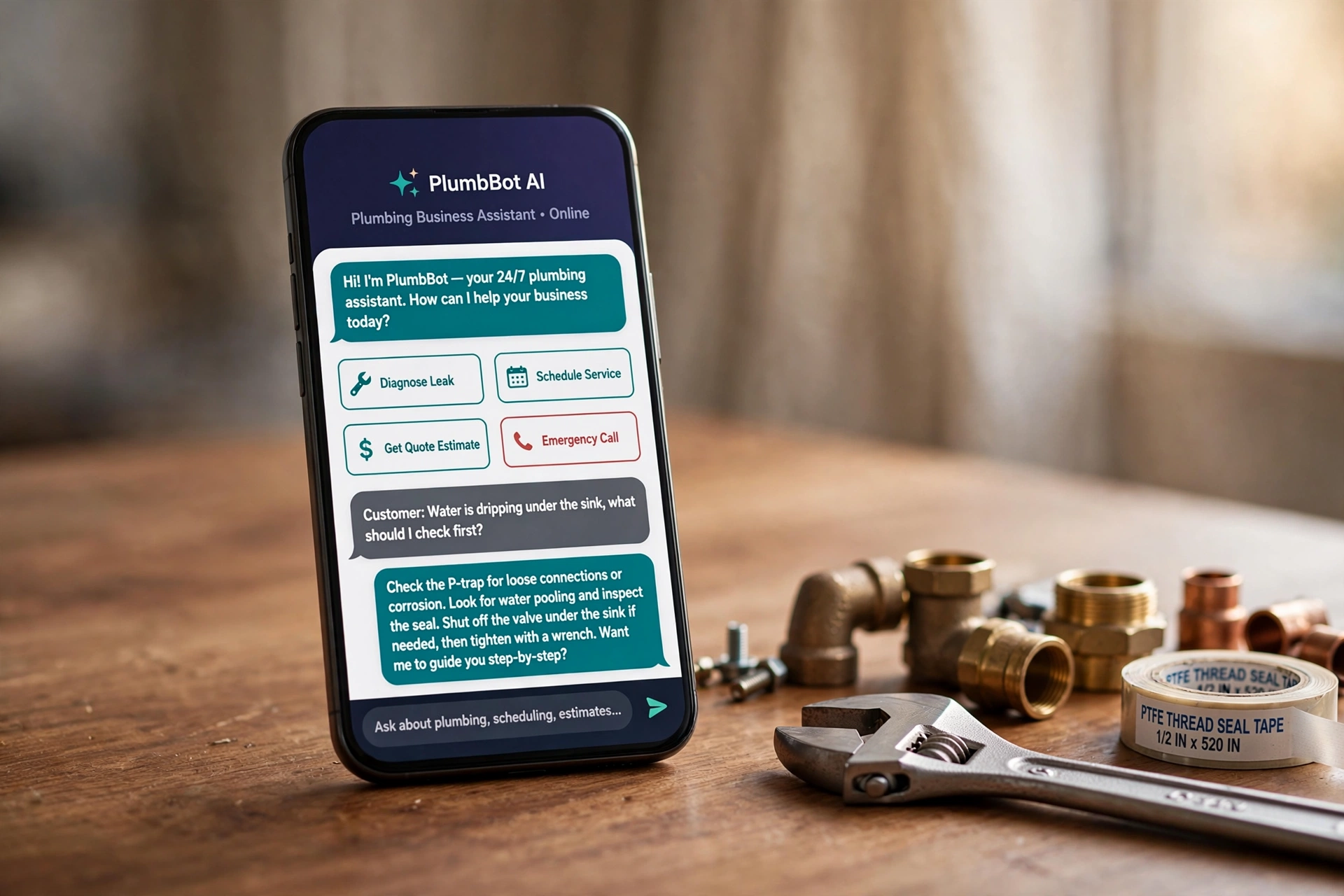
Medical practices today face a brutal paradox: they provide life-changing care but often operate with front-desk workflows from the 1990s. When a high-intent patient searches for a specialist at 11 PM, they don't want to leave a voicemail or fill out a static contact form; they want an immediate answer and a confirmed appointment. An ai customer acquisition bot for medical practices is an autonomous software agent designed to engage visitors in real-time, qualify their medical needs, and book appointments directly into the practice management software without human intervention.
In my experience working with healthcare providers, the biggest leak in their revenue isn't a lack of traffic, but a failure in 'lead velocity.' Most practices wait 24 to 48 hours to call back a web inquiry, by which point the patient has already booked with a competitor. By deploying an automated system, practices can convert organic traffic into confirmed patients in under three minutes. For a detailed look at how this fits into a broader growth strategy, you can explore our Overview of AI Search Engine Optimization & GEO.
Why Medical Practices are Adopting AI Acquisition Bots?
The shift toward AI in healthcare is no longer about futuristic robotics; it is about solving the administrative bottleneck. According to a report by McKinsey, generative AI could unlock between $260 billion and $360 billion in value for the healthcare sector annually by automating routine tasks and improving patient engagement. For a private medical practice, this translates to a drastic reduction in 'no-shows' and an increase in the volume of high-value patients acquired per marketing dollar spent.
Modern patients exhibit a strong preference for asynchronous communication. A Gartner survey found that over 60% of consumers prefer digital self-service options over speaking with a representative for basic scheduling. When a medical practice relies solely on a human receptionist, they are effectively capping their growth at the number of phone calls a human can handle simultaneously. An AI acquisition bot removes this ceiling, allowing the practice to handle 1,000 concurrent conversations with the same precision and empathy as a top-tier office manager.
Furthermore, the integration of these bots with the latest search trends is essential. With the rise of AI-driven search, patients are asking more complex questions to their devices before ever visiting a website. Practices that use how to automate organic traffic & lead capture with AI strategies are seeing a compounding effect where their website doesn't just provide information, but actively sells their expertise 24/7.
What are the Key Benefits of an AI Customer Acquisition Bot for Medical Practices?
Implementing an autonomous acquisition system transforms the patient journey from a passive experience into an active conversion funnel. Unlike traditional chatbots that follow a rigid, frustrating decision tree, modern AI agents use Large Language Models (LLMs) to understand intent, nuance, and medical urgency.
24/7 Instant Qualification and Booking
The primary benefit is the elimination of the 'dead zone'—those hours between 6 PM and 8 AM when your office is closed but patients are browsing. An AI bot doesn't just collect an email; it qualifies the patient based on their insurance provider, the type of procedure they need, and their urgency. This ensures that your clinical staff spends their time on high-value patients rather than chasing unqualified leads.
Reduced Administrative Burnout
Front-desk staff are often overwhelmed by repetitive questions regarding parking, insurance accepted, or basic service descriptions. By offloading these queries to an AI agent, the administrative burden is reduced by up to 70%. This allows the staff to focus on in-person patient care and complex case management, significantly improving the overall patient experience and staff retention rates.
Higher Conversion Rates through Hyper-Personalization
AI bots can tailor the conversation based on the page the patient is visiting. If a user is reading about 'Advanced Dental Implants,' the bot will initiate the conversation with a specific offer or question about implants, rather than a generic 'How can I help you?' This level of context-aware engagement mirrors the experience of a high-end concierge service.
💡
Key Takeaway
The most significant ROI from an AI acquisition bot comes from reducing 'lead leakage'—the gap between a patient's moment of intent and the actual booking of the appointment.
Comparison: Patient Acquisition Methods
| Feature | Traditional Front Desk | Basic Chatbot (Rule-Based) | BizAI Intelligence Agent |
|---|---|---|---|
| Availability | 9 AM - 5 PM | 24/7 | 24/7 |
| Context | High (Human) | Low (Scripted) | High (AI-Driven) |
| Booking | Manual Entry | Lead Form Only | Direct CRM/Calendar Sync |
| Lead Qualification | Manual | Minimal | Autonomous & Deep |
| Scalability | Limited by Staff | High | Infinite |
Real-World Examples from Medical Practices
To understand the impact of this technology, we must look at the data from practices that have transitioned from manual to autonomous acquisition. The pattern I see consistently is a dramatic spike in 'after-hours' revenue that was previously invisible to the business owner.
Case Study 1: Specialized Orthopedic Clinic
This clinic was spending $4,000 per month on Google Ads but suffered from a 30% lead-to-appointment conversion rate because their staff couldn't keep up with the inquiry volume. After implementing a comprehensive AI SDR and autonomous appointment setter, they automated the qualification of 'knee and hip' leads. Within 60 days, their conversion rate jumped from 30% to 62%, and the cost per acquired patient dropped by 45%. The bot handled the initial vetting and booked the surgery consultations directly into the surgeon's calendar.
Case Study 2: Multi-Location Dental Network
For a dental network with five locations, the challenge was routing patients to the correct clinic based on location and specialty. They utilized a system that integrated with their CRM to track patient history. By deploying an AI acquisition bot, they saw a 25% increase in new patient bookings within the first quarter. More importantly, they reduced the time spent on phone triage by 12 hours per week per location, allowing the office managers to focus on treatment plan acceptance and patient retention.
How to Get Started with AI Customer Acquisition
Moving into AI automation requires a strategic approach to avoid the common mistake of deploying 'dumb' bots that frustrate patients. The goal is to create a seamless bridge between the search engine and the exam room.
Step 1: Map Your Patient Journey
Identify where your patients are dropping off. Is it on the service page? Is it because your 'Contact Us' form is too long? Define the exact questions a patient needs to answer before they are considered a 'qualified lead' (e.g., Insurance type, symptoms, preferred date).
Step 2: Implement a High-Authority Traffic Engine
An AI bot is useless if no one visits your site. You need a system that generates high-intent traffic. This is where a programmatic SEO platform guide becomes essential, allowing you to create hundreds of satellite pages targeting specific conditions and local searches in your area. By dominating the local search landscape, you feed the AI bot a steady stream of qualified prospects.
Step 3: Deploy the BizAI Intelligence Agent
Instead of building a fragile system from scratch, we recommend the BizAI Intelligence architecture. Our agents are not just 'chatbots'; they are autonomous sales engines. They track user behavior, understand the medical context of the page, and aggressively move the patient toward a booking. We integrate these agents directly with your existing CRM through automated inbound lead qualification and CRM webhooks, ensuring zero data loss.
Step 4: Optimize for Generative AI (GEO)
In 2026, patients are using Perplexity and ChatGPT to find doctors. If your practice isn't optimized for these engines, you are invisible. By applying GEO vs traditional SEO principles, you ensure that when an AI search engine recommends a provider, your practice is the one listed as the authority.
Common Objections and Data-Backed Answers
Many practitioners are hesitant to adopt AI due to misconceptions about patient trust and technical complexity. However, the data suggests that the risk of inaction is far greater than the risk of automation.
Objection 1: "Patients prefer a human touch and will find AI cold."
Most people assume that patients want to talk to a human for every interaction. However, the data shows the opposite for administrative tasks. According to recent digital health trends, patients report higher satisfaction when they can book an appointment in 30 seconds via AI than when they spend 10 minutes on hold with a receptionist. The 'human touch' should be reserved for the clinical consultation, not the scheduling process.
Objection 2: "I'm worried about HIPAA compliance and data privacy."
This is a valid concern, but a solvable one. Enterprise-grade AI agents, such as those deployed by BizAI Intelligence, use encrypted data transmission and do not store sensitive health information in the LLM's training set. By using secure API gateways and HIPAA-compliant CRM integrations, you can automate acquisition while maintaining absolute legal rigor.
Objection 3: "AI is too expensive and takes too long to set up."
In practice, the cost of a missed lead is significantly higher than the monthly subscription of an AI bot. If a single high-ticket procedure (like a dental implant or a surgical consultation) is worth $5,000, losing just two patients a month due to slow response times costs the practice $10,000 in lost revenue. The ROI on an AI acquisition bot is typically realized within the first 30 days of deployment.
📚
Definition
Lead Velocity is the speed at which a prospective patient moves from the first point of contact on your website to a confirmed appointment in your calendar.
Frequently Asked Questions
How does an AI customer acquisition bot for medical practices differ from a standard chatbot?
A standard chatbot operates on 'if-then' logic, meaning if a user doesn't type a specific keyword, the bot fails. An AI acquisition bot uses Large Language Models (LLMs) to understand natural language, sentiment, and intent. For example, if a patient says, 'My jaw has been throbbing since Tuesday,' a standard bot might say, 'I don't understand.' An AI bot recognizes this as an urgent dental pain symptom, qualifies the patient's insurance, and immediately offers the next available emergency slot in the calendar.
Can the AI bot integrate with my existing medical software or CRM?
Yes, modern AI agents are designed to be ecosystem-agnostic. Using webhooks and API integrations, the bot can communicate directly with platforms like HubSpot, Salesforce, or specialized medical practice management software. This means that as soon as a patient books an appointment through the bot, their contact details, qualifying answers, and appointment time are instantly synced to your staff's dashboard, eliminating the need for manual data entry and reducing human error.
Will using an AI bot hurt my search engine rankings?
On the contrary, an AI bot can improve your rankings by increasing 'dwell time' and reducing bounce rates. When users engage in a meaningful conversation with a bot, they spend more time on your page, which signals to Google that your content is helpful. Furthermore, when combined with how to rank on ChatGPT, SearchGPT, and Perplexity AI strategies, the bot acts as the conversion endpoint for the high-quality traffic generated by your Generative Engine Optimization (GEO) efforts.
How does the bot handle patients who have complex or emergency medical questions?
The AI bot is programmed with strict guardrails. While it can provide general information and qualify the urgency of a case, it is trained to recognize 'red flag' keywords. If a patient describes a life-threatening emergency, the bot is programmed to immediately stop the booking process and provide a clear, bold instruction to call 911 or go to the nearest emergency room, ensuring patient safety remains the absolute priority over acquisition.
What is the typical ROI timeframe for a medical practice implementing this technology?
Most practices see an immediate impact on their lead conversion rate within the first two weeks. Because the bot captures the 'after-hours' traffic that was previously lost, the increase in appointment volume is usually instantaneous. Depending on the average patient value and the existing volume of organic traffic, most clinics recover their initial setup investment within the first 30 to 60 days through the acquisition of 3 to 5 additional high-value patients who would have otherwise gone to a competitor.
Final Thoughts on AI Customer Acquisition Bot for Medical Practices
The era of the 'passive website' is over. For a medical practice to thrive in 2026, your online presence must transition from a digital brochure to an autonomous acquisition engine. An ai customer acquisition bot for medical practices is the only way to scale your patient intake without linearly increasing your administrative overhead. By combining high-volume programmatic traffic with an intelligent agent that closes the deal in real-time, you stop renting traffic and start building a compounding asset.
If you are ready to stop losing patients to slow response times and start dominating your local market, it is time to implement a system built for the AI era. Visit BizAI Intelligence to see how we can transform your practice into a lead-generation machine that works while you sleep.
AI Search Accelerator: 1-on-1 Strategy Session
Claim one of the 10 monthly slots. Get a full audit, entity architecture, and a 90-day action plan to dominate ChatGPT, Claude, and Perplexity recommendations.