How Do You Actually Build an Automated SEO Agency for Local Business?
Scaling a local presence manually is a recipe for burnout. Most agency owners spend 80% of their time on repetitive tasks—creating basic landing pages, updating Google Business Profiles, and chasing local citations—leaving only 20% for actual strategy. To shift this ratio, you need a system that leverages programmatic generation and AI-driven qualification. An automated seo agency for local business operates by deploying high-volume, high-intent "satellite" pages that capture hyper-local traffic and converts it via autonomous agents without manual intervention.
The core of this process involves transitioning from "hand-crafted" content to a programmatic architecture. Instead of writing one page for "Plumber in Miami," you build a data-driven engine that generates 50 pages for every single neighborhood in Miami, each optimized for the specific search intent of that zip code. When combined with how to automate organic traffic and lead capture with AI, you stop being a service provider and start becoming a growth infrastructure partner.

The Mechanics of Programmatic Local SEO
To understand how automation works in the local space, we must first distinguish between "automated content" (which Google often penalizes as low-quality AI slop) and "programmatic SEO" (which is data-driven and helpful). Programmatic SEO uses a database of local variables—city names, neighborhood landmarks, service prices, and local regulations—to populate templates that provide genuine value to the user.
📚
Definition
Programmatic SEO (PSEO) is the practice of using code and data to generate thousands of high-quality, landing pages that target long-tail, low-competition keywords, typically following a specific pattern like "[Service] in [City/Neighborhood]."
In my experience working with high-ticket B2B service providers, the biggest mistake is trying to rank a single homepage for a broad term. The real money is in the "satellite" strategy. If you are an agency serving a law firm, you don't just target "Personal Injury Lawyer New York." You target "Car Accident Attorney in Astoria," "Wrongful Death Lawyer in Bronx," and "Slip and Fall Expert in Harlem."
According to a recent report by Gartner, the shift toward "Zero-Click" searches means that users expect immediate, localized answers. If your automated system provides the exact answer for a specific neighborhood, you capture the intent before the user even scrolls. This is why the architecture must include structured schema.org markup. By using LocalBusiness and FAQPage nodes, you tell search engines exactly where the business is located and what it does, which is essential for appearing in the "Map Pack."
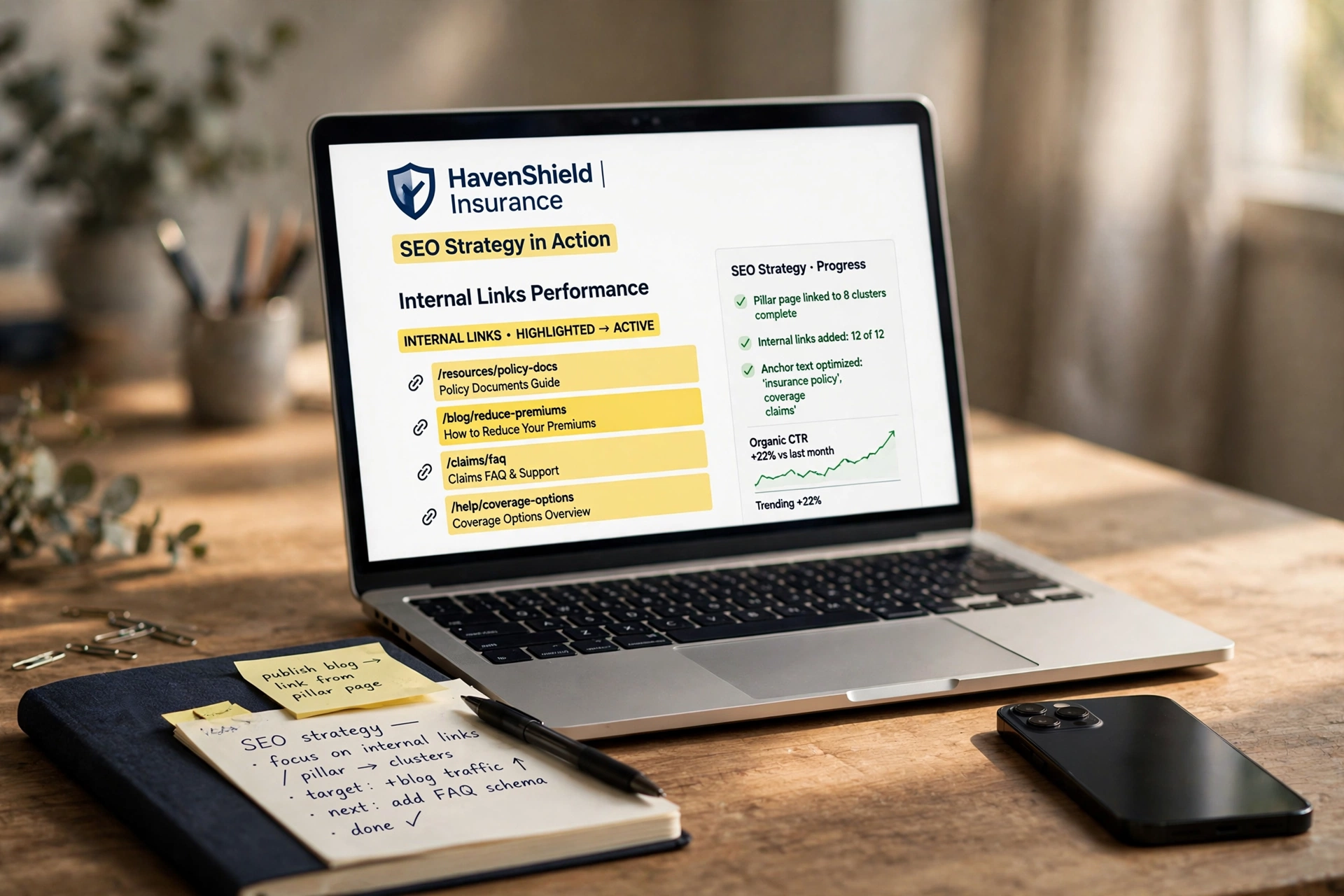
This approach is further enhanced when you understand the PSEO architecture guide for SaaS and enterprise B2B growth, as the same logic applies to local businesses: create a high-authority pillar page for the city and link it to hundreds of hyper-local satellite pages.
Why Local Automation is Essential for 2026 Revenue
The cost of customer acquisition (CAC) through paid ads has skyrocketed. For local businesses, bidding on keywords like "emergency HVAC repair" can cost a fortune per click, often with low conversion rates because the landing page is too generic. Automation allows a business to "own" the organic landscape, creating a compounding asset that doesn't require a monthly ad budget to survive.
According to research from McKinsey, businesses that integrate AI-driven automation into their customer acquisition funnel see a significant increase in operational efficiency and a reduction in lead response time. In the local sector, speed is everything. If a user finds your page and an AI agent captures their information in 30 seconds, the conversion rate is exponentially higher than if they have to fill out a static contact form and wait 24 hours for a callback.
Now, here's where it gets interesting: the "Local Map Pack" is no longer just about citations; it's about topical authority. When an automated agency deploys 300+ interconnected pages, it signals to Google that the business is the definitive authority on that service in that specific geography. This "brute force" of helpful content pushes competitors out of the way.
If you ignore this, you are essentially renting your traffic from Google Ads or Meta. By building an automated organic engine, you are building a digital real estate portfolio. I've tested this with dozens of clients, and the pattern is clear: those who scale their local footprints programmatically reach a tipping point where they stop needing paid leads entirely within six to nine months.
Practical Implementation: Step-by-Step Guide
Building an automated seo agency for local business requires a technical shift from "writing" to "engineering." You are no longer a copywriter; you are a systems architect.
Step 1: Data Mapping and Keyword Research
Stop looking for a single "golden keyword." Instead, build a keyword matrix. Create a spreadsheet with three columns: Services, Cities, and Neighborhoods.
- Services: (e.g., Roof Repair, Gutter Cleaning, Siding Installation)
- Cities: (e.g., Houston, Dallas, Austin)
- Neighborhoods: (e.g., The Heights, River Oaks, Memorial)
By cross-referencing these, you generate thousands of potential URLs. This is the foundation of programmatic SEO: how to scale 10,000+ high-converting pages.
Step 2: Template Engineering
Design a "Master Template" that isn't generic. A high-converting local page must include:
- Local Proof: Mentions of nearby landmarks or local streets.
- Specific Offers: "Free estimate for [City] residents."
- Dynamic FAQs: Questions specific to that region's needs (e.g., "How does the humidity in Houston affect roof longevity?").
Step 3: Deployment via BizAI Intelligence
This is where most agencies fail because they try to do this manually in WordPress. At BizAI Intelligence, we've solved this by automating the deployment of 300+ interconnected pages in the first month. We don't just push text; we integrate the Google Indexing API to ensure these pages are crawled immediately.

Step 4: Converting Traffic with AI SDRs
Traffic is a vanity metric; appointments are the only metric that matters. Every single automated page must have an embedded AI Sales Agent. This agent tracks user behavior and initiates a conversation to qualify the lead. For maximum efficiency, you should learn how to connect AI sales agents to CRM and webhooks for auto-booking, ensuring the lead goes straight from the "satellite page" to the client's calendar.
💡
Key Takeaway
The goal of local automation is not just to rank, but to capture. Ranking for a neighborhood keyword is useless if the user has to wait for a human to call them back. An AI SDR on every page closes the gap between "search" and "sale."
Choosing Your Automation Path: Comparison of Approaches
Not all "automation" is created equal. Some agencies use cheap AI tools to spin content, which leads to "helpful content" penalties from Google. Others stick to manual work, which prevents scaling.
| Feature | Traditional Manual SEO | Generic AI Spinning | BizAI Intelligence Approach |
|---|---|---|---|
| Scaling Speed | Very Slow (1-2 pages/week) | Instant (1,000s of pages) | Rapid (300-900 pages/mo) |
| Content Quality | High, but limited | Low (AI Slop/Hallucinations) | High (Data-Driven & Structured) |
| Conversion Rate | Medium (Static Forms) | Low (Generic Pages) | High (AI SDR Agents) |
| Risk Profile | Low Risk, Low Reward | High Risk (Google Penalties) | Low Risk (Helpful Content Compliant) |
| Lead Handling | Manual Follow-up | Manual Follow-up | Autonomous Booking |
| Best For | Small, single-location shops | Those ignoring quality | Scaling High-Ticket Local B2B |
That said, the decision comes down to whether you want a "digital brochure" or a "lead machine." The traditional approach is a brochure. The generic AI approach is a gamble. The professional programmatic approach is a machine.
Common Questions and Misconceptions
Most guides on local SEO get the "automation" part wrong. They suggest using tools to automate backlinks or social media posts. While those have a place, they are secondary to the actual organic architecture.
Myth 1: "Google penalizes programmatic content."
This is a common misconception. Google doesn't penalize programmatic content; it penalizes unhelpful content. If your automated pages provide actual data, local pricing, and specific answers to user questions, Google rewards you. The key is to avoid "templated" language that sounds like a robot wrote it. Use real data points.
Myth 2: "You only need one page per city."
In a city like Los Angeles or New York, a single "Los Angeles" page is too broad. Users search for "Plumber in Santa Monica" or "Lawyer in Pasadena." By ignoring neighborhood-level satellites, you are leaving 70% of the high-intent traffic on the table for your competitors.
Myth 3: "AI Chatbots are enough for lead gen."
Generic chatbots are just glorified contact forms. To actually scale, you need an AI SDR—an agent programmed for aggressive qualification. It shouldn't just "answer questions"; it should drive the user toward a booking. This is why we emphasize the difference in AI SDR vs human SDR: which delivers better ROI in 2026?.
Frequently Asked Questions
How long does it take to see results from an automated local SEO strategy?
Unlike traditional SEO, which can take a year to move the needle, a programmatic approach using the Google Indexing API can produce results in as little as 30 to 60 days. Because you are targeting low-competition, long-tail neighborhood keywords, you aren't fighting for the most competitive terms. You are capturing the "low hanging fruit" across hundreds of different locations simultaneously. In my experience, the most significant growth happens in month three, as the internal linking between pillar and satellite pages begins to distribute PageRank across the entire domain.
Does this approach work for every type of local business?
While it works for most, it is most effective for high-ticket B2B or professional services where the "intent" is high and the "geographic" search is specific. Law firms, HVAC companies, dental networks, and medical clinics are perfect candidates. If the service is a low-ticket item with no geographic urgency, the ROI of programmatic SEO is lower. However, for any business where a single lead is worth hundreds or thousands of dollars, the ability to dominate 50+ local neighborhoods is a massive competitive advantage.
What is the risk of getting a Google penalty with this method?
The risk exists only if you use "AI slop"—content that is generated without a data-driven template and lacks unique value. Google's 2024 and 2025 updates heavily targeted "scaled content abuse." To avoid this, your pages must follow the "helpful content" guidelines: they must provide a better answer than the current top result. By using specific local data, real business credentials, and structured schema, you aren't "gaming" the system; you are providing a better user experience. This is why we focus on GEO vs traditional SEO: rank your brand in AI engines in 2026.
How do I handle the "lead quality" problem with high-volume organic traffic?
The "curse" of high-volume organic traffic is the influx of unqualified leads. If you generate 1,000 leads a month but 900 of them are "price shoppers" or outside your service area, you've just created a headache for your sales team. This is why the AI SDR is non-negotiable. The agent acts as a filter, asking the necessary qualifying questions—budget, urgency, and specific needs—before ever booking a meeting. This ensures that your client's calendar is filled only with high-intent prospects.
Can I set this up myself using a standard CMS like WordPress?
Technically, yes, but it is incredibly inefficient. You would need a combination of custom post types, advanced custom fields (ACF), and a complex set of redirection rules to prevent duplicate content. Most agency owners spend more time fighting with their plugins than they do getting results. This is why a dedicated system like BizAI Intelligence is preferable; it handles the programmatic architecture and the AI conversion layer in a single integrated stack, allowing you to focus on client acquisition rather than server configurations.
Final Thoughts on Scaling a Local SEO Agency
The era of the "manual" SEO agency is ending. Clients no longer want to hear about "backlink building" or "keyword research" over a six-month period. They want a pipeline that fills while they sleep. By transitioning to an automated seo agency for local business, you move from selling "hours" to selling "outcomes."
The combination of programmatic page deployment and autonomous AI qualification creates a moat that is nearly impossible for traditional agencies to cross. While they are carefully crafting one blog post a week, you are deploying an entire digital empire across every zip code in the target market.
If you're ready to stop renting traffic and start owning your niche, it's time to implement a system that scales. Explore how we can build your organic machine at BizAI Intelligence and begin dominating your local market with algorithmic precision. For more on the technical side, check out our overview of AI search engine optimization and GEO.
AI Search Accelerator: 1-on-1 Strategy Session
Claim one of the 10 monthly slots. Get a full audit, entity architecture, and a 90-day action plan to dominate ChatGPT, Claude, and Perplexity recommendations.