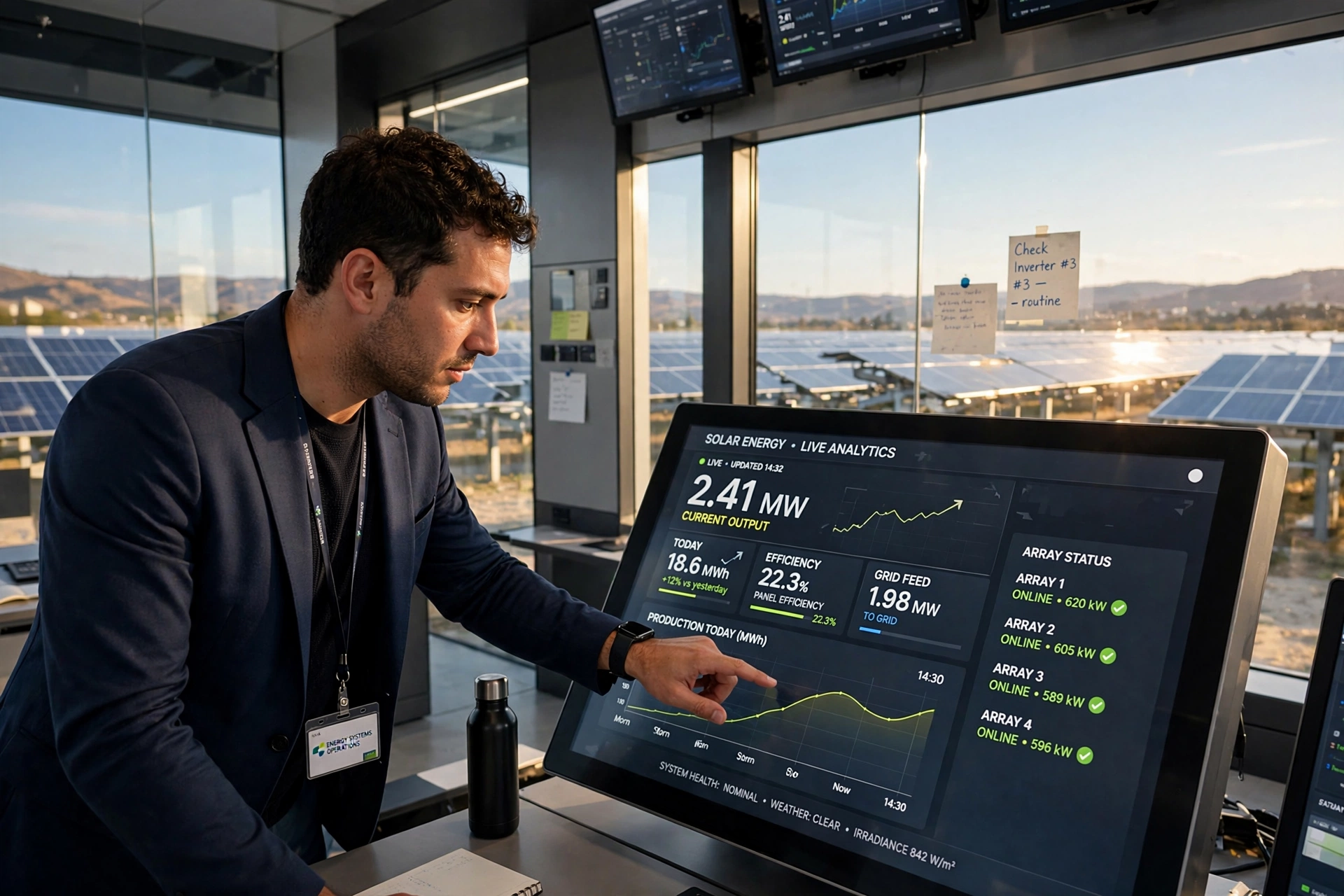
Solar installation companies are currently fighting a losing battle against skyrocketing customer acquisition costs (CAC). When the cost of a single qualified lead from paid ads exceeds $150, the only sustainable path to growth is owning the organic search landscape. An autonomous content scaling platform for solar energy companies solves this by programmatically generating hundreds of high-intent, localized landing pages that target specific buyer queries, such as "best solar panels for flat roofs in Phoenix" or "solar tax credits in Texas 2026," turning a website into a 24/7 lead-generation machine without manual copywriting.
In my experience working with renewable energy firms, the biggest mistake they make is relying on a single "Solar Installation" service page. The modern buyer doesn't search for a generic service; they search for specific solutions to their local energy problems. By deploying a system that maps every single city in a service area to a high-value pillar of knowledge, we shift the business from renting traffic via Google Ads to owning a digital asset that compounds in value over time. To truly master this, growth teams are now shifting toward Overview of AI Search Engine Optimization & GEO to ensure they are cited not just in search results, but in AI answers.
Why Do Solar Energy Companies Need an Autonomous Content Scaling Platform?
Solar energy companies require autonomous content scaling because the industry is hyper-local yet technically standardized. While the core value proposition, reducing utility bills and increasing home value, remains the same across regions, the actual buyer intent is fragmented by city-specific zoning laws, state-level tax incentives, and regional climate variables. A homeowner in Miami cares about hurricane-rated mounts, while a homeowner in Buffalo focuses on snow-load capacity and low-light efficiency. An autonomous content scaling platform for solar energy companies allows a brand to address these thousands of micro-nuances simultaneously without hiring a massive army of writers.
According to the International Energy Agency (IEA), solar PV capacity is expected to grow exponentially through 2030, but the competition among installers is intensifying. This creates a "winner-take-all" dynamic on the first page of Google. When a company can launch 500 optimized pages targeting every suburb in their region within 30 days, they effectively block out competitors who are still writing one manual blog post a month. This is why we see a shift toward PSEO Architecture Guide for SaaS & Enterprise B2B Growth, as the logic of scaling high-intent pages applies perfectly to the solar niche.
Furthermore, the rise of generative engine optimization has fundamentally changed the buyer's journey. Today's high-intent leads use Perplexity or ChatGPT to ask, "Which solar installer in my area has the best warranty for hail damage?" If your brand hasn't programmatically established authority across hundreds of specific long-tail queries, these AI models won't have the data to cite you. In practice, the companies investing in How to Get Cited by ChatGPT, SearchGPT, and Perplexity AI are the ones capturing the high-intent leads that used to go to the biggest national brands.

How Does Programmatic SEO Work for the Solar Industry?
Programmatic SEO works by combining a high-value content template with a structured database of regional and technical variables. Instead of writing one page for "Solar Installation," a company creates a system that generates pages for every city in their service area, injecting local data such as average sunlight hours, local utility company names, and specific state rebates. This transforms the website from a brochure into a comprehensive directory of local energy solutions.
📚
Definition
Programmatic SEO (PSEO) is the practice of using variables and databases to generate thousands of high-quality, unique landing pages at scale to capture long-tail search traffic.
In my experience building these systems at BizAI Intelligence, the secret is not just quantity, but "topical dominance." We don't just create city pages; we create clusters. For example, a solar company might have a pillar page on "Residential Solar Incentives 2026," with satellites for every single county in the state. This creates a web of internal links that signals extreme authority to Google's algorithms. For those looking to scale this rapidly, understanding Programmatic SEO: How to Scale 10,000+ High-Converting Pages is the first step toward market dominance.
This architecture is specifically designed to feed the hungry crawlers of modern search engines. By utilizing Schema.org markup and deep internal linking, we ensure that Google understands exactly which page is the authority for "Solar Installers in Austin" versus "Solar Battery Backup in Dallas." This granular approach prevents keyword cannibalization and maximizes the surface area for lead capture.
What Are the Specific Benefits of Scaling Content Autonomously?
Autonomous content scaling eliminates the bottleneck of human content production, allowing solar brands to capture intent at the exact moment a homeowner decides to switch to renewable energy. The primary benefit is the drastic reduction in CAC; while a Google Ad lead might cost $150, an organic lead from a hyper-specific localized page often costs a fraction of that over the long term because the asset continues to work for years without further payment.
According to research from Gartner, B2B and high-ticket B2C buyers now complete nearly 70% of their research before ever contacting a sales representative. If your company isn't appearing in those research phases, specifically through long-tail queries like "average solar payback period in [City]", you are effectively invisible to the most qualified leads. By using an autonomous content scaling platform for solar energy companies, you occupy the search space during the education phase, positioning your brand as the trusted expert before the lead even looks for a competitor.
💡
Key Takeaway
Scaling content autonomously allows solar companies to shift from "renting" leads through expensive PPC campaigns to "owning" a compounding organic traffic asset.
Another critical advantage is the integration of AI-driven qualification. At BizAI Intelligence, we don't just drive traffic; we deploy AI Sales Agents on every single programmatically generated page. These agents can answer specific questions about local rebates in real-time and book appointments directly into the CRM. This synergy between How to Automate Organic Traffic & Lead Capture with AI and localized content ensures that the traffic actually converts into revenue.
Comparison: Traditional Content vs. AI-Driven Scaling
To understand the impact, we must look at the operational difference between traditional agency-led content and a modern autonomous platform.
| Feature | Traditional Content Agency | Generic AI Tools (ChatGPT/Jasper) | BizAI Autonomous Scaling |
|---|---|---|---|
| Production Speed | 4-8 articles per month | Fast, but manual prompts | 300-900+ pages per month |
| Local Accuracy | High (but slow/expensive) | Low (prone to hallucinations) | High (database-driven variables) |
| Lead Capture | Static "Contact Us" form | Static "Contact Us" form | AI SDR Appointment Setters |
| Cost per Page | $150 - $500 | Low, but requires human editor | Extremely low at massive scale |
| AI Search Visibility | Low (not optimized for GEO) | Medium (generic output) | High (Structured Schema & GEO) |
As this table illustrates, the traditional approach is too slow for the fast-moving solar market of 2026, while generic AI tools create "content slop" that Google's helpful content updates now penalize. The modern approach combines the scale of AI with the precision of structured data.
How to Implement an Autonomous Content Scaling Strategy for Solar
Implementing this system requires a move away from "blogging" and a move toward "architecting." You are not writing articles; you are building a lead-generation engine. The process starts with identifying the high-intent variables that drive solar decisions: state incentives, local utility rates, roof types, and weather patterns.
First, you must define your data set. This includes a list of every city, zip code, and county you serve, paired with the specific technical data for those areas. For example, if you operate in Florida, your data set should include the current 2026 solar rebates for each major municipality. This data becomes the "fuel" for the autonomous content scaling platform for solar energy companies.
Second, create your high-conversion templates. A solar landing page should not be a wall of text. It needs a clear value proposition, a localized calculator, a section on local incentives, and an embedded AI agent. When these templates are combined with the data set, the system can generate 1,000 unique pages that feel hand-written for every specific town. If you want to understand the technical side of this, our PSEO Architecture Guide for SaaS & Enterprise B2B Growth provides a blueprint for this structure.
Third, deploy the AI qualification layer. Driving traffic is only half the battle. You need a system that can handle the volume. By integrating How AI Appointment Setters Automate B2B Demo Booking 24/7, you ensure that a lead landing on a "Solar Panels in Orlando" page is immediately greeted by an agent that knows Orlando's specific energy landscape and can book a site visit into your calendar.

Common Pitfalls in Solar Content Scaling
Many companies attempt to scale content by simply spinning a single article 100 times. This is a recipe for disaster in 2026. Google's algorithms are now sophisticated enough to detect "templated content" that provides no unique value. To avoid this, you must ensure that each page contains unique, data-driven insights.
One major mistake I see is the lack of internal linking. Companies launch 500 pages but leave them as isolated islands. This prevents the "link equity" from flowing through the site. You must implement a strict silo structure where satellite city pages link back to a main state pillar. For a deeper dive into this, see GEO Vs Traditional SEO: Rank Your Brand in AI Engines in 2026.
Another common error is ignoring the AI search experience. Many solar companies optimize for "keywords" but forget that people are now asking full questions to LLMs. If your content doesn't use structured data (JSON-LD) to explicitly tell AI engines that you are a "LocalBusiness" with a specific "serviceArea," you will be omitted from AI-generated recommendations. This is why we prioritize Top AI Search Optimization Tools for Modern Growth Teams in our internal workflows.
The ROI of Autonomous Scaling vs. Paid Ads
Let's look at the math. A typical solar company spends $5,000 to $20,000 per month on Google Ads. At a $150 cost per lead, a $10,000 spend nets roughly 66 leads. This is a linear cost; the moment you stop paying, the leads stop flowing.
In contrast, investing in an autonomous content scaling platform for solar energy companies is an investment in a compounding asset. While the initial setup requires a strategic investment in data and architecture, the cost per lead drops precipitously over time. Once you rank for 500 high-intent long-tail keywords, you are receiving those 66+ leads every month for free. Over a 24-month period, the ROI of organic scaling outweighs paid ads by a factor of 10x to 20x.
According to data from the Content Marketing Institute, organic leads have a significantly higher conversion rate than paid leads because the user is in an "information-seeking" mindset rather than a "being sold to" mindset. By providing genuine value through localized data, you build trust before the first phone call occurs.
Frequently Asked Questions
Is autonomous content scaling safe from Google's helpful content updates?
Yes, provided the scaling is driven by unique data and not generic AI spinning. Google penalizes "low-effort" AI content that adds no value. However, programmatic pages that provide specific, local utility data, regional tax credit information, and actual technical specifications for a specific city are considered highly helpful. When you use a professional platform like BizAI Intelligence, every page is engineered to meet the E-E-A-T (Experience, Expertise, Authoritativeness, and Trustworthiness) guidelines by grounding the AI output in factual, structured databases.
How long does it take to see leads from an autonomous scaling platform?
While traditional SEO can take 6-12 months, an autonomous scaling approach using the Google Indexing API can see results much faster. By deploying hundreds of pages simultaneously and forcing an immediate crawl, many of our clients see significant traffic spikes within the first 30 to 60 days. Because we target "long-tail" keywords (queries with lower competition but higher intent), these pages often rank faster than highly competitive head terms like "Solar Panels," allowing you to capture leads while the main pillar pages continue to build authority.
Can this system actually book appointments, or just generate leads?
Unlike traditional SEO, which ends at a "Contact Us" form, an autonomous content scaling platform integrated with BizAI Intelligence includes an AI SDR. This agent lives on the page, interacts with the visitor in real-time, qualifies their roof type and energy spend, and then connects to your CRM via webhooks to book a demo or site visit. This removes the "lead leak" that happens when a human sales rep takes 24 hours to call a lead back, ensuring the conversion happens while the intent is at its peak.
Do I need to write the data for every city myself?
No. The power of an autonomous platform is its ability to integrate with external data sources and use LLMs to synthesize that data into natural language. We help you identify the key variables, such as the 2026 federal solar tax credits or state-specific net metering laws, and then the system programmatically applies those facts across your entire service area. You provide the strategic direction and the core business data; the platform handles the massive execution of scaling that data into thousands of optimized pages.
How does this differ from just using a landing page builder?
Landing page builders are designed for a few static pages used in paid campaigns. They lack the semantic architecture, internal linking silos, and Schema markup required for organic ranking. An autonomous content scaling platform for solar energy companies isn't just about the "look" of the page; it's about the underlying code that tells Google and AI engines exactly what the page is about. It is a comprehensive SEO engine that generates the pages, optimizes them for GEO, and integrates an AI salesperson for conversion.
Conclusion
In 2026, the solar industry is no longer won by those with the biggest ad budget, but by those who own the most digital real estate. Relying on a few generic pages and expensive PPC leads is a precarious strategy that leaves you vulnerable to rising costs and competitor aggression. By deploying an autonomous content scaling platform for solar energy companies, you can build a moat of topical authority that makes your brand the default choice for every homeowner in your service area.
Stop renting your growth from Google Ads and start owning your market. Whether you are looking to dominate a single state or scale across multiple regions, the combination of programmatic SEO and AI-driven lead qualification is the only way to achieve sustainable, compounding growth. To see how we can build this engine for your business and turn your website into a 24/7 acquisition machine, visit BizAI Intelligence.
Only 12 Onboarding Slots Remaining This Month
BizAI deploys 300 AI salespeople scoring purchase intent 24/7. Get your free niche domination blueprint.
AI Search Accelerator: 1-on-1 Strategy Session
Claim one of the 10 monthly slots. Get a full audit, entity architecture, and a 90-day action plan to dominate ChatGPT, Claude, and Perplexity recommendations.