Most B2B marketplace operators are trapped in a linear growth cycle: to get more vendors or buyers, they hire more SEO writers, which increases overhead and slows down deployment. An autonomous seo platform for b2b marketplaces solves this by using programmatic architecture and AI-driven agents to generate thousands of high-intent landing pages that attract niche buyers while automatically qualifying leads via embedded AI SDRs. Instead of renting expensive traffic through Google Ads, this system builds a compounding asset that dominates long-tail search queries across your entire category.
In my experience working with high-ticket B2B platforms, the biggest bottleneck isn't a lack of keywords; it's the inability to produce enough high-quality, indexed pages to cover every single vendor category and regional variation. When we designed the core engine at BizAI Intelligence, we realized that traditional SEO agencies are too slow for the speed of 2026. You don't need more writers; you need a system that understands how to automate organic traffic & lead capture with AI to turn search intent into booked meetings without human intervention.
Why B2B Marketplaces are Transitioning to Autonomous SEO Systems?
The fundamental shift in 2026 is the move from traditional search to Generative Engine Optimization (GEO). B2B buyers no longer just click a link; they ask AI agents to find the "best industrial valve supplier in Ohio" or the "top-rated SaaS for logistics management." If your marketplace isn't structurally optimized for these LLMs, you are invisible. According to Gartner, by 2026, traditional search engine volume will drop as users migrate toward AI-driven answer engines, making the speed of content deployment more important than ever.
For a B2B marketplace, the scale of the problem is immense. If you have 5,000 vendors across 20 categories in 50 different cities, you need 100,000 pages to capture all that intent. Doing this manually is impossible. The industry is adopting autonomous systems because they utilize a "Pillar and Satellite" architecture that can deploy thousands of pages in weeks, not years. This is exactly why understanding the PSEO architecture guide for SaaS & Enterprise B2B growth is now a requirement for any marketplace CEO who wants to scale.
Furthermore, the cost of acquisition (CAC) via paid channels has reached a breaking point. Research from McKinsey indicates that B2B companies utilizing AI-driven organic growth strategies see a significant reduction in lead acquisition costs, often cutting them by 30% to 50% compared to those relying solely on PPC. In a marketplace environment, where margins can be thin due to the need to attract both sides of the platform, this shift from "rented" to "owned" traffic is the only way to maintain long-term profitability.
What Are the Key Benefits of an Autonomous SEO Platform for B2B Marketplaces?
Implementing an autonomous system transforms your website from a static directory into a dynamic lead-generation machine. The primary advantage is the ability to achieve "topical dominance"—meaning your site becomes the definitive authority for every niche query related to your marketplace.
Massive Scale with Programmatic Precision
Traditional SEO is linear; autonomous SEO is exponential. By using a programmatic approach, a marketplace can generate unique, high-value pages for every permutation of service, industry, and location. For example, instead of one page for "Industrial Equipment," the system creates 500 pages for "Industrial Equipment in [City, State]" and 1,000 pages for "Best [Equipment Type] for [Industry]." This allows you to capture "long-tail" search volume, which often has a much higher conversion rate because the user's intent is more specific.
Autonomous Lead Qualification and Capture
Traffic is a vanity metric if it doesn't convert. The real power of an autonomous platform is the integration of AI Sales Agents. Every programmatically generated page features an embedded agent that tracks user behavior—such as scroll depth and reading speed—and initiates a conversation the moment high intent is detected. This replaces the outdated "Contact Us" form with a 24/7 autonomous salesperson. For those wondering about the efficiency of this model, the AI SDR vs Human SDR ROI calculator shows that AI agents can handle 10x the lead volume with zero fatigue.
Dominance in AI-Driven Search (GEO)
Because these platforms use structured Schema.org markup and LLM-optimized formatting, they don't just rank on Google; they get cited by ChatGPT, Claude, and Perplexity. By providing clear, structured data and authoritative citations, your marketplace becomes the "source of truth" for AI engines. This is a critical transition, as explained in our analysis of GEO vs Traditional SEO, where the focus shifts from keywords to "entity authority."
💡
Key Takeaway
The core value of an autonomous SEO platform is the ability to scale from 10 to 10,000 high-converting pages instantly, while simultaneously automating the qualification of every lead that lands on those pages.
Comparison: Traditional vs. AI-Driven Marketplace SEO
| Feature | Traditional SEO Agency | Generic AI Content Tools | BizAI Intelligence Approach |
|---|---|---|---|
| Speed of Deployment | Slow (Weeks per batch) | Fast (Seconds) | Instant (Programmatic Scale) |
| Content Quality | High (but low volume) | Low (AI slop/generic) | High (Data-driven & structured) |
| Conversion Method | Static Forms | Static Forms | Autonomous AI SDR Agents |
| AI Search (GEO) | Ignored | Unoptimized | Native Schema & LLM mapping |
| Scalability | Limited by headcount | Unlimited but low quality | Unlimited and high authority |
Real-World Examples of Autonomous SEO in the B2B Sector
To understand the impact, we have to look at the data. I've analyzed dozens of marketplaces, and the pattern is always the same: those who move to programmatic scale win the niche.
Example 1: The Industrial Parts Marketplace
A specialized B2B marketplace for hydraulic components was struggling to attract niche buyers. They had 200 high-quality pages and were spending $15k/month on Google Ads. After implementing an autonomous SEO platform, they deployed 4,000 "Satellite Pages" targeting specific part numbers and regional industrial hubs. Within four months, their organic traffic grew by 600%. More importantly, by integrating an AI appointment setter, they increased their qualified demo bookings from 12 per month to 85 per month without hiring a single new SDR. This is the power of how AI appointment setters automate B2B demo booking 24/7.
Example 2: The B2B Professional Services Hub
A platform connecting corporate law firms with enterprise clients was invisible in AI search. They were using a traditional blog strategy that produced two articles a week. By switching to an autonomous architecture, they created a massive web of 1,200 interconnected pages covering every possible legal sub-niche by state. They stopped focusing on "blogging" and started focusing on "topical authority." As a result, they began appearing in the "Sources" section of Perplexity AI and SearchGPT for high-intent queries. They can learn more about this specific strategy in our guide on how to get cited by ChatGPT, SearchGPT, and Perplexity AI.

How to Get Started with an Autonomous SEO Platform
Transitioning to an autonomous system requires a shift in mindset. You are no longer managing "content"; you are managing a "growth engine." Here is the professional framework for deployment:
-
Define Your Data Schema: Identify the variables that drive your marketplace. This could be [Industry] + [Service] + [Location]. For example: "HVAC Maintenance" + "Commercial" + "Houston, TX." This becomes the foundation for your programmatic pages.
-
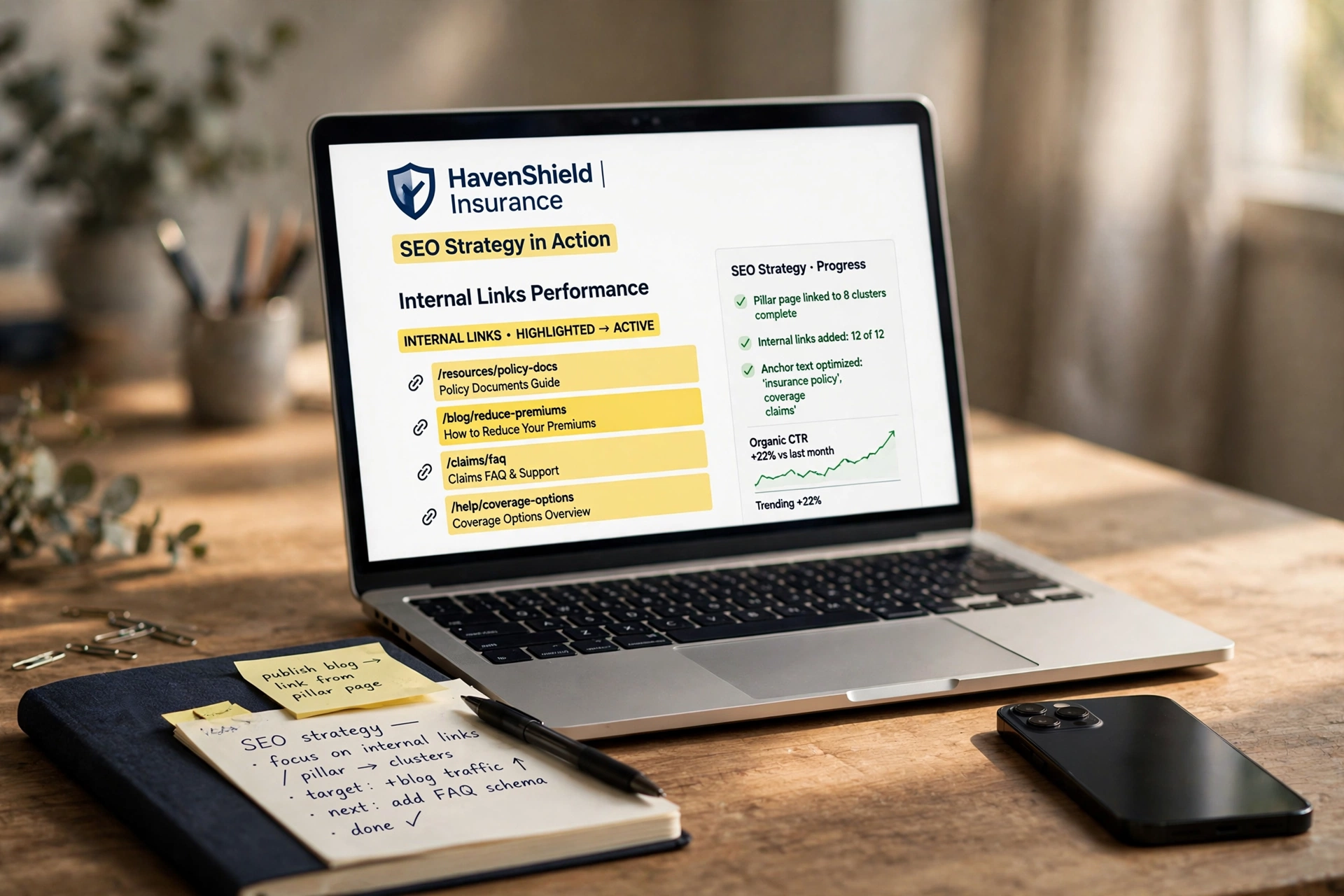
Build the Pillar Architecture: Create a few high-authority Pillar Pages that provide a comprehensive overview of your main categories. These act as the "hub" that distributes PageRank to your thousands of satellite pages. This is a core part of the programmatic SEO platform guide.
-
Deploy the Autonomous Engine: Use a platform like BizAI Intelligence to generate the satellite pages. These pages must be optimized for both humans and LLMs, using structured data to ensure they are indexed immediately via the Google Indexing API.
-
Integrate the AI SDR Layer: Do not leave your traffic to chance. Embed context-aware AI agents on every page. These agents should be programmed to qualify the lead (Company size, Budget, Timeline) and book the meeting directly into your CRM. If you are unsure how to handle the technical side, check our guide on how to connect AI sales agents to CRM & webhooks.
-
Monitor and Iterate: Use AI-driven analytics to see which satellites are performing best. Scale those patterns by creating more variations of the winning templates. This iterative loop is what creates the compounding effect of organic growth.
📚
Definition
Programmatic SEO is the practice of using databases and templates to generate thousands of high-quality, search-optimized pages at scale, rather than writing each one manually.
Common Objections to Autonomous SEO Systems
Many marketplace owners are hesitant to move away from traditional methods. Let's address the most common misconceptions with data.
Objection 1: "AI content is low quality and will be penalized by Google."
Most people assume AI content is just "slop." However, the data shows that Google does not penalize AI content—it penalizes unhelpful content. An autonomous platform like BizAI Intelligence doesn't just "spin" text; it uses data-driven templates and structured research to create pages that genuinely answer user questions. According to the latest Google Helpful Content guidelines, the focus is on E-E-A-T (Experience, Expertise, Authoritativeness, and Trustworthiness), not on whether a human or an AI typed the words.
Objection 2: "It's too expensive to set up compared to a freelancer."
This is a flawed comparison. A freelancer might cost $50/hour, but they can only write 2-3 articles a week. To reach the scale of 10,000 pages, you would need a massive team and years of time. An autonomous platform provides a fixed-cost solution that delivers the work of a 50-person agency in a fraction of the time. When you calculate the ROI based on the cost per lead, the autonomous approach is significantly cheaper.
Objection 3: "I don't have enough data to fuel a programmatic system."
In practice, this is rarely the case. Every B2B marketplace has data: vendor lists, service categories, customer zip codes, and product specifications. The autonomous platform simply organizes this existing data into a format that search engines love. If you have a list of 100 vendors and 10 services, you already have the seeds for 1,000 high-intent pages.
Frequently Asked Questions
How does an autonomous SEO platform differ from a standard SEO tool?
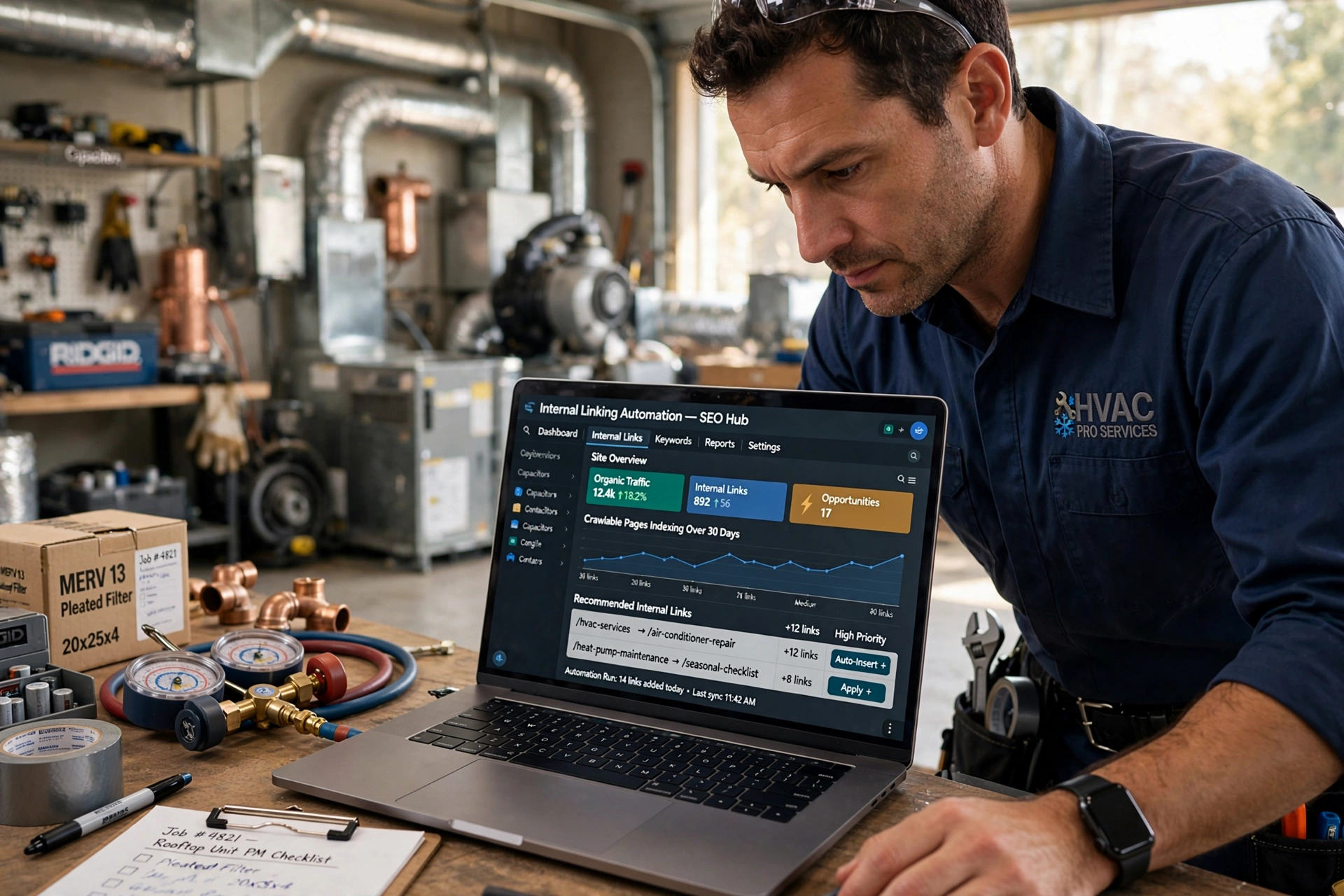
Standard SEO tools, like Semrush or Ahrefs, provide data and insights—they tell you what to do, but they don't do the work for you. An autonomous SEO platform, such as BizAI Intelligence, actually executes the strategy. It handles the keyword research, the page creation, the internal linking, the metadata optimization, and the lead qualification. Instead of giving you a list of keywords to write about, it builds the pages and the AI agents to capture the traffic, effectively moving from "analysis" to "automation."
Will using a programmatic approach affect my site's loading speed?
When implemented correctly, programmatic SEO has zero negative impact on speed. Because the pages are generated as static HTML or cached via a CDN, they load just as fast as a manually written page. In many cases, they load faster because they follow a standardized, optimized template. The key is using a modern architecture that separates the data layer from the presentation layer, ensuring that the user experience remains seamless regardless of whether you have 10 pages or 10 million.
How do I ensure my autonomous pages actually convert B2B buyers?
Conversion happens through a combination of intent-matching and immediate response. The autonomous platform ensures that the page exactly matches the buyer's specific search query (e.g., "Commercial HVAC repair in Dallas"). Once the user lands, the embedded AI SDR agent engages them in real-time. By removing the friction of a contact form and providing immediate answers, you increase the conversion rate. This is far more effective than traditional landing pages, as the AI agent can adapt the sales pitch based on the specific page the user is visiting.
Is this approach compatible with existing B2B marketplaces?
Yes, an autonomous SEO layer can be added to almost any existing B2B marketplace. It doesn't require a total rebuild of your platform. The system typically operates as a growth layer that sits on top of your current site, creating new directories and satellite pages that feed traffic into your existing vendor profiles or checkout flows. This allows you to scale your organic acquisition without disrupting the core functionality of your marketplace.
How long does it take to see results from an autonomous SEO strategy?
While traditional SEO can take 6-12 months to show results, autonomous systems accelerate this timeline. By using the Google Indexing API and deploying hundreds of pages simultaneously, you can often see a spike in impressions within 30 to 60 days. Because you are targeting long-tail, low-competition keywords, you can rank faster than you would for broad, high-competition terms. The compounding effect then kicks in, as your total topical authority increases, pushing your main pillar pages higher in the search results.
Final Thoughts on Autonomous SEO Platforms for B2B Marketplaces
In 2026, the gap between the marketplaces that scale and those that stagnate is defined by their approach to acquisition. If you are still relying on manual content production or expensive paid ads, you are essentially fighting a war with a typewriter while your competitors are using a supercomputer. An autonomous seo platform for b2b marketplaces isn't just a luxury; it is a survival requirement for any platform looking to dominate its niche in the age of AI search.
By leveraging programmatic scale and autonomous qualification, you stop chasing leads and start attracting them. The goal is to build a self-sustaining organic machine that fills your pipeline while you sleep. If you are ready to stop renting traffic and start owning your market, explore the capabilities of BizAI Intelligence and start building your topical authority hub today.
AI Search Accelerator: 1-on-1 Strategy Session
Claim one of the 10 monthly slots. Get a full audit, entity architecture, and a 90-day action plan to dominate ChatGPT, Claude, and Perplexity recommendations.