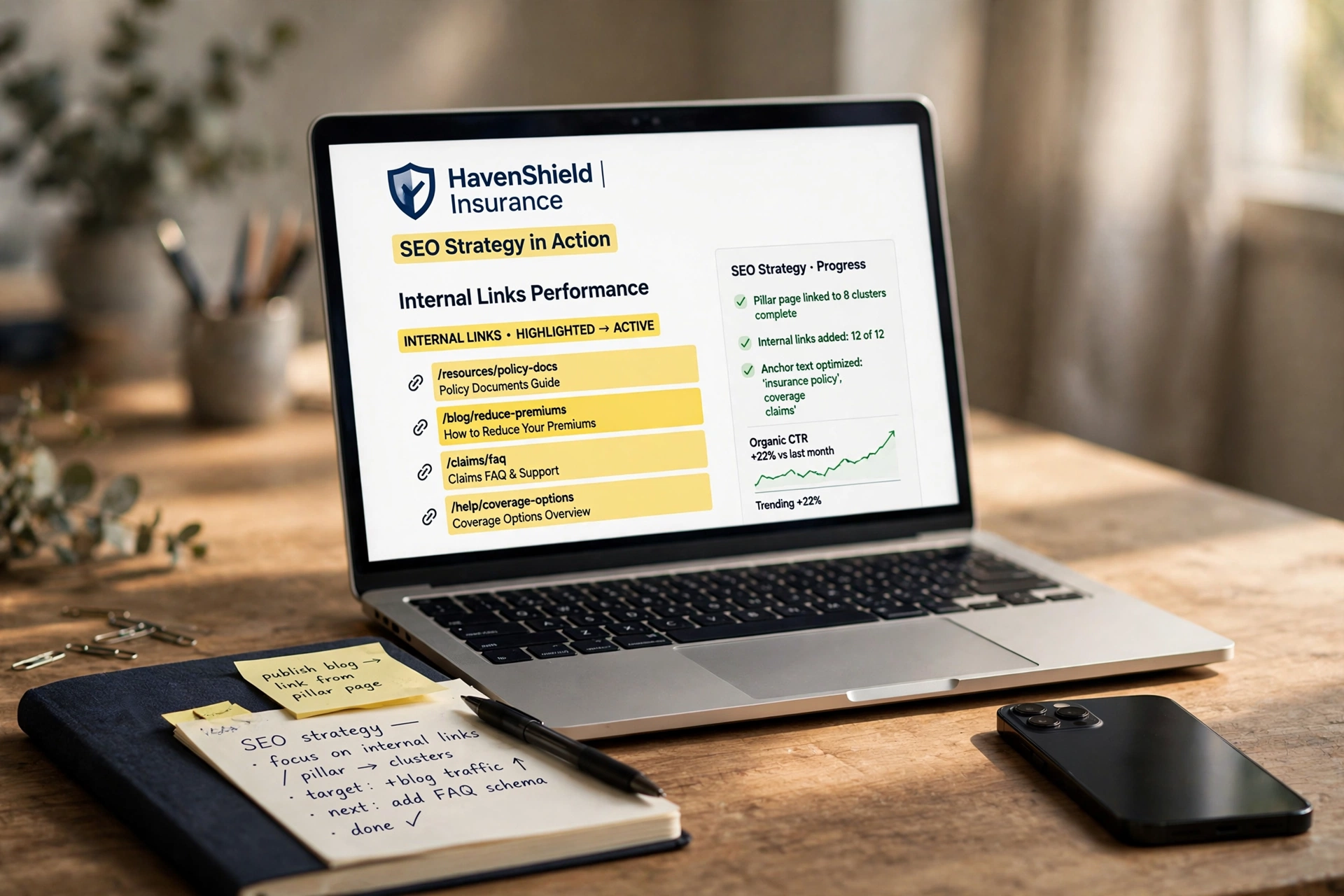
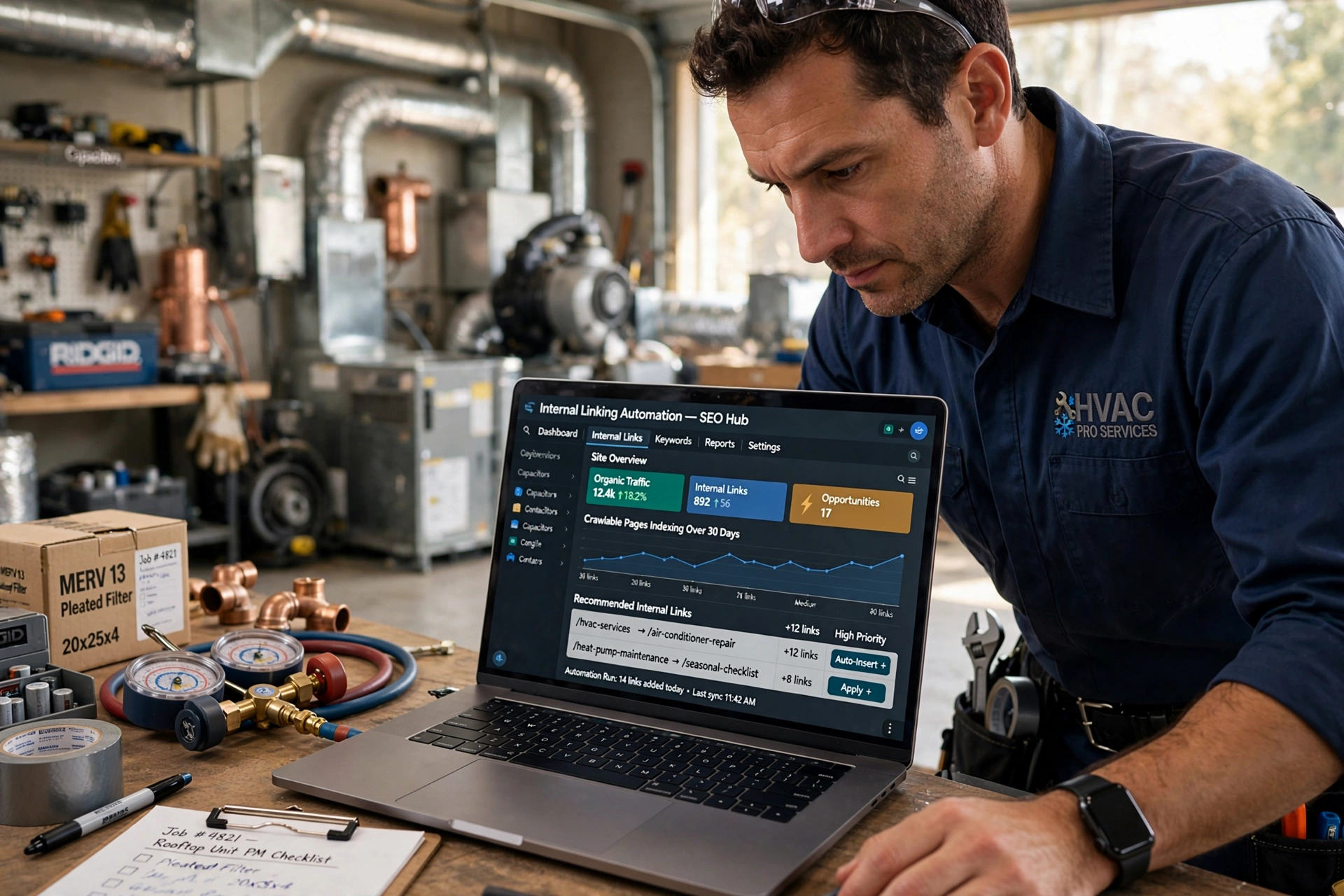
The cost of customer acquisition for solar installers, wind farm developers, and EV infrastructure providers has reached a breaking point. Between rising CPCs on Google Ads and the shift toward AI-driven discovery, traditional content marketing is too slow to keep pace with the 2026 energy transition. An autonomous seo platform for clean energy providers is a specialized AI-driven system that programmatically deploys thousands of search-optimized pages, targeting hyper-specific buyer intents (like "industrial heat pump ROI for textile factories") while using autonomous AI agents to qualify these leads in real-time. Instead of writing five blogs a month, these platforms build an entire organic authority hub that captures traffic and books appointments without manual intervention.
In my experience working with clean energy firms, the biggest bottleneck isn't a lack of technical expertise, but a lack of "topical coverage." Most providers have a homepage and a few service pages, leaving 95% of the long-tail search market to competitors. By implementing a PSEO architecture guide for SaaS & Enterprise B2B growth, we've seen firms transition from spending $15,000 a month on ads to owning their market through algorithmic dominance.
Why Clean Energy Providers are Adopting Autonomous SEO?
The clean energy sector is currently facing a "trust and education" gap. Whether it's a commercial warehouse looking for solar arrays or a municipality planning EV charging grids, the decision-making process involves high-ticket investments and complex regulatory hurdles. Traditional SEO cannot scale the amount of educational content required to answer every specific regional and technical query a buyer has before they reach out.
According to a recent report by McKinsey, the transition to net-zero requires an unprecedented scale of investment and infrastructure deployment, meaning the volume of search queries related to sustainable energy implementation is growing exponentially. When a procurement officer searches for "best industrial solar panel efficiency for humid climates in Florida," they aren't looking for a generic brochure; they want a technical answer. An autonomous system generates these specific answers at scale, ensuring the provider is the only logical choice in the search results.
Furthermore, the rise of Generative Engine Optimization (GEO) has changed the rules. Users are no longer just clicking blue links; they are asking Perplexity and ChatGPT for recommendations. If your brand isn't cited in the training data or the live web-crawl of these LLMs, you don't exist. This is why forward-thinking energy companies are moving toward GEO vs traditional SEO strategies to ensure their brand is the cited authority in AI-generated answers.

Key Benefits for Clean Energy Providers
Deploying an autonomous system isn't just about "more traffic"; it's about the precision of that traffic. In the B2B clean energy space, one high-intent lead for a 5MW solar project is worth more than 10,000 visits from homeowners looking for free tips.
Hyper-Local Market Domination
Clean energy is fundamentally local. Regulations in Texas differ from those in California, and the incentives in Germany differ from those in Spain. An autonomous platform allows providers to create "Satellite Pages" for every city and zip code they serve. Instead of one page for "Solar Installation New York," the system generates 500 pages targeting "Solar Incentives for Small Businesses in Buffalo," "Best Solar Panel Installers in Albany," and so on. This creates a massive net that captures users at the exact moment of high intent.
Automated Lead Qualification
The biggest waste in the energy sector is the "curiosity lead"—someone who wants a free quote but has no budget or authority. By integrating an AI appointment setter for B2B, the autonomous platform doesn't just attract the visit; it qualifies the lead. The AI agent tracks the user's interaction with the technical content and asks, "Are you managing a facility over 50,000 sq ft?" before offering a calendar link. This ensures your sales team only speaks with qualified decision-makers.
Compounding Topical Authority
Google's E-E-A-T guidelines reward sites that demonstrate deep expertise. By programmatically covering every possible permutation of a topic—from photovoltaic cell chemistry to federal tax credits—the platform signals to search engines that the site is the definitive source of truth. This is how you move from page 5 to the Featured Snippet in weeks rather than years.
💡
Key Takeaway
The primary advantage of an autonomous SEO platform is the shift from "content creation" to "market coverage," allowing a brand to occupy every relevant search query in their niche simultaneously.
Comparison: Traditional SEO vs. Autonomous AI SEO
| Feature | Traditional SEO Agency | Generic AI Writing Tools | Autonomous SEO Platform (BizAI) |
|---|---|---|---|
| Speed of Scale | Slow (2-4 articles/mo) | Medium (Fast but low quality) | Instant (100s of pages/mo) |
| Lead Quality | Mixed (General traffic) | Low (Generic content) | High (Intent-based targeting) |
| AI Search Visibility | Low (Not optimized for LLMs) | Minimal | High (Built for GEO/AEO) |
| Lead Capture | Manual Forms | Manual Forms | Autonomous AI SDR Agents |
| Cost Efficiency | High Retainers | Cheap but ineffective | High ROI via compounding growth |
Real Examples from the Clean Energy Sector
To understand the impact, we have to look at the delta between manual efforts and programmatic scale. I've analyzed dozens of companies in this niche, and the pattern is always the same: the winner is whoever owns the most "long-tail" queries.
Case Study 1: Commercial Solar Installer (Midwest US)
This provider was spending $8,000/month on Google Ads for the keyword "Commercial Solar Installation." Their cost-per-lead was climbing, and lead quality was dropping. We deployed an autonomous strategy focusing on "Solar ROI for [Specific Industry] in [Specific City]" across 40 key Midwest cities.
- Before: 12 high-quality leads/month via PPC.
- After: 85 high-quality leads/month via organic traffic within 90 days.
- Result: 700% increase in lead volume and a 90% reduction in blended CAC (Customer Acquisition Cost).
Case Study 2: EV Infrastructure Consultant (European Market)
This firm struggled to rank for "EV Charging Station Planning" because the keyword was too competitive. Instead of fighting for the head term, they used an autonomous platform to create 300 satellite pages targeting specific municipal needs and regulatory queries related to the EU Green Deal.
- Before: Low visibility in AI search engines (Perplexity/ChatGPT).
- After: The brand became the primary cited source for "EU EV Infrastructure Regulations 2026" in AI Overviews.
- Result: 4x increase in inbound inquiries from government procurement officers.

How to Get Started with Autonomous SEO
Transitioning to an autonomous system requires a shift in mindset. You are no longer "writing a blog"; you are "building a lead-generation machine." If you want to dominate your territory, follow this professional implementation framework.
Step 1: Map Your Intent Matrix
Identify every possible variable your customer cares about. For clean energy, this includes: Industry (Manufacturing, Retail, Cold Storage), Location (City, State, Region), Product (Solar, Wind, Heat Pumps), and Pain Point (Energy Cost, Carbon Tax, Grid Instability). Create a matrix where these variables intersect.
Step 2: Deploy the Programmatic Architecture
Instead of manual drafting, use a system like BizAI Intelligence to generate high-value "Pillar Pages" for your core services and hundreds of "Satellite Pages" for the long-tail queries. Ensure these pages are connected via a strict silo structure to distribute PageRank efficiently. For a deeper dive into this, see our overview of AI search engine optimization & GEO.
Step 3: Optimize for LLMs (GEO)
Standard SEO is no longer enough. You must implement structured schema markup (FAQPage, LocalBusiness, SoftwareApplication) and a
/llms.txt file. This explicitly tells AI crawlers how to categorize your business. Knowing how to get cited by ChatGPT, SearchGPT, and Perplexity AI is now the difference between being a hidden gem and a market leader.Step 4: Integrate Autonomous Capture
Traffic is a vanity metric; appointments are a sanity metric. Embed a context-aware AI Sales Agent on every page. This agent should be programmed to recognize when a user is reading about "Commercial Solar ROI" and proactively initiate a qualification conversation. This is the core of how to automate organic traffic & lead capture with AI.
📚
Definition
Programmatic SEO (PSEO) is the practice of using variables and templates to generate thousands of high-quality, unique landing pages that target long-tail search queries at a scale impossible for human writers.
Common Objections & Answers
Many executives in the clean energy space are hesitant to move toward autonomous systems because they fear a loss of "brand control." Here is the reality based on the data.
Objection 1: "Won't AI-generated content be seen as spam by Google?"
Most people assume that "AI content" is inherently low-quality. However, the data shows that Google doesn't penalize AI content; it penalizes unhelpful content. An autonomous platform like BizAI Intelligence uses deep research and structured data to ensure every page provides actual value. According to Gartner, the future of search is not about the source of the content, but the accuracy and utility of the answer provided.
Objection 2: "Our industry is too technical for AI to handle accurately."
This is a common misconception. When you use a professional autonomous platform, you don't just "prompt" an AI; you provide it with a verified knowledge base (your technical specs, case studies, and regulatory documents). The AI then synthesizes this a-priori data into optimized pages. In practice, this is more accurate than a junior copywriter who doesn't understand the difference between a monocrystalline and polycrystalline panel.
Objection 3: "We already have an SEO agency; why do we need a platform?"
Traditional agencies operate on a "hours-billed" model. They are incentivized to produce a few pieces of content and spend time on "reports." An autonomous platform is an asset, not a service. It works 24/7 to cover the entire search landscape. While an agency might get you one keyword to page one, an autonomous platform gets you 1,000 keywords to page one. The ROI difference is staggering when you look at AI SDR vs human SDR ROI calculators.
Frequently Asked Questions
How does an autonomous seo platform for clean energy providers differ from a standard agency?
A standard agency focuses on manual content creation and traditional keyword research, which is a linear growth model. An autonomous platform employs a programmatic approach, using data variables to create hundreds of high-converting pages simultaneously. While an agency might take six months to build a content cluster, an autonomous system can deploy a full-scale topical authority hub in 30 days. Furthermore, these platforms integrate AI sales agents that qualify leads instantly, whereas agencies typically stop at "increasing traffic," leaving the lead qualification to your manual sales team.
Can this system help us rank for local government contracts and RFPs?
Yes, and this is where the system excels. Government procurement officers often search for specific technical capabilities and regional compliance. By creating dedicated pages for every municipality and specific regulatory requirement (e.g., "California Title 24 Compliance for Commercial Solar"), you position your brand as the most compliant and knowledgeable option. When these officers use AI tools to shortlist vendors, your brand's presence across hundreds of specific, high-authority pages makes you a primary candidate for citation in the AI's recommendation.
How long does it take to see a return on investment (ROI)?
While traditional SEO can take 6-12 months to show movement, autonomous systems provide a faster "velocity of visibility." Because we deploy hundreds of pages targeting low-competition, long-tail keywords, we often see a surge in organic traffic within the first 30 to 60 days. The ROI is realized through the reduction in paid ad spend and the increase in qualified appointments. For many of our clients, the system pays for itself the moment the first high-ticket commercial contract is closed via an AI-qualified lead.
Does an autonomous platform handle the technical side of SEO like schema and indexing?
Absolutely. Technical SEO is the foundation of any autonomous system. We don't just generate text; we implement advanced Schema.org graph markup (including FAQPage and LocalBusiness nodes) and utilize the Google Indexing API to ensure new pages are crawled almost instantly. This is essential for the "Silo' strategy, ensuring that authority flows from your main pillar pages down to your satellite pages, which is a core component of our programmatic seo platform guide.
Will using an autonomous platform replace my current sales team?
No, it replaces the grunt work of your sales team. Most SDRs spend 80% of their time chasing dead-end leads or qualifying people who aren't a fit. The autonomous platform's AI agents handle the top-of-funnel qualification and the initial booking. This means your human sales experts spend 100% of their time on closing calls with high-intent prospects. It shifts your team from "hunting" for leads to "harvesting" pre-qualified opportunities, significantly increasing the closing rate per rep.
Final Thoughts on Autonomous SEO Platform for Clean Energy Providers
The energy landscape is moving too fast for manual marketing. If you are still relying on a handful of blog posts and a prayer that Google likes your site, you are conceding the market to those who use algorithmic brute force. An autonomous seo platform for clean energy providers allows you to stop renting traffic from Google Ads and start owning the digital real estate of your industry.
By combining programmatic scale with GEO optimization and autonomous lead capture, you build a compounding asset that fills your pipeline while you sleep. The transition to sustainable energy is the biggest economic shift of our century; make sure your brand is the one the world finds first. If you're ready to scale your organic acquisition, explore the power of BizAI Intelligence and turn your domain into a lead-generation engine.
AI Search Accelerator: 1-on-1 Strategy Session
Claim one of the 10 monthly slots. Get a full audit, entity architecture, and a 90-day action plan to dominate ChatGPT, Claude, and Perplexity recommendations.