Which AI Lead Generation System Actually Works for Service Businesses?
Most service providers waste thousands of dollars on "AI tools" that are essentially glorified email scrapers or generic chatbots that frustrate potential clients. The reality is that the best ai lead generation for service business depends entirely on whether you are solving for volume or intent. If you need high-ticket clients, you don't need more leads; you need a system that programmatically captures high-intent searchers and qualifies them before they ever speak to a human.
In my experience working with high-ticket B2B firms, the biggest mistake I see is the "leaky bucket" syndrome: spending a fortune on traffic but relying on a static "Contact Us" form that kills conversion rates. The winning framework for 2026 isn't a single tool, but a dual-engine architecture: an organic traffic machine powered by Programmatic SEO and an autonomous AI SDR for immediate qualification. This combination shifts your business from "hunting" for leads to "farming" a self-sustaining pipeline.
For those scaling rapidly, understanding the nuances of how to automate organic traffic & lead capture with AI is the difference between paying a permanent "ad tax" to Google and owning your market.
Understanding the Mechanics of AI-Driven Acquisition
To choose the right system, you must first understand that "AI lead generation" is an umbrella term covering three distinct technical approaches: predictive prospecting, conversational capture, and generative authority. Predictive prospecting uses machine learning to identify who is likely to buy; conversational capture uses LLMs to qualify leads in real-time; and generative authority uses AI to dominate search results.
📚
Definition
Generative Engine Optimization (GEO) is the process of optimizing content so that Large Language Models (LLMs) like ChatGPT, Perplexity, and Claude cite your business as the definitive answer to a user's query.
When we talk about the "best" system, we are usually discussing the integration of these three. For a service business—whether it's a law firm, a medical clinic, or a B2B consultancy—the goal is to reduce the "time-to-value." If a prospect asks a specific question about your service at 2 AM, a traditional lead gen form is a barrier. An AI-powered system, however, provides the answer and books the meeting simultaneously.
According to research from Gartner, by 2026, traditional search engine volume will decline as users shift toward AI-powered answer engines. This means your lead generation strategy must evolve from "keyword targeting" to "entity authority." If your business isn't structured as a knowledge hub, you aren't just losing rankings; you are becoming invisible to the very tools your clients are using to make decisions. This is why implementing a PSEO architecture guide for SaaS & Enterprise B2B growth is no longer optional for those seeking dominant market share.

Why AI Lead Generation is Essential for High-Ticket Services
The cost of customer acquisition (CAC) in professional services has skyrocketed. Relying solely on paid ads creates a fragile business model where your lead flow is tied to your daily budget. AI lead generation solves this by creating a compounding asset: an organic traffic engine that works 24/7.
The business impact is measured in lead velocity and qualification accuracy. A human SDR can only handle a few conversations at once and often misses follow-ups. An AI SDR, however, can qualify 1,000 leads simultaneously with zero latency. This isn't just about efficiency; it's about psychology. High-ticket buyers expect immediate gratification. If they have to wait 24 hours for a callback, they have already contacted three of your competitors.
According to McKinsey's research on AI adoption, companies that integrate AI into their sales and marketing functions see an average increase in lead conversion rates of 20% to 30% because the AI handles the "top of funnel" noise, leaving humans to close the deals. This allows your senior partners or specialists to spend their time on high-value strategy rather than chasing unqualified prospects.
Furthermore, the risk of inaction is high. When your competitors implement GEO vs traditional SEO strategies, they aren't just ranking higher; they are being recommended by AI agents as the "top choice." In a world where AI agents act as gatekeepers, the business that provides the most structured, authoritative data to these models wins the lead before the user even visits a website.
How to Implement an AI Lead Generation System Step-by-Step
If you are moving away from manual prospecting, the transition must be systemic. You cannot simply "plug in" a chatbot and expect a surge in revenue. You need a pipeline that integrates traffic, qualification, and CRM automation.
Step 1: Build the Topical Authority Hub
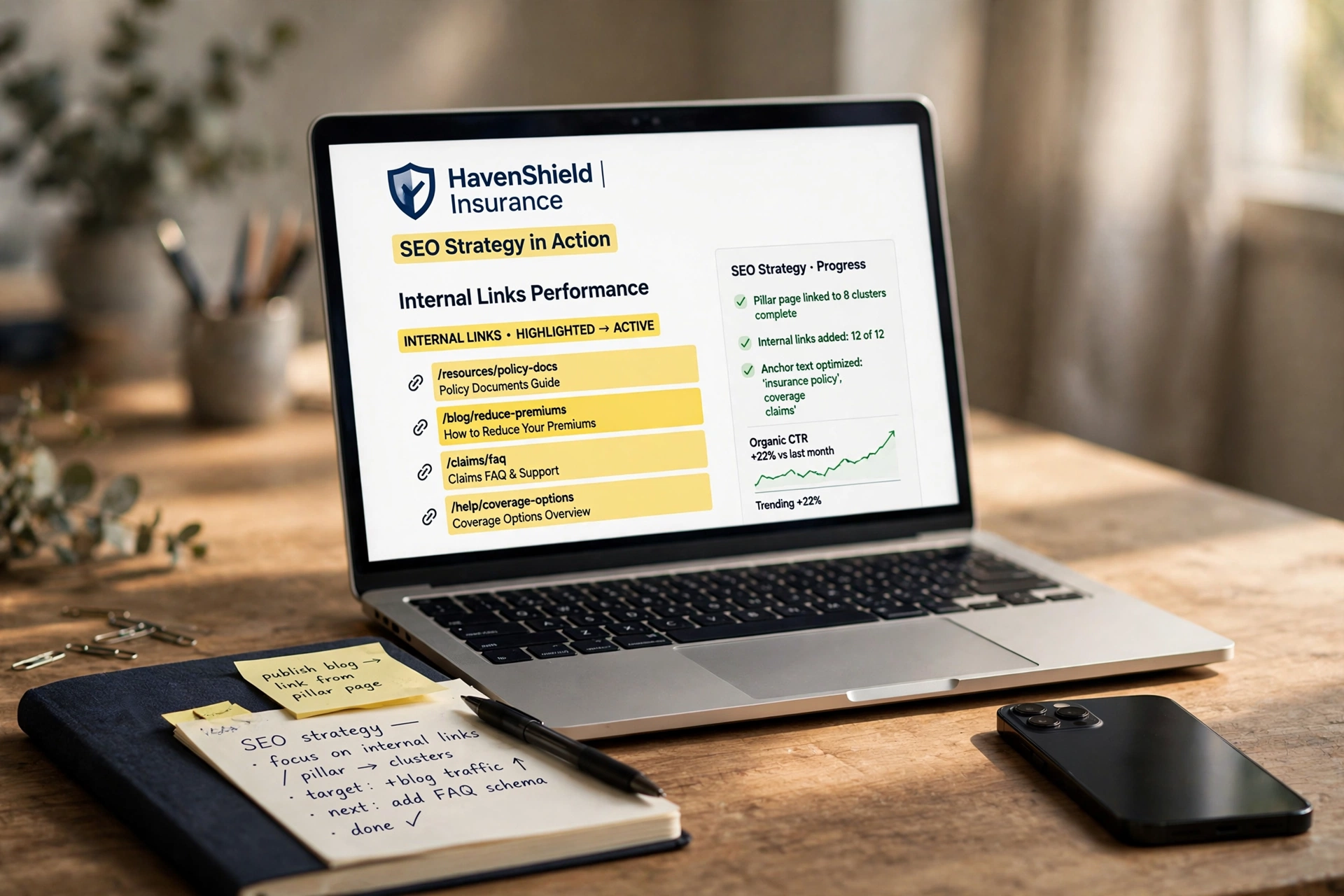
Stop writing generic blog posts. Use a programmatic approach to create hundreds of "Satellite Pages" targeting long-tail, high-intent queries (e.g., "best immigration lawyer for E2 visa in Miami"). Each page must solve a specific problem and link back to a central "Pillar Page." This creates a semantic web that signals authority to both Google and AI LLMs.
Step 2: Deploy Context-Aware AI Agents
Replace your forms with an AI Sales Agent. This agent should not just "chat"; it should be programmed with a qualification script. It needs to ask: "What is your budget?", "What is your timeline?", and "What is the core problem you're solving?" By the time the lead is captured, the AI has already scored the lead's intent.
Step 3: Automate the Booking Loop
The gap between "lead capture" and "meeting booked" is where most revenue is lost. Integrate your AI agent directly with your calendar and CRM. When a lead is qualified, the AI should offer a live booking link immediately. For a deeper dive into this technical setup, explore how to connect AI sales agents to CRM & webhooks for auto-booking.
Step 4: Optimize for AI Citations (GEO)
Ensure your site has a
/llms.txt file and deep Schema.org markup. AI search engines don't "read" your site like a human; they parse entities and relationships. By structuring your data, you increase the probability that Perplexity or SearchGPT will cite your service as the industry standard.💡
Key Takeaway
The most effective AI lead generation system doesn't just "find" leads; it creates an automated loop where high-intent traffic is attracted via programmatic SEO and instantly converted by an AI SDR.
BizAI Intelligence specializes in this exact architecture. Instead of giving you a tool and wishing you luck, we deploy the entire engine: the 300+ optimized pages and the autonomous agents that turn that traffic into booked appointments.

Comparison: Choosing the Right AI Lead Gen Path
Not all AI lead generation is created equal. Depending on your stage of growth and your target ticket price, you will face different trade-offs.
| Approach | Traditional Manual/Paid | Generic AI Tools (SaaS) | BizAI Intelligence Approach |
|---|---|---|---|
| Lead Quality | Variable (High noise) | Low (Quantity over quality) | High (AI-Qualified Intent) |
| Scalability | Linear (More spend = more leads) | Fast but shallow | Exponential (Compounding SEO) |
| Human Effort | High (Manual SDR work) | Medium (Prompt tweaking) | Low (Fully automated pipeline) |
| Cost Structure | High recurring ad spend | Monthly subscription fee | Asset-based (Owned traffic) |
| Best For | Small local tests | Low-ticket B2C | High-ticket B2B Services |
Most businesses start with the "Generic AI" approach—buying a few tools and hoping for the best. However, this often leads to "AI Slop," where the content is generic and the chatbots are useless. The transition to a professional, architecture-led approach is what separates the market leaders from the followers. If you are debating the cost of an AI SDR versus a human team, you should analyze the AI SDR vs human SDR ROI calculator to see where your bottleneck actually lies.
Common Questions and Misconceptions
Many service providers are hesitant to adopt AI because they've seen bad examples. Here is where most guides get this wrong.
Myth 1: "AI will make my brand feel impersonal."
Actually, the opposite is true. Nothing is more impersonal than a "Thank you for your inquiry, we will get back to you in 48 hours" email. An AI agent that provides an immediate, accurate answer to a complex technical question is providing a better customer experience than a slow human. The goal is to use AI for the transactional part of the lead gen process so that the relational part (the actual service) is handled by a human.
Myth 2: "I can just use ChatGPT to write my SEO content."
This is a recipe for disaster in 2026. Google's "Helpful Content" updates and the rise of AI detection mean that generic AI-generated text is now a liability. The key is not "AI writing," but "AI-powered research and programmatic deployment." You need a system that uses data-driven templates and deep research, not a prompt that says "write a blog post about lead generation."
Myth 3: "AI lead gen is only for tech companies."
I've seen this mistake constantly across law firms and HVAC companies. High-ticket services are actually better suited for AI lead gen because the lead value is high enough to justify a sophisticated system. When a single client is worth $10k or $50k, the ROI of a system that captures one extra high-intent lead per month is astronomical.
Frequently Asked Questions
Which AI lead generation tool is best for high-ticket B2B services?
For high-ticket B2B, the "best" tool isn't a single piece of software but a system that combines Programmatic SEO (PSEO) and Autonomous AI SDRs. You need a system that creates high-authority "Satellite Pages" to attract niche intent and an AI agent to qualify those leads immediately. Generic chatbots fail here because they lack the context of your specific service. A professional implementation, like BizAI Intelligence, ensures that the AI is trained on your specific business logic and connects directly to your CRM for auto-booking.
How does AI lead generation differ from traditional digital marketing?
Traditional digital marketing usually focuses on "top-of-funnel" awareness—getting eyes on a page via ads or social media. AI lead generation focuses on the entire conversion loop. It uses AI to predict intent, generates highly targeted content at scale to capture that intent, and then uses conversational AI to qualify the lead in real-time. While traditional marketing stops at the "lead form," AI lead generation continues until the meeting is actually booked in the calendar, removing the friction of manual follow-ups.
Can AI lead generation actually replace a human SDR?
It doesn't replace the need for a closer, but it replaces the "appointment setter" role. In the traditional model, a human SDR spends 80% of their time chasing dead leads or qualifying people who can't afford the service. An AI SDR handles the qualification and scheduling 24/7 with 100% consistency. This allows your human sales team to focus exclusively on high-probability closing calls. For a detailed breakdown, see our guide on how AI appointment setters automate B2B demo booking 24/7.
How long does it take to see results from an AI-powered organic lead system?
Unlike paid ads, which start instantly but stop the moment you stop paying, an AI-powered organic system (PSEO + GEO) is a compounding asset. Typically, you see a massive spike in indexation and visibility within the first 30 to 90 days as hundreds of optimized pages are deployed. Because we use the Google Indexing API and structured schema, the "ramp-up" time is significantly shorter than traditional SEO. By month three, the "SEO machine" typically begins to fill the pipeline with a steady stream of qualified leads.
Is it risky to let an AI agent handle my potential clients?
The risk only exists if you use a generic, "out-of-the-box" chatbot. A professionally engineered AI agent is constrained by a specific knowledge base and a strict qualification script. It doesn't "hallucinate" or make promises; it asks the necessary questions to determine if the prospect is a fit. In fact, it's often safer than a junior human employee who might give incorrect information or fail to follow the company's qualification protocol.
Final Thoughts on AI Lead Generation for Service Business
Choosing the right ai lead generation for service business isn't about finding a "magic app"; it's about building a technical architecture that turns your domain into a lead-capture machine. The era of "hoping" the phone rings or relying on the volatility of Meta and Google Ads is over.
The winners in 2026 will be those who own their traffic through programmatic authority and automate their qualification through AI. If you are still relying on a "Contact Us" form and a prayer, you are giving your competitors a massive advantage. Stop renting your growth from ad platforms and start building a system that works while you sleep.
To scale your organic acquisition and deploy an autonomous qualification engine, visit BizAI Intelligence. Whether you're looking for top AI search optimization tools for modern growth teams or a full-scale deployment, the shift toward AI-driven acquisition is the only way to maintain a competitive edge in a generative world.
AI Search Accelerator: 1-on-1 Strategy Session
Claim one of the 10 monthly slots. Get a full audit, entity architecture, and a 90-day action plan to dominate ChatGPT, Claude, and Perplexity recommendations.