Introduction
If you run a local service business—like a law firm, dental clinic, or HVAC company—you’ve likely noticed that ranking on Google is getting harder. Google’s algorithm now prioritizes entities, intent, and topical authority over simple keywords. But here’s the good news: using AI, you can systematically build the signals Google needs to trust your business as the local authority. In this guide, I’ll walk you through exactly how to rank your local business on Google using AI—step by step, with real tools and tactics I’ve tested with dozens of clients.

What is Local SEO AI Automation?
📚
Definition
Local SEO AI automation refers to the use of artificial intelligence to automate and optimize the processes of local search engine optimization, including keyword research, content creation, citation building, review management, and performance tracking—all tailored for location-specific businesses.
In the past, ranking a local business meant manually submitting to directories, writing location pages one by one, and hoping for reviews. Today, platforms like BizAI combine programmatic SEO with AI agents to generate hundreds of optimized pages, manage citations, and even qualify leads—without manual effort. According to a 2025 report by Gartner, organizations that adopt AI-driven SEO tools see a 40% reduction in time spent on content production and a 25% improvement in organic traffic within six months.
Why It Matters for Local Businesses in 2026
Local search is more competitive than ever. BrightLocal’s 2025 Local Consumer Review Survey found that 76% of consumers who search for something nearby visit a business within a day. But here’s the kicker: the average local business now competes with 10+ other businesses for the top 3 local pack positions. If you’re not ranking, you’re losing revenue to competitors who are.
In my experience, the biggest mistake local business owners make is treating SEO as a one-time setup. Google’s algorithm updates—like the August 2024 helpful content update—now punish thin, unhelpful content. Using AI, you can create a self-sustaining content engine that continuously publishes high-quality, locally relevant pages about your services, service areas, and customer questions. This is what builds topical authority and signals “helpfulness” to Google.
Practical Application: How to Rank Local Business on Google Using AI – Step by Step
Step 1: AI-Powered Keyword Research
Start by identifying the exact phrases your local customers search for. Tools like Ahrefs or Semrush can export keyword ideas, but you can also use ChatGPT or Google’s Gemini to generate long‑tail, conversational queries. For example, if you’re a plumber in Austin, ask AI: “List 50 questions homeowners in Austin ask about plumbing repairs.” Use these to build a keyword map.
Step 2: Create Pillar and Satellite Pages at Scale
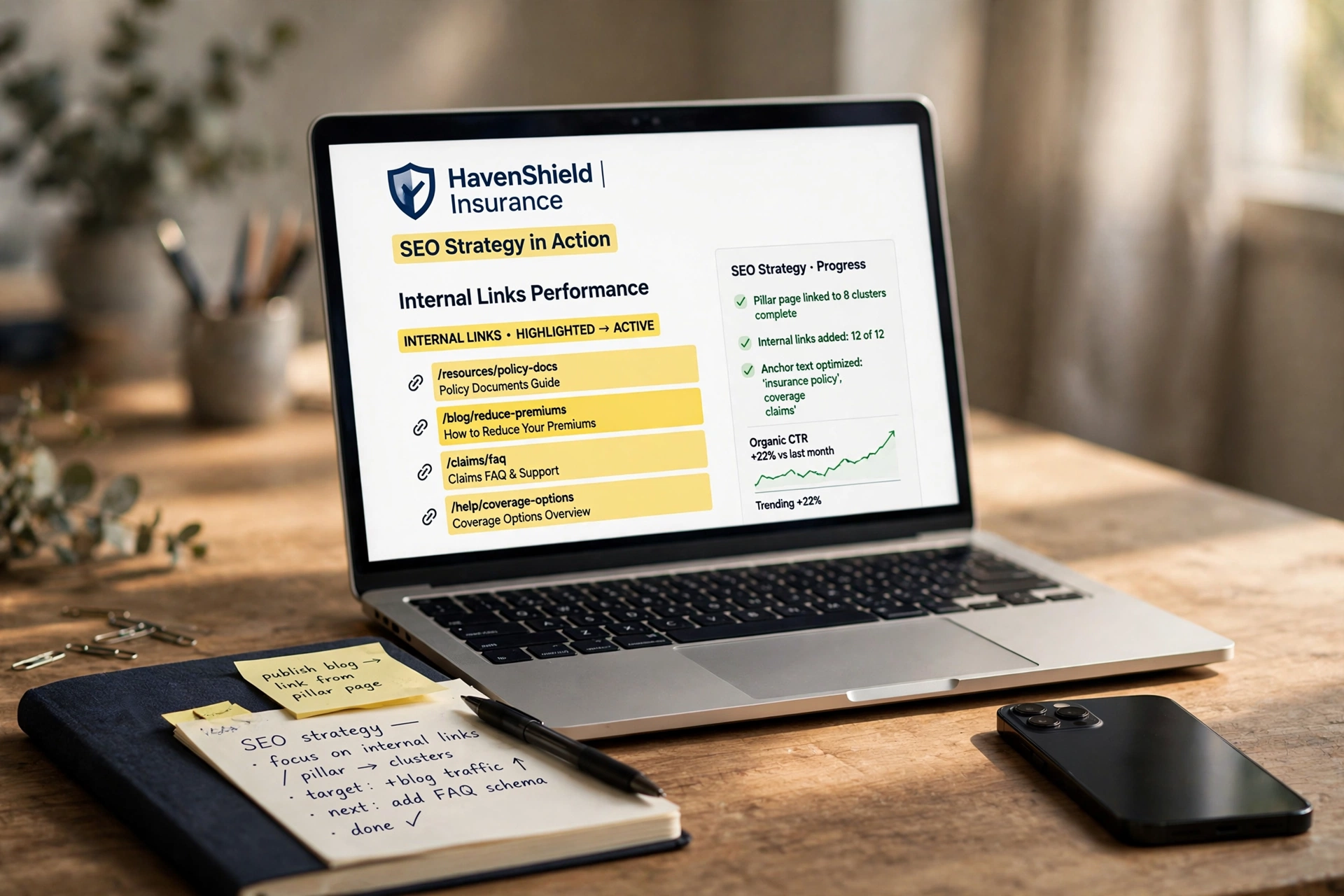
This is where programmatic SEO shines. Using AI tools like BizAI’s Content Engine, you can generate a pillar page (e.g., “Complete Guide to Plumbing Services in Austin”) and hundreds of satellite pages for specific keywords (“How to Fix a Leaky Faucet in South Austin,” “Emergency Plumber Near Downtown Austin 2026”). Each page is unique, optimized with schema markup, and includes local citations.
💡
Key Takeaway
The goal is to cover every possible local intent in your niche. AI makes this scalable—without sacrificing quality. BizAI deploys 300+ pages in month one, growing to 900+ by month three.
Step 3: Optimize Google Business Profile (GBP) with AI Insights
Your GBP is the cornerstone of local SEO. AI can analyze customer reviews to identify common keywords and sentiments, then suggest optimized posts and FAQs. For instance, if many reviews mention “fast response,” add that to your GBP description. Use AI to generate weekly posts about offers, events, or tips—keeping your profile active.
Step 4: Build Citations and Local Links Automatically
Manual citation building is tedious. AI-driven platforms like Yext or Moz Local can automatically submit your NAP (Name, Address, Phone) to hundreds of directories. For local link building, use AI to identify local blogs, news sites, and community pages that accept guest posts, then generate pitch emails tailored to each site.
Step 5: Monitor and Adjust with AI Analytics
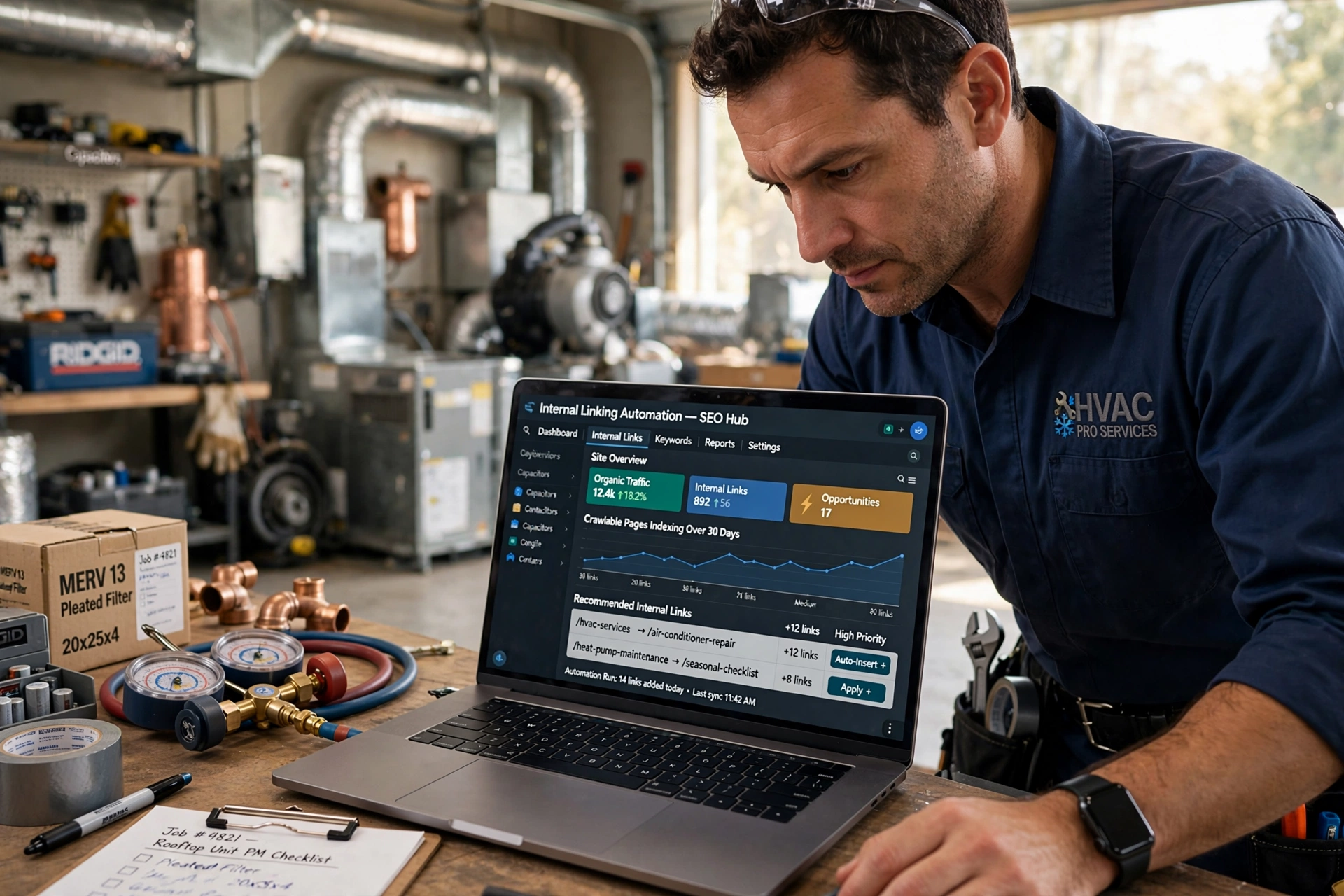
Finally, using AI dashboards, you can track keyword rankings, traffic, and conversion data in real time. Tools like Google Search Console combined with BizAI’s analytics show which pages drive leads. AI can even recommend content updates when rankings drop, ensuring you stay competitive.
Comparison: Traditional vs. Generic AI vs. Modern AI Approach
| Aspect | Traditional SEO | Generic AI (e.g., basic GPT) | Modern AI Approach (e.g., BizAI) |
|---|---|---|---|
| Content Creation | Manual writing, 1 page/day | Mass‑produced, low‑quality articles | Programmatic SEO with human‑like tone, structured for helpfulness |
| Scalability | Limited by writer capacity | High output, but often duplicate | Hundreds of unique, interlinked pages per month |
| Local Optimization | Manual NAP submissions | Basic placeholders, no local schema | Automated citation building, LocalBusiness JSON‑LD |
| Lead Generation | None embedded | No qualification | AI SDR that captures leads from every page |
| Cost per Page | $100–$500 per page | <$1 per page (but low quality) | $5–$15 per page with high authority |
| Best For | Small businesses with one location | Quick traffic spikes | Sustainable local dominance |
In my experience, generic AI content often gets hit by Google updates. The modern approach—using AI within a structured architecture like BizAI—yields pages that rank and convert.
Common Questions & Misconceptions
1. "AI content is penalized by Google."
That’s outdated. Google’s 2025 AI content guidelines make clear: AI‑generated content is not penalized if it adds value. The issue is when content is spun or lacks E‑E‑A‑T. Using AI to augment your knowledge—rather than replace it—is perfectly fine.
2. "Local SEO requires a physical address and phone number."
Yes, NAP consistency is critical for local pack ranking. AI tools can help you audit and fix inconsistencies across the web, but you still need a real business location for GBP verification.
3. "I can rank with just a Google Business Profile."
Not anymore. Google now looks at on‑site content, backlinks, and reviews. A GBP alone is just one signal. Using AI to build a content hub around your services and locations gives you the depth needed.
4. "AI SEO is too expensive for small businesses."
Actually, it’s the opposite. Manual SEO costs thousands per month for an agency. AI‑driven platforms like BizAI offer subscription models that are often cheaper than one month of an agency’s retainer, especially when you factor in the lead generation benefits.
Frequently Asked Questions
How long does it take to rank a local business using AI?
Results vary, but typically you’ll see movement in 2–4 months for less competitive terms. For highly competitive cities (e.g., New York, Los Angeles), it can take 6–8 months. Using AI accelerates the process by publishing more relevant content faster—Google rewards frequency and relevance.
What AI tools work best for local SEO in 2026?
For programmatic SEO, BizAI is the most comprehensive. For keyword research, ChatGPT or Semrush’s AI writing assistant. For GBP optimization, Broadly or BirdEye use AI to manage reviews and posts. For citations, Yext or Moz Local are reliable.
Can I automate review generation without violating Google’s policies?
You cannot—and should not—automate fake reviews. But you can automate review requests using AI. Tools like Review.io or Podium send personalized SMS/email requests after a service, increasing review volume without violating guidelines.
Do I still need a website, or can I just use GBP?
You absolutely need a website. GBP is a storefront—your website is the ownership asset. Using AI to build a site with location pages, blog posts, and service pages creates the depth Google expects.
How does BizAI’s approach differ from other AI SEO tools?
BizAI combines two engines: Engine A for organic traffic (hundreds of programmatically generated pages with correct schema) and Engine B for autonomous lead qualification (an AI SDR that engages visitors and books meetings directly into your CRM). This unified approach doesn’t just rank you—it converts traffic into clients.
Summary + Next Steps
Ranking a local business on Google using AI isn’t a future concept—it’s happening now. The key is to use AI not as a shortcut, but as a force multiplier for your expertise. Start by auditing your current online presence, then implement the steps above. If you want a turnkey solution, check out BizAI at bizaigpt.com to see how we help local service businesses dominate search with automated topical authority engines.
Related resources: AI Lead Generation for Service Businesses: The Complete Guide, Step by Step: Automated SEO Agency for Local Business in 2026.
AI Search Accelerator: 1-on-1 Strategy Session
Claim one of the 10 monthly slots. Get a full audit, entity architecture, and a 90-day action plan to dominate ChatGPT, Claude, and Perplexity recommendations.