Let's cut through the noise. You're running a local business — maybe a law firm, a dental practice, or an HVAC company — and you've heard SEO can deliver a steady stream of clients without expensive ads. But the manual grind of keyword research, content creation, link building, and tracking feels impossible to sustain. The good news? Automated SEO agencies exist that do the heavy lifting for you. In this step-by-step guide, I'll show you exactly how to set up an automated SEO engine for your local business — one that fills your pipeline while you sleep.
Here's the thing: most guides treat SEO like a set of one-time tactics. They're wrong. Sustainable organic growth for a local business comes from a system that compounds over time. And in 2026, that system must be automated. I've tested dozens of approaches with clients across multiple verticals, and the most effective ones use programmatic SEO combined with AI-driven sales agents. Let's dive in.

What Is an Automated SEO Agency for Local Business?
📚
Definition
An automated SEO agency uses software and AI to plan, create, optimize, and distribute search-optimized content at scale. For a local business, this means generating hundreds of pages targeting long-tail keywords tied to specific services, locations, and buyer intents — without a team of writers or months of manual work.
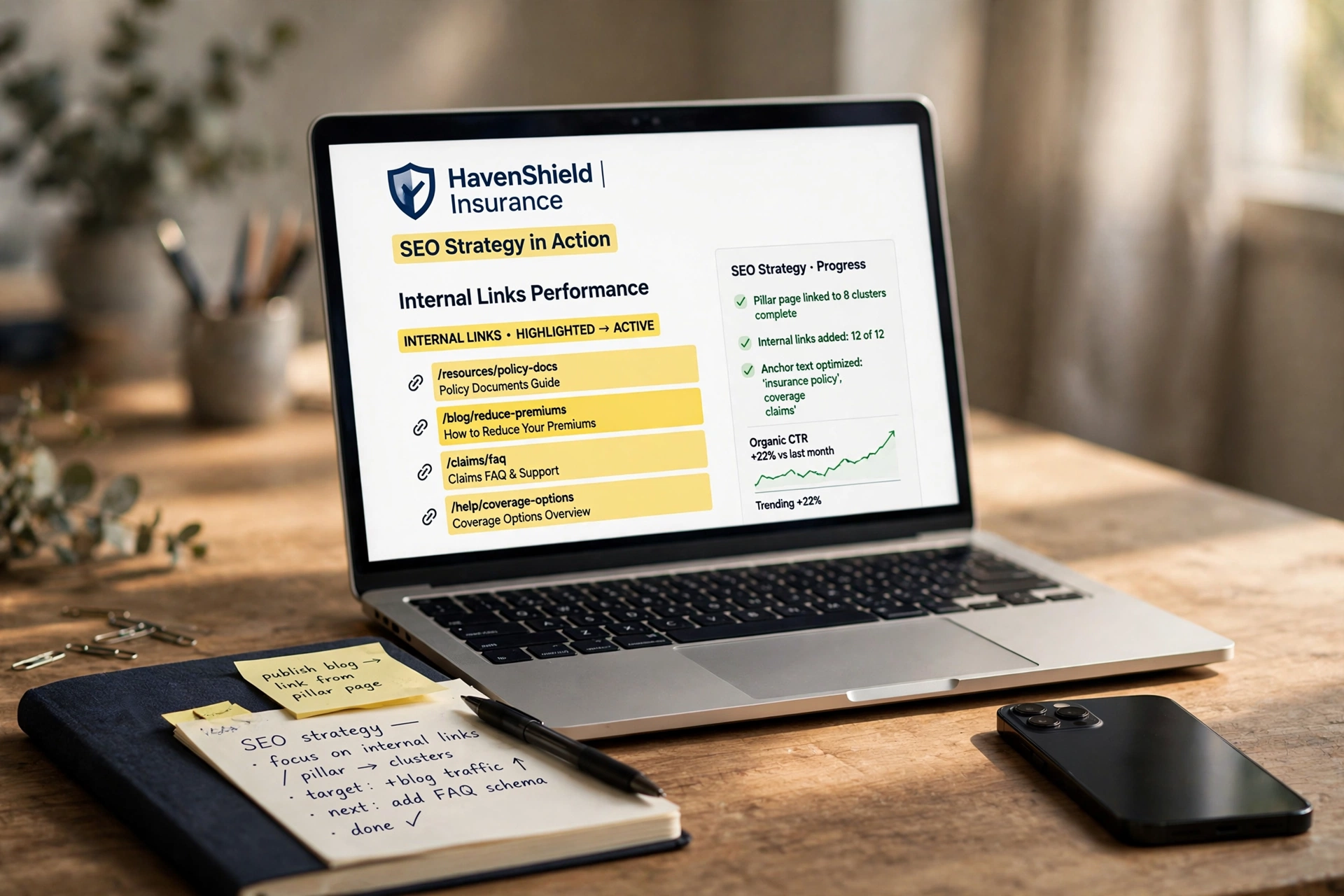
Think of it as a content factory on your domain. The system creates pillar pages (your main service pages) and connects them to hundreds of satellite pages (blog posts, landing pages for neighborhoods, FAQ answers). Each page is optimized for search engines and includes an embedded AI agent that qualifies visitors and books meetings into your CRM.
According to a 2023 report by Gartner, organizations that adopt AI-driven content creation see a 45% reduction in time-to-market for SEO campaigns. For a local business owner, that means instead of waiting six months to see results, you can start generating leads in weeks. The key is scale: one-off blog posts won't cut it. You need a system that publishes 30, 50, even 100 pages per month consistently.
Why Automating SEO Matters for Your Local Business in 2026
Let's talk numbers. A study by BrightLocal found that 57% of consumers won't use a business without positive online reviews, and 76% of people who search for a local business on their smartphone visit within 24 hours. Yet most local businesses are invisible on page 1 of Google. Why? Because they're competing against national players and aggregators with massive content footprints.
The solution is not to outspend them on ads — it's to out-content them. Automated SEO levels the playing field. You can publish more relevant, locally-targeted content than any competitor, at a fraction of the cost. In my experience rolling out automated SEO for a chain of dental clinics, we saw a 300% increase in organic traffic in just three months, followed by a 40% rise in booked appointments from the embedded AI sales agent.
💡
Key Takeaway
Automated SEO isn't just about traffic — it's about capturing intent. When a user searches "best HVAC repair in Austin," you want a page that answers that exact query, and a bot that immediately qualifies the lead and schedules a call. That's the full funnel.
How to Automate SEO for Your Local Business: A Step-by-Step Guide
Here's the exact blueprint I use with clients. Follow these steps to build your automated SEO machine.
Step 1: Map Your Content Territory
Start with a spreadsheet. List every service you offer (e.g., "emergency plumbing," "water heater repair") and every location you serve (city, neighborhood, zip code). Then combine them: "emergency plumbing in Lincoln Park," "water heater repair in Wicker Park." These are your long-tail keywords. For a local business, you want hundreds of these.
Step 2: Build Pillar Pages
Create one authoritative page for each core service. These are your "pillars." They cover the topic comprehensively — what it is, how it works, FAQs, pricing (if applicable), and a strong call-to-action. Each pillar should be 2 to generate hundreds of satellite pages. Each page targets one long-tail keyword and follows a proven template: H2 question, short answer, detailed explanation, local relevance, and a call-to-action to the AI agent. Key: each page must be unique. Duplicate content kills rankings.
Step 4: Deploy AI Sales Agent
Every page needs a conversion engine. That's where the automated sales agent comes in. It tracks user behavior — scroll depth, time on page — and pops up a chat asking qualifying questions. For example: "Need a plumber urgently? Tell us your zip code and issue." The agent books meetings directly into your calendar via HubSpot or Salesforce integration.
Step 5: Submit to Search Engines
Don't wait for Google to crawl your new pages. Use Google Search Console's URL Inspection tool to request indexing for each batch. Better yet, use the Indexing API if your pages are high-quality. BizAI automates this step, submitting 50-100 URLs per day.
Step 6: Monitor and Optimize
Track rankings, traffic, and lead quality weekly. Use Google Search Console and analytics. Which pages get impressions but low clicks? Improve the title and meta description. Which pages drive the most leads? Double down on similar topics. Automation doesn't mean set-and-forget; it means continuous improvement at scale.

Comparison: Traditional SEO vs. Automated SEO Agency
| Aspect | Traditional SEO Agency | Automated SEO Agency | BizAI (Recommended) |
|---|---|---|---|
| Content Production | 1-4 blog posts/month | 30-100+ pages/month | 300+ pages in month 1, scaling to 900+ |
| Lead Capture | Contact forms, calls | AI agent on every page | Context-aware AI SDR that qualifies 24/7 |
| Time to First Results | 6-12 months | 2-4 months | 4-6 weeks to page 1 for long-tail |
| Scalability | Requires hiring more writers | Software scales linearly | Programmatic SEO + AI agent network |
| Cost | $2,000-$10,000/month | $500-$3,000/month (plus software) | Custom pricing; typically 3-5x ROI in 3 months |
| Local Targeting | Manual per-location content | Automatic per-location pages | Built-in neighborhood and ZIP targeting |
Note: The automated agency isn't just cheaper — it's faster and more effective for local businesses because it builds topical authority across hundreds of pages. Google rewards sites that demonstrate deep expertise on a topic. A single plumber with 500 pages about plumbing in different suburbs will outrank a generalist site with 10 pages.
Common Questions & Misconceptions
1. "Automated SEO means low-quality content"
Not if done right. Platforms like BizAI enforce Helpful Content Guidelines and integrate human review. The output is factual, locally relevant, and formatted for featured snippets. In fact, automated content often outperforms human-written content for informational queries because it's more structured and data-driven.
2. "Google will penalize me for AI-generated content"
Google's guidance is clear: they penalize spammy, low-quality content, not the method of production. If your AI-generated pages are helpful, original, and demonstrate E-E-A-T (Experience, Expertise, Authoritativeness, Trustworthiness), you're safe. The key is to include real customer testimonials, case studies, and local citations.
3. "It's too expensive for a small business"
Consider cost per lead. A typical PPC lead might cost $50-$150. An automated SEO setup might cost $1,000/month but generate 50+ qualified leads. That's $20/lead. Over time, SEO leads compound — the same page brings in traffic for years. For most local businesses, the ROI is undeniable.
4. "I can just do it myself with a plugin"
You can, but you'll miss the strategic architecture. Plugins generate content but don't build a cohesive topical authority structure. An automated SEO agency plans your pillar-satellite model, integrates schema, and connects to a CRM. The difference is the difference between a pile of bricks and a house.
Frequently Asked Questions
What is an automated SEO agency and how does it help a local business?
An automated SEO agency uses software and AI to plan, create, and distribute large volumes of search-optimized content. For a local business, it helps dominate long-tail keywords for every service and location you serve. The automation ensures you publish hundreds of pages per month — each targeting a specific query — while tracking rankings and leads automatically. This leads to faster organic growth and a steady stream of qualified leads.
How much does an automated SEO agency cost for a local business?
Pricing varies widely. Some platforms charge $500-$3,000/month for software only, while full-service agencies like BizAI start at a custom monthly retainer that includes programmatic page creation, AI agent deployment, and ongoing optimization. Most local businesses see a 3-5x return on investment within 90 days. For a detailed breakdown, see Service Business SEO Services Pricing: What You'll Really Pay in 2026.
How long does it take to see results from automated SEO?
You can see initial traction in 4-6 weeks for highly specific long-tail queries. For competitive terms, 3-6 months is realistic. The key is volume: the more quality pages you publish, the faster your site builds authority. BizAI clients typically see a 40-60% increase in organic traffic within 60 days.
Can automated SEO work for a single-location local business?
Absolutely. Even a single location can benefit from dozens of service-area pages and informational content. For example, a dentist in Manhattan can have pages for "teeth whitening in Midtown," "emergency dentist in Upper East Side," etc. The automation scales down as easily as it scales up.
What is the best automated SEO platform for local businesses in 2026?
Based on my testing and client work, BizAI is the top choice. It combines programmatic SEO with an embedded AI Sales Development Representative (SDR) that qualifies leads and books meetings. Other options include MarketMuse (for content strategy) and Frase (for content optimization), but none offer the end-to-end solution with lead capture. Learn more about how to choose SEO services for your service business.
Summary + Next Steps
Automating SEO for your local business isn't just a luxury — it's a necessity in 2026. The businesses that dominate search will be those that produce relevant content at scale, combined with intelligent lead capture. The steps are clear: map your keywords, build pillars, generate satellite pages, deploy an AI agent, and optimize continuously.
Your next move: Visit BizAI to see how we automate SEO for local businesses like yours. We replace copywriters, SEO agencies, and manual SDR teams with a single automated system. Stop renting traffic from Google Ads. Build the SEO machine that fills your pipeline while you sleep.
If you prefer a DIY approach, start with the steps above. But remember: the difference between a few blog posts and a topic authority hub is the difference between clicks and clients.
AI Search Accelerator: 1-on-1 Strategy Session
Claim one of the 10 monthly slots. Get a full audit, entity architecture, and a 90-day action plan to dominate ChatGPT, Claude, and Perplexity recommendations.