📖This article is part of the complete guide to Ultimate Guide to Conversation Intelligence for Sales.
Most sales managers are flying blind, relying on a rep's subjective 'feeling' about a call to determine if a deal is healthy. In my experience building scalable growth systems at BizAI Intelligence, the gap between a 'good' call and a 'closed' deal is almost always hidden in the data that goes unrecorded. Relying on manual CRM notes is a recipe for churn; you aren't capturing the buyer's actual objections, only the rep's interpretation of them.
For a comprehensive overview, explore our Ultimate Guide to Conversation Intelligence for Sales.
What Are Conversation Intelligence Tools?
📚
Definition
Conversation intelligence tools are AI-powered platforms that record, transcribe, and analyze verbal and written interactions between sales representatives and prospects to extract actionable insights and behavioral patterns.
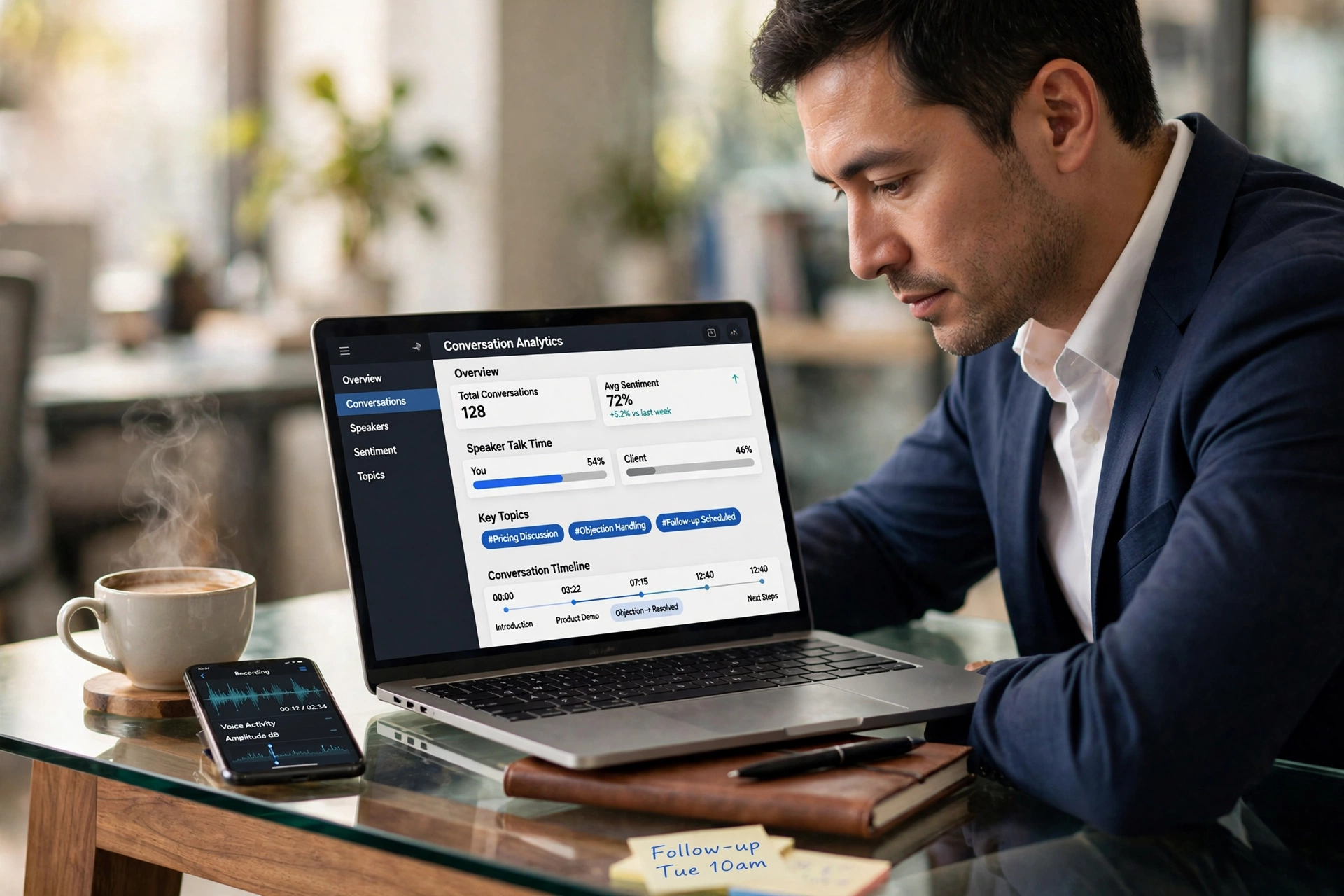
Conversation intelligence tools act as a continuous feedback loop for your entire revenue organization. Unlike simple call recording, these platforms leverage large language models (LLMs) and natural language processing (NLP) to identify "intent signals"—specific phrases or tones that indicate a prospect is ready to buy or is about to churn. By converting unstructured audio into structured data, these tools allow leadership to see exactly how their best performers handle objections compared to underperformers.
When we analyzed the architecture of top-performing B2B pipelines, we found that the most successful teams don't just record calls; they use these tools to build a "golden transcript." This is a composite of the most effective talk tracks, timing, and question sequences that consistently lead to closed-won deals. This shift from qualitative guessing to quantitative analysis is what separates modern growth engines from legacy sales teams. By implementing AI conversation intelligence, companies can effectively eliminate the "black box" of sales calls and treat every interaction as a data point for optimization.
Why Do These Tools Matter for High-Ticket B2B Growth?
In a 2026 market where buyer skepticism is at an all-time high, the ability to mirror a prospect's language is the only way to maintain trust. Conversation intelligence tools provide the exact linguistic data needed to perform this mirroring at scale. According to research by Gartner, organizations that integrate AI-driven conversation analysis into their sales coaching see a 20% increase in quota attainment within the first year. This happens because the tools identify "coachable moments" in real-time, rather than waiting for a weekly 1-on-1 meeting where the rep has already forgotten the nuances of the call.
One of the most significant benefits is the drastic reduction in sales rep ramp time. Traditionally, a new hire learns by shadowing a senior rep for weeks. With these tools, a new hire can analyze the top 10% of successful calls across the entire company, essentially downloading the "DNA" of a top closer. This programmatic approach to training ensures that your baseline quality remains high, regardless of individual talent fluctuations. When you combine this with sales conversation intelligence strategies, you move from a culture of intuition to a culture of evidence.
Furthermore, these tools solve the "CRM gap." Most reps hate data entry, meaning 40% to 60% of critical buyer information never makes it into the CRM. AI-powered tools automatically sync key outcomes—such as budget confirmation, competitor mentions, and next steps—directly into the lead record. This ensures that the marketing and product teams have an accurate view of the market's pain points, enabling a tighter loop between what customers ask for and what the company builds.
How to Implement Conversation Intelligence Tools Successfully?
Implementing these tools is not as simple as flipping a switch; it requires a cultural shift in how your team views monitoring. The goal must be "coaching," not "surveillance." If reps feel they are being policed, they will subconsciously alter their behavior, destroying the authenticity of the call. The first step is to define your "Winning Patterns." Identify the specific keywords and phrases that correlate with a successful close. For example, do your best reps ask about the prospect's 2026 budget in the first ten minutes, or the last ten?
Once the winning patterns are defined, you should deploy a tiered analysis system. First, use automated alerts to flag "at-risk" deals—calls where the prospect mentions a competitor three or more times without the rep providing a rebuttal. Second, use the tools for "Deal Strategy' sessions, where a manager and rep review a specific transcript to plan the next move. Finally, integrate these insights into your broader acquisition strategy. If you are using leading conversation intelligence platforms, you can feed these insights back into your AI search engine optimization guide to create content that answers the exact questions your prospects are asking on calls.
To maximize ROI, you should follow this implementation framework:
- Technical Integration: Connect the tool to your VOIP provider and CRM. Ensure that the mapping between the call recording and the lead record is seamless.
- Baseline Mapping: Record 50-100 calls across different rep levels to establish what "average" looks like.
- Keyword Triggering: Set up automated tags for competitors, pricing objections, and feature requests.
- Feedback Loop: Create a weekly "Wins Library" where the best segments of calls are shared with the whole team.
Comparing the Approaches to Conversation Intelligence
Not all tools are created equal. Some are basic recording devices, while others are full-scale intelligence engines. At BizAI Intelligence, we advocate for an integrated approach where the intelligence gathered from calls informs the automated capture systems on your website.
| Feature | Traditional Recording | Generic AI Transcription | Modern Intelligence Engines |
|---|---|---|---|
| Data Output | Raw Audio/Video | Text Transcript | Behavioral Insights & Scoring |
| Analysis | Manual Listening | Keyword Search | Intent Detection & Sentiment |
| Workflow | Passive Storage | Manual Review | Proactive Alerts & CRM Sync |
| ROI Driver | Compliance/Audit | Time Saving | Revenue Growth & Coaching |
As we can see, the modern approach doesn't just transcribe words; it translates behavior. Using a generic tool might tell you that the word "price" was mentioned five times. A modern intelligence engine will tell you that the prospect's tone shifted to "hesitant" when price was mentioned, and the rep failed to use the established value-proposition framework to counter it.
Common Mistakes When Choosing Conversation Intelligence Tools
One of the most frequent errors I see is the "Tool-First Mentality." Companies buy a high-end license and expect the software to automatically make their reps better. Software is a multiplier, not a creator. If your sales process is broken, a conversation intelligence tool will simply provide you with a high-definition recording of a broken process. You must have a documented sales methodology before you can measure how well it is being executed.
Another critical mistake is ignoring the "Post-Call Friction." If the tool requires the rep to manually tag the call or spend 20 minutes summarizing it, they will stop using it. The power of these tools lies in their autonomy. The best systems use LLMs to summarize the call and push the data into the CRM without the rep lifting a finger. This is why we emphasize automated inbound lead qualification in our own frameworks—the more you remove manual data entry, the more the rep can focus on the human element of selling.
Lastly, avoid the "Micromanagement Trap." Managers who use these tools to nitpick a rep's grammar or minor phrasing errors quickly kill morale. Instead, focus on the outcomes. Did the rep uncover the primary pain point? Did they secure a firm next step? Use the data to celebrate wins and identify gaps in knowledge, rather than policing the conversation. If you are looking for the best conversation intelligence software for 2026, look for tools that prioritize coaching metrics over surveillance metrics.
Deep Dive: The Synergy Between Intelligence Tools and AI SDRs
There is a massive opportunity in linking the data from conversation intelligence tools with the deployment of AI SDRs. When you know exactly how your top closers handle a lead, you can program that same logic into an autonomous agent. This creates a seamless transition from the first touchpoint to the final contract. For instance, if your intelligence tools show that prospects in the HVAC industry respond best to "efficiency-first" messaging, you can update your AI appointment setter to lead with those specific data points.
According to a study by the Sales Enablement Collective, companies that align their AI-driven top-of-funnel tools with their bottom-of-funnel conversation data see a 15% higher conversion rate from demo to close. This is because the buyer experiences a consistent narrative. The AI agent on the website uses the same language, handles the same objections, and sets the same expectations as the human rep who eventually takes over the call. This is the essence of a truly automated organic traffic and lead capture system, which is exactly what we've engineered at BizAI Intelligence.
By leveraging how to automate organic traffic with AI, you aren't just getting more leads; you're getting leads that have been pre-qualified using the same intelligence gathered from your most successful human conversations. This creates a compounding effect: your human calls make your AI smarter, and your AI makes your human calls more efficient.
Frequently Asked Questions
How do conversation intelligence tools impact sales rep privacy?
Privacy is handled through a combination of legal consent and transparent internal policies. Most professional tools include an automated notification at the start of the call informing the prospect that the session is being recorded for quality and training purposes. Internally, the focus should remain on coaching and professional development. When the objective is clearly framed as helping the rep earn more commission by improving their skill set, the perceived "privacy intrusion" typically transforms into a valued resource for career growth.
Can these tools work with non-English languages in 2026?
Yes, modern conversation intelligence platforms leverage advanced LLMs that support multi-language transcription and sentiment analysis. Many of the leading tools now offer real-time translation and cross-lingual analysis, allowing global sales teams to maintain a standardized quality of service across different regions. The accuracy of these tools has improved significantly, with current models capable of handling regional dialects and industry-specific jargon with over 95% accuracy in most major languages.
What is the typical ROI timeline for implementing these tools?
Most B2B organizations see a tangible ROI within 90 to 120 days. The immediate gains come from the reduction in manual CRM entry and the ability to identify "leaking' pipelines'"—deals that were thought to be healthy but show negative sentiment in the transcripts. Long-term ROI is realized through shortened ramp times for new hires and an overall increase in the average deal size as reps become more adept at value-based selling and objection handling.
How do these tools integrate with existing CRM systems?
Integration is typically handled via native API connectors to platforms like HubSpot, Salesforce, and Pipedrive. The tool monitors the call via the VOIP integration, transcribes the audio, and then uses a webhook or direct API push to update the specific deal or contact record. Advanced configurations allow the AI to not only push a summary but to actually update specific custom fields—such as "Competitor Mentioned"—based on the content of the conversation.
Do I need a dedicated manager to oversee the intelligence data?
While the tools automate the data collection, you still need a "Revenue Architect" or Sales Enablement Manager to interpret the trends. The software provides the what (e.g., "reps are failing at the pricing stage"), but the human manager provides the how (e.g., "here is the new training module to fix the pricing conversation"). For smaller teams, the founder or head of sales can handle this, but as you scale, a dedicated focus on sales enablement becomes essential for maximizing the tool's utility.
Conclusion
Investing in conversation intelligence tools is no longer a luxury for the Fortune 500; it is a survival requirement for any B2B service business that wants to scale in 2026. The ability to turn every single sales call into a repeatable, optimizable asset allows you to stop guessing and start growing. When you remove the ambiguity from your sales process, you can scale your team with confidence, knowing that your "winning patterns" are being replicated across every single interaction.
If you are ready to move beyond simple recording and start building a high-converting inbound engine, remember that the data from your calls should inform every other part of your business, from your content strategy to your AI agents. For a deeper dive into the strategic application of these technologies, return to our Ultimate Guide to Conversation Intelligence for Sales.
Stop letting your best insights disappear the moment the call ends. Transition your business into a data-driven revenue machine with the help of BizAI Intelligence.
AI Search Accelerator: 1-on-1 Strategy Session
Claim one of the 10 monthly slots. Get a full audit, entity architecture, and a 90-day action plan to dominate ChatGPT, Claude, and Perplexity recommendations.