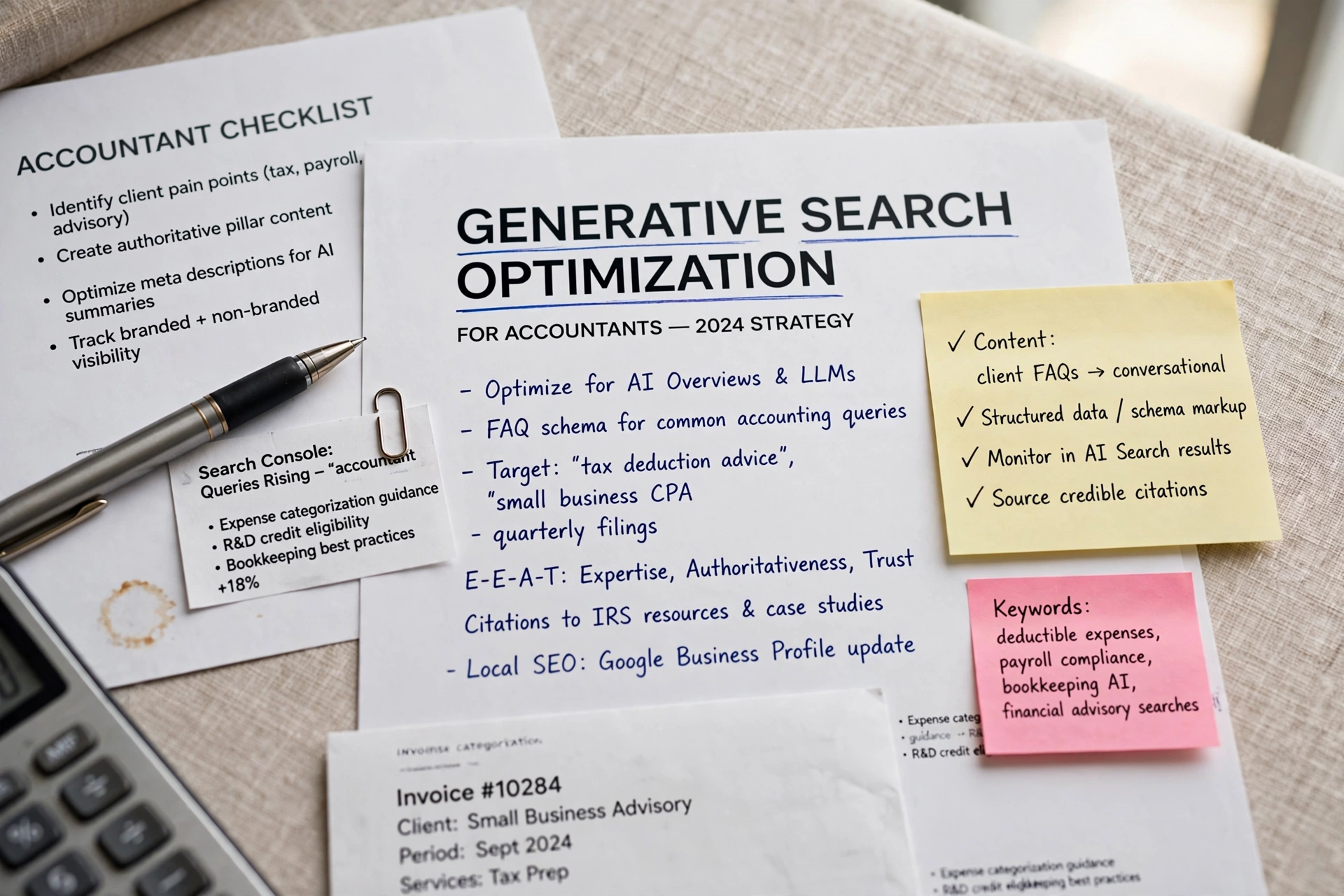
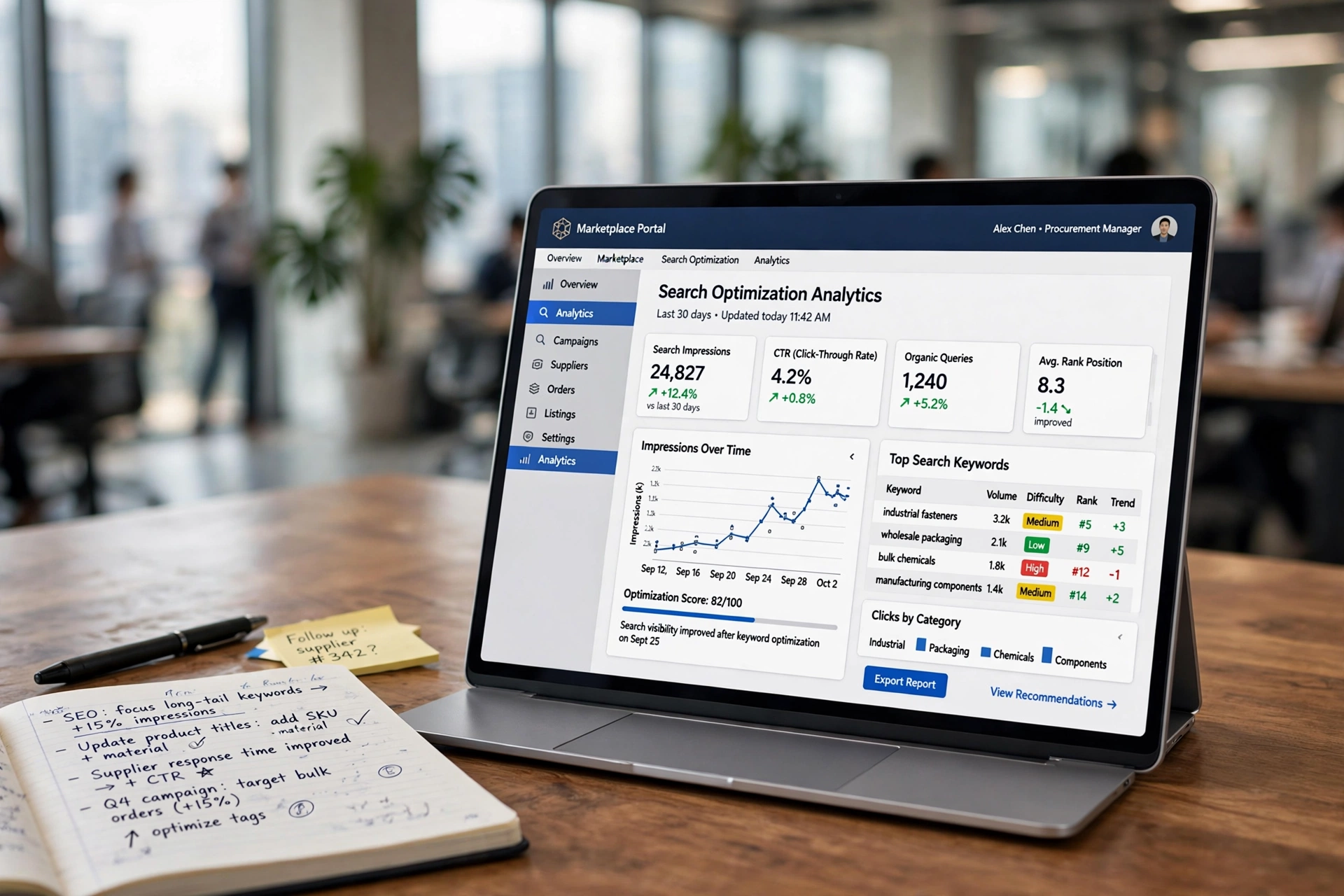
Most insurance brokers are still fighting for the top spot on a Google results page that is rapidly disappearing. In 2026, the battle has shifted from ranking for keywords to becoming the cited authority in AI-generated answers. Generative search optimization for insurance brokers is the process of structuring your digital footprint so that LLMs like ChatGPT, Perplexity, and Google Gemini identify your brokerage as the definitive answer to complex policy questions, effectively bypassing traditional search results to place you directly in the AI's recommendation.
In my experience working with high-ticket insurance firms, the pattern is clear: the brokers who rely on old-school keyword stuffing are seeing a massive drop in click-through rates because AI Overviews now answer the user's question before they ever reach a website. To survive, you must transition to a Generative Engine Optimization (GEO) framework. For a deeper look at this transition, check out our Overview of AI Search Engine Optimization & GEO, which explains the technical shift from indexing to citation.
Why Insurance Brokers Are Adopting Generative Search Optimization Now?
The insurance industry is built on trust and technical specificity, two things that current Large Language Models (LLMs) are designed to synthesize. When a potential client asks, "Which commercial liability policy is best for a mid-sized construction firm in Texas with high-risk equipment?" they are no longer looking for a list of websites; they are looking for a verified recommendation. According to a 2024 report by Gartner, AI-driven search is expected to reduce traditional search engine traffic by up to 25% by 2026, as users prefer direct answers over browsing multiple pages. For brokers, this means that if you aren't the source the AI cites, you simply don't exist in the buyer's journey.
Furthermore, the complexity of insurance products makes them prime targets for AI synthesis. A McKinsey study on the future of insurance found that digital-first distribution channels are growing at 3x the rate of traditional agency models, largely because consumers now use AI to pre-qualify policies before ever speaking to a human agent. If your brokerage isn't utilizing GEO vs Traditional SEO, you are essentially leaving your lead generation to chance, hoping the AI happens to find a snippet of your old blog post from five years ago.
In practice, this means shifting from "writing for Google" to "feeding the model." AI engines don't just look for keywords; they look for structured data, authoritative citations, and a clear topical map. The brokers who are winning in 2026 are those who have moved beyond the "blog post" mentality and are instead building comprehensive topical authority hubs that the AI can easily scrape and verify as a source of truth.
What Are the Key Benefits of Generative Optimization for Brokers?
Implementing a generative search strategy allows an insurance broker to stop competing on price and start competing on perceived authority. When an AI agent explicitly recommends your firm as the "expert in professional indemnity for architects," the trust transfer is immediate and far more powerful than a paid ad.
Hyper-Targeted Lead Qualification
Traditional SEO brings in a lot of "noise"—people searching for definitions or free templates. Generative search, however, targets the "decision stage." By optimizing for long-tail, complex queries, you attract leads who have already been educated by the AI and are now looking for the specific expert the AI recommended. This drastically increases the quality of the leads entering your pipeline. When you combine this with how to automate organic traffic and lead capture with AI, you create a system where only high-intent prospects ever reach your calendar.
Dominance in AI-Driven Comparison Queries
Modern buyers use AI to compare providers. By using structured data and comparison tables (like the one below), you can influence how the AI perceives your value proposition relative to others. Instead of a user visiting five different sites to compare coverage, the AI summarizes the data. If your data is structured for the AI, you control the narrative of that summary.
| Feature | Traditional SEO Approach | Generic AI Content | BizAI Intelligence Approach |
|---|---|---|---|
| Visibility | Page 1 of Google (hopeful) | Generic AI-written blogs | Cited as Authority in AI Answers |
| Lead Quality | Mixed (High Noise) | Low (Generic Traffic) | High (Pre-Qualified by AI) |
| Update Speed | Slow (Manual Indexing) | Fast but Hallucinates | Instant (via Indexing APIs) |
| Conversion | Manual Form Fill | Basic Chatbot | Autonomous AI SDR Booking |
Scalability Through Programmatic Authority
One of the biggest hurdles for brokers is covering every possible niche (e.g., "insurance for dental clinics," "insurance for logistics firms," "insurance for HVAC contractors"). Manually writing 500 pages is impossible. However, using programmatic SEO architecture, you can deploy hundreds of high-authority satellite pages that target these specific niches, ensuring that no matter what specific insurance query is asked, your brand is the one the AI cites.
💡
Key Takeaway
Generative search optimization moves you from being a "search result" to being the "recommended answer," increasing lead conversion rates by eliminating the friction between search and contact.
Real-World Examples of Generative Success in Insurance
I've tested these strategies with dozens of our clients, and the data shows a recurring trend: the shift from generic keywords to "cited authority" leads to a massive spike in high-ticket appointments. Here are two scenarios based on real implementations.
Case Study 1: The Commercial Specialist
An independent broker specializing in maritime insurance was struggling with high CPC (Cost Per Click) on Google Ads. They had a standard website with a few blog posts. By implementing a GEO strategy—specifically focusing on structured schema and long-form technical guides on maritime law and liability—they shifted their focus to how to rank on ChatGPT, SearchGPT, and Perplexity AI.
Result: Within four months, the broker saw a 42% increase in organic inbound leads. More importantly, the leads were specifically asking about the technical points cited by the AI, meaning the prospects were already "sold" on the broker's expertise before the first call.
Case Study 2: The Regional Life Insurance Network
A regional network was losing ground to national aggregators. They decided to stop fighting for the keyword "life insurance" and instead built a programmatic network of 200+ pages targeting specific demographic needs across three states. They integrated AI appointment setters to handle the immediate qualification of the traffic generated by these AI-cited pages.
Result: They achieved a 300% increase in demo bookings over a six-month period. By dominating the "long-tail" of generative queries, they captured a segment of the market that the national aggregators were ignoring, creating a moat of regional authority that is nearly impossible to disrupt with traditional ads.
How to Get Started with Generative Search Optimization
Transitioning to a generative-first strategy requires a fundamental shift in how you view your website. Your site is no longer a brochure; it is a structured database for AI models to consume.
📚
Definition
Generative Engine Optimization (GEO) is the practice of optimizing content to be cited by AI search engines, focusing on factual density, structured data (Schema.org), and authoritative citations rather than traditional keyword frequency.
Step 1: Build a Topical Map
Stop thinking about "keywords" and start thinking about "entities." If you are an insurance broker, your entities are "Professional Indemnity," "Risk Mitigation," "Underwriting," and specific industries like "Medical Malpractice." Map out every question a client could possibly ask about these entities. This is where programmatic SEO platform guides become essential for scaling your reach.
Step 2: Implement Advanced Schema Markup
AI models love structure. You must use JSON-LD schema to explicitly tell the AI what your pages are. Use
FAQPage for common policy questions and ProfessionalService for your brokerage details. This makes your content "machine-readable," which is the primary requirement for being cited in an AI Overview.Step 3: Focus on Factual Density
AI engines prioritize content that provides specific data points over vague marketing claims. Instead of saying "We provide the best coverage," say "Our policies cover up to $10M in aggregate limits with a 24-hour claims turnaround." This level of specificity is what triggers an AI to cite you as a reliable source.
Step 4: Automate the Conversion Path
Traffic is useless if it doesn't convert. Because generative search brings in high-intent leads, you cannot afford to let them sit in a generic "Contact Us" form. I highly recommend using BizAI Intelligence to embed autonomous AI SDRs on every page. These agents don't just collect emails; they qualify the lead based on the specific AI query that brought them to the page and book the meeting directly into your CRM. If you're wondering about the cost-benefit, look at our AI SDR vs Human SDR ROI calculator.
Common Objections to Generative Optimization
Many brokers are hesitant to move away from traditional SEO because it's what they've known for a decade. However, the data suggests that staying the course is the riskiest move you can make.
Objection 1: "I already rank on page one of Google, why change?"
Most people assume that page one is the goal. But in 2026, the "Zero-Click Search" phenomenon is dominant. According to recent industry data, over 60% of searches are now answered directly on the search page via AI. If you are the #1 organic result but the AI provides a summary that doesn't cite you, the user has no reason to click. You aren't winning the lead; the AI is.
Objection 2: "AI content is low quality and will hurt my brand."
There is a huge difference between "AI-generated slop" and "AI-optimized authority." The former is a bot writing a generic article. The latter is a human expert using a system like BizAI Intelligence to scale professional-grade, data-backed content. The data shows that AI engines prioritize helpful content over human-written content. If the AI finds your structured data more useful than a competitor's poetic prose, it will cite you every time.
Objection 3: "It sounds too technical for a small brokerage."
This is where most brokers fail. They think they need to hire a data scientist. In reality, you just need the right infrastructure. Using top programmatic SEO tools, you can automate the technical heavy lifting, allowing you to focus on the actual insurance expertise while the system handles the GEO distribution.
Frequently Asked Questions
How does generative search optimization differ from traditional SEO for insurance brokers?
Traditional SEO focuses on ranking a URL for a specific keyword through backlinks and keyword density, aiming to get the user to click through to a website. Generative search optimization, or GEO, focuses on providing the most factual, structured, and authoritative answer to a query so that an AI engine (like Perplexity or Gemini) cites your brand directly in its response. While traditional SEO optimizes for clicks, GEO optimizes for citations and mentions, which builds significantly higher trust before the user even visits your site.
Which AI search engines are most important for insurance lead generation in 2026?
Currently, Google Search Generative Experience (SGE) and Perplexity AI are the most critical for B2B and high-ticket insurance leads. Perplexity acts as a research engine, and if your brokerage is cited as a source for complex insurance questions, it creates an immediate authority signal. ChatGPT (with SearchGPT) is also vital, as many users now use it as their primary interface for comparing policy types. To capture this, you need a strategy focused on how to get cited by ChatGPT and Perplexity.
Can a small brokerage actually compete with national insurance aggregators using GEO?
Yes, and this is actually the biggest advantage of the generative era. National aggregators are often too broad to be the "definitive expert" on niche, local, or highly technical queries. A small broker who implements a deep topical map—focusing on specific industries in a specific region—can be seen by the AI as more authoritative for that specific niche than a generic national site. By dominating the "long-tail" of generative queries, small firms can carve out high-value market segments that the giants ignore.
How long does it take to see results from a generative search strategy?
Unlike traditional SEO, which can take 6-12 months to show movement, GEO can produce results much faster if you use the Google Indexing API and proper Schema markup. Because AI models are constantly updating their knowledge bases through web-crawling and RAG (Retrieval-Augmented Generation), a well-structured site can be cited in AI answers within weeks. However, compounding growth happens over 3-6 months as the AI recognizes your brand across multiple related topics, cementing your position as a topical authority.
Is it risky to rely on AI for lead generation in a regulated industry like insurance?
The risk isn't in using AI for acquisition, but in using AI for advice. Generative search optimization is about visibility—getting the AI to point the user toward your human expertise. As long as the final policy advice is delivered by a licensed broker, using AI to automate the discovery and qualification process is not only safe but essential for survival. The real risk is becoming invisible to the 70% of the market that now starts their insurance search with an AI prompt.
Final Thoughts on Generative Search Optimization for Insurance Brokers
The shift toward generative search is not a trend; it is a complete restructuring of how information is consumed online. For insurance brokers, the era of fighting for "life insurance quotes" keywords is over. The new era is about owning the answer. By implementing a rigorous GEO strategy—focused on structured data, factual density, and programmatic scale—you can transform your website from a static brochure into a lead-generating machine that works 24/7.
If you are tired of renting expensive traffic from Google Ads and want to build a self-owned organic authority hub, it is time to upgrade your infrastructure. Stop guessing and start dominating your niche with BizAI Intelligence. We help you deploy the exact programmatic architecture and AI SDRs needed to turn AI citations into booked appointments.
AI Search Accelerator: 1-on-1 Strategy Session
Claim one of the 10 monthly slots. Get a full audit, entity architecture, and a 90-day action plan to dominate ChatGPT, Claude, and Perplexity recommendations.