If you're running a service business and just starting out with SEO, understanding how to grow organic traffic for beginners is the single most impactful skill you can develop. Organic traffic—visitors who find you through search engines without you paying per click—is the lifeblood of a sustainable online presence. For service businesses like law firms, home services, or B2B consultancies, ranking high on Google means a steady pipeline of high-intent leads. This guide will define what organic traffic growth looks like for a service business, why it matters, and exactly how to start building it from scratch—no agency required, though we'll also cover when to bring in the pros.
📚
Definition
Organic traffic refers to website visitors who arrive via unpaid search engine results. Unlike paid ads, it compounds over time: well-optimized content can generate traffic for years after publication.
What Is Organic Traffic Growth for Service Businesses?
For a service business, organic traffic growth is the process of increasing the number of people who find your website through search engines like Google, Bing, or DuckDuckGo—without paying for clicks. The key difference from e-commerce is that you're not selling a product you can ship; you're selling trust, expertise, and a promise to solve a problem. So the content you create must demonstrate authority and answer the exact questions potential clients are asking.
In my experience working with dozens of local service providers, the most successful ones treat SEO as a long-term asset. A single blog post targeting a specific pain point—like "how to fix a leaking roof in Austin"—can bring in qualified traffic for years. According to a 2025 Gartner study, 70% of B2B buyers begin their research with a generic search, and over 60% will consume 3–5 pieces of vendor content before reaching out. That means if you're not showing up in those searches, you're invisible to the majority of your potential clients.
But organic traffic for beginners isn't just about writing articles. It's about building a topical authority hub: a collection of interconnected pages that cover every aspect of your service, from broad industry topics to hyper-specific local queries. This is where programmatic SEO comes in—but more on that later.

Why Organic Traffic Matters More Than Ever in 2026
Paid advertising costs are rising. In many competitive verticals like personal injury law or HVAC, cost-per-click (CPC) has doubled over the past three years. Meanwhile, organic traffic offers a 5.6x higher ROI on average for B2B companies, according to a HubSpot study. But here's the catch: building organic traffic takes time and consistent effort. That's why many service businesses give up after three months when they don't see instant results.
💡
Key Takeaway
Organic traffic is a compound asset. Every page you publish adds to your digital real estate. The sooner you start, the faster you'll reap the rewards.
For beginners, the temptation is to hire a cheap SEO freelancer who promises quick rankings. That almost always backfires—Google's algorithm updates target low-quality, mass-produced content. Instead, you need a strategy that prioritizes E-E-A-T (Experience, Expertise, Authoritativeness, Trustworthiness)—something Google explicitly uses for YMYL (Your Money or Your Life) topics like legal, medical, and financial services.
Consequences of neglecting organic traffic? You become reliant on expensive ads or low-margin referral sources. Your brand never builds independent authority. And when a competitor invests in SEO, they capture the search share you could have owned.
How to Start Growing Organic Traffic for Beginners: A Step-by-Step Framework
Here's a practical roadmap I've used with clients that works regardless of your technical skill level.
Step 1: Identify Your Service Topics and Keywords
Start by listing every service you offer. For a plumber: emergency repairs, pipe installation, water heater replacement, drain cleaning. Then expand with location modifiers ("Houston plumber") and question-based long-tail keywords ("how much does it cost to unclog a drain?"). Tools like Google Keyword Planner or Ahrefs can help, but even a simple brainstorm works.
Step 2: Create Pillar and Satellite Content
A pillar page is a comprehensive guide to a core service (e.g., "Complete Guide to HVAC Repair"). Satellite pages are shorter articles targeting specific queries linked back to the pillar. This structure signals topic depth to search engines. For example, if you're a dentist, a pillar on "dental implants" could link to satellites on "cost of dental implants in Chicago" and "dental implant recovery timeline."
Step 3: Optimize On-Page Elements
Each page needs a unique title tag, meta description, and header structure (H1, H2, H3). Include the target keyword naturally, but don't stuff. Write for humans first—Google's AI can understand context. Also, ensure your site loads fast (under 3 seconds) and is mobile-friendly, as Google uses mobile-first indexing.
Step 4: Build Internal Links
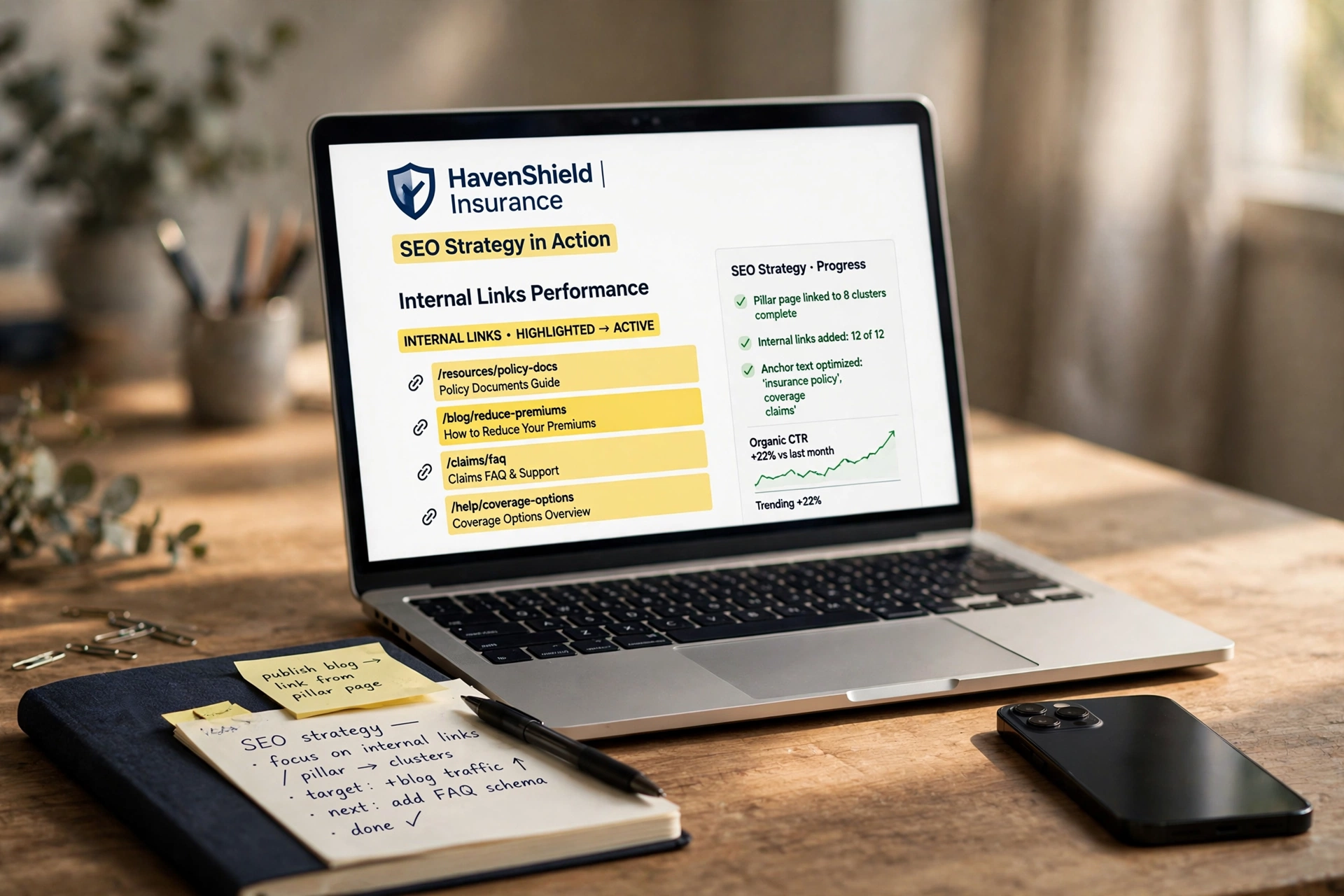
Connect your pages through contextual links. This spreads "link juice" and helps Google understand your site architecture. For instance, from a blog post about "signs your furnace needs repair," link to your pillar page on HVAC maintenance.
Step 5: Accelerate with Programmatic SEO
This is where beginners often struggle—scaling content efficiently. Manual content creation is slow. That's where a programmatic SEO platform like BizAI changes the game. It automates the creation of hundreds of optimized, interconnected pages based on your keyword list. Each page includes embedded lead capture (AI SDR) that qualifies visitors in real time. The result: you go from zero to a topical authority hub in weeks, not years.
💡
Key Takeaway
The fastest path to organic traffic for beginners is to combine a solid content strategy with automation. Don't try to do it all manually—leverage technology to scale.
Options for Growing Organic Traffic: DIY vs. Freelancer vs. Programmatic SEO
| Option | Pros | Cons | Best For |
|---|---|---|---|
| DIY (Do It Yourself) | Low cost, full control | Very slow, steep learning curve, inconsistent output | Beginners with limited budget and lots of time |
| Freelance SEO Writer/Agency | Faster than DIY, professional quality | Expensive per page, can be hit-or-miss quality, hard to scale | Small businesses with moderate budget (1–10 pages/month) |
| Programmatic SEO Platform (BizAI) | Massively scalable (300+ pages/month), integrated lead capture, optimized for AI search | Higher upfront cost but lower cost per page, requires content strategy upfront | Service businesses serious about dominating their niche and generating leads 24/7 |
Choice depends on your urgency and budget. But remember: organic traffic compounds. The earlier you invest in a scalable solution, the larger your moat.
Common Misconceptions About Organic Traffic for Beginners
Myth 1: You need to be a tech wizard. Most SEO platforms have user-friendly dashboards. Programmatic tools like BizAI handle the technical heavy lifting (schema markup, canonical tags, indexing API). You just provide the service topics.
Myth 2: SEO is dead. On the contrary, search is evolving. Google's Search Generative Experience (SGE) and AI chat platforms like ChatGPT are now sourcing answers from authoritative websites. Pages optimized for E-E-A-T and structured data get cited more often.
Myth 3: You need hundreds of backlinks. For local service businesses, topical relevance and content depth matter more than spammy links. A site with 50 well-researched pages and solid internal linking can outrank a competitor with a thousand thin pages.
Myth 4: Results happen overnight. Organic traffic is a marathon. Even with automation, expect 3–6 months before you see meaningful rankings. The key is consistency and tracking metrics like impressions and clicks, not just rankings.
Frequently Asked Questions
How long does it take for a beginner to see organic traffic results?
On average, it takes 3–6 months to start seeing measurable traffic from SEO. For highly competitive niches, it can take 9–12 months. Programmatic SEO can accelerate this by building topical authority faster—some clients see organic leads within 60 days.
What is the difference between organic traffic and paid traffic?
Organic traffic comes from unpaid search results and is free per click, but requires investment in content and SEO. Paid traffic comes from ads (Google Ads, social media) and stops as soon as you stop paying. Organic traffic compounds, while paid traffic is transactional.
How many pages do I need to rank for my service?
For a local service business, you need at least 30–50 high-quality pages covering your core services and related topics. Satellites for specific long-tail queries can number in the hundreds for maximum coverage. Tools like BizAI can generate 300+ targeted pages in one month.
Do I need technical skills to use programmatic SEO?
No. Programmatic SEO platforms automate the technical aspects. You provide the business information and service list; the platform builds the pages with proper schema, canonicalization, and indexing. However, understanding basic SEO principles (like keyword research) helps maximize results.
Can organic traffic replace paid ads for my service business?
Yes, many service businesses eventually reduce or eliminate paid ads once organic traffic is consistent. However, a hybrid strategy is common: use paid ads for immediate leads while building organic assets for long-term stability. The goal is to lower your customer acquisition cost over time.
Summary and Next Steps
Growing organic traffic for beginners doesn't have to be overwhelming. Start by understanding your target audience's questions, build a foundation of pillar and satellite pages, optimize for search intent, and consider scalable solutions like programmatic SEO. The most important step is to start—today. Every day you wait, a competitor is capturing those search visits.
Ready to stop renting traffic and start owning it? BizAI helps service businesses build 300+ optimized pages with embedded AI lead qualification in the first month. Visit BizAI to see how we can turn your website into a 24/7 lead generation machine.
Recommended Readings
To deepen your understanding of these topics, we recommend reading the following articles:
- The 85% Buyer Intent Threshold
- Account-Based AI
- The Ultimate Guide to AI Agent Scoring for Leads
- Ultimate Guide to AI Agents for Drywall Contractors
AI Search Accelerator: 1-on-1 Strategy Session
Claim one of the 10 monthly slots. Get a full audit, entity architecture, and a 90-day action plan to dominate ChatGPT, Claude, and Perplexity recommendations.