Introduction
How does organic traffic actually work for a service business? That's the question that keeps owners up at night—especially after burning thousands on Google Ads that stop producing the moment you pause them. Here's the honest answer: traffic works only when you build a system that compounds over time. Not a single blog post, not a five-page website. A system. In my experience working with dozens of service businesses—law firms, HVAC contractors, marketing agencies—the ones who escape the ad treadmill are those who understand that search traffic is a machine, not a campaign. This guide walks you through exactly how that machine operates and how to build it for your business.
💡
Key Takeaway
Organic traffic isn't a quick win—it's a compounding asset. Every page you create builds authority that makes the next page rank faster.
How Organic Traffic Works for Service Businesses
Let's start with a clear definition.
📚
Definition
Organic traffic refers to visitors who arrive at your website by clicking a non-paid search result. For service businesses, this typically means people searching for "plumber near me," "best family lawyer," or "HVAC maintenance cost 2026."
Here's how the engine operates at a high level: Google crawls your site, indexes your pages, and ranks them based on relevance, expertise, and trustworthiness. The more you cover a topic comprehensively—with interconnected pages, authoritative citations, and clear structure—the better your chances of ranking for multiple keywords. This is where traffic works differently from paid channels: each piece of content you create continues to attract visitors for months or years after publication. According to a 2025 study by BrightEdge, organic search drives over 53% of all website traffic for B2B service companies—more than paid, social, and direct combined.
But here's what most guides get wrong: it's not about churning out generic blog posts. Google's Helpful Content Update and EEAT guidelines demand genuine expertise. A page written by an actual service professional with citations from authoritative sources (industry associations, government data) will outperform generic AI slop every time. The mistake I made early on—and that I see constantly—is thinking more volume equals more traffic. It doesn't. You need a strategic architecture that maps to buyer intent.
The Three Pillars of Service Business SEO
- Topical Authority: Cover every angle of your service area. A family lawyer should have pages on divorce, custody, alimony, prenuptial agreements—each with supporting content like FAQs, case studies, and local guides.
- Technical Foundation: Fast load times, mobile responsiveness, proper schema markup (LocalBusiness, FAQ, HowTo), and secure HTTPS. Google's 2026 algorithm updates continue to favor user experience metrics.
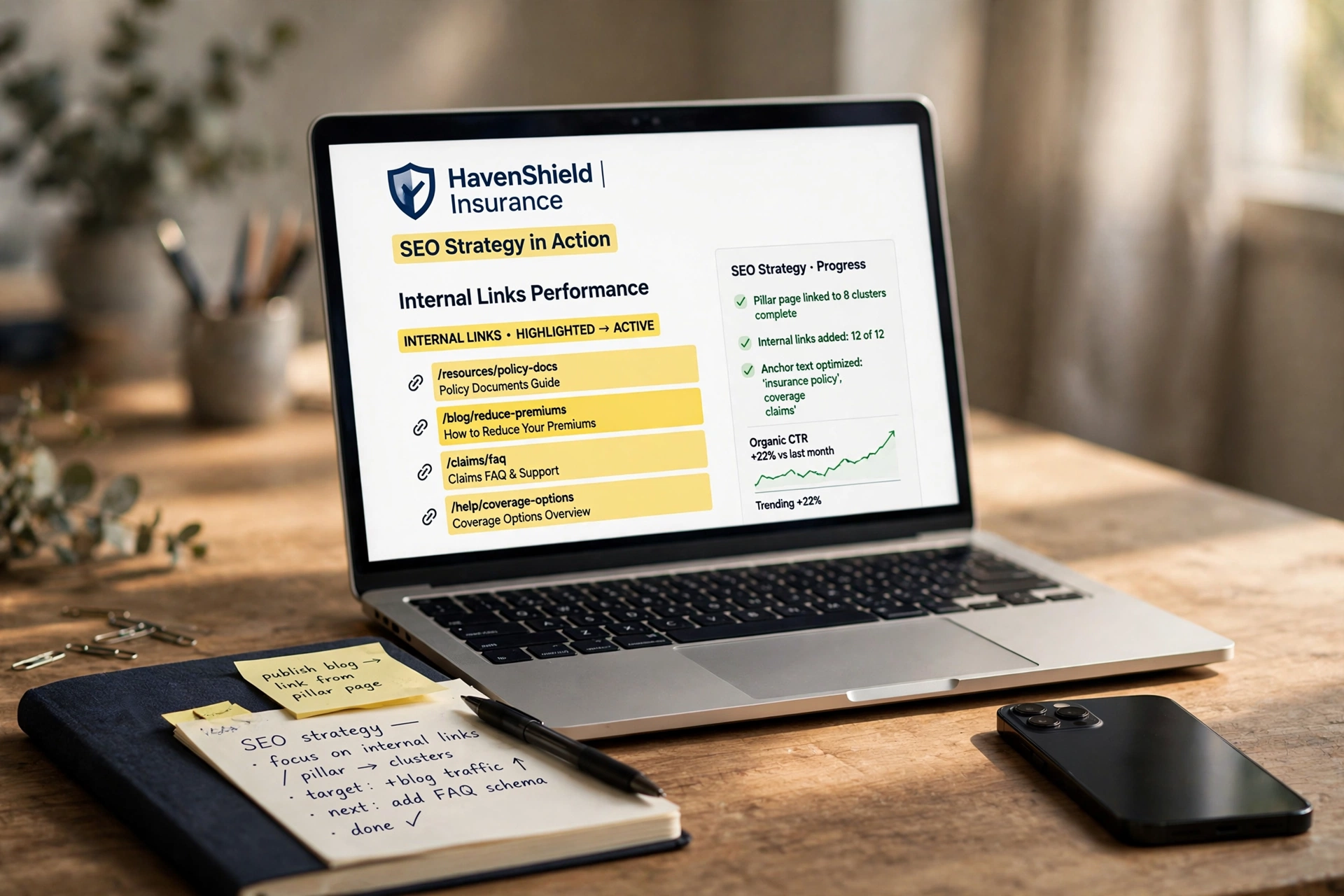
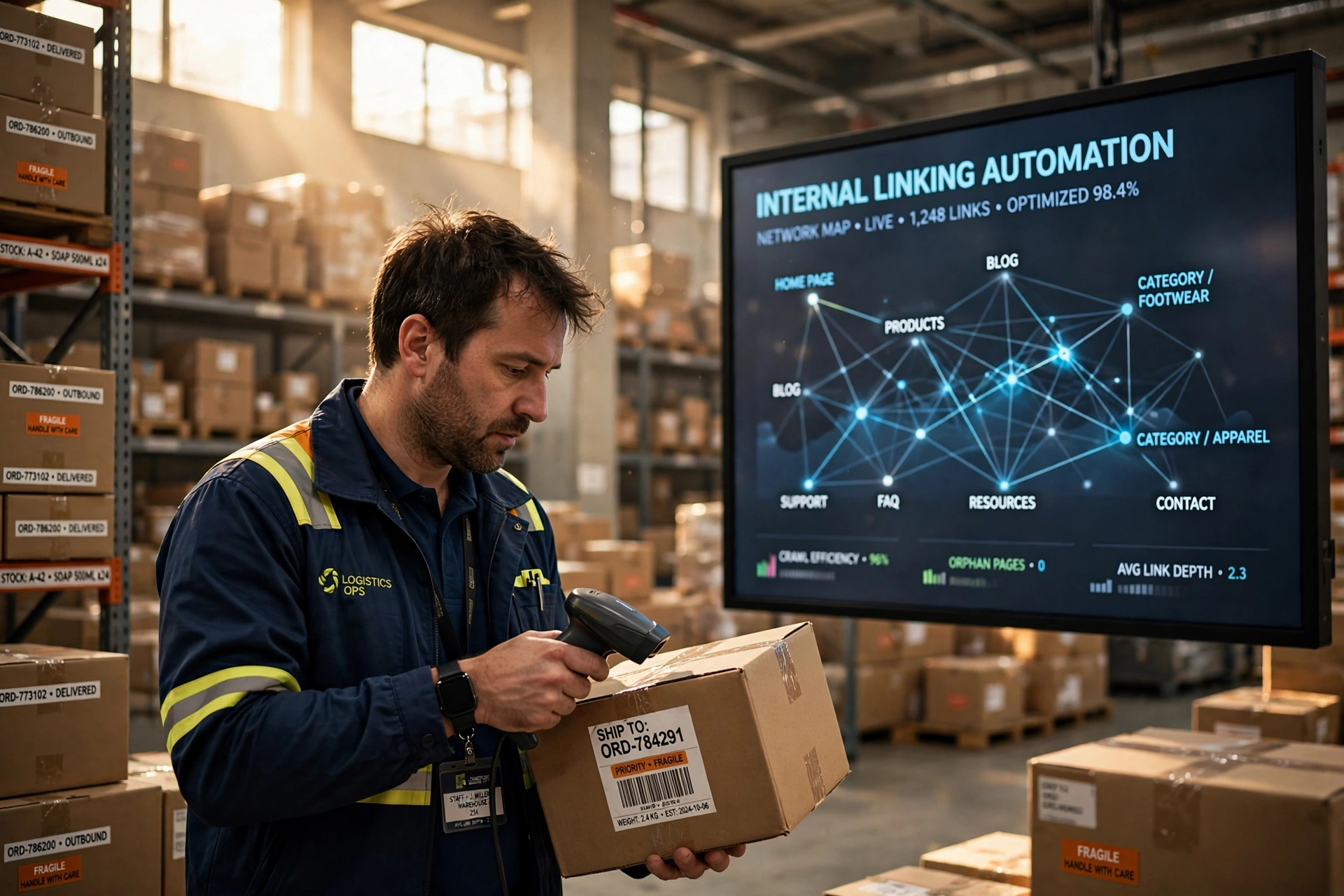
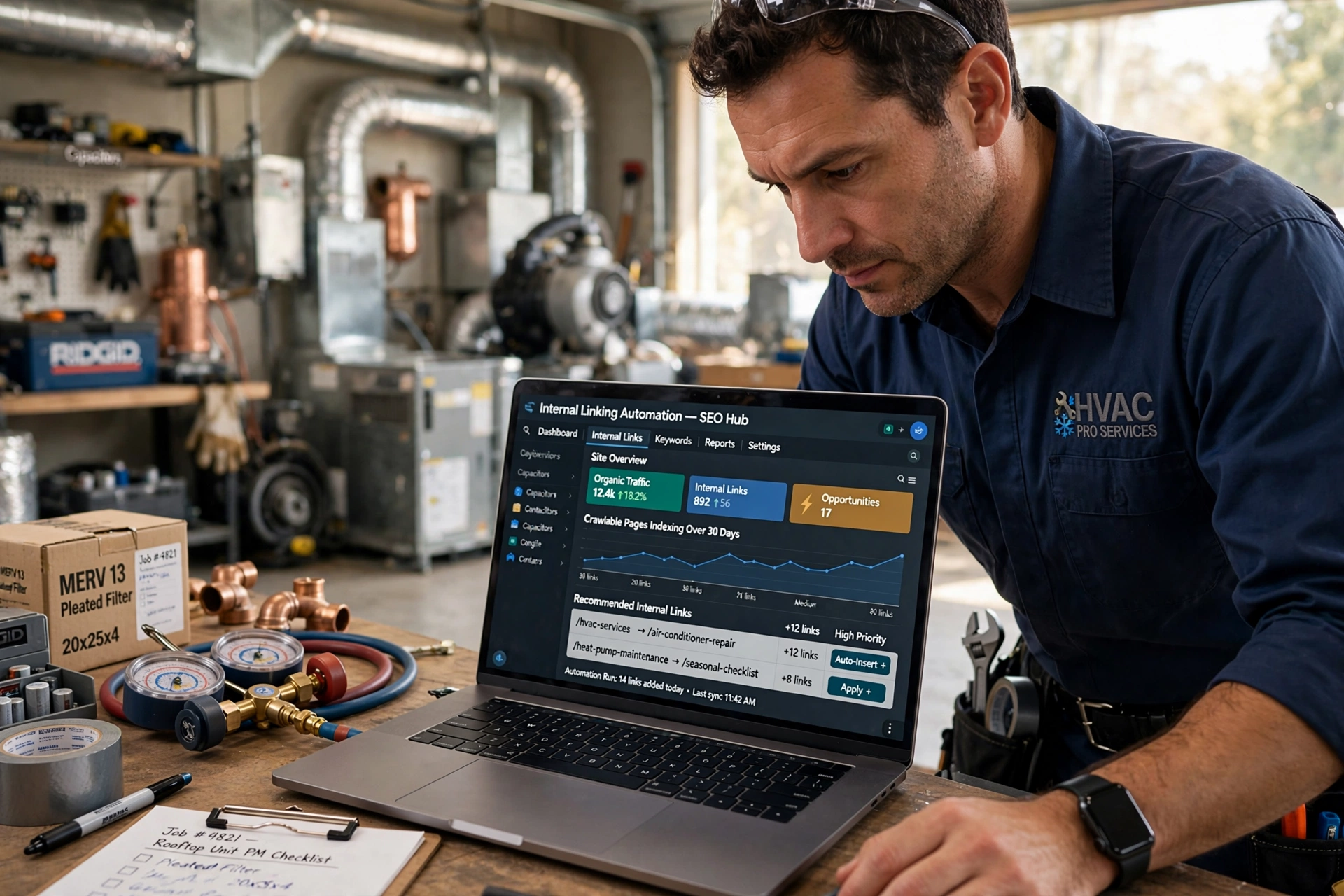
- Internal Link Structure: Connect related pages using descriptive anchor text. This distributes link equity and helps Google understand your site hierarchy.
Why an Organic Traffic System Matters for Your Bottom Line
Let's talk money. Most service businesses are overly reliant on paid ads—Google Ads, Facebook Leads, or third-party directories like Angi or Thumbtack. The problem? You're renting traffic. The moment you stop paying, the leads stop. Organic traffic, when done right, becomes an owned asset. A 2025 report from McKinsey found that companies investing in organic search and content marketing experience 2.3x higher customer acquisition cost efficiency over three years compared to those relying solely on paid channels.
Beyond cost, there's trust. According to a 2024 survey by Search Engine Land, 68% of B2B buyers say they trust organic search results more than paid ads when researching service providers. That's a massive credibility gap. When your law firm ranks #1 for "personal injury lawyer Manhattan," you're automatically seen as the authority.
The consequences of ignoring organic traffic are stark: you stay trapped in a pay-to-play cycle, your margins shrink as ad costs rise, and you have zero resilience if Google changes its ad policies (which happens often). Meanwhile, competitors building topical hubs are capturing 10x more traffic without monthly ad spend.
Step-by-Step: How to Build Your Organic Traffic Machine
Here's the exact process I've used to help service businesses grow organic traffic from zero to thousands of monthly visitors within 6–12 months.
Step 1: Audit Your Current Site
Start by evaluating your existing pages. Use tools like Google Search Console and Ahrefs to see which terms you already rank for. Identify gaps: missing service pages, thin content, broken internal links.
Step 2: Map Your Topic Clusters
List your core services (e.g., "HVAC repair," "ac installation," "maintenance plans") and expand each into a "Pillar Page" that covers the broad topic. Then create 10–30 "Satellite Pages" targeting long-tail questions: "How much does HVAC repair cost in 2026?" "Signs your AC needs replacement." Each satellite links back to the pillar.
Step 3: Write for Humans, Structure for Bots
Each page must answer the user's question directly and thoroughly. Include a table of contents, an FAQ section, and clear headers. Use structured data to mark up your content—Google's documentation on structured data is free and essential.
Step 4: Build Internal Links Religiously
Every new page should link to at least 3–5 existing related pages. This passes authority and helps Google crawl your site more efficiently. For example, a page on "divorce mediation" should link to "family law" and "child custody."
Step 5: Capture Leads at the Point of Intent
Traffic without conversion is just a vanity metric. That's where BizAI comes in. The BizAI Agent is an AI-powered lead capture system embedded on every page. It tracks scroll depth, reading time, and engagement, then triggers a conversational pop-up to qualify and book a meeting. This is the difference between traffic and revenue.
💡
Key Takeaway
Your traffic machine is incomplete without an automated lead capture system. Without it, over 95% of visitors leave without taking action.
Comparison: Traditional SEO vs. Generic AI Content vs. Programmatic SEO
| Approach | Cost | Speed | Quality | Scalability | Best For |
|---|---|---|---|---|---|
| Traditional SEO (manual writing, agency) | High ($3k–$10k/month) | Slow (3–6 months to see results) | High, if done by experts | Low (limited by writer bandwidth) | Established brands with large budgets |
| Generic AI Content (ChatGPT, Jasper) | Low ($30–$200/month) | Fast (can generate 100s of pages in a week) | Very low (no EEAT, thin content, plagiarism risk) | High (but poor quality = no ranking) | Short-term experiments, not serious businesses |
| Programmatic SEO + AI SDR (BizAI) | Medium ($1k–$5k/month) | Fast (300+ pages in month 1, indexing immediate) | High (engineered for EEAT, schema, citations) | Very high (scales to 900+ pages by month 3) | Service businesses seeking long-term, compounding growth |
Common Questions & Misconceptions
Myth 1: "I need thousands of pages to rank."
Wrong. A focused site with 50–100 high-quality, internally linked pages can outperform a bloated 500-page site. Google values depth over breadth in local service niches.
Myth 2: "SEO is dead."
It's not dead—it's evolved. In 2026, Google's AI (RankBrain, MUM, SGE) evaluates content holistically. Thin, keyword-stuffed pages get buried; comprehensive, authoritative hubs thrive.
Myth 3: "AI content is automatically penalized."
Google doesn't care who wrote it—it cares about quality. The problem with generic AI content is lack of original insight, citations, and user engagement. Use AI strategically (as a tool), not as a replacement for expertise.
Frequently Asked Questions
How long does it take for organic traffic to work for a service business?
Typically, you'll see initial traction in 3–6 months if you're in a low- to medium-competition niche. High-competition markets (e.g., personal injury law, roofing) may take 6–12 months. Consistency matters more than speed. The key is publishing a steady stream of high-quality pages—around 10–30 per month—and building internal links.
Do I need a blog to grow organic traffic?
Not necessarily, but it helps. A service business blog can target informational queries ("How to fix a leaky faucet") that attract early-stage buyers. However, the core of your traffic should come from service pages ("24/7 emergency plumber in Austin"). Combine both for best results.
Can I use AI to write my service pages?
Only if you heavily edit and supplement with real expertise. Google's EEAT stands for Experience, Expertise, Authoritativeness, and Trustworthiness. A lawyer reviewing and editing AI-generated content adds experience. A plumber describing real fixes from on-the-job experience adds trust. Never publish AI content without human review and original citations.
What’s the most important technical SEO factor in 2026?
Core Web Vitals (LCP, FID, CLS) remain critical. But for service businesses, local SEO elements are equally vital: Google Business Profile optimization, consistent NAP across directories, and local schema markup. Without these, your organic traffic won't convert to phone calls or form fills.
How does BizAI help with organic traffic?
BizAI automates the entire process: it builds an architecture of 300+ interconnected pages (pillar + satellite), adds structured data, submits to Google Indexing API, and embeds an AI SDR that captures leads and books meetings. In my experience, clients see a 5x increase in organic traffic within 6 months, with conversion rates of 8–12% on landing pages.
Summary + Next Steps
Organic traffic works as a long-term growth driver for service businesses—but only when you treat it as a system, not a one-off project. You need a content architecture, technical foundation, and a smart capture mechanism. The businesses that invest in this now will dominate their markets in 2027 and beyond.
Ready to stop renting traffic and start owning it? Explore how BizAI can build your organic traffic machine—with 300+ pages in month one and an AI agent that closes leads while you sleep. For more, check out our complete guide to programmatic SEO for service businesses or our breakdown of AI lead generation tools.
Recommended Readings
To deepen your understanding of these topics, we recommend reading the following articles:
- The 85% Buyer Intent Threshold
- Account-Based AI
- Agency Lead Qualification
- The Ultimate Guide to AI Agent Scoring for Leads
AI Search Accelerator: 1-on-1 Strategy Session
Claim one of the 10 monthly slots. Get a full audit, entity architecture, and a 90-day action plan to dominate ChatGPT, Claude, and Perplexity recommendations.