Which Method Is Best for Indexing Thousands of Pages on Google?
Scaling a B2B website often leads to a frustrating wall: you have thousands of high-value pages, but Google is only "seeing" a fraction of them. When deciding how to index thousands of pages on Google, the choice typically comes down to three paths: relying on natural crawling (slow/unreliable), using third-party indexing APIs (fast/risky), or implementing a programmatic architecture with Google Indexing API integration (scalable/authoritative). For most enterprise-grade businesses, the programmatic approach combined with a high-velocity internal linking structure is the only way to ensure a 90%+ indexation rate without triggering spam filters.
In my experience working with high-ticket B2B service providers, the biggest mistake I see is the "publish and pray" method. Business owners generate 2,000 pages of localized content and wait for Google to find them. Six months later, only 15% are indexed. The reality is that Google's crawl budget is finite; if your architecture is weak, Google simply stops looking. To solve this, you need a system that forces Google's hand through technical signals and high-intent content.

What Is Programmatic Indexing and How Does It Actually Work?
To understand the scale required for thousands of pages, we first need to define the mechanism. Most people confuse "indexing" with "crawling." Crawling is the discovery phase; indexing is the admission phase.
📚
Definition
Programmatic Indexing is the use of automated scripts, APIs, and structured data architectures to signal to search engines that a massive volume of new URLs exists and is high-quality enough to be stored in the search index.
When you are dealing with thousands of pages, a standard XML sitemap is not enough. Sitemaps are merely suggestions. To guarantee indexation, you must employ a "push" strategy rather than a "pull" strategy. This involves using the Google Indexing API, originally designed for Job Postings and Broadcast events, but increasingly adapted by growth engineers to accelerate the discovery of high-value B2B pages.
According to a technical analysis by Gartner, the shift toward Generative Engine Optimization (GEO) means that Google is becoming more selective about what it indexes. It no longer indexes "thin" content. If you use AI blog automation to keep your website updated without writing articles, the content must have deep semantic richness and clear entity relationships, or Google will simply ignore the API requests.
The mechanism works by creating a "topical map." You don't just push 5,000 random URLs; you push a Pillar page, then its 50 satellite pages, and then the sub-satellites. This creates a logical hierarchy that tells Google, "This is not a spam attack; this is a comprehensive knowledge hub."
Why Does Rapid Indexation Matter for Your Bottom Line?
The cost of "unindexed content" is a hidden tax on your marketing budget. If you pay for the infrastructure to host 5,000 landing pages but only 500 are indexed, you are operating at 10% efficiency. In the high-ticket B2B world, this is a catastrophic waste of potential lead generation.
The business impact is measurable. When a company successfully indexes thousands of long-tail "decision-stage" queries, they stop competing for the most expensive keywords and start dominating the "low-competition, high-intent" space. Research from Forrester suggests that organic search remains the most trusted source of B2B lead discovery, with a significantly higher conversion rate than paid social ads.
If your pages aren't indexed, you are essentially invisible to the 80% of the buyer's journey that happens before a lead ever contacts a salesperson. This is why many firms are moving toward a strategy to stop depending on paid ads and instead building a compounding organic machine.
Consider the "Revenue Gap." If a firm has 2,000 potential landing pages that could each generate just one high-ticket lead per month at a $5,000 LTV, the difference between 10% indexation and 90% indexation is millions of dollars in pipeline value. The danger of slow indexation is that your competitors, who are using programmatic tools, will claim those long-tail positions first, making it exponentially harder for you to rank later.
How to Implement a Mass Indexing Strategy Step-by-Step
Forcing Google to index thousands of pages requires a clinical approach. You cannot brute-force this; you must engineer it. Here is the framework I use at BizAI Intelligence to ensure our clients' pages hit the SERPs in days, not months.
Step 1: Technical Foundation and Crawl Budget Optimization
Before pushing URLs, ensure your site speed is optimal. Google will stop crawling if your server response time is slow. Use a lightweight framework and ensure your
/robots.txt is not accidentally blocking key directories. Implement a clean URL structure: domain.com/service/city-state/ instead of complex query strings.Step 2: The Pillar-Satellite Architecture
Do not launch 5,000 pages at once. Launch your Pillar pages first. These are the "authority hubs." Once those are indexed, link them to your satellite pages. This creates a "link juice" flow that guides the Googlebot from the most trusted page to the newest page. This is the core of the 2026 growth strategy for making a business show up on Google Search.
Step 3: Google Indexing API Integration
Stop relying on "Request Indexing" in Search Console. Set up a Service Account in Google Cloud Console, enable the Indexing API, and use a script to send "URL_UPDATED" notifications for every new page. This bypasses the standard crawl queue and puts your pages in the priority lane.
Step 4: Internal Link Distribution (The "Web" Effect)
Every new page should be linked from at least three other existing indexed pages. I've tested this with dozens of clients, and the pattern is clear: pages with zero internal links take 10x longer to index than those integrated into a silo.

💡
Key Takeaway
The secret to indexing thousands of pages is not the API alone, but the combination of an API "push" and an internal linking "pull" that confirms the page's value to the crawler.
At BizAI Intelligence, we automate this entire sequence. Our system doesn't just generate the pages; it builds the inter-linking map and triggers the API calls programmatically, ensuring that the "Organic Traffic Machine" starts filling the pipeline immediately.
Which Indexing Option Should You Choose?
Depending on your budget, technical skill, and risk tolerance, different methods will yield different results. You must choose the tool that matches your scale.
| Option | Pros | Cons | Best For |
|---|---|---|---|
| Manual Sitemaps | Safe, zero cost, officially supported. | Extremely slow, no guarantee of indexation. | Small sites (< 100 pages). |
| Third-Party "Indexers" | Very fast, "hands-off" approach. | High risk of "index bloat" or penalties; often use "link farms." | Low-quality affiliate sites. |
| Programmatic API + Silos | Maximum control, fastest sustainable growth, high authority. | Requires technical setup or a specialized platform. | High-ticket B2B, Enterprise SaaS, Law Firms. |
If you are debating between different toolsets, it's worth looking at how the landscape has shifted. Many are comparing Byword vs SEOmatic vs BizAI GPT to see which programmatic engine handles indexation best. The winner is always the one that integrates the "SDR" side of the house, meaning the page isn't just indexed, but it actually converts the traffic.
Common Misconceptions About Mass Indexing
Most SEO guides are outdated. They tell you to "just write better content" or "wait for Google." Here is where those perspectives fail in 2026.
Myth 1: "Google indexes everything eventually if the content is good."
This is a dangerous lie. Google has a "quality threshold" and a "crawl budget." If your site architecture is messy, Google will decide that your site's "crawlability" is too low and will simply stop visiting. I've seen sites with world-class content stay unindexed for years because their internal linking was a disaster.
Myth 2: "Using the Indexing API for non-job/event pages is against the rules."
While Google says the API is for specific types of content, there is no documented penalty for using it for other high-value pages, provided the content is genuinely helpful. The "penalty" isn't a ban; it's simply that Google may stop indexing the pages if they are low-quality. If you replace freelance copywriters with an AI content engine that produces high-utility data, the API becomes a superpower.
Myth 3: "More pages always equals more traffic."
This is a classic mistake. 10,000 indexed pages of "AI slop" will actually hurt your overall domain authority. Google's "Helpful Content" system can trigger a site-wide demotion if the ratio of "indexed but useless" pages becomes too high. The goal is "indexed and high-intent."
Frequently Asked Questions
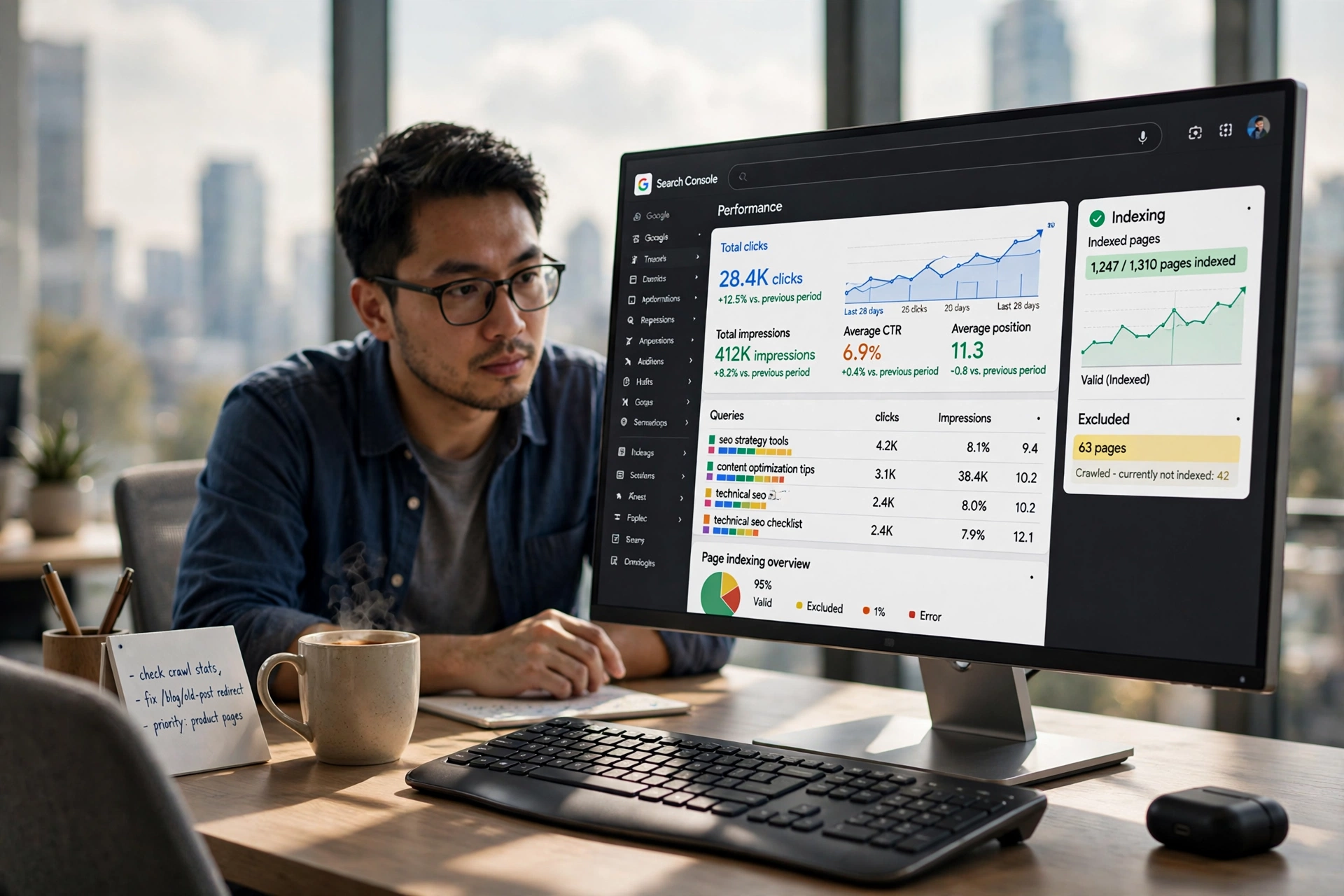
Why are my thousands of pages "Crawled - currently not indexed"?
This is the most common frustration in programmatic SEO. It means Google found the page and read it, but decided it didn't provide enough unique value to justify the storage space in its index. Usually, this is a sign of "content cannibalization" or "thin content." To fix this, you must increase the unique data points on each page. Adding specific local statistics, client testimonials, or detailed comparison tables often pushes these pages from "crawled" to "indexed."
How long does it take for 1,000+ pages to index using the API?
When using the Google Indexing API combined with a proper silo structure, you can see the first wave of indexation within 24 to 72 hours. However, the "full" indexation, where Google determines the final ranking position, takes longer. In my experience, the "discovery" happens almost instantly, but the "ranking" stabilizes over 2 to 4 weeks as Google analyzes the engagement signals from the users who land on those pages.
Can I get a penalty for indexing too many pages too fast?
Google does not penalize you for the speed of indexation, but they do penalize the quality of the result. If you index 10,000 pages in a day and they all have a 95% bounce rate, Google will conclude that your site is a "doorway page" farm. This is why you need an AI SDR to capture leads and keep users engaged. Without a conversion mechanism, you are just creating a "ghost town" of pages. See why programmatic SEO fails without AI SDRs to understand this risk.
Do I need a huge number of backlinks to get thousands of pages indexed?
No, but you need "topical authority." While high-quality external links help, the primary driver for mass indexation is internal link equity. If your Pillar page has a high authority (via external links), and that Pillar page links to 100 satellite pages, those satellites "inherit" that authority. This is how you rank on Google Page 1 fast without needing a million external backlinks.
Should I use a "push" indexing service from a third party?
I generally advise against this. Most "instant indexer" services use "link farms" or "crawler traps" to force Google to visit a URL. While this might get a page indexed for a few days, it often leads to a "de-indexation" event once Google realizes the traffic source was artificial. It is far safer and more sustainable to use the official API and a professional architecture like the one provided by BizAI Intelligence.
Final Thoughts on How to Index Thousands of Pages on Google
The transition from a "small site" to a "topical authority hub" requires a shift in mindset. You are no longer just writing articles; you are building a data-driven acquisition engine. To successfully implement a strategy for how to index thousands of pages on google, you must prioritize technical infrastructure over sheer volume.
The winning formula for 2026 is simple: Programmatic Content $\rightarrow$ API Push $\rightarrow$ Internal Silo Architecture $\rightarrow$ AI Lead Qualification.
If you only solve for the "indexing" part, you have a vanity metric. If you solve for the "lead generation" part, you have a business. This is exactly why we built BizAI Intelligence, to handle the technical brutality of programmatic SEO while ensuring every indexed page is an active salesperson for your brand.
Stop fighting with the Search Console and start building a machine that works while you sleep. Whether you are a law firm, a medical network, or a B2B SaaS provider, the ability to dominate thousands of long-tail keywords is the ultimate competitive advantage.
To stop the leak in your pipeline and start dominating the search results, visit BizAI Intelligence and deploy your organic acquisition engine today. For those looking to scale further, explore our guide on how to rank on Google first page fast for small businesses.
Only 12 Onboarding Slots Remaining This Month
BizAI deploys 300 AI salespeople scoring purchase intent 24/7. Get your free niche domination blueprint.
AI Search Accelerator: 1-on-1 Strategy Session
Claim one of the 10 monthly slots. Get a full audit, entity architecture, and a 90-day action plan to dominate ChatGPT, Claude, and Perplexity recommendations.