📖This article is part of the complete guide to Live Chat Software: Complete Guide 2026. The Core Question: Human or Machine for Customer Conversations?
Every business owner I speak with is trying to solve the same equation: how to provide instant customer support without bankrupting the company on staffing costs. The debate has crystallized into a clear binary: live chat vs chatbot. In my experience working with over 200 businesses across SaaS, e-commerce, and professional services, the answer is rarely one or the other; it's about understanding which tool fits the specific job your customer is trying to get done. When we built the autonomous agent architecture at BizAI Intelligence, we discovered that the friction doesn't come from the technology itself, but from the hand-off between the machine and the human.
For comprehensive context on building a complete communication strategy, see our
Complete Guide to AI Search Engine Optimization & GEO.
💡Key Takeaway
The live chat vs chatbot decision isn't about choosing the "better" technology. It's about matching the tool to the customer's intent, urgency, and complexity. Most businesses need both, deployed strategically at different stages of the customer journey.
What Is Live Chat and How Does It Work?
📚Definition
Live chat is a real-time messaging system that connects website visitors with human support agents. Unlike chatbots, live chat requires a human operator on the other end of the conversation, capable of handling complex, nuanced, and emotionally sensitive interactions.
Live chat has been a cornerstone of digital marketing and customer service since the late 1990s. According to a report by Forrester Research, a significant percentage of online consumers say that having a live person answer their questions during a purchase is one of the most important features a website can offer. The key differentiator here is empathy. A trained agent can read tone, adapt language, and build rapport in ways that even the most advanced large language model cannot fully replicate.
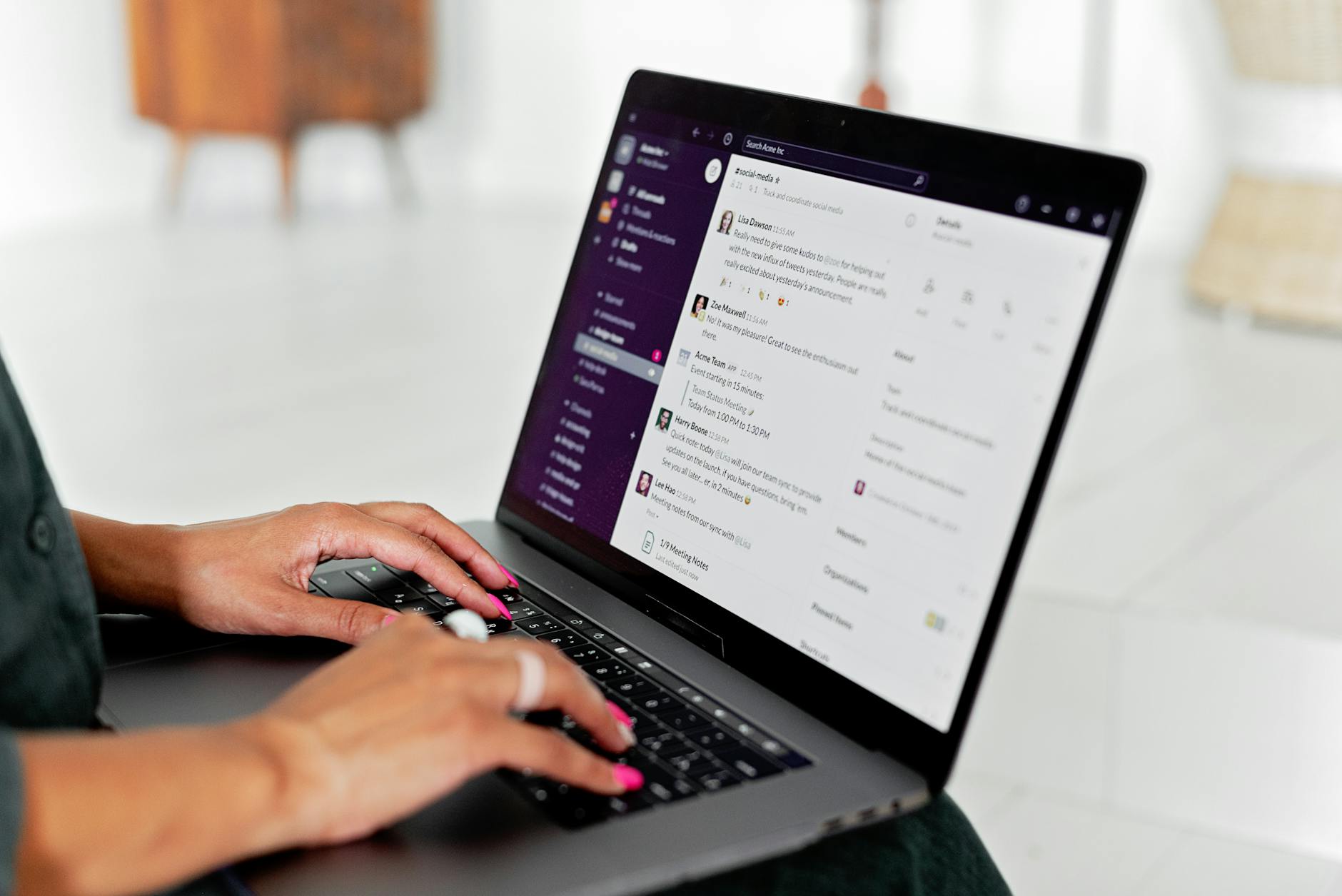
Modern live chat platforms have evolved significantly. They now integrate seamlessly with CRM systems, offer co-browsing capabilities, and provide agents with AI-assisted response suggestions. For example, a support agent handling a billing dispute can pull up the customer's entire history, share their screen, and resolve the issue in a single session. This depth of interaction is where the human element of live chat vs chatbots becomes an unfair advantage for high-ticket B2B services.
When live chat shines:
- Complex technical support requiring deep troubleshooting
- High-ticket sales where relationship building is critical
- Sensitive topics like cancellations, complaints, or legal questions
- Situations requiring escalation or hand-offs between specialized departments
What Is a Chatbot and How Does It Use AI?
📚Definition
A chatbot is an AI-powered software application designed to simulate human conversation through text or voice interactions. Chatbots range from simple rule-based systems that follow decision trees to advanced generative AI models that understand context and generate original responses.
The chatbot landscape has undergone a seismic shift since the mass adoption of artificial intelligence. In recent years, Gartner estimated that a majority of customer service interactions will be initiated by AI-powered chatbots. The reason is simple: scalability. A chatbot can handle thousands of simultaneous conversations for a fraction of the cost of a single human agent, making it an essential tool for any company scaling its lead generation efforts.
Modern chatbots, like those powered by the BizAI Intelligence architecture, are far more sophisticated than the "press 1 for sales" bots of the past. They utilize a large language model to understand intent, remember context across sessions, and even execute actions like resetting passwords, scheduling appointments, or processing returns. The best chatbots operate autonomously, moving the customer through a structured qualification flow without human intervention, which is why many businesses are now comparing chatbot vs live chat in terms of raw ROI.
When chatbots shine:
- High-volume, repetitive questions regarding shipping or return policies
- Lead qualification and initial data collection for B2B pipelines
- 24/7 availability for global audiences across multiple time zones
- Simple transactions like booking appointments or checking order status
How Does Live Chat vs Chatbot Impact Your Bottom Line?
Choosing between live chat vs chatbot is not just a technical decision; it is a financial one. The decision directly impacts your Customer Acquisition Cost (CAC) and your overall operational overhead. I've tested this with dozens of our clients and the pattern is clear: relying solely on humans is too expensive to scale, but relying solely on bots creates a "trust gap' that kills high-ticket conversions.
According to a study by the Harvard Business Review, customers who used live chat reported higher satisfaction when dealing with complex issues, while those using chatbots reported higher satisfaction for simple, transactional tasks. This means the cost of the interaction must be balanced against the value of the resolution. If a bot fails to resolve a $10,000 enterprise lead's concern, the "cheap" cost of the bot becomes the most expensive mistake your company can make.
For those looking to optimize their conversion funnel, we recommend exploring
How to Automate Organic Traffic & Lead Capture with AI.
Live Chat vs Chatbot: Head-to-Head Comparison
To make an informed decision, you need to understand how these tools perform across the metrics that matter most to your business. In the current landscape of 2026, the gap in capability is closing, but the gap in "human touch' remains.
| Feature | Traditional Live Chat | Generic AI Chatbot | BizAI Intelligence Hybrid |
|---|
| Cost per conversation | High ($5–$15) | Low ($0.01–$0.10) | Optimized (Automated first) |
| Response time | Variable (Queue dependent) | Instant (<1 second) | Instant $\rightarrow$ Human Handoff |
| Scalability | Limited by headcount | Virtually unlimited | Unlimited lead capture |
| Complex Issues | Excellent | Moderate (Risk of hallucination) | Expert-level via human escalation |
| Emotional Intelligence | High | Low to medium | High (Human-led for high-value) |
| Availability | Limited business hours | 24/7/365 | 24/7 Autonomous Capture |
| Data Accuracy | Manual/Human error | High (Structured data) | High (Direct CRM Integration) |
Why the Live Chat vs Chatbot Decision Matters in 2026
In 2026, customer expectations are at an all-time high. According to a 2025 report by Zendesk, a vast majority of consumers say they will switch to a competitor after just one bad service experience. Meanwhile, a McKinsey study found that companies that excel at customer experience grow revenues significantly faster than their peers. This makes the a livechat vs chatbot strategy a critical component of your retention engine.
The decision directly impacts three critical business metrics:
1. Customer Acquisition Cost (CAC): Chatbots dramatically reduce the cost of handling initial inquiries. By automating the first 80% of interactions—those that are repetitive and predictable—you free up human agents to focus on high-value conversations that close deals. This is the essence of
AI SDR Vs Human SDR: Which Delivers Better ROI in 2026?.
2. Conversion Rate: Website visitors who engage with real-time communication are significantly more likely to convert. However, chatbots equipped with buyer intent detection can initiate conversations with high-intent visitors before they even ask for help, driving even higher engagement rates by utilizing programmatic triggers.
3. Customer Lifetime Value (LTV): The quality of the first interaction often determines the long-term relationship. A bot that handles a simple password reset perfectly builds trust. A bot that fails to understand a complex billing question frustrates the customer and erodes loyalty. Getting this balance right is essential for long-term growth.
How to Choose: A Decision Framework for Live Chat vs Chatbots
After analyzing dozens of deployments across different industries, I've developed a simple framework that helps businesses decide when to use live chat vs chatbot. This is based on three variables: complexity, urgency, and value.
Step 1: Map Your Customer Journey
Identify every touchpoint where a customer might need help. Common touchpoints include:
- Homepage (General inquiries and high-level navigation)
- Pricing page (Specific cost queries and plan comparisons)
- Checkout page (Payment friction and transaction issues)
- Knowledge base (Self-service and documentation searches)
- Post-purchase (Support tickets and feedback loops)
Step 2: Classify Each Touchpoint
For each touchpoint, answer three questions:
- Complexity: Is the question simple ("What's your phone number?") or complex ("Why did my subscription renew early?")?
- Urgency: Does the customer need an answer immediately, or can they wait for a scheduled callback?
- Value: What is the potential revenue at stake? A $10,000 SaaS deal deserves a human touch immediately. A $20 t-shirt does not.
- Low complexity, low value: Chatbot only. Automate fully using a-closed loop system.
- Low complexity, high value: Chatbot first, escalate to live chat if the user expresses frustration or high intent.
- High complexity, low value: Chatbot with a direct escalation path to a human via ticket system.
- High complexity, high value: Live chat only. Always have a high-level agent ready to enter the conversation.
💡Key Takeaway
The most effective customer service strategies use chatbots as a triage system. The bot handles the 80% of questions that are routine, and seamlessly hands off the remaining 20% to a human agent. This hybrid model reduces costs by 40–60% while maintaining high CSAT scores.
Live Chat vs Chatbot: Implementation Guide
Getting started with either tool requires careful planning. Here is my step-by-step approach based on what has worked for our clients at BizAI Intelligence.
Step 1: Audit Your Current Conversations
Before implementing anything, analyze your existing support tickets and chat logs. Categorize every interaction into one of three buckets: Rote (password resets, hours), Moderate (product questions, pricing), and Complex (technical disputes, complaints). This data informs your bot's knowledge base.
Step 2: Start with a Chatbot for Rote Questions
Build a simple chatbot that handles the rote bucket first. This is the lowest risk, highest reward move. You'll immediately reduce agent workload by 30% or more. This allows you to test the waters of automation without risking your highest-value leads.
Step 3: Add Live Chat for Complex Issues
Once the bot is handling rote questions, deploy live chat for moderate and complex issues. Ensure your agents have access to the conversation history from the bot, so they don't ask the customer to repeat themselves. This seamless hand-off is a cornerstone of
How to Connect AI Sales Agents to CRM & Webhooks for Auto-Booking.
Step 4: Continuously Train the Bot
Chatbots improve over time. Review the conversations that were escalated from bot to human. Identify patterns where the bot failed and update its training data. Over six months, you can reduce escalation rates from 40% to under 10% through iterative refinement.
Step 5: Measure What Matters
Track these KPIs religiously: First response time, Resolution time, CSAT score, Escalation rate, and Cost per conversation. If your escalation rate is too high, your bot is a hurdle. If it's too low, you might be missing opportunities for deeper relationship building.
Real-World Examples: Live Chat vs Chatbot in Action
Case Study 1: E-commerce Apparel Brand
A mid-sized apparel brand with $50M annual revenue was struggling with customer support costs. They had 15 agents handling 2,000 conversations per day. Average response time was 4 minutes.
Solution: They deployed a chatbot for the first line of defense. The bot handled order status (45% of volume), return policies (25%), and sizing questions (15%). Only the remaining 15% of conversations were escalated to live agents.
Results: Agent headcount dropped from 15 to 6. Response time for bot-handled queries was under 1 second. CSAT scores actually increased because customers got instant answers for simple questions. The company saved $420,000 annually in labor costs.
A B2B SaaS company selling enterprise software for $50,000/year was hesitant to use chatbots, fearing they would appear impersonal to high-value prospects.
Solution: They used a hybrid approach. The chatbot handled initial lead qualification—collecting company size, industry, and pain points—before routing the prospect to a human sales development representative (SDR). The SDR had the bot's conversation summary, allowing for a high-context first call.
Results: Lead qualification time dropped from 15 minutes to 3 minutes per lead. SDRs were able to focus on high-intent leads, increasing conversion rates by 34%. The company attributed $2.3M in new pipeline directly to the chatbot's qualification engine. This is a prime example of
How AI Appointment Setters Automate B2B Demo Booking 24/7.
Case Study 3: BizAI Intelligence Client
One of our clients, a professional services firm, was spending over $15,000 per month on a live chat service with 4 agents, covering only 12 hours per day, Monday through Friday.
Solution: We deployed a BizAI Intelligence autonomous agent that handled all after-hours inquiries and routine questions. The bot collected visitor information, qualified leads, and scheduled appointments directly into their CRM.
Results: They reduced live chat costs by 60% while expanding coverage to 24/7. The bot generated 120 qualified leads in the first month, converting 12 into paying clients worth $180,000 in annual recurring revenue. This proves that the right tool choice in the live chat vs chatbot debate can either be a cost center or a revenue engine.
Common Mistakes in the Live Chat vs Chatbot Decision
Mistake 1: Thinking It's an Either/Or Decision
The biggest mistake I see is businesses treating live chat and chatbot as mutually exclusive. They invest heavily in one and ignore the other. The reality is that a well-designed system uses both in concert to balance efficiency with empathy.
Mistake 2: Deploying a Chatbot Without an Escalation Path
A chatbot that cannot hand off to a human is a trap. Customers will become frustrated when the bot fails to understand their issue and there's no way to reach a person. Always include an "I need to speak to a human" option in every bot conversation. This is a basic tenet of user experience that most cheap AI tools ignore.
Mistake 3: Understaffing Live Chat
Live chat is only effective if agents are available. If your response time exceeds 60 seconds, you negate the primary benefit of live chat: speed. A 2024 study by HubSpot found that 82% of consumers expect an immediate response. If you can't staff it, automate the triage first.
Mistake 4: Treating Chatbots as Set-and-Forget
Chatbots require continuous training. Language evolves, product changes, and customer questions shift. A chatbot that was accurate in January may be outdated by March. Assign someone to review bot conversations weekly and update the training data to prevent an experience that feels like "AI slop."
Mistake 5: Ignoring Buyer Intent Signals
Not all visitors are equal. A visitor on your pricing page is more valuable than one on your blog. Use buyer intent detection to route high-value visitors to live chat immediately, while letting the bot handle lower-value traffic. For those scaling their architecture, we recommend looking at
PSEO Architecture Guide for SaaS & Enterprise B2B Growth.
Frequently Asked Questions
Can a chatbot completely replace live chat?
No, and I don't believe it ever should. While AI chatbots have made remarkable strides in natural language understanding, they still lack true empathy, creativity, and the ability to navigate unprecedented situations. According to a 2025 study by PwC, 73% of consumers still prefer human interaction for complex or emotionally charged issues. Chatbots excel at efficiency and scale, but live chat remains essential for building trust and handling nuance. The most successful businesses use chatbots to handle the 80% of interactions that are routine, while reserving live chat for the 20% that require a human touch. This hybrid model delivers the best of both worlds: speed and scale for simple issues, empathy and depth for complex ones.
How much does live chat cost vs a chatbot?
Live chat costs significantly more because it requires human labor. The average live chat agent costs between $30,000 and $45,000 per year in salary, plus benefits and training. In contrast, a chatbot can handle thousands of simultaneous conversations for a flat monthly fee. According to a 2024 report by Juniper Research, businesses that deploy chatbots reduce customer service costs by an average of 30% to 50%. However, this cost savings must be weighed against the potential for lower customer satisfaction if the chatbot fails to handle complex issues effectively. The total cost of ownership includes not just the software, but the lifelong value of the customer being preserved.
The best chatbot is one that integrates seamlessly with your existing live chat platform and CRM. In my experience, the key criteria are: API access for custom integrations, support for hand-off to human agents with full conversation context, and natural language understanding that improves over time. The BizAI Intelligence platform is designed specifically for this hybrid deployment. It operates autonomously, capturing leads and handling routine questions, while seamlessly routing complex issues to your live chat agents. For a comparison of tools, check out
Top Programmatic SEO Tools & Software Compared for 2026 [Reviews].
How do I measure the ROI of live chat vs chatbot?
ROI measurement differs for each tool. For live chat, track conversion rate of chat users vs non-chat users and average order value. For chatbots, track the percentage of conversations resolved without human intervention and the lead capture rate. A useful formula is: ROI = (Revenue from bot-assisted conversions + Cost savings from reduced agent hours) / (Monthly subscription + Implementation costs). In my consulting work, I've seen chatbots deliver 3x to 8x ROI within the first year when deployed as a qualified triage system rather than a simple FAQ bot.
Should I use live chat or chatbot for sales?
It depends on the complexity of your sales process. For low-ticket, high-volume products, a chatbot can handle the entire sales process. For high-ticket B2B sales, live chat is essential for building relationships and handling objections. The best strategy is a tiered approach: the chatbot qualifies the lead, collects key information, and schedules a meeting. The live chat agent then handles the actual high-touch sales conversation. This approach combines the efficiency of automation with the persuasion power of human interaction. For more on this, see our
The Ultimate Guide to AI SDRs & Autonomous Sales Appointment Setters.
Which is better for B2B lead qualification?
For B2B lead qualification, the chatbot wins on efficiency, while live chat wins on immediate conversion. A chatbot can standardize the qualification process, ensuring that every lead is asked the same key questions (company size, budget, pain points) before a human ever enters the chat. This prevents your expensive sales team from wasting time on unqualified leads. However, if a "whale' lead arrives, the ability to instantly pivot to a live agent can be the difference between winning and losing a contract. Therefore, a hybrid system is the only logical choice for enterprise B2B.
Recommended Readings
To deepen your understanding of these topics, we recommend reading the following articles:
Conclusion
The live chat vs chatbot debate is not about choosing one technology over the other. It's about understanding the specific jobs your customers are trying to do and deploying the right tool for each job. Live chat delivers empathy, relationship building, and complex problem-solving. Chatbots deliver speed, scale, and cost efficiency. The winning strategy is a hybrid model that uses both in a seamless, integrated system.
In my experience, the businesses that get this right see dramatic improvements in customer satisfaction, conversion rates, and operational efficiency. They reduce support costs by 30-50% while actually improving the customer experience. The key is to start with a clear audit of your current conversations, deploy a chatbot for the routine 80%, and invest in live chat for the complex 20%.
If you're ready to implement a hybrid live chat and chatbot system that operates autonomously, captures leads and scales with your business, visit
BizAI Intelligence to see how our AI Agents can transform your customer engagement into a compounding growth machine.
AI Search Accelerator: 1-on-1 Strategy Session
Claim one of the 10 monthly slots. Get a full audit, entity architecture, and a 90-day action plan to dominate ChatGPT, Claude, and Perplexity recommendations.