📖This article is part of the complete guide to Organic Acquisition Engine for Startups: 2026 Growth Strategy.
How Much Should Startups Invest in an Organic Acquisition Engine?
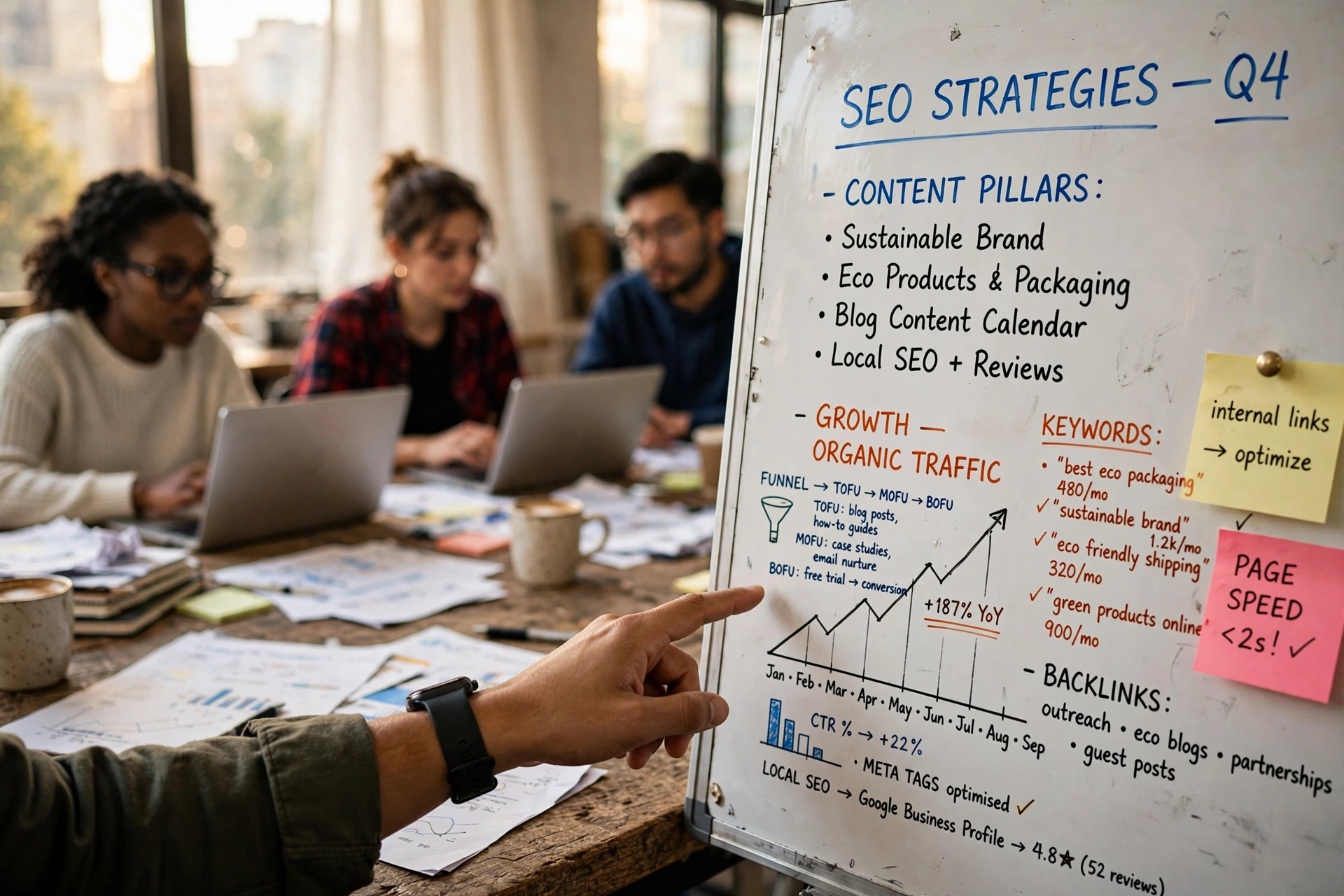
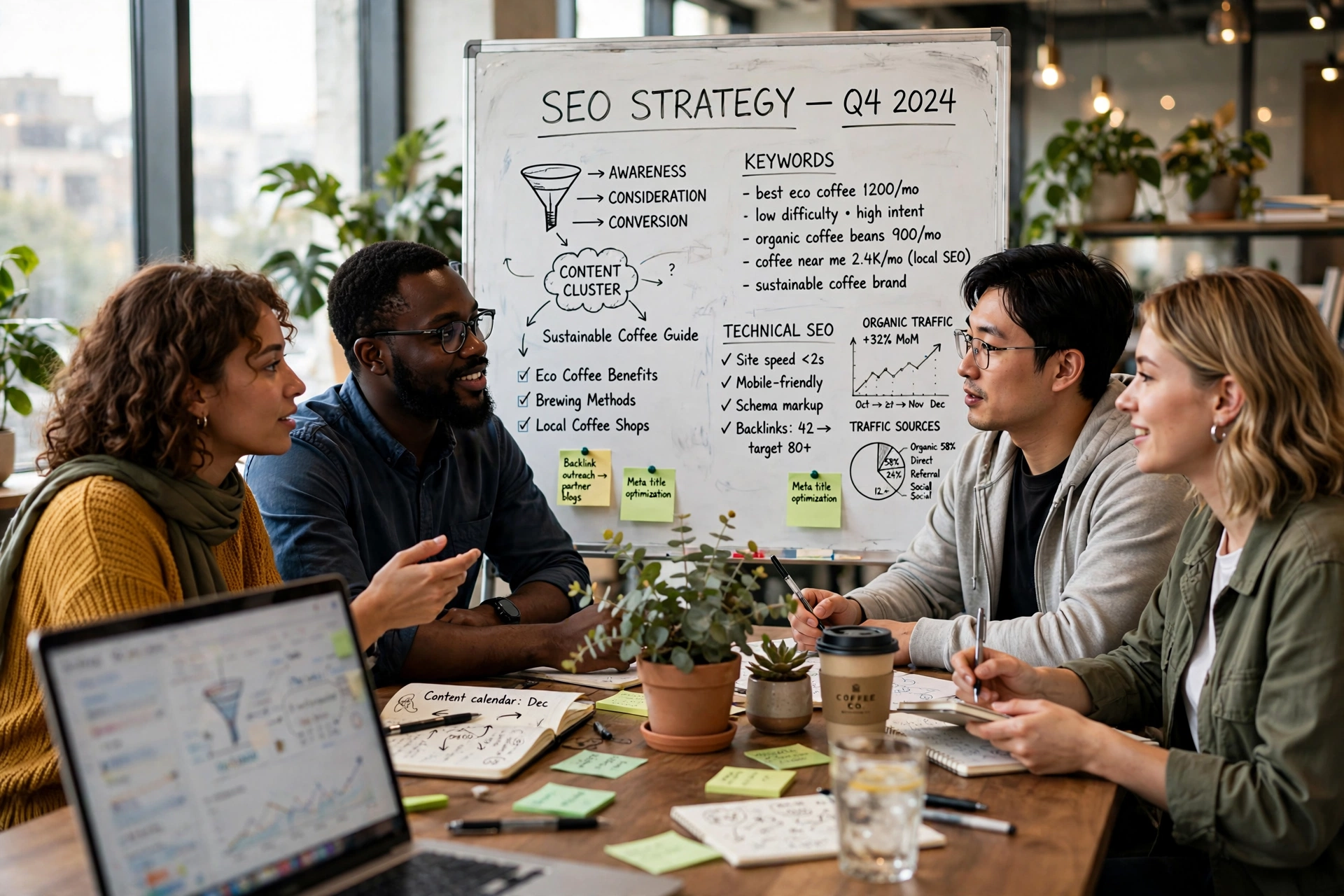
The true cost of a high-performance organic acquisition engine for startups isn't a flat fee; it's an investment in a compounding asset. For most B2B startups in 2026, the financial commitment ranges from $5,000 to $25,000 per month depending on the scale of the programmatic architecture and the sophistication of the AI qualification layer. Unlike paid ads, where your lead flow stops the second you stop paying, this investment creates a permanent digital moat that reduces your Customer Acquisition Cost (CAC) over time.
In my experience working with early-stage SaaS companies, the biggest mistake I see is treating organic growth as a "side project" for a part-time content writer. When you invest in a systemic engine, combining programmatic SEO with autonomous lead capture, you aren't paying for "articles"; you are paying for a predictable volume of high-intent inbound appointments. If you are spending $10k/month on LinkedIn Ads with a volatile conversion rate, shifting that budget into a programmatic system often yields a 3x increase in lead velocity within six months.

What Exactly is an Organic Acquisition Engine?
To understand the investment, we must first define the mechanism. Most startups confuse "having a blog" with having an acquisition engine. A blog is a collection of thoughts; an engine is a programmatic system designed to capture specific search intents at scale.
📚
Definition
An Organic Acquisition Engine is a technical framework that uses Programmatic SEO (pSEO) to deploy hundreds of high-intent landing pages, coupled with an AI-driven conversion layer that qualifies leads and books meetings without human intervention.
The architecture typically consists of "Pillar Pages" that establish broad topical authority and "Satellite Pages" that target long-tail, high-intent queries. For example, if you sell a fintech tool for accountants, your pillar page might be "Accounting Software for Small Businesses," while your satellites are "Best Accounting Software for CPAs in Austin, Texas" or "How to Automate Tax Filing for Law Firms."
This approach leverages what we call Generative Engine Optimization (GEO). Because search is shifting toward AI-driven answers, your engine must be structured for LLMs to cite. According to a recent Gartner report, by 2026, search engine traffic will decline as users shift toward AI chatbots, meaning your investment must prioritize structured data and schema markup to remain visible.
When building this at BizAI Intelligence, we discovered that the most successful startups don't just target "traffic"; they target "intent." This means investing in a PSEO Architecture Guide for SaaS & Enterprise B2B Growth to ensure that every page generated serves a specific stage of the buyer's journey, from awareness to decision.
Why This Investment is Non-Negotiable for B2B Startups
The financial implication of ignoring organic acquisition is a permanent reliance on "rented traffic." When you rely solely on Meta or Google Ads, you are renting visibility. The moment the CPM (Cost Per Mille) rises or an algorithm changes, your pipeline collapses. An organic engine, conversely, is an owned asset.
The business impact is most visible in the CAC-to-LTV (Life Time Value) ratio. According to research from Harvard Business Review, companies that prioritize organic authority and content-led growth see a significantly higher retention rate because customers who find a solution through education-based search are more "pre-qualified" and trusting of the brand.
Now here's where it gets interesting: the cost of not investing. If your competitor deploys a Programmatic SEO platform guide and captures 500 high-intent keywords in your niche, they essentially "own" the digital real estate. For you to win those leads back later, you will have to pay a premium in paid ads because the organic space is already occupied.
Beyond the traffic, the modern engine incorporates an AI SDR layer. Traditional organic growth fails because traffic doesn't equal revenue. By integrating an AI appointment setter for B2B, you convert a random visitor into a qualified meeting in seconds. This removes the "leak" in the funnel where 95% of organic visitors leave without converting.
Practical Application: Implementing Your Acquisition Engine
Building an organic acquisition engine requires a shift from "creative writing" to "data engineering." You don't start by writing a post; you start by analyzing keyword clusters and intent maps.
Step 1: Intent Mapping and Database Construction
First, identify the "money keywords." These are the queries where the user is actively looking for a solution (e.g. "best [product] for [industry]"). You then build a database of variables, locations, industries, or pain points, that allow you to generate 300+ unique, high-value pages.
Step 2: Programmatic Deployment
Using the database, you deploy these pages. This isn't about "spamming" Google; it's about providing a specific answer to a specific query. This is where how to automate organic traffic with AI becomes the core operational strategy.
Step 3: The AI Conversion Layer
Every page must have an autonomous agent. Instead of a static "Contact Us" form, you embed a context-aware AI agent that recognizes the page the user is on and asks relevant qualification questions. This ensures that your sales team only spends time with high-intent leads.
Step 4: GEO Optimization
To ensure your startup is cited by Perplexity or SearchGPT, you must implement advanced schema.org markup. This is the difference between being a "result" and being the "answer." Learning how to get cited by ChatGPT, SearchGPT, and Perplexity AI is now as important as traditional keyword research.
💡
Key Takeaway
The goal of a programmatic engine is not "more traffic," but "more qualified meetings." If your organic growth doesn't automatically book demos into your CRM, you have a library, not an engine.

Comparing Acquisition Strategies: Manual vs. Programmatic vs. AI-Driven
Startups often struggle to decide between the "old way" of SEO and the modern automated approach. The following table breaks down the investment and output differences.
| Feature | Traditional Content Marketing | Generic AI "Slop" | BizAI Modern Engine |
|---|---|---|---|
| Production Speed | Slow (2-4 articles/month) | Instant (100s of low-quality posts) | Fast (300+ optimized pages/mo) |
| Lead Quality | High, but low volume | Very Low (High bounce rate) | High (Intent-targeted + AI filtered) |
| Scalability | Linear (More writers = more cost) | Exponential but risky | Exponential & Controlled |
| Conversion | Manual forms / Emails | Static "Contact" pages | Autonomous AI SDR Booking |
| Long-term ROI | Slow compound | Negative (Google penalties) | Rapid compounding asset |
| Best For | Brand storytelling | Low-ticket affiliate sites | High-ticket B2B Startups |
As the table shows, the "Generic AI" approach is a trap. Many startups try to use basic LLMs to churn out thousands of words of fluff. Google's "Helpful Content" updates specifically target this. A professional engine, like the one we build at BizAI Intelligence, focuses on technical rigor, combining data-backed programmatic pages with high-value expertise.
Common Misconceptions About Organic Investment
Most guides get this wrong by suggesting that SEO is "free." It is never free; it is either paid in cash (agency fees/software) or paid in time (manual writing).
Myth 1: "SEO takes too long to show results."
That is true for traditional blogging. However, with programmatic SEO and the Google Indexing API, we can get hundreds of pages indexed and ranking for long-tail keywords in weeks, not years. If you use a programmatic SEO case studies 2026 framework, you'll see that the "hockey stick" growth curve happens much faster when you attack 500 keywords instead of 5.
Myth 2: "AI content will get me penalized."
Google does not penalize AI content; it penalizes low-value content. If your AI-generated page solves a user's problem better than a human-written one, it will rank. The secret is in the "Human-in-the-loop" system where experts define the data points and the AI handles the scaling.
Myth 3: "I only need a few high-quality pieces of content."
For a brand, yes. For an acquisition engine, no. To dominate a niche, you need "topical authority." This requires a massive web of interconnected pages that prove to the search engine that you are the definitive source of truth for that topic.
Frequently Asked Questions
How much does it actually cost to start an organic acquisition engine?
For a professional setup, expect an initial investment between $5,000 and $15,000 for the architectural phase, this includes intent mapping, database creation, and initial page deployment. After the launch, monthly maintenance and scaling costs typically range from $2,000 to $7,000. This is often cheaper than a single mid-level sales hire but provides the lead volume of an entire SDR team. The ROI is realized when your cost-per-lead drops below your paid ad average.
How long until I see a return on my investment?
While traditional SEO takes 6-12 months, a programmatic engine targeting long-tail "satellite" keywords often sees lead spikes within 60 to 90 days. This is because long-tail keywords have lower competition. By combining this with GEO vs Traditional SEO strategies, you can capture "AI Answer" traffic almost immediately, provided your technical schema is correct and your site is indexed.
Can a small startup really compete with industry giants in organic search?
Yes, and the strategy is "flanking." You don't try to outrank a giant for the keyword "CRM." Instead, you outrank them for "Best CRM for Boutique Law Firms in Florida." Giants ignore these hyper-specific queries because they are too small for their corporate KPIs. A startup using an organic acquisition engine can capture thousands of these "micro-niches," effectively stealing high-intent leads from the giants.
Do I need a full-time SEO expert to manage this?
If you use a managed system like BizAI Intelligence, no. The "engine" approach is designed to be systemic. Once the architecture is set, defined by your target personas and keyword databases, the AI handles the generation, the indexing API handles the crawling, and the AI SDR handles the booking. Your role shifts from "managing content" to "optimizing the conversion rate" of the leads coming in.
How does the AI SDR part fit into the organic investment?
The AI SDR is the "closing" mechanism of the engine. Without it, organic traffic is just a vanity metric. By investing in an AI SDR vs Human SDR ROI calculator approach, you'll see that an autonomous agent can handle 1,000 simultaneous conversations, whereas a human can handle a few. This allows your organic engine to scale infinitely without needing to hire more staff to qualify leads.
Final Thoughts on the Organic Acquisition Engine for Startups
Investing in an organic acquisition engine for startups is the most effective way to break the dependency on expensive, volatile paid channels. By treating your digital presence as a piece of financial infrastructure rather than a marketing expense, you build a moat that competitors cannot easily cross.
The shift in 2026 is clear: the winners will not be those with the "best" blog, but those with the most efficient conversion systems. This means marrying programmatic scale with AI-driven qualification. If you are tired of renting your traffic and want to own your pipeline, the time to build your engine is now.
For a complete system that handles everything from programmatic page deployment to autonomous meeting booking, visit BizAI Intelligence. If you want to understand the technical shift in how AI search works, read our overview of AI search engine optimization & GEO.
Only 12 Onboarding Slots Remaining This Month
BizAI deploys 300 AI salespeople scoring purchase intent 24/7. Get your free niche domination blueprint.
AI Search Accelerator: 1-on-1 Strategy Session
Claim one of the 10 monthly slots. Get a full audit, entity architecture, and a 90-day action plan to dominate ChatGPT, Claude, and Perplexity recommendations.