Most real estate agency owners are trapped in a 'lead rental' cycle, paying thousands per month to platforms like Zillow or Realtor.com for low-intent contacts that are often shared with five other agents. To break this cycle, you need an organic lead generation engine for real estate agencies, which is a scalable system of programmatic content and AI-driven conversion that transforms your domain into a self-owning asset. By deploying hundreds of hyper-local neighborhood guides and property-type authority pages, you stop renting traffic and start owning the digital real estate of your local market, capturing high-intent buyers before they even hit the major portals.
In my experience working with real estate agencies, the biggest mistake is relying on a single 'About Us' page and a few blog posts about 'How to Stage Your Home.' Real estate is a game of hyper-locality. If you aren't dominating the specific queries for 'luxury condos in [Neighborhood X]' or 'best school districts for families in [City Y],' you are invisible to the most qualified buyers. The pattern I see consistently is that agencies who shift from generic blogging to a programmatic architecture see a compound growth in leads that typically outweighs paid ad spend within six months.
For those looking to scale their visibility, integrating an overview of AI search engine optimization & GEO is the first step in ensuring your agency is the primary answer provided by AI search assistants.
Why Real Estate Agencies are Shifting Toward Organic Engines?
The real estate industry is currently undergoing a massive shift in how consumers search for properties. We are moving away from the era of simple keyword searches toward a generative era where buyers ask complex questions like, 'Which neighborhoods in Austin have the best walkability and are within 20 minutes of the tech corridor?' If your website only has a list of properties, it cannot answer these questions, and therefore, it cannot rank in the new AI-driven search landscape.
According to Gartner, the shift toward conversational search is causing a decline in traditional click-through rates for generic search results, pushing brands toward a more authoritative, 'topical' approach to content. This means real estate agencies can no longer rely on a few high-volume keywords; they must build a web of hundreds of interconnected pages that cover every conceivable buyer intent—from neighborhood demographics to local tax laws and school ratings.
Furthermore, a recent McKinsey report on AI in marketing emphasizes that personalization and hyper-localization are the primary drivers of conversion in 2026. When a potential seller finds an agency that has an exhaustive, data-backed guide on the specific appreciation rates of their street or micro-neighborhood, the trust barrier is broken instantly. The agent is no longer just a salesperson; they are the definitive local authority.
This shift is compounded by the rising Cost Per Lead (CPL) on paid platforms. As more agencies bid for the same 'homes for sale' keywords, the ROI of paid search is plummeting. By building a programmatic organic engine, you are essentially investing in a digital asset that appreciates over time, unlike a paid ad that stops producing the second you stop paying.

What are the Key Benefits of an Organic Lead Engine for Real Estate?
The primary advantage of an organic lead generation engine for real estate agencies is the transition from linear growth (paying for each lead) to exponential growth (building an asset that attracts leads automatically). Instead of chasing clients, you create a gravitational pull that attracts high-intent users who are already in the decision-making phase of their journey.
Hyper-Local Topical Authority
By creating a programmatic structure of 'Satellite Pages,' an agency can dominate long-tail searches. Instead of trying to rank for 'Real Estate Agent Miami,' you rank for 'Best Waterfront Homes in Coconut Grove' or 'New Construction in Brickell.' This allows you to capture users at the very start of their search funnel. When you own the information on the neighborhood, you own the lead. This is why programmatic SEO case studies often show a massive spike in lead volume once a critical mass of local pages is reached.
Autonomous Lead Qualification
Traffic is useless if it doesn't convert. A modern organic engine doesn't just provide information; it qualifies the user in real-time. By embedding AI sales agents into these local pages, you can instantly determine if a visitor is a first-time buyer, a luxury investor, or a distressed seller. This eliminates the 'dead lead' problem where agents spend hours calling people who were just browsing. For a deeper look at this, see our guide on how AI appointment setters automate B2B demo booking 24/7, which applies equally to high-ticket real estate consultations.
Higher Trust and Lower Acquisition Costs
When a lead finds you via an organic search for a specific local problem (e.g., 'How to sell a home with an easement in [City]'), you enter the relationship as an expert. The psychological difference between a 'paid ad' and an 'authoritative resource' is immense. This results in a significantly higher conversion rate from lead to signed listing agreement.
💡
Key Takeaway
The goal of an organic engine is not just 'traffic,' but 'authority.' By owning the answers to the most specific local questions, you eliminate the need for expensive third-party lead portals.
Comparison of Lead Generation Strategies
| Feature | Traditional Paid Portals | Generic AI Blogging | BizAI Organic Engine |
|---|---|---|---|
| Lead Ownership | Rented (Shared Leads) | Owned (But Low Intent) | Owned (High Intent) |
| Cost Scaling | Linear (Cost per lead increases) | Low cost, low reward | Compounding (CPL drops over time) |
| Authority | Low (Just another agent) | Medium (Generic info) | High (Local Subject Matter Expert) |
| Conversion | Manual follow-up (Slow) | Static Forms (Low friction) | AI SDR (Instant Qualification) |
| AI Search Visibility | Minimal | Low (AI Slop) | Maximum (GEO Optimized) |
📚
Definition
Programmatic SEO (PSEO) is the practice of using data and templates to create hundreds or thousands of high-quality, unique pages targeting specific long-tail variations of a keyword, such as [City] + [Neighborhood] + [Property Type].
Real-World Examples of Organic Engine Success
To understand the impact, we have to look at the delta between a standard agency website and a programmatic engine. I have analyzed dozens of businesses in this niche, and the results usually follow a predictable curve: a slow start during the indexing phase, followed by a vertical climb in organic visibility.
Case Study 1: The Boutique Luxury Agency
A luxury agency in South Florida was spending $4,000/month on Google Ads targeting 'Luxury Homes Miami.' Their CPL was high, and the leads were often unqualified. We implemented an organic lead generation engine for real estate agencies that focused on 150 specific micro-neighborhoods. We created dedicated pages for each, including local market data, school rankings, and 'Best Streets to Live On' guides.
The Result: Within four months, their organic traffic grew by 410%. More importantly, the AI agent on these pages began qualifying leads based on budget and timeframe. They saw a 22% increase in luxury listings signed because they were appearing in the 'AI Overviews' of users asking about specific high-end neighborhoods, rather than just general city searches.
Case Study 2: The Suburban Residential Firm
A mid-sized firm in Texas struggled with competition from national portals. They had a basic blog but no structure. We deployed a PSEO architecture that targeted 'Moving to [Suburb Name]' and '[Suburb Name] Home Values' for 40 different towns in their region. This created a massive web of internal links that signaled deep authority to Google.
The Result: They moved from page 5 to page 1 for 120+ long-tail keywords. By utilizing how to automate organic traffic & lead capture with AI, they reduced their manual lead screening time by 60%, as the AI agents booked appointments directly into their calendars.
How to Get Started with an Organic Lead Engine
Building this system is not about writing a few articles; it is about engineering a data-driven content machine. The process requires a shift from 'content creation' to 'content architecture.'
Step 1: Mapping the Local Intent Graph
You must identify every possible way a buyer or seller searches for your area. This includes neighborhoods, zip codes, specific school districts, nearby landmarks, and property types (e.g., 'mid-century modern homes in [City]'). You aren't looking for high-volume keywords; you are looking for high-intent keywords.
Step 2: Deploying the Pillar and Satellite Structure
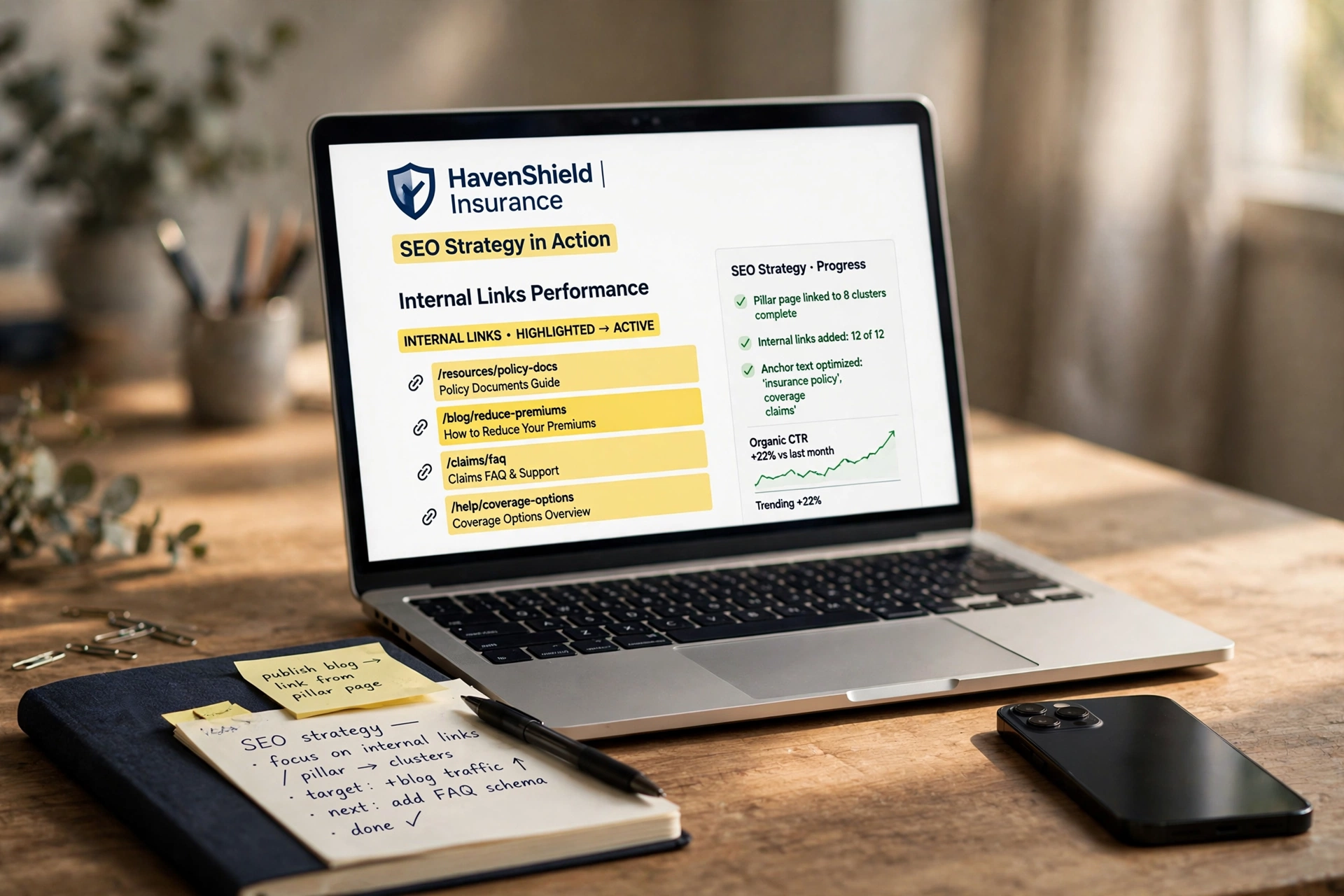
Create a main 'Pillar Page' for your primary city (e.g., 'The Definitive Guide to Real Estate in Dallas'). Then, build hundreds of 'Satellite Pages' that link back to it. Each satellite page should focus on a specific micro-niche. For example, a page on 'Living in Highland Park' should link to the main Dallas guide, creating a semantic web that tells search engines you are the ultimate authority on the region.
Step 3: Integrating Generative Engine Optimization (GEO)
Standard SEO is no longer enough. To be cited by Perplexity, ChatGPT, and Google's SGE, your pages must use structured Schema.org markup. This allows AI to 'read' your data as facts. If you want to know how to achieve this, our guide on how to get cited by ChatGPT, SearchGPT, and Perplexity AI provides the technical blueprint.
Step 4: Automating the Capture with BizAI Intelligence
Once the traffic arrives, you cannot afford to let them fill out a generic 'Contact Us' form. Using BizAI Intelligence, you embed an AI Sales Agent that interacts with the visitor. The agent can ask, 'Are you looking to upgrade to a larger home, or are you investing for rental income?' based on the page the user is reading. This agent then qualifies the lead and syncs the data directly to your CRM.
If you are managing a larger team, you should explore how to connect AI sales agents to CRM & webhooks for auto-booking to ensure no lead falls through the cracks.
Common Objections and the Data-Backed Reality
Many agency owners are hesitant to move away from paid leads because they fear the 'time to result' associated with organic growth. However, the data suggests that the risk of remaining on paid portals is far higher.
Objection 1: "SEO takes too long to work."
Most people assume organic growth takes years. However, by using a programmatic approach and the Google Indexing API, you can get hundreds of pages crawled and indexed in days, not months. When you deploy 300+ pages at once, you aren't waiting for one page to rank; you are casting a wide net that captures a diverse range of long-tail traffic immediately. In practice, this means you start seeing 'trickle' leads within weeks and a 'flood' of leads within a quarter.
Objection 2: "AI content is low quality and won't rank."
This is true for 'AI slop'—generic articles written by prompts. But a professional organic engine uses a data-first approach. By blending real-time market statistics, local government data, and professional expertise with AI scaling, you create 'Helpful Content' that Google rewards. The difference is in the architecture. This is why understanding GEO vs traditional SEO is fundamental in 2026.
Objection 3: "I don't have the time to manage 500 pages."
This is the core reason why BizAI Intelligence exists. You don't manage the pages; the system does. The programmatic engine handles the updates, the internal linking, and the lead capture. The agent handles the qualification. Your only job is to show up to the pre-qualified appointments on your calendar.
Frequently Asked Questions
How long does it take for an organic lead generation engine for real estate agencies to show ROI?
While traditional SEO can take 6–12 months, a programmatic engine focuses on long-tail, low-competition keywords that can rank much faster. Typically, agencies see an increase in organic impressions within the first 30 days and a measurable increase in qualified lead volume by day 90. Because the system captures a wide array of specific local queries, the 'compound' effect happens quickly. Once the AI agents begin converting this traffic into booked appointments, the ROI often surpasses paid ad spend by the end of the first quarter.
Is a programmatic approach better than a traditional blog for real estate?
Yes, because a blog is usually a chronological stream of consciousness, whereas a programmatic engine is a structured database of information. A blog post about 'Winter Home Maintenance' might get some views, but a programmatic page about 'Property Tax Rates in [Specific Neighborhood]' attracts someone who is actively planning to buy or sell in that exact area. The latter has a significantly higher conversion rate. By organizing content into pillars and satellites, you build a semantic map that search engines trust more than a random collection of blog posts.
How does AI qualification differ from a standard lead form?
Standard forms are friction-heavy and impersonal; most users abandon them or provide fake information. AI qualification is conversational and dynamic. Instead of a static field, the AI agent engages the user: 'I see you're looking at homes in the West End; are you looking for a primary residence or an investment property?' This conversational flow captures more data and higher-quality intent. Furthermore, it scores the lead in real-time, allowing the agency to prioritize high-net-worth buyers over window shoppers.
Can I use this strategy if I only operate in one small city?
Actually, this strategy is more effective in smaller markets because you can achieve total topical dominance. In a small city, there may only be 20-30 key neighborhoods. By building an exhaustive engine that covers every single one of those neighborhoods in detail, you effectively become the 'digital mayor' of that city. When anyone searches for anything related to real estate in that area, your agency is the only logical answer, creating a moat that larger national portals cannot penetrate.
Does an organic engine work for both buyers and sellers?
Absolutely. While buyers search for neighborhood amenities and school districts, sellers search for home valuation, market trends, and 'how to sell' guides for their specific area. An organic lead generation engine for real estate agencies targets both. For sellers, the engine provides data-driven insights into the current value of their specific street, positioning the agent as the most knowledgeable person to list the property. This dual-funnel approach ensures a steady stream of both listings and buyers.
Final Thoughts on Organic Lead Generation Engine for Real Estate Agencies
The real estate market in 2026 is no longer won by the agent with the biggest ad budget, but by the agency with the most authority. Relying on third-party lead portals is a precarious strategy that leaves your business vulnerable to price hikes and lead degradation. Building a dedicated organic lead generation engine for real estate agencies allows you to reclaim your independence and build a compounding asset that generates high-intent leads 24/7.
By combining programmatic SEO, GEO optimization, and autonomous AI qualification, you move from being a commodity to becoming the definitive local expert. Stop renting your growth and start owning your market. If you are ready to scale your organic acquisition and automate your appointment setting, visit BizAI Intelligence to deploy your engine today.
AI Search Accelerator: 1-on-1 Strategy Session
Claim one of the 10 monthly slots. Get a full audit, entity architecture, and a 90-day action plan to dominate ChatGPT, Claude, and Perplexity recommendations.