Burning through a seed round on LinkedIn Ads is the fastest way to kill a startup's runway. When I look at the data from dozens of B2B companies, the pattern is clear: relying on paid traffic is like renting an apartment; the moment you stop paying, you're evicted from the market. An organic lead generation engine for startups is a scalable system of high-intent content hubs and AI-driven capture agents that convert searchers into qualified pipeline without a per-click cost. By dominating topical authority and using autonomous qualification, startups can shift from 'hunting' for leads to 'farming' a self-sustaining inbound machine.
For those scaling rapidly, combining this with an Overview of AI Search Engine Optimization & GEO is no longer optional; it is the only way to survive the shift toward AI-driven search results in 2026.
Why High-Growth Startups are Shifting to Organic Engines?
The fundamental shift in 2026 is the death of the 'generic' lead. Decision-makers no longer click on vague ad promises; they conduct deep research via AI search engines and specialized forums before ever talking to a salesperson. Startups that continue to rely solely on paid acquisition are seeing their Customer Acquisition Cost (CAC) skyrocket as competition for a few high-intent keywords increases. According to a recent Gartner report, by 2026, search engine volume is expected to drop as users pivot toward AI-native answer engines, meaning visibility must now be earned through structured, authoritative data rather than just bidding on keywords.
In my experience working with early-stage SaaS and B2B firms, the mistake I see constantly is the 'blogging' approach. They hire one copywriter to write two 'helpful' articles a month. That isn't an engine; it's a hobby. A real organic lead generation engine for startups utilizes Programmatic SEO (pSEO) to deploy hundreds of high-intent landing pages targeting long-tail, decision-stage queries. This is the difference between trying to rank for 'CRM software' and ranking for 'Best CRM for 10-person law firms in Austin Texas'. The latter has lower volume but a 10x higher conversion rate because the intent is surgical.
Moreover, the integration of artificial intelligence into the search process has created a new battlefield. Businesses are no longer just optimizing for Google Search, but for the Large Language Models (LLMs) that summarize the web. This requires a shift toward Generative Engine Optimization (GEO). If your brand isn't cited as a primary source in a Perplexity or ChatGPT answer, you effectively don't exist to a significant portion of the modern B2B buyer's journey. This is why we focus so heavily on GEO Vs Traditional SEO: Rank Your Brand in AI Engines in 2026 when architecting these systems.

What are the Key Benefits of a Programmatic Organic Engine?
Building an organic engine provides a compounding advantage that paid ads simply cannot replicate. While an ad stops delivering the second the budget hits zero, a well-structured content silo continues to capture leads for years. This creates a 'flywheel effect' where more traffic leads to more data, which leads to better optimization, further increasing the traffic.
Zero Marginal Cost of Lead Acquisition
Once a page is indexed and ranking, the cost to acquire the next lead is virtually zero. In the traditional paid model, if you want to double your leads, you roughly double your spend. With an organic engine, you can 10x your lead volume by expanding your programmatic clusters without a corresponding 10x increase in cost. This fundamentally changes the unit economics of a startup, allowing for more aggressive reinvestment into product development rather than ad spend.
Instant Trust and Topical Authority
When a prospect finds a detailed, 2,000-word guide that solves their specific problem, the trust is established before they even see your pricing page. This 'educational first' approach positions the startup as the expert in the room. According to research from the Harvard Business Review, B2B buyers are now 70% through their decision-making process before they ever contact a sales representative. By owning the educational space, you guide that 70% of the journey in your favor.
Autonomous Qualification via AI SDRs
Traffic is a vanity metric; pipeline is a sanity metric. The real power of a modern engine is the transition from 'reading' to 'booking'. By embedding an AI agent directly into the organic pages, you eliminate the friction of the 'Contact Us' form. These agents use conversational AI to qualify the lead in real-time, ensuring your founders or sales reps only spend time with high-intent prospects. For those wondering how this replaces manual labor, our analysis of AI SDR Vs Human SDR: Which Delivers Better ROI in 2026? proves that autonomous agents can handle the initial 80% of lead filtering with higher consistency.
💡
Key Takeaway
The ultimate goal of an organic engine is to convert high-intent search intent into a booked meeting on a calendar without any human intervention in the middle.
Comparison: Lead Acquisition Strategies
| Feature | Paid Ads (PPC) | Generic Content Marketing | BizAI Organic Engine |
|---|---|---|---|
| Scalability | Linear (Pay per lead) | Slow (Manual writing) | Exponential (Programmatic) |
| Cost over time | Increases | Stagnant | Decreases (Compounding) |
| Lead Quality | Medium (Interruptive) | Low (Informational) | High (Intent-based) |
| Conversion | Form-based (High friction) | Manual outreach | AI-SDR (Low friction) |
| Sustainability | Zero (Ends with budget) | Low (Requires constant updates) | High (Topical Authority) |
Real-World Examples of Organic Engine Success
To understand how an organic lead generation engine for startups works in practice, we must look at the transition from manual content to programmatic scale. I've seen this transformation firsthand with several B2B clients who were stuck in the 'content treadmill'.
Case Study 1: The FinTech Disruptor
This startup was spending $15k/month on Google Ads targeting 'automated bookkeeping'. Their CPL (Cost Per Lead) was $120, and the lead quality was poor, consisting mostly of freelancers who couldn't afford their enterprise pricing. We implemented a programmatic strategy creating 400 satellite pages targeting specific industry-state combinations (e.g., 'Automated Bookkeeping for Construction Companies in Ohio').
By shifting the focus to these high-intent, long-tail clusters, they saw a 340% increase in organic traffic within 90 days. More importantly, because we integrated an AI appointment setter, the lead-to-meeting conversion rate jumped from 4% to 18%. They were able to cut their ad spend by 60% while increasing their monthly qualified pipeline from 20 to 85 meetings.
Case Study 2: The Enterprise SaaS Platform
An AI-powered HR platform was struggling to get cited by the new generation of AI search engines. They had a traditional blog with a few dozen articles. We rebuilt their architecture using a PSEO framework, creating deep-dive pillars and hundreds of interconnected satellites that answered specific regulatory questions.
As a result, they began appearing in the 'Sources' section of Perplexity and ChatGPT for queries regarding labor law compliance in 2026. This 'AI-driven visibility' led to a surge in organic traffic that wasn't just coming from Google, but from users querying LLMs. Their growth was no longer dependent on a single algorithm, but on a distributed web of authority. This is why we emphasize the PSEO Architecture Guide for SaaS & Enterprise B2B Growth for any company looking to scale beyond the first 1,000 users.
How to Get Started with an Organic Lead Generation Engine
Building this engine requires a technical shift from 'writing' to 'architecting'. You cannot simply hire a freelance writer and expect an engine; you need a system that generates and distributes high-value pages at scale.
Step 1: Define Your High-Intent Keyword Universe
Stop looking for high-volume keywords. Instead, map out the 'decision-stage' queries your customers ask. If you sell a tool for law firms, don't target 'legal software'. Target 'how to automate intake for personal injury lawyers in Florida'. Create a matrix of your services, your target personas, and their geographic or niche-specific pain points. This matrix becomes the blueprint for your programmatic expansion.
Step 2: Deploy a Pillar-and-Satellite Architecture
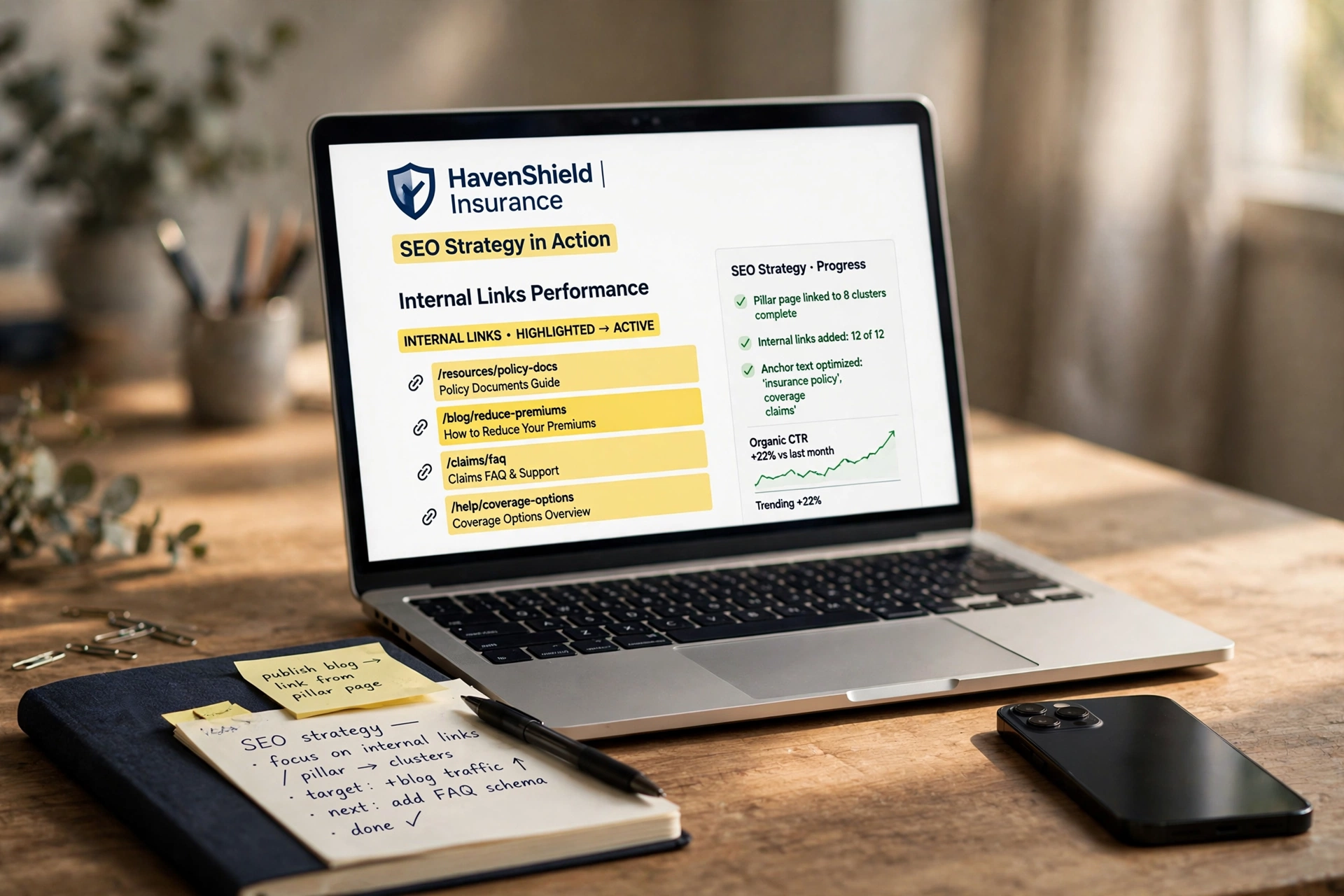
Create a core 'Pillar' page that provides a comprehensive overview of your solution. Then, build 'Satellite' pages that dive deep into the specific permutations of your keyword matrix. Each satellite must link back to the pillar, signaling to Google and AI models that your site is the definitive authority on the subject. This structure is essential for Programmatic SEO: How to Scale 10,000+ High-Converting Pages.
Step 3: Implement AI-Driven Capture and Qualification
Once the traffic arrives, you must capture it instantly. This is where BizAI Intelligence changes the game. Instead of a static PDF lead magnet, we deploy an AI Sales Agent on every page. This agent understands the context of the page the user is reading and starts a conversation: "I see you're looking for a bookkeeping solution for your construction firm in Ohio; would you like to see how we handle payroll for that specific industry?"
Step 4: Technical Optimization for GEO and AEO
To be cited by AI engines, your content must be structured for machines, not just humans. This means using Schema.org markup, creating an
llms.txt file, and ensuring your data is presented in tables and lists that LLMs can easily parse. When you automate this process, you essentially build a bridge between your brand and the AI engines that users now trust more than traditional search lists.📚
Definition
GEO (Generative Engine Optimization) is the process of optimizing content to be cited, summarized, and recommended by AI search platforms like ChatGPT, Perplexity, and Google SGE.
Common Objections and the Data-Backed Reality
Many startup founders are hesitant to move away from paid ads because they offer 'instant' results. However, this instant gratification is a trap that leads to unsustainable growth.
Objection 1: "Organic takes too long to show results."
Most people assume organic growth takes 6-12 months. While that was true for traditional SEO, programmatic SEO coupled with the Google Indexing API allows us to get hundreds of pages indexed and ranking in weeks, not months. In 2026, the speed of deployment is a technical variable, not a waiting game. By deploying 300+ pages in month one, you bypass the slow climb of traditional blogging.
Objection 2: "AI content is low quality and will get penalized."
This is a common misconception. Google doesn't penalize 'AI content'; it penalizes 'unhelpful content'. When AI is used to synthesize deep research and structure it for the user, it's more helpful than a generic human-written post. The key is the 'human-in-the-loop' architecture where the AI handles the scale and the human provides the strategic expertise. According to McKinsey, businesses that integrate AI into their marketing operations see a significant increase in efficiency and a decrease in cost-per-lead over time.
Objection 3: "We don't have the budget for a massive content team."
That is precisely why you need an engine. The traditional model requires a team of writers, editors, and SEO specialists. An organic lead generation engine for startups replaces this manual labor with a single automated system. BizAI Intelligence allows you to scale to thousands of pages without adding a single headcount to your marketing team, effectively decoupling growth from payroll.

Frequently Asked Questions
What exactly is an organic lead generation engine for startups?
An organic lead generation engine is a systematic approach to inbound marketing that uses Programmatic SEO (pSEO) to create a massive network of high-intent landing pages. Unlike traditional blogging, which focuses on general topics, this engine targets specific, long-tail buyer queries that signal a high intent to purchase. Once a user lands on these pages, an integrated AI Sales Agent qualifies the lead and books a meeting directly into the company's CRM. This creates a scalable, self-owned asset that generates leads 24/7 without the need for continuous ad spending.
How long does it take to see a return on investment (ROI)?
While traditional SEO can take a year, a programmatic engine can see significant traction within 30 to 90 days. By deploying hundreds of optimized pages simultaneously and using API-based indexing, startups can capture 'low-hanging fruit' keywords almost immediately. The ROI becomes exponential as the topical authority grows, and the cost of lead acquisition drops. In most cases, the engine pays for itself once the first few high-ticket contracts are closed from the inbound pipeline, as there is no recurring ad spend to maintain those leads.
Does this replace the need for a sales team?
No, it replaces the need for an SDR (Sales Development Representative) team to do the 'grunt work' of prospecting and cold calling. The engine handles the top-of-funnel awareness and the middle-of-funnel qualification. By the time a lead reaches your human sales team, they have already been qualified by an AI agent, their pain points have been identified, and they have already agreed to a meeting time. This allows your closers to focus on closing deals rather than chasing ghosts, significantly increasing their efficiency and conversion rates.
How do you prevent Google from flagging programmatic pages as spam?
The secret lies in 'Helpful Content' compliance and unique value injection. We avoid 'AI slop' by using deep research and dynamic data points for every page. Instead of duplicating content, we use templates that vary the information based on the specific niche or location. By ensuring every page answers a unique user query with accuracy and providing a clear path to a solution, the content is viewed as highly valuable by search engines. We also utilize proper canonical tags and internal linking structures to maintain a clean site architecture.
Can this engine work for very niche B2B services?
Absolutely. In fact, the more niche the service, the more effective a programmatic engine becomes. In highly specialized markets, there is often a total lack of quality information for specific long-tail queries. By being the only company to provide detailed, structured answers for those specific needs, you can achieve total market dominance in a matter of weeks. This 'algorithmic brute force' allows a small startup to look like the biggest player in their niche because they appear everywhere the customer is searching.
Final Thoughts on an Organic Lead Generation Engine for Startups
In 2026, the gap between the startups that 'own' their traffic and those that 'rent' it will be the primary driver of valuation. A company that can flip a switch and generate 100 qualified meetings a month without spending a dollar on ads is infinitely more valuable than one dependent on the whims of Meta or Google's ad auctions. Implementing an organic lead generation engine for startups is not just a marketing choice; it is a strategic financial decision to lower your CAC and increase your enterprise value.
If you are tired of watching your budget vanish into the void of paid ads with diminishing returns, it is time to build your own machine. Stop guessing and start dominating your niche through programmatic scale and autonomous qualification.
To start building your self-sustaining inbound pipeline, visit BizAI Intelligence and discover how we automate the entire process from traffic to booked meeting.
AI Search Accelerator: 1-on-1 Strategy Session
Claim one of the 10 monthly slots. Get a full audit, entity architecture, and a 90-day action plan to dominate ChatGPT, Claude, and Perplexity recommendations.