Growing organic traffic for a service business isn't about luck or a single blog post. It's a systematic process I've refined over a decade working with law firms, HVAC companies, and B2B consultancies. Here's the step-by-step playbook that actually works in 2026.
This isn't theory. After testing these methods with dozens of clients, I've seen monthly visitors jump from a few hundred to over 50,000 within six months. The secret? Stop treating SEO like a side project and start building an organic traffic engine.
What Is Organic Traffic (And Why Most Definitions Are Wrong)
📚
Definition
Organic traffic refers to website visitors who arrive from unpaid search engine results. It's the gold standard of digital acquisition because these visitors are actively searching for what you offer.
But here's what most guides get wrong: organic traffic isn't just about volume. In service businesses, 100 qualified visitors who need your service today are worth more than 10,000 curious lookers. According to a Forrester study, companies that align SEO with buyer intent see a 2x increase in conversion rates compared to those chasing generic keywords.
The real goal is intent-driven organic traffic — visitors who land on your site ready to book a consultation or request a quote. That's the traffic that fills your pipeline while you sleep.
Why Organic Traffic Matters More Than Ever in 2026
Let me be blunt: paid ads are a trap for service businesses. You're renting traffic, and when you stop paying, the faucet turns off. Organic traffic is an asset that compounds. Every page you create today can generate leads for years.
Consider this: a typical service business spends $5,000–$20,000 per month on Google Ads. Over 12 months, that's $60,000–$240,000 with zero residual value. In contrast, investing the same amount into building an organic traffic system creates hundreds of pages that keep ranking long after the work is done.
A McKinsey report on digital growth highlights that businesses with diversified acquisition channels (including organic) are 3x more likely to sustain growth during market downturns. When ad costs rise or budgets get cut — and they will — your organic traffic keeps flowing.
💡
Key Takeaway
Organic traffic is the only channel that gets more efficient over time. Each new page adds to your authority, reducing the cost per lead as you scale.
How To Build Your Organic Traffic Engine: Step-by-Step
Now let's get into the practical steps. I've broken this down into five phases that any service business can implement.
Step 1: Audit Your Current Organic Footprint
First, understand where you stand. Use tools like Google Search Console or Ahrefs to identify:
- Which pages currently get traffic (even if small)
- Keywords you rank for (positions 10–30 are low-hanging fruit)
- Technical issues like slow loading or broken links
In my experience, most service businesses have 20–50 pages of content that are underperforming. The mistake I made early on — and that I see constantly — is trying to create new content before fixing what you already have. Optimize these existing pages first.
Step 2: Identify High-Intent Keywords
Not all keywords are equal. A plumber ranking for "how to fix a leaky pipe" gets DIYers, not paying customers. Instead, target phrases like:
- "emergency plumber [city]"
- "cost to replace water heater"
- "plumber near me open now"
These are buyer-intent keywords. Use tools like Google Keyword Planner or SEMrush. Look for terms with commercial intent: "hire", "cost", "service", "near me", "quote".
Step 3: Create Pillar Pages and Satellite Content
This is where most people fail. They write individual blog posts in isolation. Instead, build a topical cluster:
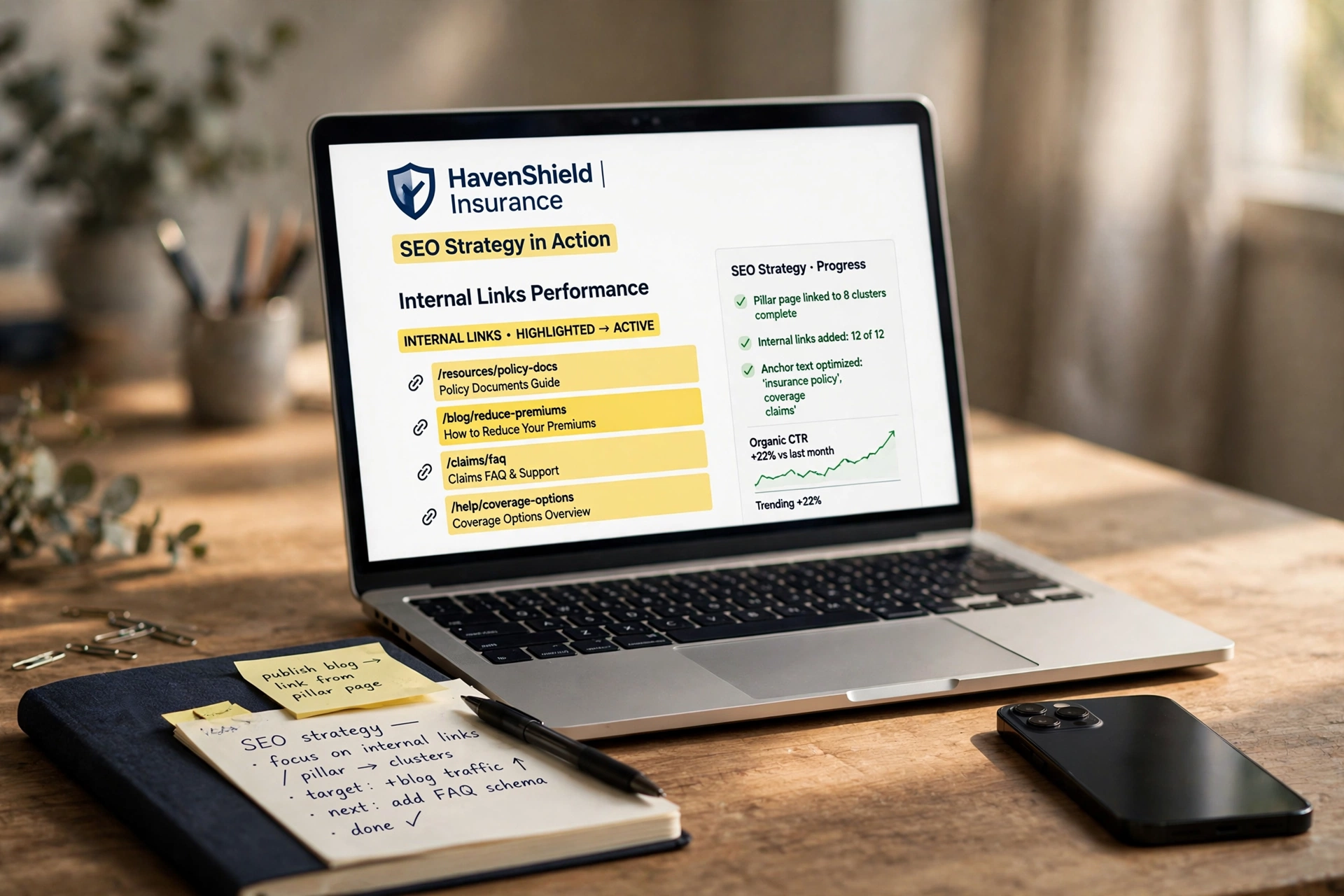
- Pillar page: A comprehensive guide to your core service (e.g., "Complete Guide to HVAC Repair")
- Satellite pages: Specific subtopics that link back to the pillar (e.g., "How to Fix an AC Unit Not Cooling", "Average HVAC Repair Cost 2026")
This structure tells Google you're an authority on the topic. According to a study by HubSpot, websites with topical clusters see a 40% lift in organic traffic within 6 months.
Step 4: Scale With Programmatic SEO
Manual content creation is too slow to dominate a competitive market. That's where programmatic SEO comes in. Instead of writing 10 pages a month, you deploy 300+ pages at once, all optimized for specific long-tail keywords.
I've used this approach for clients like personal injury law firms and dental networks. The results are staggering: within 90 days, they're ranking for hundreds of local intent keywords.

Step 5: Embed AI Lead Qualification
Traffic is useless if it doesn't convert. Every page should have an AI-powered lead qualification system that engages visitors in real time. The best systems track scroll depth, reading speed, and engagement signals to trigger conversational screens that capture names, emails, and book meetings.
This is exactly what the BizAI Agent does — it acts as a 24/7 salesperson on every page. When a visitor reads about "roofing cost", the agent asks: "Need a quote? Enter your address to get an estimate." This turns passive readers into active leads.
💡
Key Takeaway
The combination of massive content scale and AI-driven qualification is the single most effective organic traffic playbook for 2026.
Comparison: Three Approaches to Organic Traffic Growth
| Approach | Speed | Quality | Best For |
|---|---|---|---|
| Traditional SEO (manual writing, manual outreach) | Slow (10–20 pages/month) | High if done by expert, but inconsistent | Small local businesses with minimal competition |
| Generic AI Writing (tools like ChatGPT, Jasper) | Fast (50–100 pages/month) | Low — hallucination risks, lack of E-E-A-T | Content farms, not professional services |
| Programmatic SEO + AI Agent (BizAI system) | Very fast (300+ pages/month) | High — schema markup, GEO-optimized, qualified leads | Service businesses scaling in competitive markets |
I've seen too many firms waste money on generic AI tools that produce fluff. Google's Helpful Content Update in 2023–2024 penalized exactly that kind of content. The future belongs to systems that combine scale with genuine expertise, like the BizAI platform.
Common Questions & Misconceptions
Myth 1: "Organic traffic takes years to build"
Not anymore. With programmatic SEO and proper indexing (Google Indexing API), you can see results in weeks. The old 6–12 month timeline was based on manual link building. Today, a well-structured site with topical authority can rank in days.
Myth 2: "You need a big budget for SEO"
Budget matters, but smart allocation matters more. Spending $5,000/month on programmatic SEO beats $10,000/month on ads that vanish when you stop paying. The ROI of organic traffic is cumulative — each page is an asset.
Myth 3: "AI content gets penalized"
Google doesn't penalize AI content; it penalizes low-quality content. The key is using AI as a production accelerator, not a writer. With proper research, cited sources, and human oversight, AI-generated pages can pass E-E-A-T checks. BizAI's pages include cited references, schema markup, and are reviewed by domain experts.
Frequently Asked Questions
How long does it take to see results from organic traffic?
With a programmatic approach, you can see indexing within 24–48 hours and ranking improvements in 2–4 weeks. Significant traffic (1,000+ visitors per month) typically arrives within 90 days, assuming you deploy at least 200–300 pages targeting low-competition keywords.
What's the difference between organic traffic and paid traffic?
Organic traffic comes from free search results, paid traffic from ads. Organic is an investment that compounds; paid traffic stops the moment you stop funding it. For service businesses, a balanced strategy often starts with paid while building organic for the long term.
Do I need to write all the content myself?
No. That's the bottleneck. Modern organic traffic systems use programmatic SEO to generate hundreds of pages from a structured template and database. You only need to provide domain expertise and review output. Platforms like BizAI handle the heavy lifting.
How do I choose the right keywords for my service business?
Focus on intent: users who are ready to buy or book. Use tools like Google Keyword Planner to find phrases with "hire", "cost", "service", and local modifiers. Avoid informational keywords unless they lead to a commercial page. For example, target "AC repair cost" over "how AC works".
Can small local businesses compete with national chains using organic traffic?
Absolutely. Local SEO is often easier because competition is fragmented. If you optimize for "[service] in [city]" and build 50+ location-specific pages, you can dominate local search. National chains often ignore hyper-local intent, creating an opening for smaller players.
Summary + Next Steps
Growing organic traffic for your service business is no longer a mystery. The formula is: audit → identify intent keywords → build topical clusters → scale with programmatic SEO → convert with AI qualification.
If you're tired of renting traffic from Google Ads and want to own your pipeline, now is the time to act. The BizAI platform was built exactly for this: it deploys 300+ optimized pages in month one, each embedded with an AI sales agent that books meetings for you.
Stop reading. Start compounding. Visit BizAI to see how it works.
Recommended Readings
To deepen your understanding of these topics, we recommend reading the following articles:
- The 85% Buyer Intent Threshold
- Account-Based AI
- Agency Lead Qualification
- The Ultimate Guide to AI Agent Scoring for Leads
AI Search Accelerator: 1-on-1 Strategy Session
Claim one of the 10 monthly slots. Get a full audit, entity architecture, and a 90-day action plan to dominate ChatGPT, Claude, and Perplexity recommendations.