Introduction
If you run a service business — law firm, dental practice, HVAC company, or consultancy — you've probably heard the term organic traffic thrown around. But what does it actually mean, and more importantly, how do you grow it? Organic traffic is the lifeblood of a sustainable online presence. It's the visitors who find your website through unpaid search results on Google, Bing, or other search engines. Unlike paid ads, which stop the moment you cut the budget, organic traffic compounds over time. In my experience working with dozens of service businesses, the ones that invest in organic growth consistently outperform competitors who rely solely on paid channels. This article will define organic traffic, explain why it matters for service businesses, and give you a battle-tested playbook to grow it in 2026.

What Is Organic Traffic? A Complete Definition
📚
Definition
Organic traffic refers to visitors who land on your website as a result of unpaid (non-paid) search engine results. It is earned through search engine optimization (SEO) efforts — content relevance, site authority, technical structure, and user experience.
Organic traffic differs from paid traffic in one crucial way: it's free in the sense that you don't pay per click, but it requires investment in content, technical SEO, and authority building. According to a study by BrightEdge, organic search drives 53% of all website traffic, making it the largest channel for most businesses. For service businesses, this is even more pronounced. A personal injury lawyer or a plumber doesn't need millions of visitors — they need high-intent visitors searching for their specific service. That's the power of organic traffic: it brings people actively looking for what you offer.
Here's the thing though: organic traffic is not a set-it-and-forget strategy. It requires consistent effort, but the payoff is immense. I've seen service businesses double their leads within 12 months just by focusing on a handful of high-impact pages.
Why Organic Traffic Matters for Service Businesses in 2026
The landscape in 2026 is hyper-competitive. Paid ad costs are rising — according to a recent report from Gartner, the average cost per click for law firms has increased by over 30% since 2022. Meanwhile, buyer behavior has shifted. A Forrester study found that 70% of B2B buyers prefer to research independently before engaging with sales. They don't want to be sold to; they want to find answers. Organic traffic is the vehicle that delivers those answers.
Let me give you a concrete example. A roofing company I worked with was spending $5,000 per month on Google Ads. They were getting leads, but each lead cost $200. After we built out a library of service-area pages and educational content (e.g., "How to Choose a Roofing Contractor in Denver"), organic traffic grew month over month. Within six months, organic leads surpassed paid leads. The cost per lead dropped to $12. That's the compounding effect of organic traffic.
💡
Key Takeaway
Organic traffic lowers your customer acquisition cost over time, builds trust, and creates a moat against competitors who rely on paid ads.
How to Grow Organic Traffic: A Step-by-Step Plan
Now let's get practical. How do you actually grow organic traffic for a service business? Here's the process I've refined over the years.
1. Identify Your Topical Authority Pillars
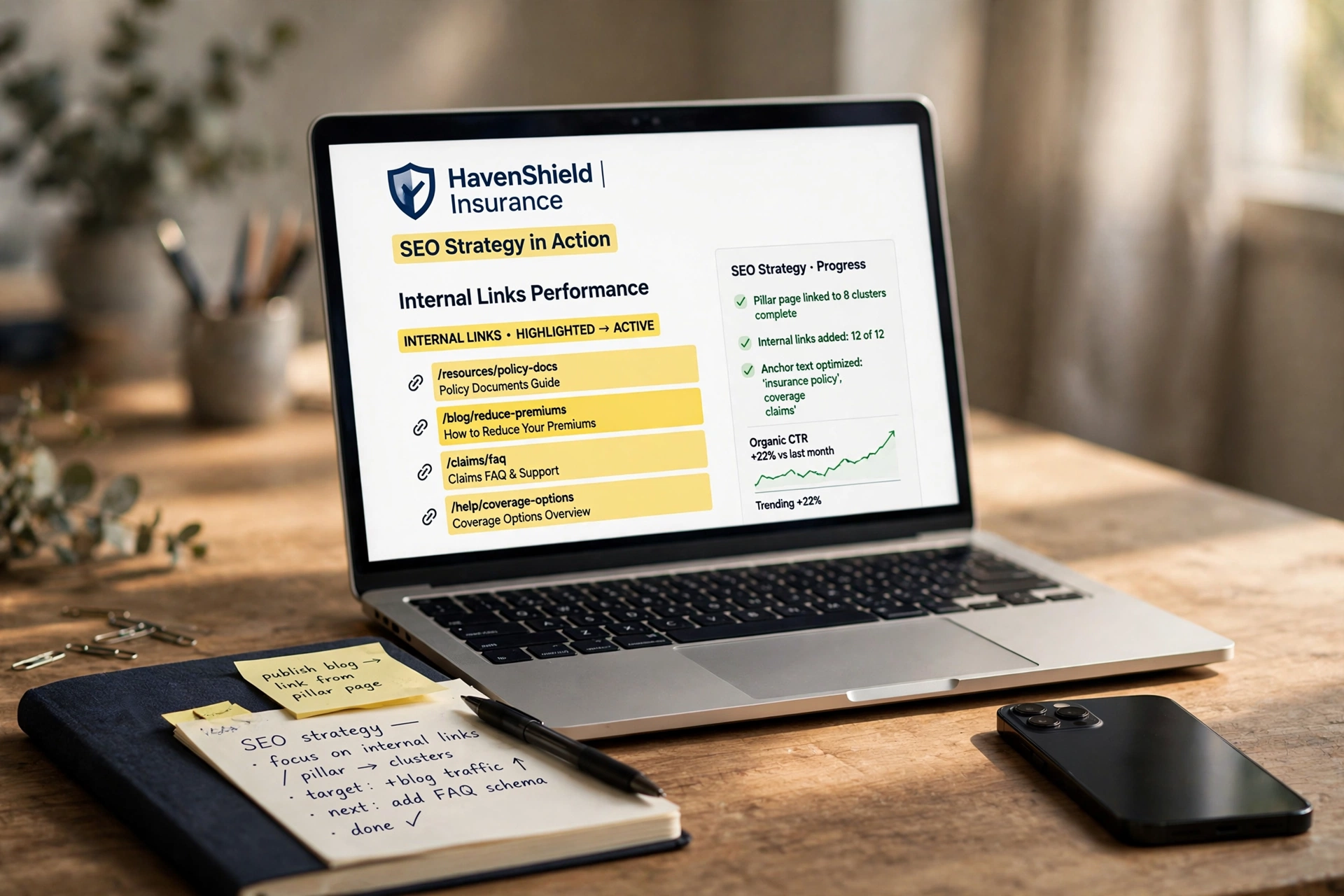
Don't write about everything. Focus on the core services you offer and the questions your customers ask before they buy. For a family law firm, that might be "divorce process," "child custody," and "alimony." Create a pillar page for each broad topic, then link to satellite pages that cover long-tail keywords (e.g., "How to modify child custody in Texas").
2. Build Content at Scale with Programmatic SEO
Manual content creation is too slow for rapid growth. Programmatic SEO uses templates and data to generate hundreds of targeted pages. For example, a personal injury law firm can create unique pages for every city they serve, combined with injury types: "Car accident lawyer in Austin," "Truck accident lawyer in Dallas," etc. BizAI's platform is built for this — deploying 300+ pages in month one that are optimized for search and designed to capture intent. Each page includes an AI SDR that qualifies leads in real time.
3. Optimize for Search Generative Experience (SGE) and AI Platforms
In 2026, Google's SGE and AI chat platforms (ChatGPT, Perplexity) are major traffic sources. Your content needs to be structured for these systems. Use schema markup, FAQ schema, and clear definitions. BizAI's pages are engineered with structured Schema.org graph markup and /llms.txt files to ensure LLMs cite your site as an authoritative source.
4. Earn Backlinks and Local Citations
Local SEO is critical for service businesses. Get listed in local directories, earn citations from industry associations, and create linkable assets (e.g., a guide to "2026 Home Renovation Costs"). Backlinks from local news sites or .edu domains boost your domain authority.
5. Track and Iterate
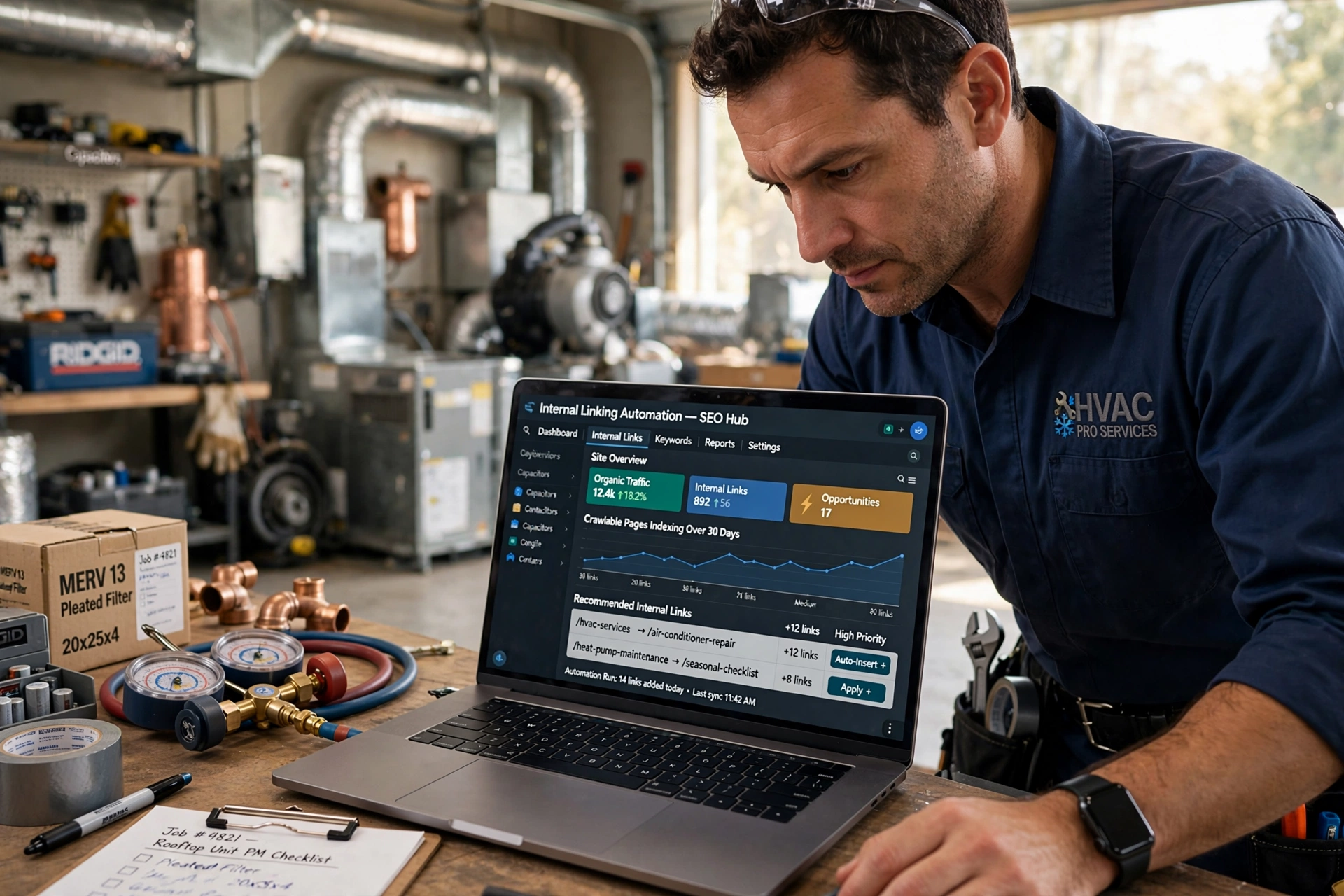
Use tools like Google Search Console and Ahrefs to monitor which pages drive traffic. Double down on what works, prune or improve underperformers. Organic traffic is a system, not a one-time project.
Comparison: Traditional SEO vs. Generic AI Content vs. Programmatic + AI
| Approach | Pros | Cons | Best For |
|---|---|---|---|
| Traditional SEO | High-quality manual content; proven results | Slow; expensive; requires specialized writers | Businesses with large budgets and patience |
| Generic AI Content | Fast; cheap | Low quality; may get penalized by Google; no authority | Short-term experiments, not sustainable |
| Programmatic + AI (BizAI) | Scalable; high engagement; integrated lead capture | Requires technical setup; ongoing optimization | Service businesses wanting to dominate a market quickly |
In my opinion, most service businesses are better off with a programmatic approach that combines scale with quality controls. The generic AI content approach is a race to the bottom. I've had clients come to me after their sites were hit by Google's Helpful Content Update because they used cheap AI writers. Don't make that mistake.

Common Questions & Misconceptions
Myth 1: Organic traffic is free.
Correction: It doesn't cost per click, but it requires investment in content creation, SEO tools, and sometimes agency fees. Think of it as an asset you build.
Myth 2: SEO is dead because of AI search.
Not at all. AI search actually rewards authoritative, well-structured content. If you optimize for SGE, you can get traffic from both Google and ChatGPT.
Myth 3: You need thousands of pages to see results.
For local service businesses, even 50–100 well-optimized pages can drive significant leads. It's about intent, not volume.
Myth 4: Organic traffic takes too long.
It does take time — typically 3–6 months to see traction — but it compounds. Unlike paid ads, the traffic you build today lasts for years.
Frequently Asked Questions
What is organic traffic in simple terms?
Organic traffic is the number of people who visit your website after clicking a non-paid search result. It's earned through good SEO, not bought with ads.
How long does it take to grow organic traffic for a service business?
Most businesses see initial results in 3–4 months, with significant growth by month 6–12. Programmatic SEO can accelerate this by deploying many targeted pages at once.
What is the best strategy to increase organic traffic in 2026?
Focus on topical authority: create comprehensive pillar pages around your core services, supported by hundreds of satellite pages for specific locations or questions. Use programmatic SEO to scale this efficiently.
Do I need to hire an agency for organic traffic growth?
Not necessarily. Tools like BizAI automate much of the process. However, if you lack time or expertise, an agency specializing in programmatic SEO can help.
Can organic traffic replace paid ads?
For many service businesses, yes — over time. Organic traffic typically has higher conversion rates because visitors are further along in their buyer journey. You can eventually reduce ad spend and rely on organic as your primary channel.
Summary + Next Steps
Growing organic traffic is the smartest investment a service business can make in 2026. It provides consistent, high-intent leads without the ever-increasing cost of paid ads. Start by defining your topical pillars, then build pages at scale using a programmatic approach. Tools like BizAI can deploy 300+ optimized pages in a month, each with an AI SDR to capture and qualify leads 24/7.
Ready to stop renting traffic and start owning it? Visit BizAI GPT to see how our dual-engine system (organic traffic + AI lead qualification) can transform your business.
Recommended Readings
To deepen your understanding of these topics, we recommend reading the following articles:
- The 85% Buyer Intent Threshold
- Account-Based AI
- Agency Lead Qualification
- The Ultimate Guide to AI Agent Scoring for Leads
AI Search Accelerator: 1-on-1 Strategy Session
Claim one of the 10 monthly slots. Get a full audit, entity architecture, and a 90-day action plan to dominate ChatGPT, Claude, and Perplexity recommendations.