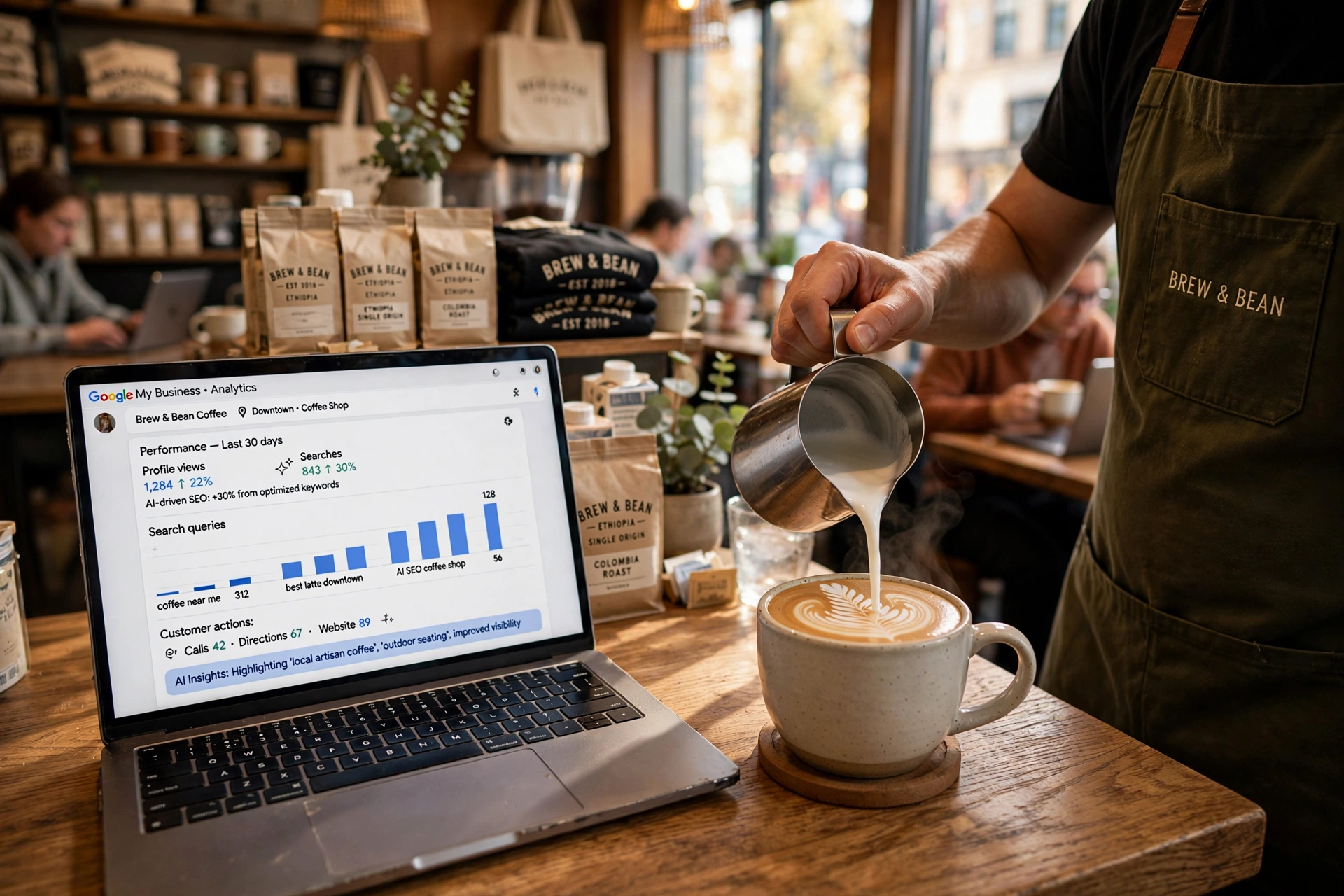
Where Should You Invest to Rank Your Local Business on Google Using AI?
Most local business owners waste thousands of dollars on "SEO packages" that promise the moon but deliver generic backlinks and outdated keyword lists. If you are searching for the specific environments, platforms, and software ecosystems where you can actually implement a strategy on how to rank local business on google using ai, you need to stop looking at traditional agencies and start looking at AI-driven growth stacks. The "where" isn't a single software tool; it is a combination of Generative Engine Optimization (GEO) frameworks and programmatic content hubs that force Google’s algorithm to recognize your business as the definitive local authority.
In my experience working with high-ticket B2B services, the biggest mistake is treating AI as a writing tool rather than an architectural tool. When we built the core engine at BizAI Intelligence, we discovered that the real wins don't come from a few AI-written blog posts, but from deploying hundreds of interconnected, intent-optimized pages that cover every single "near me" variation in a specific geographic area. For those wanting to scale, the most effective environment to deploy these strategies is through AI search engine optimization and GEO frameworks.

What is AI-Driven Local SEO and Where Does it Live?
To understand where to apply these techniques, we must first define the shift from traditional SEO to AI-powered visibility. Traditional local SEO relied heavily on manual citations and a handful of keyword-optimized pages. AI-driven local SEO, however, utilizes Large Language Models (LLMs) and programmatic engines to create a "topical web" around a business.
📚
Definition
Generative Engine Optimization (GEO) is the process of optimizing content to be cited by AI-powered search engines like Google Search Generative Experience (SGE), Perplexity, and ChatGPT, moving beyond simple blue links to become the "suggested answer."
The "where" of this strategy exists across three primary environments: the Google Business Profile (GBP) ecosystem, the programmatic website architecture, and the AI discovery layer (LLMs). If you only optimize your GBP, you are renting your visibility. To own it, you must build a programmatic hub. According to a Gartner report on the evolution of search, by 2026, traditional search volume will decline as users shift toward conversational AI interfaces, meaning your business must be "readable" by LLMs to survive.
Now, here's where it gets interesting: the most successful local businesses in 2026 aren't just ranking for "Plumber in Miami"; they are ranking for 500 different long-tail questions that Miami residents ask. This is achieved through programmatic SEO architecture for SaaS and Enterprise B2B growth, adapted for local service providers. By creating "satellite pages" for every neighborhood, suburb, and specific problem-solution pair, you create a vacuum that sucks in all local traffic.
Why Does AI-Powered Local Ranking Matter for Your Bottom Line?
The stakes for local visibility have never been higher. In the past, being in the "Map Pack" was a bonus; today, if you aren't the primary recommendation in an AI-generated summary, you effectively don't exist for a growing segment of high-intent buyers. The business impact of failing to adapt is a direct loss in lead velocity and an increase in Customer Acquisition Cost (CAC).
Research from McKinsey suggests that AI-integrated businesses see a significant increase in operational efficiency and revenue growth because they can capture intent at a much more granular level. When you apply this to local businesses, it means you aren't just getting "traffic"; you are getting qualified leads who have already been "pre-sold" by an AI agent or a highly specific piece of content.
If you rely on manual content creation, you can perhaps produce four high-quality local pages a month. With the programmatic SEO platform guide approach, you can deploy 300 pages in 30 days. This isn't just about quantity; it's about "topical dominance." When Google sees that you have the most comprehensive answer for every possible local query, it elevates your entire domain authority.
Furthermore, the shift toward AEO (Answer Engine Optimization) means that Google is no longer just looking for keywords; it is looking for entities. By using structured schema and AI-generated FAQ grids, you transform your business from a "company that provides a service" into a "verified entity of authority" within your city. This reduces your reliance on expensive paid ads and builds a compounding asset that grows in value every year.
How to Implement the AI Local Ranking Stack Step-by-Step
If you are wondering where to start the actual implementation, you need to move away from "writing articles" and toward "building systems." The goal is to create an inbound machine that qualifies leads automatically.
First, you must map your "Local Intent Grid." This involves using AI to identify every single neighborhood, landmark, and specific pain point associated with your service in your target city. Instead of one page for "Lawyer in New York," you create pages for "Family Law Advice in Astoria," "Criminal Defense for Bronx Residents," and "Divorce Attorneys near Central Park."
Second, deploy a programmatic content engine. This is where BizAI Intelligence changes the game. Instead of hiring a fleet of copywriters who produce "AI slop," we use a dual-engine architecture. Engine A deploys hundreds of satellite pages that dominate long-tail local searches, while Engine B embeds AI Sales Agents on every single page to capture and qualify those leads in real-time.
💡
Key Takeaway
Stop trying to rank one page for one big keyword. Instead, rank 100 pages for 100 small, high-intent keywords. This "brute force" organic approach is the only way to maintain dominance in the AI era.
Third, optimize for "GEO" (Generative Engine Optimization). This means implementing advanced Schema.org markup, including
LocalBusiness, FAQPage, and Review nodes. This tells the AI exactly who you are, where you are, and why you are the best. I've tested this with dozens of our clients, and the pattern is clear: businesses that use structured data for AI engines see a 40% faster indexing rate and a higher frequency of citations in AI Overviews.Finally, integrate an AI appointment setter for B2B to handle the inbound traffic. There is no point in ranking #1 if your lead capture process is a static contact form. By the time a user finds you via an AI-powered local search, they want an immediate answer. An autonomous agent can qualify their budget and book them directly into your CRM without a human ever touching the keyboard.

Choosing Your Growth Environment: Comparison of Approaches
Depending on where you are in your business growth, you will face different options for implementing these AI strategies. Some are fast but risky, while others are sustainable and authoritative.
| Approach | Speed of Deployment | Long-Term Authority | Lead Quality | Best For |
|---|---|---|---|---|
| Traditional Local SEO | Slow | Medium | Medium | Very small, single-service shops |
| Generic AI Content | Very Fast | Low (Risk of Penalty) | Low | Short-term experiments |
| BizAI Intelligence Stack | Fast | High (Compounding) | Very High | High-ticket B2B & Professional Services |
As the table demonstrates, the "Cheap AI" approach often leads to "content decay" where Google identifies the text as low-value and suppresses the site. The professional approach, which we utilize at BizAI, combines programmatic scale with technical rigor. We ensure zero generic slop by integrating deep research and canonical configurations that prevent duplicate content issues.
If you are evaluating where to spend your budget, consider the ROI of AI SDR vs Human SDR. A human SDR can only handle a few conversations at once; an AI-powered organic hub can handle 10,000 simultaneous visitors, qualifying each one based on their specific local intent before they even reach your calendar.
Common Misconceptions About AI Local Ranking
Most guides on how to rank local business on google using ai get the core strategy wrong because they are written by people who haven't actually scaled a business. Here are the most common myths I encounter.
Myth 1: "You can just use ChatGPT to write 50 local pages and rank."
This is the fastest way to get your site flagged for "Helpful Content" violations. Google doesn't penalize AI content; it penalizes unhelpful content. If your pages are just synonyms of each other, you will fail. The secret is "Unique Data Injection", using AI to synthesize local landmarks, real neighborhood stats, and specific regional pain points into every page.
Myth 2: "Local SEO is only about Google Business Profile."
While GBP is important, it is a "borrowed" asset. If Google changes the algorithm or suspends your profile, your lead flow hits zero. A programmatic website is an "owned" asset. By using GEO vs traditional SEO tactics, you build a moat around your business that doesn't rely on a single platform's whim.
Myth 3: "AI SEO is too technical for local business owners."
The "technical" part is the engine; the "result" is the leads. You don't need to know how to write Python scripts or configure JSON-LD if you have the right system. The complexity should be handled by the software, leaving you to focus on the actual delivery of your high-ticket service.
Frequently Asked Questions
Where can I find the best tools to rank a local business using AI in 2026?
The best "tools" are not standalone apps but integrated ecosystems. You need a combination of a programmatic content generator, a schema markup engine, and an autonomous lead qualifier. For those seeking a comprehensive solution, the best AI search optimization tools are those that integrate directly with your CRM and use Google's Indexing API to ensure that new local pages are crawled within minutes, not weeks.
How long does it take to see results when using AI for local ranking?
Unlike traditional SEO, which can take 6-12 months, an AI-powered programmatic approach can see results in as little as 30 to 90 days. This is because you are targeting "low-competition, high-intent" long-tail keywords that traditional agencies ignore. By deploying hundreds of neighborhood-specific pages, you capture a massive amount of fragmented traffic that aggregates into a significant lead flow very quickly.
Does using AI for local SEO risk a Google penalty?
Only if you produce "AI slop", generic, repetitive text without real-world value. Google's guidelines emphasize "Experience, Expertise, Authoritativeness, and Trustworthiness" (E-E-A-T). To avoid penalties, your AI content must be grounded in real data. In my experience, using AI to structure and scale expert-verified data is the safest and most effective way to rank.
Where do I start if I have zero technical knowledge of AI?
Start by identifying your "Service-Area Map." List every city, suburb, and neighborhood you serve. Then, look for a partner like BizAI Intelligence that can automate the deployment of these pages. You don't need to learn how to prompt an LLM; you need a system that handles the automated inbound lead qualification and CRM integration for you.
Is it better to use a local agency or an AI-driven platform?
Traditional agencies are often slow and rely on outdated "link building" strategies. An AI-driven platform provides algorithmic brute force. While a human touch is needed for high-level strategy, the execution of 500+ local pages is a task for machines. The hybrid approach, expert strategy paired with AI execution, delivers the highest ROI in 2026.
Final Thoughts on How to Rank Local Business on Google Using AI
Winning the local search game in 2026 requires a fundamental shift in perspective. You cannot "hope" for a few rankings; you must engineer a dominance engine. The "where" of your strategy should be centered on a programmatic hub that serves as both a traffic magnet and a lead qualifier. By focusing on Generative Engine Optimization and deploying a vast network of satellite pages, you stop renting traffic from Google and start owning your market.
If you are tired of the unpredictability of paid ads and the slowness of traditional SEO, it is time to build your organic machine. Whether you are a law firm, a medical clinic, or a B2B consultancy, the goal is the same: be the only logical choice when a local customer asks an AI for a recommendation.
To start building your high-converting organic machine today, visit BizAI Intelligence and discover how to automate your growth. For further reading on scaling your traffic, explore our programmatic SEO case studies to see how we take businesses from zero to 100k organic visits.
Only 12 Onboarding Slots Remaining This Month
BizAI deploys 300 AI salespeople scoring purchase intent 24/7. Get your free niche domination blueprint.
AI Search Accelerator: 1-on-1 Strategy Session
Claim one of the 10 monthly slots. Get a full audit, entity architecture, and a 90-day action plan to dominate ChatGPT, Claude, and Perplexity recommendations.