Where Can You Actually Deploy Autonomous Sales Agents Using AI?
Most B2B founders believe that finding autonomous sales agents using AI involves browsing a marketplace of "plugins" or hiring a freelance prompt engineer to build a basic chatbot. The reality is far more structural. These agents don't live in a vacuum; they exist within high-intent digital environments, specifically, embedded within programmatic SEO hubs, integrated directly into your CRM via webhooks, and deployed across AI-native search interfaces like Perplexity or SearchGPT. If you are looking for where to "find" them, you aren't looking for a person or a single software download, but rather an integrated ecosystem that connects organic traffic to an autonomous qualification engine.
In my experience working with high-ticket B2B service providers, the most common mistake is deploying an agent on a generic "Contact Us" page. This is like putting a world-class closer in a room where no one ever visits. To see a real return on investment, these agents must be placed where the buyer's intent is highest, on specific, long-tail landing pages that answer a precise problem. When we developed the architecture at BizAI Intelligence, we realized that the "location" of the agent is just as important as the LLM powering it.
For those trying to scale their inbound pipeline, understanding the shift toward
AI SDR vs Human SDR ROI is the first step in determining where these agents should live in your sales stack.
What Exactly Are Autonomous Sales Agents and Where Do They Operate?
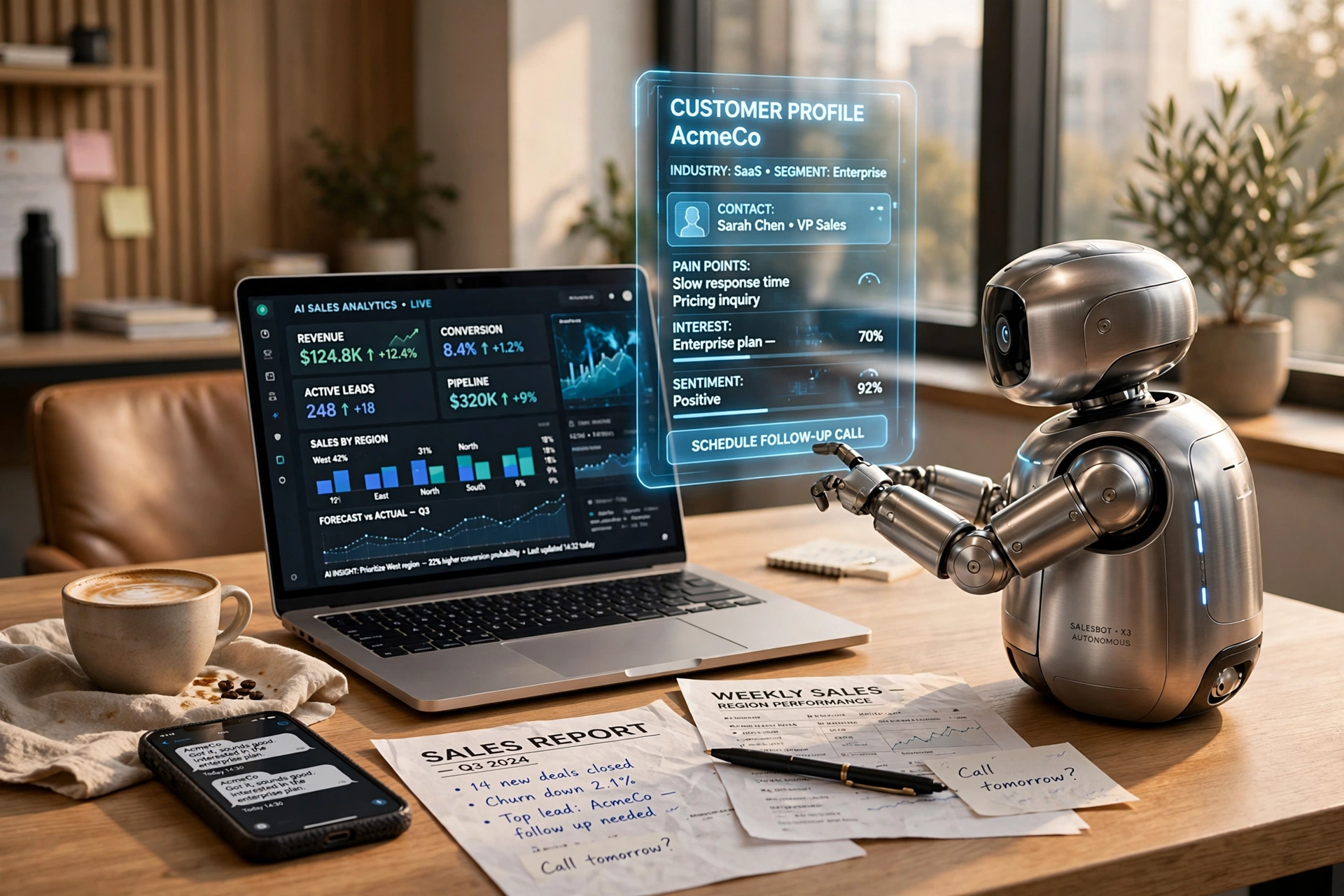
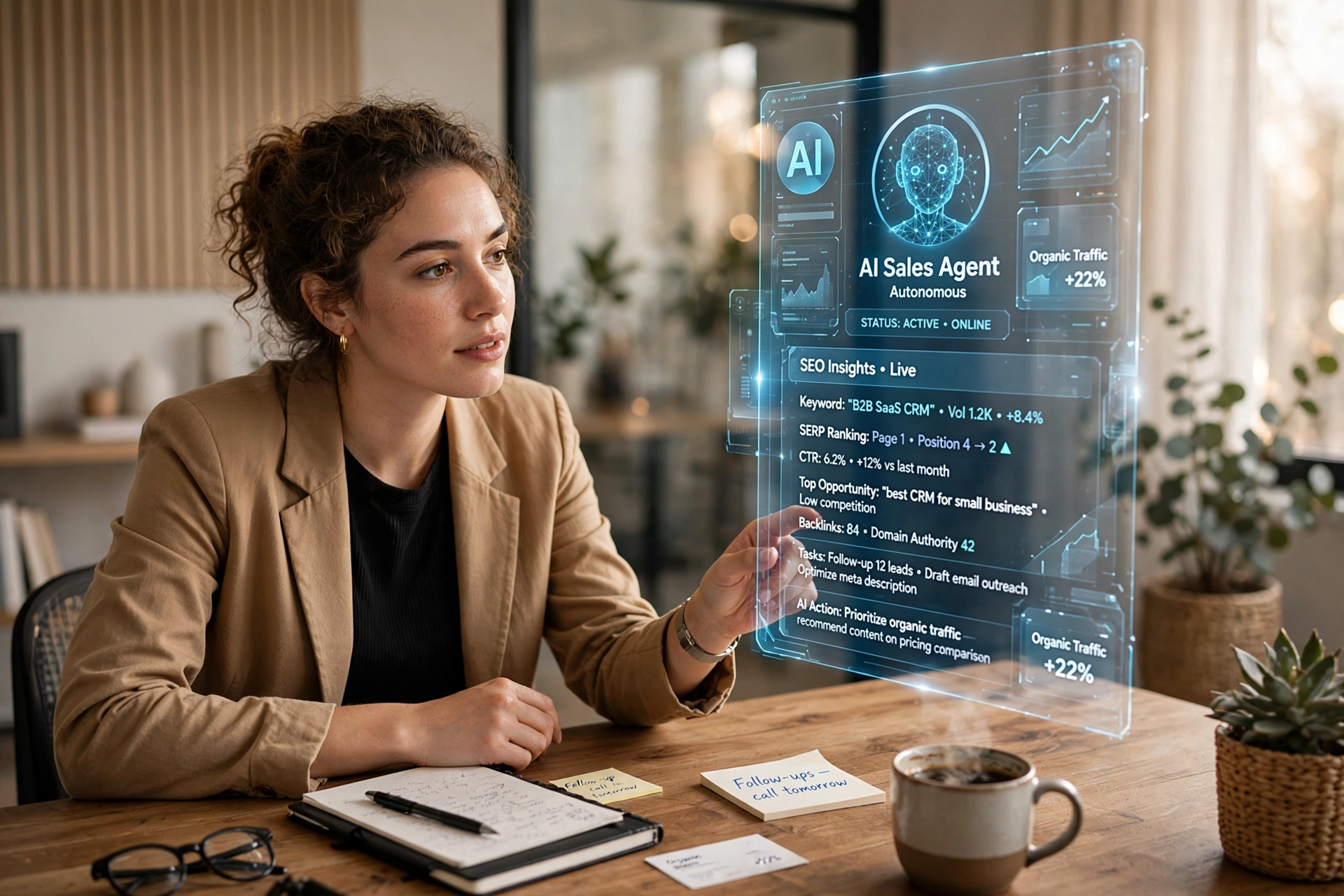
To understand where these agents reside, we first need to clarify what they are. Unlike traditional chatbots that follow a rigid "if-then" decision tree, autonomous agents use Large Language Models (LLMs) to reason through a conversation, qualify a lead based on custom business logic, and take a concrete action, such as booking a meeting.
📚Definition
Autonomous Sales Agents are AI-driven software entities capable of independent reasoning and task execution. They don't just answer questions; they pursue a goal (e.g. "Get the lead's budget and book a demo in HubSpot") without requiring step-by-step manual prompts for every interaction.
These agents operate in three primary environments. First, there is the On-Site Environment. This is the most controllable space, where the agent is embedded into a website's frontend. However, the "where" here is specific: they are most effective when placed on "satellite pages" created through programmatic SEO. By aligning the agent's knowledge base with the specific intent of the page, the conversion rate skyrockets.
Second, they operate in the
Integration Layer. This is the "invisible" location. The agent exists as a bridge between your website and your backend operations. This involves connecting the AI to your CRM via APIs. For a deep dive into this technical setup, you should look into
how to connect AI sales agents to CRM and webhooks.
Third, we are seeing the rise of
Agentic Search Environments. As users move away from traditional blue links and toward AI-driven answers, the "location" for sales agents is shifting toward Generative Engine Optimization (GEO). This means your "agent" is effectively the structured data and authoritative content that allows an AI search engine to recommend your business and facilitate a lead capture. This is why understanding
GEO vs Traditional SEO is no longer optional for B2B growth.
According to a 2024 report by Gartner, by 2026, 30% of all inbound lead qualification will be handled by autonomous AI agents, shifting the focus from "lead capture" to "intent-based qualification."
Why the "Location" of Your AI Agent Dictates Your ROI
The financial impact of autonomous sales agents using AI is not determined by the sophistication of the code, but by the proximity of the agent to the buyer's moment of peak intent. If an agent is placed on a homepage, it acts as a customer support tool. If it is placed on a page titled "Cost of Personal Injury Law in Miami for 2026," it acts as a high-performance sales closer.
The business implications of this are massive. When an agent is strategically located, it eliminates the "leaky bucket" problem where leads land on a page but leave because they don't want to fill out a static form. Static forms are friction; autonomous agents are conversations. Research from McKinsey indicates that personalization and real-time interaction can increase conversion rates by up to 20% compared to traditional lead-capture methods.
Consider the cost of a human SDR. Between salary, commissions, and software seats, a single SDR can cost a company $60k to $100k per year. An autonomous agent, when deployed across hundreds of programmatic pages, can handle the volume of ten SDRs with zero downtime. However, this only works if the agent is "found" by the user at the right time.
The risk of ignoring this "location" strategy is clear: you end up with "AI slop." This happens when companies deploy generic agents that don't know the context of the page they are on. If a user is reading about "Enterprise HVAC Installation in Houston" and the AI agent asks, "How can I help you today?" it has failed. A high-performing agent should say, "I see you're looking into HVAC installation for your Houston facility; do you have the square footage ready so I can give you an accurate estimate?"
This level of context-awareness is what separates a glorified chatbot from a true autonomous sales engine. By leveraging
AI appointment setters for B2B, businesses can ensure that the "where" (the landing page) matches the "what" (the agent's script) and the "when" (the instant the user shows high scroll velocity).
Practical Application: Deploying Agents Across Your Digital Estate
If you are wondering how to actually implement this, you need to stop thinking about "installing a bot" and start thinking about "building an acquisition machine." The most effective way to deploy autonomous sales agents using AI is through a dual-engine approach.
Step 1: Build the Traffic Engine. You cannot have an agent without visitors. This is where Programmatic SEO (PSEO) comes in. Instead of writing five blog posts a month, you deploy hundreds of interconnected pages targeting high-intent, long-tail keywords. You can see how this works in the
PSEO architecture guide for SaaS.
Step 2: Embed Contextual Agents. Once your pages are live, you embed an agent that is programmed with the specific data of that page. If the page is about a specific service in a specific city, the agent's "system prompt" should reflect that local expertise.
Step 3: Establish the Hand-off. The agent's goal is not to close the deal, it is to qualify the lead and book the meeting. The "location" of the final conversion is your calendar. The agent must have direct access to your availability via an API (like Calendly or HubSpot) to prevent any friction.
💡Key Takeaway
The highest ROI comes from placing autonomous agents on high-intent "satellite" pages, not the homepage. The goal is to move the user from "searching for an answer" to "booking a meeting" in under three minutes.
At BizAI Intelligence, we automate this entire loop. We don't just give you an agent; we build the 300+ pages the agent lives on and then program the agent to aggressively capture and qualify leads based on the content of those pages. This eliminates the manual work of managing separate SEO and sales tools.
Comparing Your Options for AI Sales Deployment
Not all "AI agents" are created equal. Depending on your budget and technical capability, you have three main paths. Most businesses make the mistake of choosing the cheapest option, only to realize they've built a tool that frustrates their customers.
| Deployment Option | Pros | Cons | Best For |
|---|
| Manual Chatbot (Basic) | Cheap, fast to setup, low risk. | Rigid, no reasoning, high friction, low conversion. | Small sites with low traffic. |
| Generic AI Wrappers | Better language, easier to prompt. | Hallucinations, no CRM integration, "robotic" feel. | Content blogs with no sales goal. |
| BizAI Autonomous Engine | High-intent traffic, autonomous qualification, CRM sync. | Requires strategic setup of PSEO pillars. | High-ticket B2B looking to scale. |
As the table shows, the "Modern Approach" isn't just about the AI; it's about the integration. If you use a generic wrapper, you are essentially renting a brain without a body. The BizAI approach provides both: the "body" (the programmatic SEO pages) and the "brain" (the autonomous qualifying agent).
If you are still undecided on the tools to use, checking a list of
top programmatic SEO tools can help you understand the infrastructure required to support these agents at scale.
Common Questions and Misconceptions About AI Agents
There is a lot of noise in the market right now, and most guides get this wrong. They treat AI agents as a replacement for a website's "Contact" page. They aren't. They are a replacement for the entire top-of-funnel sales process.
Myth 1: "AI agents will replace my entire sales team."
Wrong. AI agents replace the drudgery of the sales team. They replace the "discovery call" and the "qualification screen." They do not replace the high-level negotiation and relationship building that happens during a closing call. The agent's job is to ensure your human closers only speak to qualified, high-intent leads.
Myth 2: "You can just put an agent on your site and the leads will come."
This is the most expensive mistake I see. An agent is a converter, not a traffic generator. If you have zero organic traffic, your agent is just a lonely bot in an empty room. You must combine autonomous agents with a strategy to
automate organic traffic and lead capture.
Myth 3: "AI agents are too risky because they hallucinate."
Hallucinations happen when the agent has too much "creative freedom" and not enough "grounded data." When you use a RAG (Retrieval-Augmented Generation) architecture, which is what we use at BizAI Intelligence, the agent is forced to answer based on a specific knowledge base. This reduces hallucinations to near zero because the agent is prohibited from inventing facts outside of your provided documentation.
Frequently Asked Questions
Where is the best place to put an autonomous sales agent for maximum conversion?
The most effective location is on high-intent, long-tail landing pages created through
programmatic SEO. Instead of a general placement on your homepage, put your agent on pages that target specific "buyer-intent" queries (e.g. "Best [Service] for [Industry] in [City]"). This ensures the agent interacts with a user who is already 80% of the way through the decision-making process, making the qualification and booking process much faster and more natural.
Can autonomous sales agents using AI actually book meetings in my calendar?
Yes, provided they are integrated via API or webhooks to your calendar software (like Google Calendar, Outlook, or Calendly). An autonomous agent does not just tell the user to "pick a time"; it can check your real-time availability and insert the meeting directly into your CRM, such as Salesforce or HubSpot. This removes the friction of back-and-forth emails and ensures the lead is captured and scheduled instantly.
Most companies sell you either an SEO service or an
AI chatbot. To find a platform that integrates both, you need a "Growth Engine" approach. BizAI Intelligence is designed specifically for this, providing the PSEO architecture to generate hundreds of pages and the autonomous agents to convert that traffic. This holistic approach prevents the common "silo" problem where marketing and sales are using different, disconnected tools.
Do these AI agents work on mobile devices and different browsers?
Absolutely. Because these agents are typically deployed as embedded JavaScript components or integrated via API, they are fully responsive. In fact, autonomous agents often perform better on mobile because users prefer a conversational interface over trying to fill out a complex, multi-field lead form on a small screen. They work across all modern browsers, including Chrome, Safari, and Firefox, ensuring a seamless experience.
How long does it take to see a return on investment after deploying an AI agent?
The ROI timeline depends on your current traffic. If you already have high organic traffic, you can see an increase in
lead qualification rates within days of deployment. However, if you are building from scratch using a PSEO strategy, the "compounding" effect typically takes 30 to 90 days as Google indexes your satellite pages. Once the traffic hits and the agent is live, the ROI is immediate because the cost per lead drops significantly compared to paid ads.
Final Thoughts on Autonomous Sales Agents Using AI
Finding the right "location" for your autonomous sales agents using AI is the difference between a fancy toy and a revenue-generating machine. Stop looking for a simple plugin and start building an ecosystem where your content attracts the lead and your AI agent qualifies them. The era of the static website is over; the era of the autonomous acquisition hub is here.
If you are tired of renting expensive traffic from Google Ads and want to build a self-owned organic machine, the solution is to integrate PSEO with autonomous qualification. Whether you are a law firm, a medical clinic, or a B2B SaaS company, the goal is the same: dominate the search results and capture the lead before they even think about clicking "back" to the search page.
To start building your own autonomous lead engine, visit
BizAI Intelligence and learn how to stop renting traffic and start owning your market. For more on scaling your visibility, read our guide on
how to rank on ChatGPT, SearchGPT, and Perplexity AI.
Only 12 Onboarding Slots Remaining This Month
BizAI deploys 300 AI salespeople scoring purchase intent 24/7. Get your free niche domination blueprint.
AI Search Accelerator: 1-on-1 Strategy Session
Claim one of the 10 monthly slots. Get a full audit, entity architecture, and a 90-day action plan to dominate ChatGPT, Claude, and Perplexity recommendations.