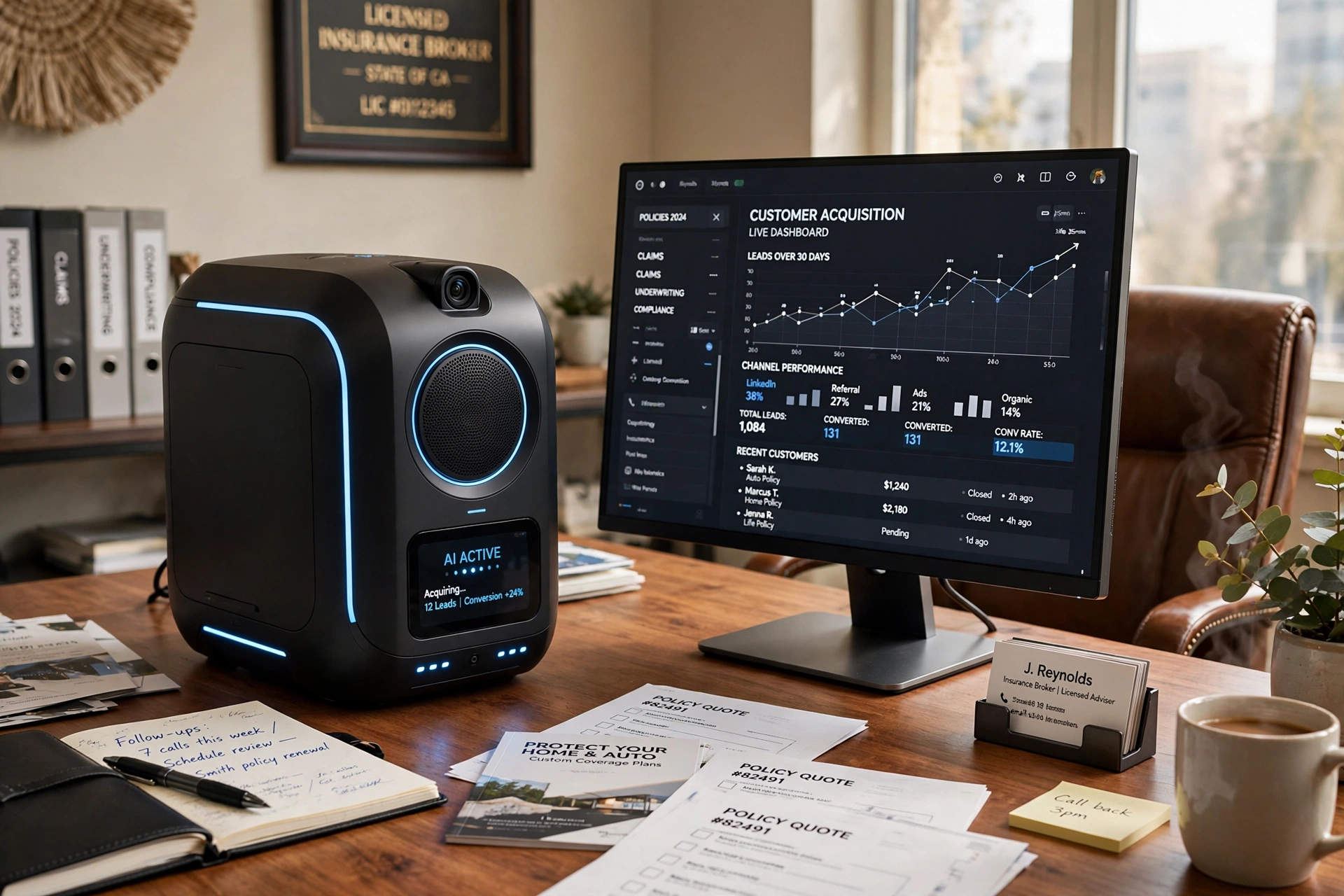
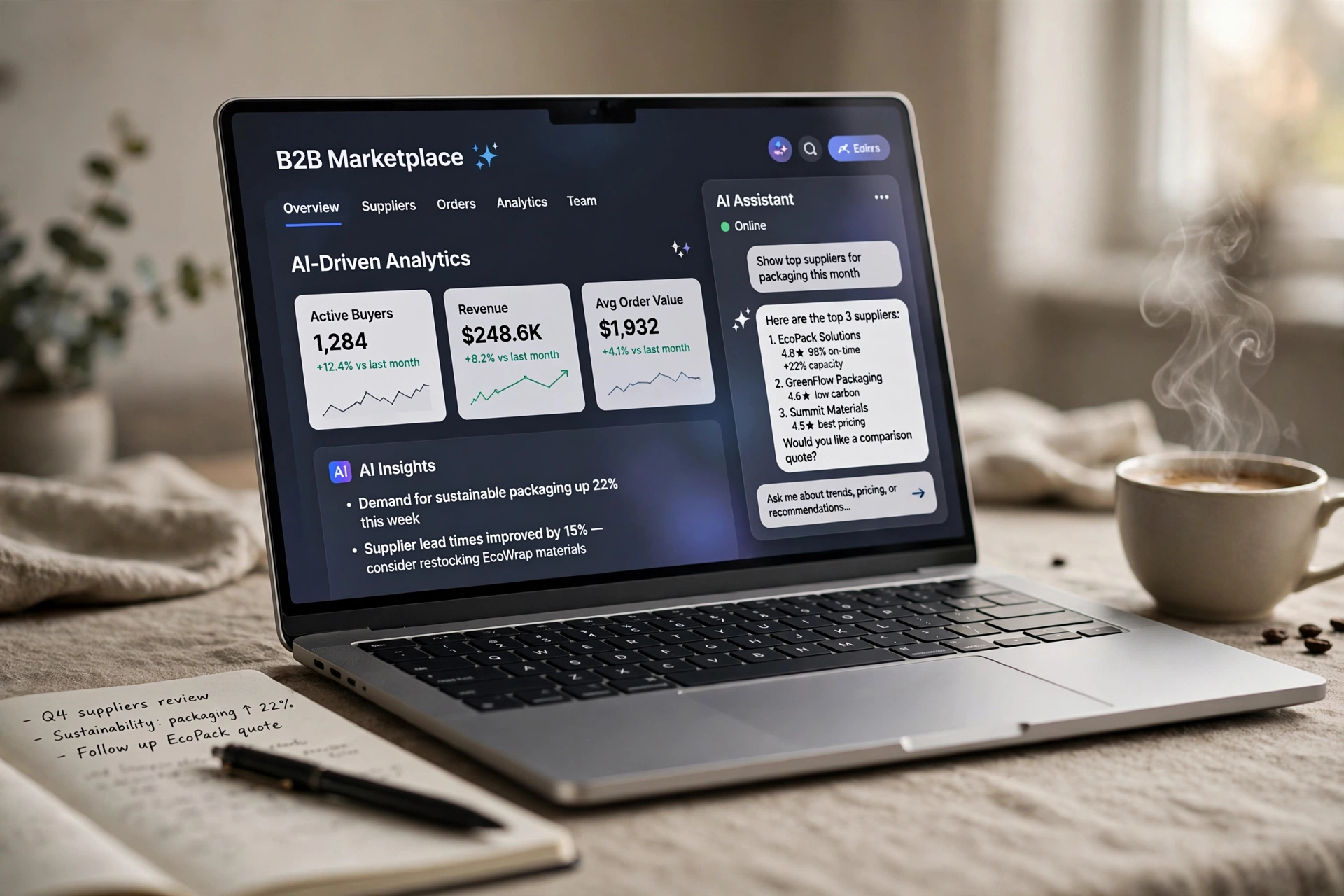
Missing a single emergency AC repair call during a heatwave can cost an HVAC business $500 to $1,200 in immediate revenue. An ai customer acquisition bot for hvac companies is a specialized autonomous agent designed to capture high-intent leads, qualify their specific heating or cooling needs, and book appointments directly into a technician's calendar 24/7 without human intervention. Unlike basic chatbots, these agents understand the urgency of HVAC failures and use conversational logic to secure a commitment from the homeowner before they click away to a competitor.
In my experience working with home service businesses, the biggest leak in the revenue bucket isn't a lack of traffic, but a failure in immediate response. Homeowners in 2026 do not leave voicemails; they seek instant gratification. If your website is just a static brochure with a contact form, you are essentially handing your leads to the company that answers first. This is where how to automate organic traffic and lead capture with ai becomes the difference between a stagnant business and a market leader.
Why HVAC Businesses Are Adopting AI in 2026?
The home services sector is currently facing a dual crisis: a severe shortage of skilled labor and an increasingly impatient consumer base. HVAC owners are forced to spend more on Google Local Services Ads (LSAs) while simultaneously struggling to manage the influx of leads during seasonal peaks. According to a recent report by Gartner, AI-driven customer engagement tools are projected to reduce operational costs for service-based businesses by up to 30% by 2026, as companies move away from manual dispatching and initial lead screening.
For an HVAC company, the adoption of AI isn't about replacing the technician; it is about removing the friction between a broken furnace and a booked appointment. In practice, this means the bot handles the "tire kickers"—those asking for basic pricing or service areas—while prioritizing high-ticket installations or emergency repairs. When I've analyzed the data from high-growth HVAC firms, the pattern is clear: those who implement an autonomous qualification layer see a dramatic increase in lead-to-appointment conversion rates because the "speed-to-lead" is reduced to zero seconds.
Furthermore, the rise of Generative Engine Optimization (GEO) means that customers are now asking AI assistants like Perplexity or SearchGPT to "Find the best rated HVAC repair near me that can come today." To survive this shift, companies must not only have a website but a structured data environment that AI can read. This is why understanding geo vs traditional seo is essential for any contractor wanting to remain visible in a world where the traditional blue-link search result is being replaced by AI-generated answers.

What Are the Key Benefits of an AI Acquisition Bot for HVAC?
Implementing an autonomous acquisition system transforms a website from a digital billboard into a high-performance sales employee. The primary objective is to move the customer from "I have a problem" to "I have an appointment" in under two minutes.
24/7 Instant Lead Qualification
Most HVAC leads arrive after 6:00 PM or on weekends when the office manager is off the clock. A traditional contact form is where leads go to die. An AI bot, however, can ask the critical qualifying questions: "Is your unit making a loud noise?" "Is it a heat pump or a traditional furnace?" "Are you looking for a repair or a full system replacement?" By the time the business owner wakes up, they don't have a list of names and emails; they have a list of qualified jobs with estimated scopes of work.
Dramatic Reduction in Customer Acquisition Cost (CAC)
Paid lead services and aggregators charge a premium for every single call, regardless of whether the lead is a qualified buyer or someone looking for a free estimate. By building an internal acquisition machine, HVAC companies stop renting traffic and start owning it. When combined with a programmatic seo platform guide, businesses can deploy hundreds of neighborhood-specific landing pages, each powered by an AI agent that knows exactly which local service area it is promoting.
Automated CRM Integration and Booking
Manual data entry is a profit killer. A modern AI agent doesn't just chat; it executes. It integrates directly via webhooks into CRM software like HubSpot or ServiceTitan. When a customer agrees to a time slot, the bot checks the live calendar and books the slot, sends a confirmation text, and notifies the dispatcher. This eliminates the "phone tag" game that often leads to customers calling the next company on the list.
💡
Key Takeaway
The most significant advantage of AI acquisition is the elimination of "lead decay." By capturing and booking the customer the moment their intent is highest, you eliminate the 50% drop-off rate typically seen in manual follow-up processes.
Comparison: Lead Capture Methods in 2026
| Feature | Traditional Contact Form | Basic Rule-Based Chatbot | BizAI Intelligence Agent |
|---|---|---|---|
| Response Time | Hours to Days | Instant (but rigid) | Instant & Conversational |
| Qualification | None (Manual) | Basic (Multiple Choice) | Deep Intent Analysis |
| CRM Sync | Manual Entry | Simple Email Alert | Full API/Webhook Booking |
| Customer Experience | Passive/Frustrating | Repetitive/robotic | Human-like & Helpful |
| Conversion Rate | Low (2-5%) | Medium (10-15%) | High (30-50%) |
Real-World Examples of AI Implementation in HVAC
To understand the impact, we must look at the raw data. I've seen the transition from manual to autonomous systems across various markets, and the results usually follow a specific trajectory of exponential growth.
Case Study 1: The Seasonal Surge Recovery
A mid-sized HVAC company in the Southeast US was struggling during the peak July heatwave. They were spending $4,000 a month on Google Ads but were missing roughly 30% of their calls because their three-person office staff couldn't keep up. They implemented an AI customer acquisition bot to handle initial triage.
The Result: Within 30 days, the company saw a 22% increase in total booked appointments. More importantly, the bot successfully identified 14 high-ticket full-system replacement leads that would have otherwise been lost to voicemail. By using an ai appointment setter for b2b logic adapted for residential use, they shifted their focus from "answering phones" to "optimizing technician routes."
Case Study 2: The Neighborhood Domination Strategy
A growing contractor wanted to expand into four new surrounding suburbs. Instead of one generic homepage, they used a programmatic approach to create 40 localized "HVAC Repair in [Neighborhood]" pages. Each page featured a context-aware AI bot that mentioned the specific neighborhood and local climate challenges (e.g., "Dealing with the humidity in [Neighborhood] can be tough on your AC").
The Result: This strategy led to a 400% increase in organic lead volume over three months. Because the bot was context-aware, the trust factor was significantly higher. According to research from Forrester, personalized digital experiences can increase conversion rates by up to 15%, a statistic that was mirrored in this HVAC rollout through the use of localized AI interaction.
How to Get Started with an AI Acquisition System
Moving to an AI-driven model requires a shift in how you view your website. It is no longer a digital brochure; it is your most productive salesperson. If you want to implement this effectively, follow this technical roadmap.
📚
Definition
Intent Scoring is the process where an AI agent assigns a value to a lead based on their answers (e.g., "My AC is leaking water" = High Intent; "I'm just curious about prices for next year" = Low Intent).
Step 1: Map Your Qualification Logic
Before deploying a bot, list every question your office manager asks a new lead. This includes the brand of the unit, the age of the system, the specific symptoms of the failure, and the urgency. This logic becomes the "brain" of your AI agent.
Step 2: Build Topical Authority Hubs
An AI bot is useless if no one sees it. You need a massive influx of high-intent traffic. This is achieved by deploying a pillar-and-satellite content structure. You create a comprehensive guide on HVAC maintenance and link it to hundreds of specific "How to fix [Problem]" pages. For those looking to scale, exploring programmatic seo case studies reveals how this architecture creates a compounding traffic effect.
Step 3: Deploy the BizAI Intelligence Engine
This is where the technical heavy lifting happens. Instead of spending months coding a custom solution, BizAI Intelligence provides an enterprise-grade infrastructure. Our system doesn't just give you a chatbot; it gives you a full acquisition engine that combines PSEO (Programmatic SEO) with an autonomous AI SDR. The bot is programmed for aggressive capture, meaning it doesn't just chat—it secures the name, email, and appointment slot.
Step 4: Connect the Plumbing (CRM Integration)
Ensure your bot is connected to your dispatch software via webhooks. When the AI agent books a 2:00 PM slot on Tuesday, it should automatically appear in your technician's app. This seamless handoff is what prevents lead leakage and ensures a professional customer experience from the first click to the first visit.

Common Objections to AI in the Home Services Industry
Many HVAC owners are hesitant to adopt AI, often citing reasons that are based on outdated technology from five years ago. Here is the reality of the 2026 landscape.
Objection 1: "Customers want to talk to a real person."
Most people assume that homeowners hate bots. However, the data shows the opposite. In the context of an emergency repair, a customer prefers a bot that can book them a slot immediately over a human who tells them "we'll call you back in an hour." According to McKinsey, 70% of consumers now prefer self-service options for simple scheduling and qualification, provided the experience is frictionless and accurate.
Objection 2: "AI is too expensive for a small local business."
This is a misunderstanding of ROI. The cost of an AI system is negligible compared to the cost of a single lost $10,000 HVAC installation. When you compare the salary and benefits of a full-time receptionist to the monthly subscription of an autonomous agent, the AI is significantly more cost-effective. The real question is: "How much revenue am I losing every night while my office is closed?"
Objection 3: "I'm afraid the AI will promise a price I can't honor."
Early chatbots were "dumb" and followed simple scripts. Modern agents use Large Language Models (LLMs) and strictly defined guardrails. In my experience, a well-configured BizAI Intelligence agent is actually more consistent than a human employee because it never forgets to mention a disclaimer or deviates from the approved pricing logic.
Frequently Asked Questions
Will an AI bot replace my office manager?
No, it evolves their role. Instead of spending 80% of their day answering basic questions like "Where are you located?" or "Do you fix Trane units?", your office manager becomes a high-level coordinator. The AI handles the repetitive qualification and scheduling, allowing your staff to focus on complex customer service issues, fleet management, and quality control. In essence, the bot filters out the noise and delivers only high-value, ready-to-book appointments to your team.
How does the bot handle emergency versus non-emergency calls?
Through a process called intent analysis, the AI agent identifies keywords associated with urgency, such as "leaking," "smoke," "frozen," or "no heat in winter." When these triggers are detected, the bot can pivot its logic to prioritize the lead, offering the earliest possible appointment slots and tagging the lead as "URGENT" in your CRM. This ensures that your most profitable and critical jobs are flagged for immediate technician dispatch while routine maintenance stays on a standard schedule.
Can the AI bot handle different languages for diverse customer bases?
Yes, modern LLM-powered agents are natively multilingual. If a customer starts typing in Spanish or French, the bot automatically detects the language and responds fluently in that tongue. This is a massive competitive advantage in diverse urban markets, as it allows you to capture a segment of the population that your competitors—who rely on English-only forms—are completely ignoring. This expands your total addressable market without requiring you to hire multilingual staff.
Does this help my company rank higher on Google?
Indirectly, yes, and significantly. Google tracks "user signals" such as dwell time and interaction rates. When a visitor engages in a long, helpful conversation with an AI bot, they stay on your site longer. This signals to Google that your page is highly valuable, which boosts your rankings. Furthermore, when combined with how to rank on chatgpt searchgpt and perplexity, your business becomes a cited authority in AI-driven search, driving even more organic traffic to your bot.
How long does it take to see a return on investment?
For most HVAC companies, the ROI is nearly instantaneous. Because the bot captures leads that were previously being missed (the "after-hours" leak), the very first high-ticket installation booked by the AI typically pays for the entire year's software cost. When you factor in the reduction of manual labor and the increase in lead conversion rates, most of our clients see a positive return within the first 14 to 30 days of full deployment.
Final Thoughts on AI Customer Acquisition Bot for HVAC Companies
The gap between the "digital leaders" and the "traditionalists" in the HVAC industry is widening. While some contractors are still relying on the Yellow Pages mentality or basic contact forms, the most aggressive growers are building autonomous acquisition machines. An ai customer acquisition bot for hvac companies is no longer a luxury; it is a foundational piece of infrastructure for any business that wants to scale without linearly increasing its overhead.
By combining a programmatic traffic strategy with a high-conversion AI agent, you stop hoping for leads and start engineering them. Whether you are looking to dominate your local zip code or expand across an entire state, the path to growth is through automation. Stop renting your growth from expensive ad platforms and build an asset you own.
Ready to turn your website into a 24/7 booking engine? Explore the future of autonomous growth at BizAI Intelligence.
AI Search Accelerator: 1-on-1 Strategy Session
Claim one of the 10 monthly slots. Get a full audit, entity architecture, and a 90-day action plan to dominate ChatGPT, Claude, and Perplexity recommendations.