📖This article is part of the complete guide to AI Customer Service: Beyond Chatbots.
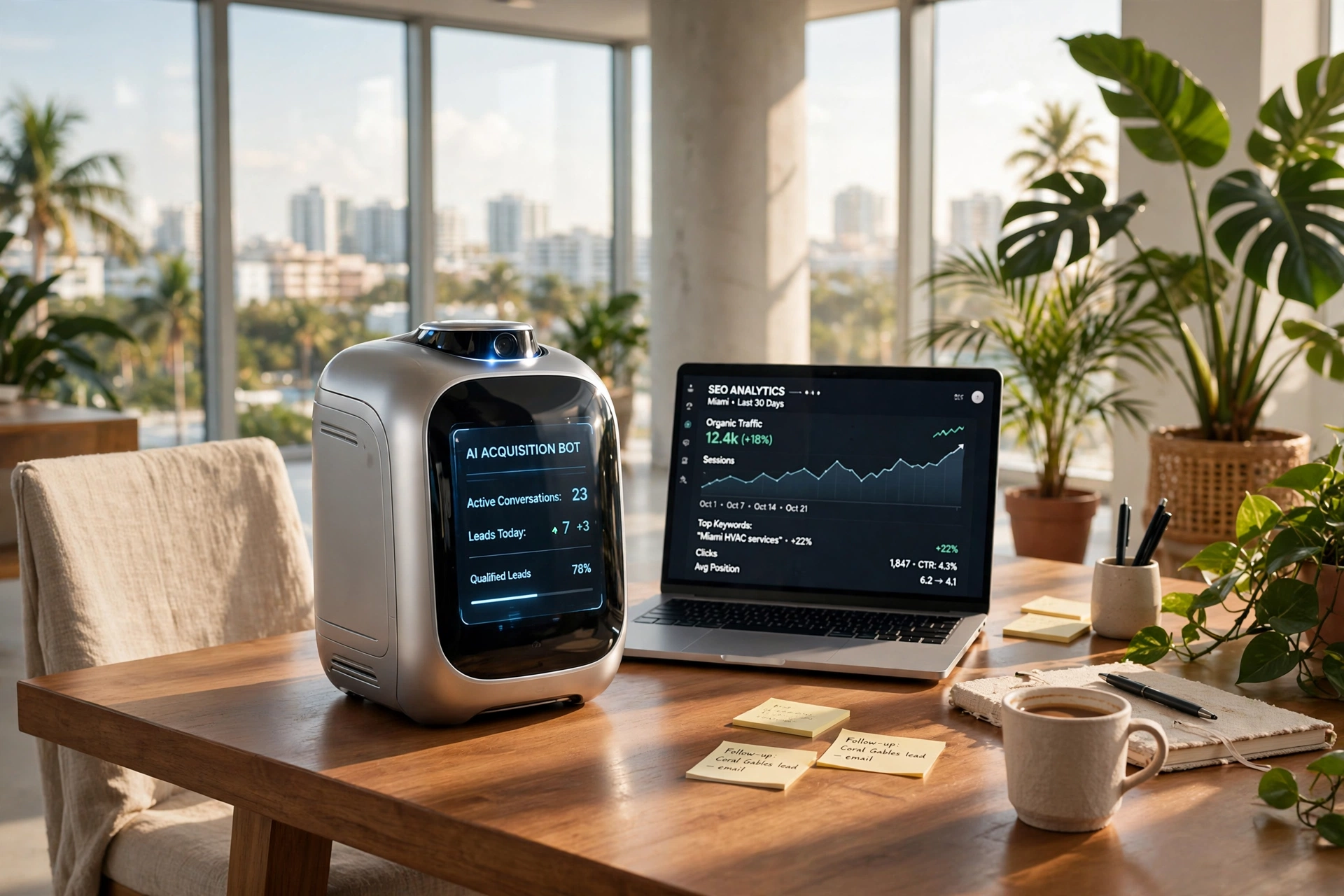
High-ticket service providers in Southern California are losing approximately 60% of their potential leads because of delayed response times and friction-heavy contact forms. An ai customer acquisition bot in los angeles solves this by replacing static lead capture with a context-aware, 24/7 autonomous agent that qualifies prospects in real-time and books meetings directly into your calendar. By deploying these bots, Los Angeles firms transition from 'renting' traffic via expensive Google Ads to owning a self-optimizing acquisition machine that converts visitors into qualified appointments without human intervention.
In my experience working with high-ticket B2B service providers, the biggest bottleneck isn't traffic, it's the 'leaky bucket' between the click and the call. Most businesses in the LA basin rely on a 'Contact Us' page that acts as a graveyard for intent. When we implement a sophisticated AI agent, we see a dramatic shift in conversion rates because the bot handles the initial friction of qualification immediately, regardless of whether the lead is browsing from Santa Monica or Downtown LA.
For firms looking to scale, understanding how to automate organic traffic & lead capture with AI is the first step toward removing the dependency on manual SDR efforts and expensive ad spend.
Why Los Angeles Businesses are Rapidly Adopting AI Acquisition
Los Angeles is one of the most competitive B2B markets in the world, characterized by a dense concentration of law firms, medical groups, and enterprise consultancies. In this environment, the cost per lead (CPL) on paid platforms has reached an all-time high, making organic and automated acquisition a survival necessity rather than a luxury. The shift toward an ai customer acquisition bot in los angeles is driven by the need for absolute immediacy; in a city where decision-makers are time-poor, a five-minute delay in response can result in a lost contract.
According to Gartner, by 2026, 80% of B2B sales interactions will occur in digital channels, with a heavy emphasis on self-service and autonomous qualification. This means the traditional model of 'submit a form and wait for a callback' is effectively dead. Local businesses are pivoting toward AI agents because these systems can process complex qualification criteria, such as budget, urgency, and specific service needs, instantly. This is particularly vital for the LA market, where the diversity of clients requires highly nuanced communication that generic chatbots simply cannot handle.
Furthermore, the integration of AI with GEO vs traditional SEO strategies allows LA firms to not only attract traffic from AI search engines but to capture that traffic immediately upon arrival. When a user finds your business via a Perplexity or ChatGPT query, they expect a conversational experience. If they land on a website and are met with a static form, the cognitive dissonance leads to a high bounce rate. An AI bot maintains the conversational flow from the search engine to the appointment booking.

Key Benefits for High-Ticket B2B Businesses
Deploying an autonomous acquisition system provides a competitive edge that traditional digital marketing cannot match. The primary advantage is the elimination of lead decay. Lead decay occurs when the time between a prospect's expression of interest and the company's response increases, causing the prospect's intent to drop. In a fast-paced hub like Los Angeles, this decay happens in minutes, not hours.
24/7 Autonomous Qualification and Scoring
Unlike human SDRs who operate on a 9-to-5 schedule, an AI bot operates continuously. It doesn't just collect names and emails; it performs a dynamic qualification screen. By asking specific, high-intent questions, the bot can score a lead based on their profile. For example, a law firm in Los Angeles can program the bot to prioritize cases with a specific claim value over smaller inquiries. This ensures that the partners' calendars are filled only with high-value appointments, drastically increasing the ROI of the sales process.
Immediate Conversion of High-Intent Traffic
When a prospect lands on a page via a long-tail keyword, their intent is at its peak. An AI bot captures this moment by initiating a conversation based on the specific page the user is reading. If a user is on a page about 'Enterprise Tax Strategy in California,' the bot doesn't ask 'How can I help you?' It asks, 'Are you looking to optimize your 2026 corporate tax filings for a business with over $10M in revenue?' This level of specificity builds immediate trust and accelerates the conversion path.
Seamless CRM Integration and Auto-Booking
One of the most significant frictions in B2B sales is the scheduling dance. AI acquisition bots eliminate this by connecting directly to calendars via webhooks. By utilizing how to connect AI sales agents to CRM & webhooks for auto booking, businesses can move a lead from 'anonymous visitor' to 'confirmed appointment' in under three minutes. This creates a frictionless experience that mirrors the high-end service these firms provide in their actual professional delivery.
💡
Key Takeaway
The core value of an AI acquisition bot is not just automation, but the ability to maintain high-intent conversational momentum, converting passive readers into scheduled appointments without any manual overhead.
| Feature | Traditional Lead Forms | Generic Chatbots | BizAI Intelligence Agents |
|---|---|---|---|
| Response Time | Hours to Days | Instant (but scripted) | Instant & Contextual |
| Qualification | Manual/Post-submit | Basic Keyword Match | Dynamic Intent Scoring |
| User Experience | High Friction | Frustrating/Limited | Conversational & Human-like |
| Booking | Manual Email Chain | Redirect to Calendar | Direct In-Chat Booking |
| Lead Quality | Mixed/Unfiltered | Low (Too many junk leads) | High (Strictly Qualified) |
📚
Definition
Lead Decay is the rapid decline in a prospect's likelihood to convert as the time between their initial inquiry and the business's response increases.
Real-World Examples from the B2B Sector
To understand the impact of an ai customer acquisition bot in los angeles, we must look at the data from firms that have transitioned from manual to autonomous systems. The results consistently show that the primary gain is not just in the number of leads, but in the quality and velocity of those leads.
Case Study 1: The Personal Injury Firm (LA Basin)
A mid-sized personal injury firm in Los Angeles was spending $15,000 per month on paid search. While they generated 200 leads monthly, their intake team struggled to call them back within the first hour. The conversion rate from lead to consultation was only 12%. After deploying a BizAI Intelligence agent, the bot began qualifying leads instantly on the landing page. It filtered out low-value cases (e.g. minor fender-benders with no injuries) and booked high-value cases directly into the attorneys' calendars. Within 90 days, the consultation rate jumped from 12% to 31%, and the cost per acquired client dropped by 45% because they stopped wasting time on unqualified leads.
Case Study 2: The Enterprise B2B Consultancy (Santa Monica)
A strategic consultancy focused on digital transformation had a high-traffic blog but a low conversion rate. Visitors were reading their deep-dive articles but rarely filled out the 'Contact Us' form. We implemented a series of context-aware bots across their pillar pages. Instead of a generic greeting, the bot would reference the specific topic of the article. For example, on a page about PSEO architecture guide for SaaS & enterprise B2B growth, the bot would ask, 'Are you scaling your organic footprint to 1,000+ pages this year?' This targeted approach increased their demo booking rate by 210% in the first quarter of 2026.
How to Get Started with AI Customer Acquisition
Transitioning to an automated acquisition model requires a shift in how you view your website. Your site is no longer a digital brochure; it is a 24/7 sales office. If you are a business owner in Los Angeles looking to implement an ai customer acquisition bot, follow this strategic framework.
Step 1: Map Your Qualification Criteria
Before deploying a bot, you must define exactly what a 'qualified lead' looks like. Do they need a minimum annual revenue? A specific location within Southern California? A certain type of problem? Write these criteria down as a logic tree. This prevents the bot from booking 'curiosity seekers' and ensures your calendar is reserved for high-ticket opportunities.
Step 2: Build the Topical Authority Hub
An AI bot is only as effective as the traffic it receives. You need a steady stream of high-intent visitors. This is where programmatic SEO becomes essential. By creating hundreds of satellite pages targeting specific buyer questions, you cast a wide net that captures prospects at the exact moment they are searching for a solution. When these visitors land on your site, the AI bot is there to close the gap.
Step 3: Deploy the Autonomous Agent
This is where BizAI Intelligence excels. Rather than spending months developing a custom bot from scratch, we provide a turnkey system that integrates your qualification logic and your calendar. We deploy agents that are programmed for aggressive capture, meaning they don't just wait for the user to type; they proactively guide the user toward a booking based on engagement signals like scroll velocity and reading speed.
Step 4: Connect to Your Growth Stack
Ensure your bot is connected to your CRM (HubSpot, Salesforce, etc.) via webhooks. This allows for an immediate handoff from the AI to your human sales team for the final closing call. Using an AI appointment setter for B2B ensures that the data captured during the chat is automatically populated into the lead's CRM record, giving your sales team full context before the meeting even starts.
Common Objections and Data-Backed Responses
Many business owners in Los Angeles are hesitant to adopt AI agents due to misconceptions about quality and trust. However, the data suggests that these concerns are often based on outdated 'chatbot' technology from five years ago.
Objection 1: "AI bots feel impersonal and will drive away high-net-worth clients."
Most people assume that luxury or high-ticket clients want a human immediately. In practice, the opposite is true. High-net-worth individuals value time above all else. According to a report by Forrester, B2B buyers now prefer self-service options for the initial discovery phase. They don't want to wait for a callback or play phone tag. A professional, efficient AI bot that provides immediate answers and a direct booking link is perceived as a sign of a sophisticated, tech-forward company, not an impersonal one.
Objection 2: "I'm worried the AI will hallucinate or give wrong information."
This is a valid concern with generic LLMs, but enterprise-grade systems like BizAI Intelligence use constrained knowledge bases. We don't allow the bot to 'wing it.' The agent is anchored to your specific business data, pricing, and service definitions. If the bot doesn't know an answer, it is programmed to pivot back to the goal: booking a call with a human expert. This eliminates the risk of misinformation while maintaining the speed of automation.
Objection 3: "It's too expensive to set up for a small firm."
This is a classic 'cost vs. investment' fallacy. When you calculate the cost of a human SDR, salary, benefits, management overhead, and compare it to the lead leakage of a static form, the AI bot pays for itself in a matter of weeks. In my experience, firms that switch to AI acquisition see a reduction in their Customer Acquisition Cost (CAC) by an average of 30% because they are no longer paying for unqualified leads through expensive ad campaigns.
Frequently Asked Questions
How does an ai customer acquisition bot in los angeles differ from a standard chatbot?
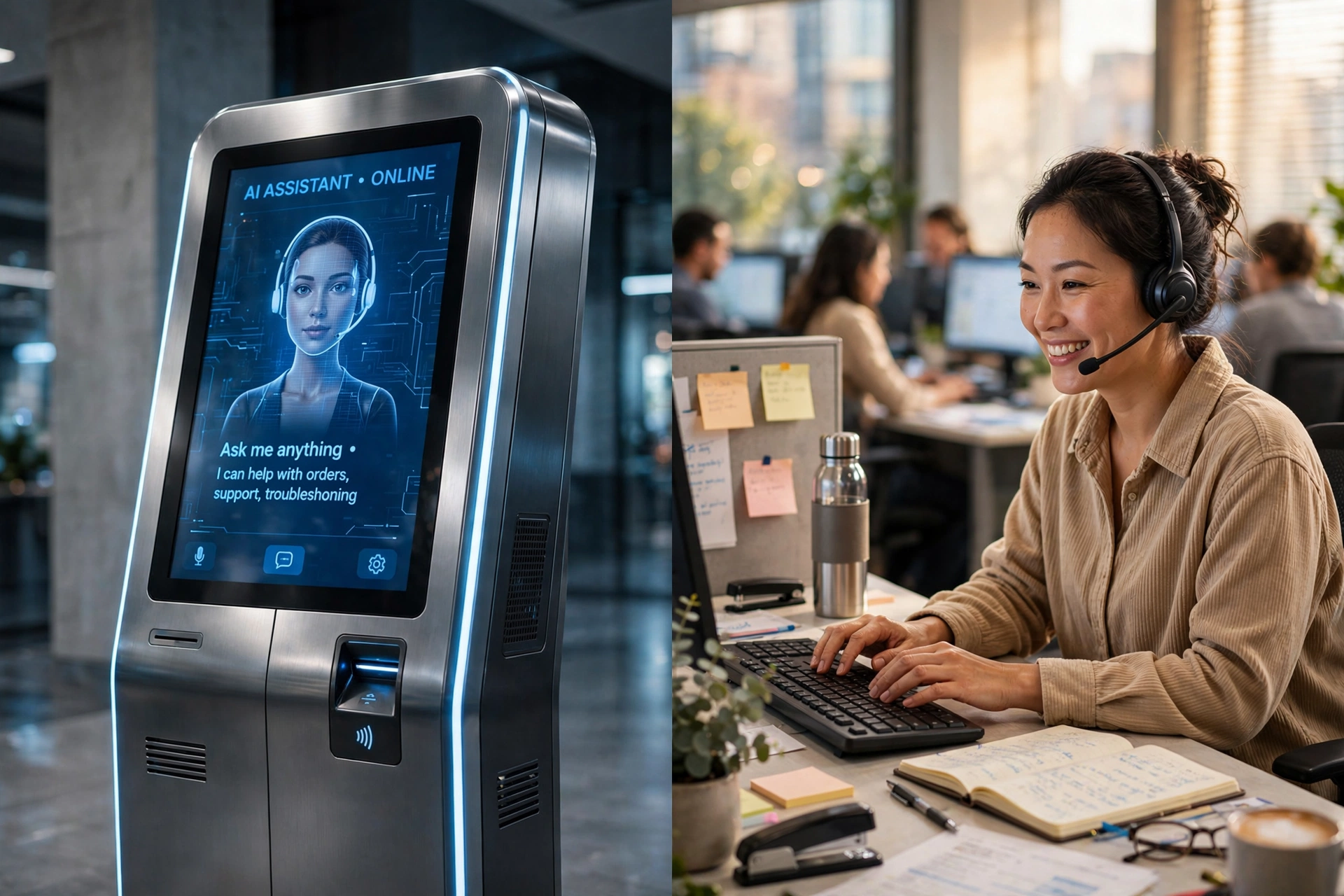
A standard chatbot is typically a decision-tree system that provides pre-written answers to a limited set of questions. It is essentially a glorified FAQ page. An AI customer acquisition bot, however, is powered by Large Language Models (LLMs) and is designed with a specific goal: conversion. It uses dynamic intent scoring, understands complex natural language, and can autonomously navigate a prospect through a qualification funnel to book a meeting. While a chatbot answers questions, an acquisition bot drives revenue.
Can an AI bot really handle the nuances of a professional service industry like law or medicine?
Yes, provided the bot is built on a specialized knowledge base. By using 'grounding' techniques, the bot is restricted to your official documentation, ensuring it doesn't provide legal or medical advice but instead focuses on qualifying the prospect's needs. For example, it can distinguish between a 'slip and fall' case and a 'wrongful death' case based on the user's input, routing the high-value lead to a priority booking slot. This level of nuance is what separates enterprise AI from generic tools.
How long does it take to see a return on investment (ROI) after deployment?
Most Los Angeles firms see an immediate impact on their lead-to-appointment rate within the first 30 days. Because the bot eliminates the 'response gap,' the conversion of existing traffic increases instantly. When combined with programmatic SEO case studies strategies that increase traffic volume, the compounding effect is massive. Most clients report a full ROI on the implementation cost within two to three months, purely from the increase in qualified appointments.
Will this replace my current sales team or SDRs?
It doesn't replace your sales team; it replaces the drudgery of their jobs. Most SDRs spend 70% of their time chasing leads that are unqualified or unresponsive. By automating the top-of-funnel qualification and booking, the AI bot allows your sales team to focus exclusively on closing. Your human talent is shifted from 'appointment setters' to 'deal closers,' which significantly increases the overall morale and productivity of your organization.
Is it difficult to integrate an AI bot with my existing CRM like HubSpot or Salesforce?
Not with a professional implementation. Modern AI agents use webhooks and API integrations to sync data in real-time. When a bot captures a lead's name, email, and qualification answers, that data is pushed instantly into your CRM. This means your team has a full profile of the lead before the first meeting starts. If you are unsure of the technical side, exploring the comprehensive AI SDRs & autonomous sales appointment setters will show you how the plumbing of these systems works behind the scenes.
Final Thoughts on AI Customer Acquisition Bot in Los Angeles
For any high-ticket B2B firm in Southern California, the choice is simple: you can continue to rent traffic through expensive ads and lose half of it to static forms, or you can build an autonomous acquisition machine. An ai customer acquisition bot in los angeles is the bridge between the traffic you've already paid for and the revenue you're currently leaving on the table.
By combining a programmatic SEO strategy with an autonomous AI agent, you create a compounding growth engine that works while you sleep. You stop worrying about whether your intake team called back a lead from three days ago and start focusing on how to handle the influx of qualified appointments on your calendar. The technology has matured, the ROI is proven, and the competitive gap is widening. If your competitors are already using autonomous qualification, your static form is a liability.
Stop losing leads to friction and start scaling your inbound pipeline today. Visit BizAI Intelligence to deploy your own autonomous acquisition system.
Only 12 Onboarding Slots Remaining This Month
BizAI deploys 300 AI salespeople scoring purchase intent 24/7. Get your free niche domination blueprint.
AI Search Accelerator: 1-on-1 Strategy Session
Claim one of the 10 monthly slots. Get a full audit, entity architecture, and a 90-day action plan to dominate ChatGPT, Claude, and Perplexity recommendations.