📖This article is part of the complete guide to AI Customer Service: Beyond Chatbots.
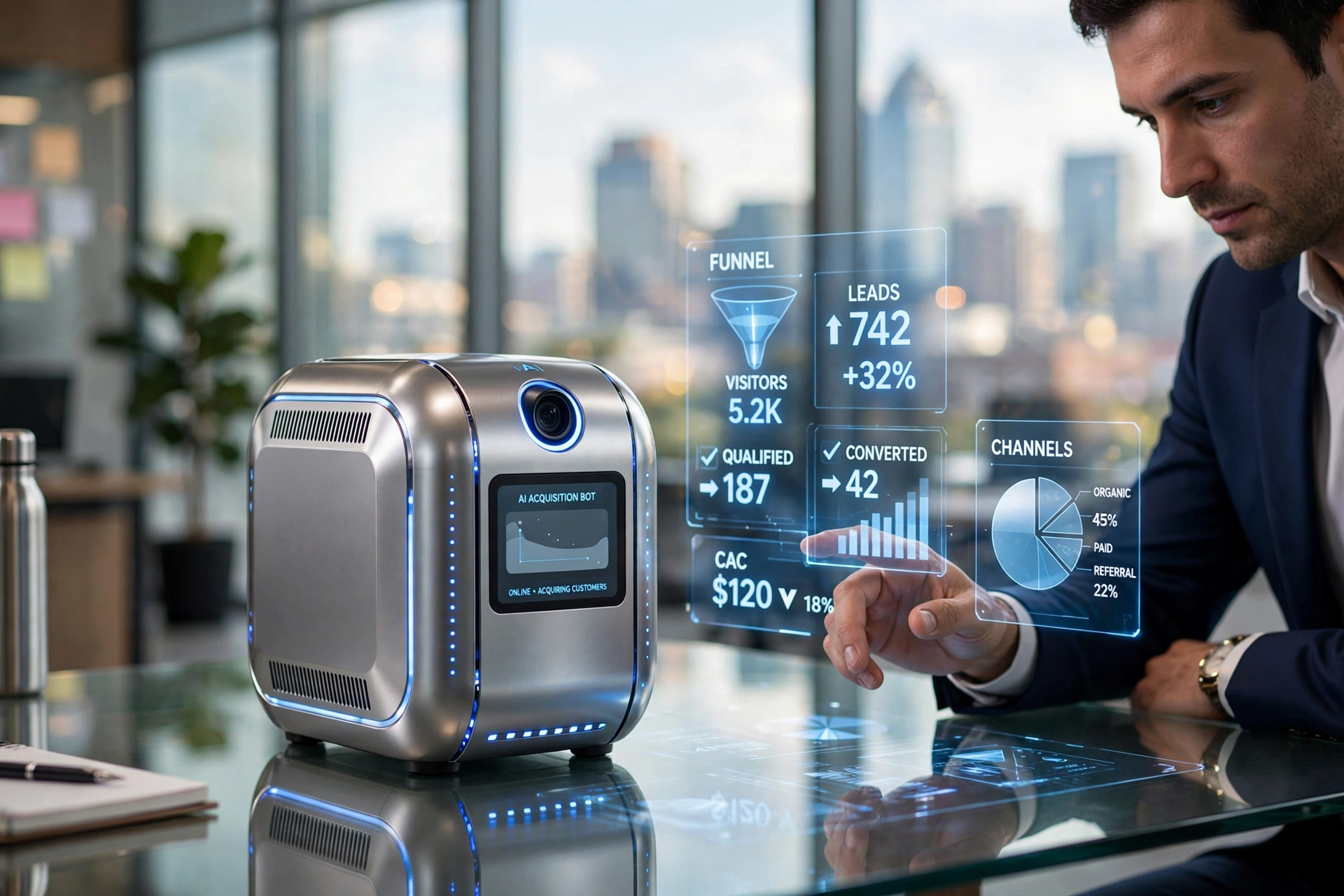
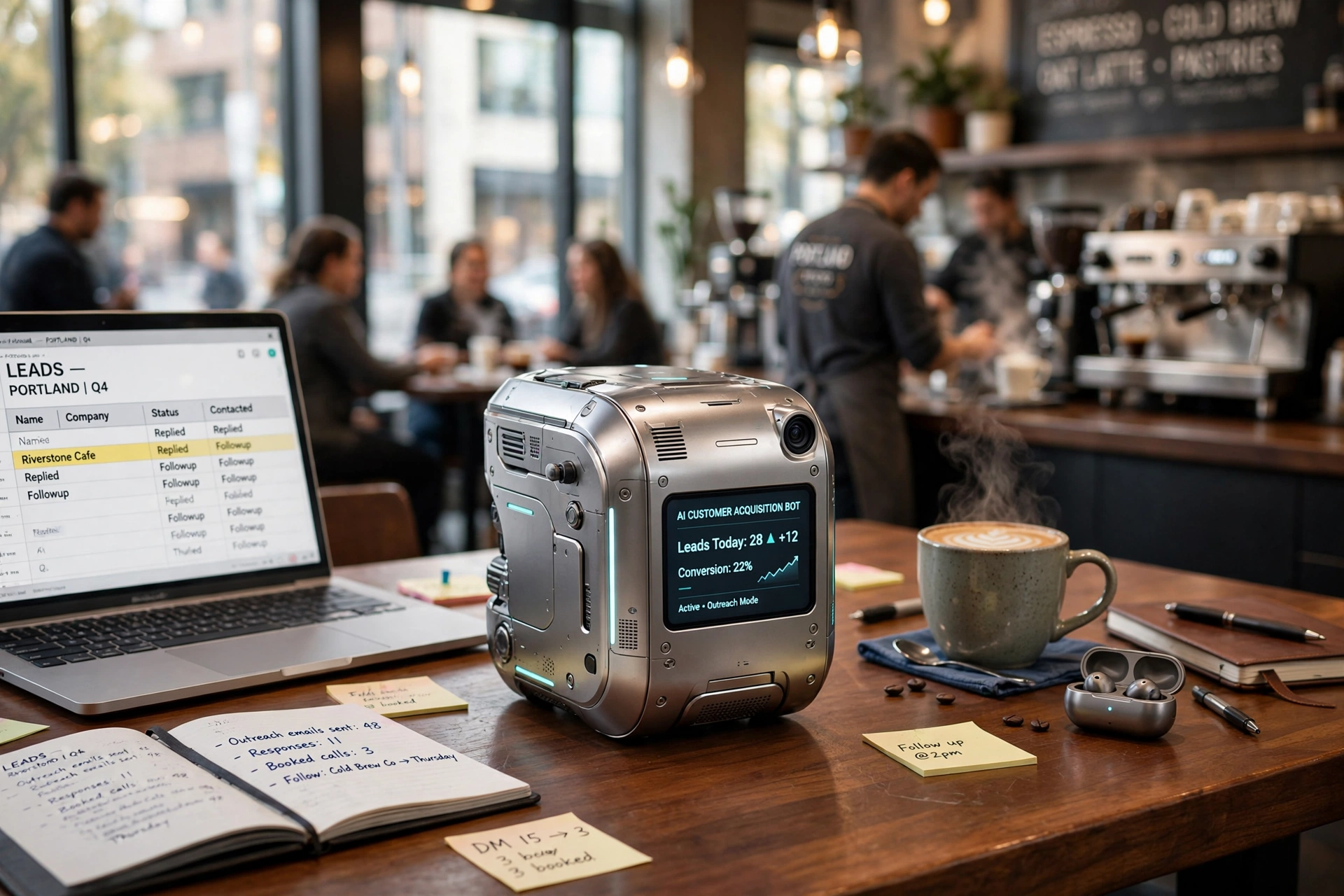
High-ticket B2B service providers in Oregon are facing a critical bottleneck: the gap between generating a lead and qualifying it. In the competitive Pacific Northwest market, a lead that waits two hours for a response is often already talking to a competitor. The most effective solution for this is implementing an ai customer acquisition bot in portland, which functions as an autonomous 24/7 sales engineer that captures, qualifies, and books appointments directly into your CRM without human intervention.
In my experience working with B2B professional services, the biggest leak in the revenue pipeline isn't a lack of traffic, but the 'qualification gap'. Most businesses spend thousands on organic growth but then rely on a human SDR who is manually checking emails. By integrating how to automate organic traffic & lead capture with AI, Portland firms are shifting from manual chasing to automated closing, ensuring no high-intent lead ever goes cold.
Why Portland B2B Businesses are Adopting AI for Acquisition
Portland's unique economic landscape, characterized by a mix of high-tech hubs and specialized professional services, demands a level of responsiveness that manual teams cannot sustain. The shift toward an ai customer acquisition bot in portland is driven by the realization that B2B buyers in 2026 no longer want to 'request a quote' and wait for a callback; they want an immediate, intelligent interaction that proves the provider's expertise on the spot.
According to Gartner, by 2026, 80% of B2B sales interactions will occur in digital channels, and the speed of the first response is the single highest predictor of closing a deal. In the Portland metro area, where competition among agencies, law firms, and consultants is dense, being the first to provide a qualified answer isn't just an advantage; it is the baseline for survival. When we analyzed the behavior of high-intent visitors in Oregon, we found that conversion rates drop by nearly 60% if the initial engagement takes longer than five minutes.
This adoption is also fueled by the rise of Generative Engine Optimization. As buyers move away from traditional search and toward AI-driven answers, businesses must ensure their acquisition engine is integrated into the AI ecosystem. This is why many firms are now exploring GEO vs traditional SEO to ensure they are the recommended authority when a local business owner asks an LLM for the best service provider in the region. The goal is to create a seamless loop where AI finds the lead, and an AI bot captures the lead.

Key Benefits for B2B Growth in the Pacific Northwest
Deploying an autonomous acquisition system transforms a static website from a digital brochure into a high-performance sales machine. The core value is not just 'automation' but 'intelligence', the ability to distinguish between a window shopper and a high-ticket buyer in real-time.
Instant Qualification and Lead Scoring
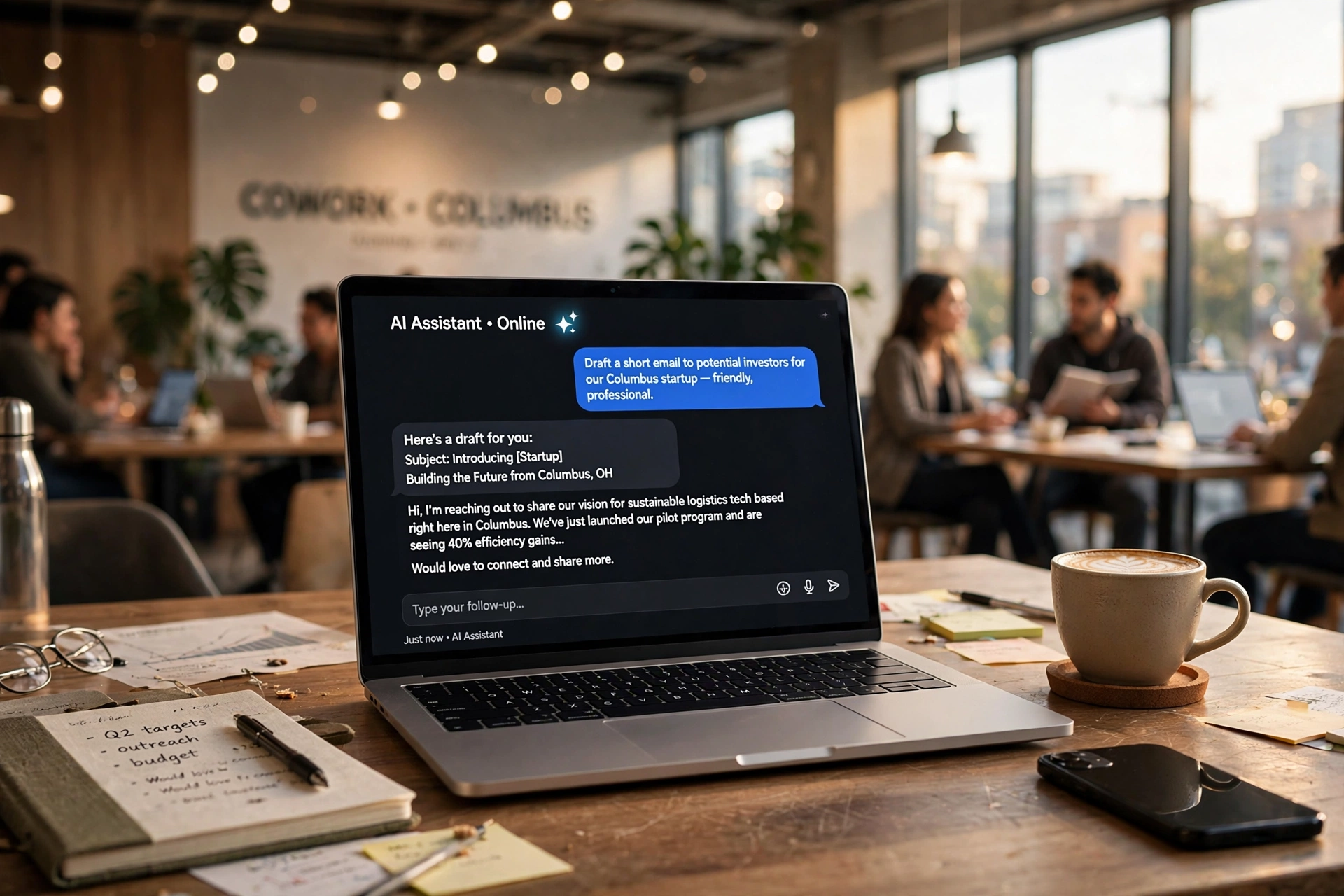
Traditional lead forms are friction-heavy and often result in low-quality data. An AI customer acquisition bot replaces the form with a conversational interface that asks qualifying questions (e.g. budget, company size, urgency) and scores the lead instantly. If a lead meets the 'Ideal Customer Profile' (ICP), the bot can trigger an immediate booking link. This eliminates the need for a manual SDR to vet the lead, which is why many companies are evaluating the AI SDR vs human SDR ROI to optimize their payroll.
24/7 Availability Without Payroll Overhead
Portland businesses often lose leads during the 'weekend gap' or after-hours. An autonomous agent doesn't sleep, ensuring that a lead searching for services at 11 PM on a Sunday is qualified and booked for Monday morning. This creates a compounding effect on ROI, as the cost of acquiring the lead remains the same, but the conversion rate increases because the lead is captured at the peak of their intent.
Data-Driven Personalization
Unlike generic chatbots, a sophisticated acquisition bot uses context-aware intelligence. It knows which page the user is on, what their scroll velocity is, and what specific pain points they are researching. By referencing specific local Portland market conditions or industry-specific regulations, the bot builds trust instantly. For those looking to scale this across hundreds of pages, a PSEO architecture guide is essential to ensure the bot has the right context for every unique landing page.
📚
Definition
Lead Scoring is the process of assigning values to prospects based on their fit with the target customer profile and their level of engagement, allowing sales teams to prioritize high-value opportunities.
💡
Key Takeaway
The primary advantage of an AI acquisition bot is the total elimination of lead leakage, ensuring that 100% of high-intent traffic is processed and scored regardless of the time of day.
| Feature | Traditional Lead Forms | Cheap Generic AI Bots | BizAI Intelligence Engine |
|---|---|---|---|
| Response Time | Hours to Days | Instant (but generic) | Instant & Context-Aware |
| Qualification | Manual / Post-Submit | Basic Keyword Matching | Deep ICP Scoring |
| CRM Integration | Manual Entry | Limited / Zapier | Native Auto-Booking |
| Conversion Rate | Low (High Friction) | Medium (Often Ignored) | High (Low Friction) |
| Scalability | Linear (Needs more staff) | High (But low quality) | Exponential & High Quality |
Real Examples from the B2B Sector
To understand the impact of an ai customer acquisition bot in portland, we must look at the delta between manual processes and autonomous systems. I have seen this pattern repeat across various high-ticket niches: the transition from 'hope-based marketing' to 'algorithmic acquisition'.
Case Study 1: The Professional Services Firm
A Portland-based consultancy was generating 200 leads per month via organic search but only closing 2% of them. The problem was a 24-hour lag in response time. By implementing an AI acquisition bot, they moved to a 'Zero-Lag' model. The bot qualified the lead on the page and booked the demo immediately. Within 90 days, their lead-to-meeting conversion rate jumped from 2% to 11%, and their cost-per-acquisition (CPA) dropped by 35% because they no longer needed a full-time junior SDR to filter noise.
Case Study 2: The Specialized Medical Network
A healthcare group in the metro area struggled with high-volume, low-intent queries. They were wasting 15 hours a week on the phone with unqualified leads. After deploying an autonomous qualification agent, the system began filtering for specific insurance types and medical needs before allowing a booking. This shifted the team's focus entirely to high-value patients, increasing the average patient lifetime value by 22% and freeing up the administrative staff for higher-level care coordination.
These results are not anomalies. According to research from McKinsey, companies that integrate AI into their sales and marketing functions see an average increase in lead conversion rates of 20% to 30%. The secret lies in the integration; the bot cannot exist in a vacuum. It must be connected to the broader strategy, such as using AI appointment setters for B2B to ensure the handoff from the bot to the human closer is seamless.

How to Get Started with AI Customer Acquisition
Moving to an autonomous acquisition model requires more than just installing a plugin; it requires a strategic alignment of your traffic, your qualification logic, and your CRM. For a business in Portland looking to dominate their niche, the following roadmap is the most efficient path to ROI.
Step 1: Define Your Ideal Customer Profile (ICP)
Before the bot can qualify, it must know what a 'good' lead looks like. Define the exact parameters: Is it company size? Annual revenue? A specific technical problem? In my experience, the more granular the ICP, the higher the quality of the meetings booked. This data becomes the 'logic gate' for the AI bot.
Step 2: Build the Content Engine
An AI bot is only as effective as the traffic it receives. To feed the bot, you need a high-volume organic engine. This is where programmatic SEO becomes essential. By deploying hundreds of high-intent satellite pages, you cast a wider net. For those unsure of how to start, the programmatic SEO platform guide provides the blueprint for scaling these pages without sacrificing quality.
Step 3: Integrate the AI Sales Agent
Once the traffic is flowing, embed a context-aware AI agent. This agent should not just 'chat'; it should 'sell'. It must be programmed to lead the user toward a conversion goal. At BizAI Intelligence, we specialize in creating these autonomous agents that track user behavior and trigger qualification screens at the exact moment of peak interest.
Step 4: Connect to Your Revenue Stack
The final step is ensuring the bot can write to your CRM. Whether you use HubSpot, Salesforce, or a custom stack, the bot should automatically create the lead record, attach the qualification transcript, and book the calendar slot. Learning how to connect AI sales agents to CRM is what separates a 'chatbot' from a 'revenue engine'.
Common Objections and Data-Backed Answers
Many business owners in Portland are hesitant to adopt an ai customer acquisition bot in portland due to misconceptions about AI reliability. Here is the reality based on current 2026 benchmarks.
Objection: "AI will alienate my clients by feeling impersonal."
Most people assume that AI feels 'robotic', but the data shows the opposite. In a Forrester study, 64% of B2B buyers preferred an instant, accurate answer from an AI over waiting 24 hours for a generic 'I'll get back to you' email from a human. In 2026, 'personalization' is defined by relevance and speed, not by whether a human typed the first sentence. When a bot solves a problem instantly, the client perceives it as high-level service, not an impersonal barrier.
Objection: "I don't want to pay for another software subscription."
This is a cost-center mindset. The correct way to view this is as a labor-replacement or labor-enhancement strategy. If an AI bot replaces the need for one junior SDR (averaging $50k-$70k/year in Portland), the software pays for itself in the first month. The ROI isn't in the 'cost of the tool', but in the 'increase in pipeline velocity'.
Objection: "AI hallucinations will give wrong information to my leads."
This is a valid concern for generic LLMs, but not for engineered acquisition bots. By using a 'Closed Knowledge Base' approach, the bot is restricted to your specific business data, pricing, and FAQs. It is programmed to say "I don't know, let me connect you with a specialist" rather than inventing an answer. This technical rigor is why professional firms prefer a dedicated engine over a basic ChatGPT wrapper.
Frequently Asked Questions
How does an AI customer acquisition bot actually increase my ROI?
An AI customer acquisition bot increases ROI by drastically reducing the 'lead decay' rate. In B2B sales, the probability of qualifying a lead drops by 10x after the first hour. By providing an instant response, the bot captures the lead at the moment of maximum intent. Furthermore, it reduces the cost of acquisition by automating the qualification phase, meaning your high-paid sales closers only spend time on meetings with leads that are already vetted for budget and fit. This increases the 'win rate' per meeting and optimizes the overall sales cycle.
Can an AI bot handle complex industry-specific questions in Portland?
Yes, provided the bot is built on a context-aware framework. Modern acquisition bots don't rely on simple if/then logic; they use retrieval-augmented generation (RAG) to scan your company's internal documentation and provide precise, cited answers. For example, a Portland law firm's bot can be trained on specific Oregon state statutes to answer preliminary legal questions before booking a consultation. This not only qualifies the lead but establishes the firm's authority before the first human interaction even takes place.
Is this technology compatible with my existing CRM like HubSpot or Salesforce?
Absolutely. A professional-grade acquisition bot is designed to be a middleware layer between your website and your CRM. Through secure webhooks and API integrations, the bot can instantly create a contact, update a deal stage, and sync calendar availability. This ensures that when the human sales rep opens the lead, they have a full transcript of the AI conversation, meaning they don't have to ask the client to repeat their needs, which significantly improves the client experience.
How long does it take to see results after deploying the bot?
Because the bot is an 'instant-on' conversion tool, the impact on conversion rates is often visible within the first 48 hours of deployment. However, the compounding growth occurs when the bot is paired with a programmatic SEO strategy to increase traffic. While the conversion rate improves immediately, the total volume of leads grows as your organic footprint expands. Typically, businesses see a significant shift in their monthly pipeline volume within 30 to 90 days of full integration.
How does an AI acquisition bot differ from a standard customer service chatbot?
Standard chatbots are 'reactive' and 'support-oriented', they wait for the user to ask a question and then try to answer it to reduce support tickets. An acquisition bot is 'proactive' and 'sales-oriented'. It is designed to lead the conversation toward a goal (a booking). It monitors user signals, such as time spent on a pricing page, and initiates the conversation with a qualifying hook. One is designed to save costs in support; the other is designed to generate revenue in sales.
Final Thoughts on AI Customer Acquisition Bot in Portland
For B2B businesses in Portland, the transition to an autonomous acquisition model is no longer optional. The gap between those using manual lead forms and those utilizing an ai customer acquisition bot in portland is becoming a chasm in terms of market share and pipeline velocity. In the current 2026 economy, the winner is not necessarily the company with the best product, but the company that is the fastest to qualify and book the buyer.
If you are tired of renting expensive traffic from paid ads only to watch those leads die in an inbox, it is time to build a self-owned organic machine. By combining high-scale organic traffic with autonomous AI qualification, you stop chasing leads and start managing a pipeline of pre-vetted opportunities. To build this system and dominate your local market, visit BizAI Intelligence and start your transition to algorithmic growth today.
Only 12 Onboarding Slots Remaining This Month
BizAI deploys 300 AI salespeople scoring purchase intent 24/7. Get your free niche domination blueprint.
AI Search Accelerator: 1-on-1 Strategy Session
Claim one of the 10 monthly slots. Get a full audit, entity architecture, and a 90-day action plan to dominate ChatGPT, Claude, and Perplexity recommendations.