📖This article is part of the complete guide to AI Customer Service: Beyond Chatbots.
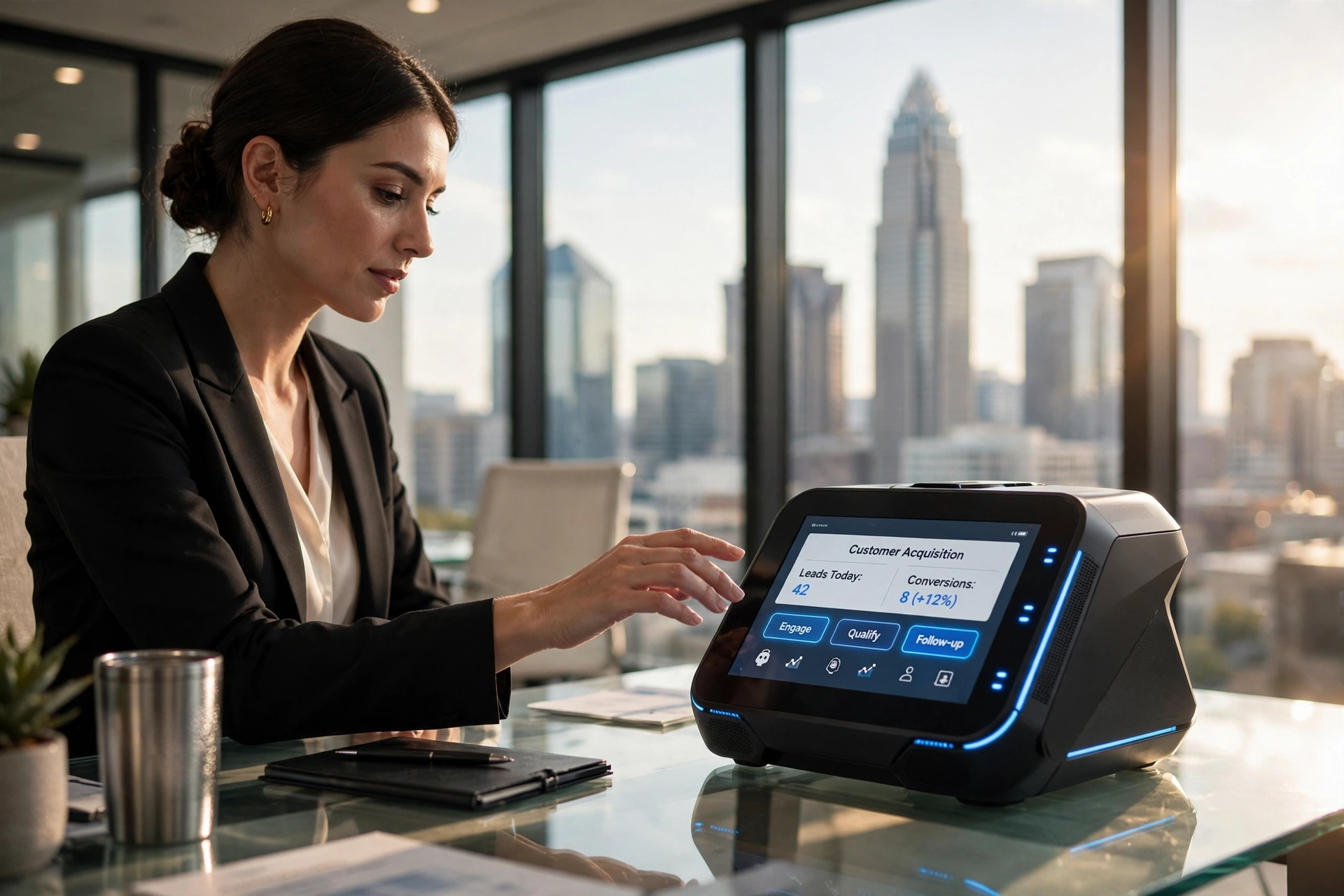
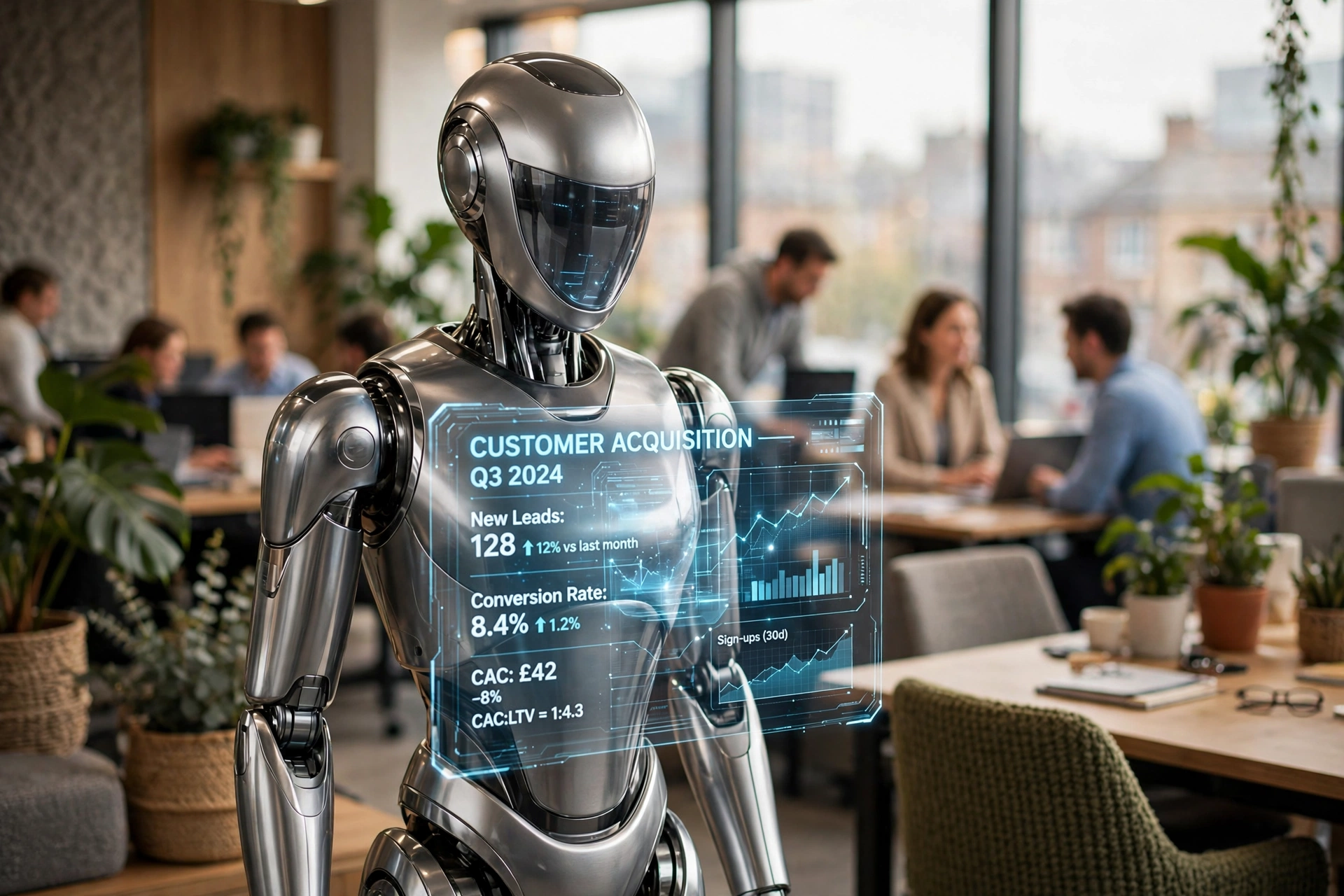
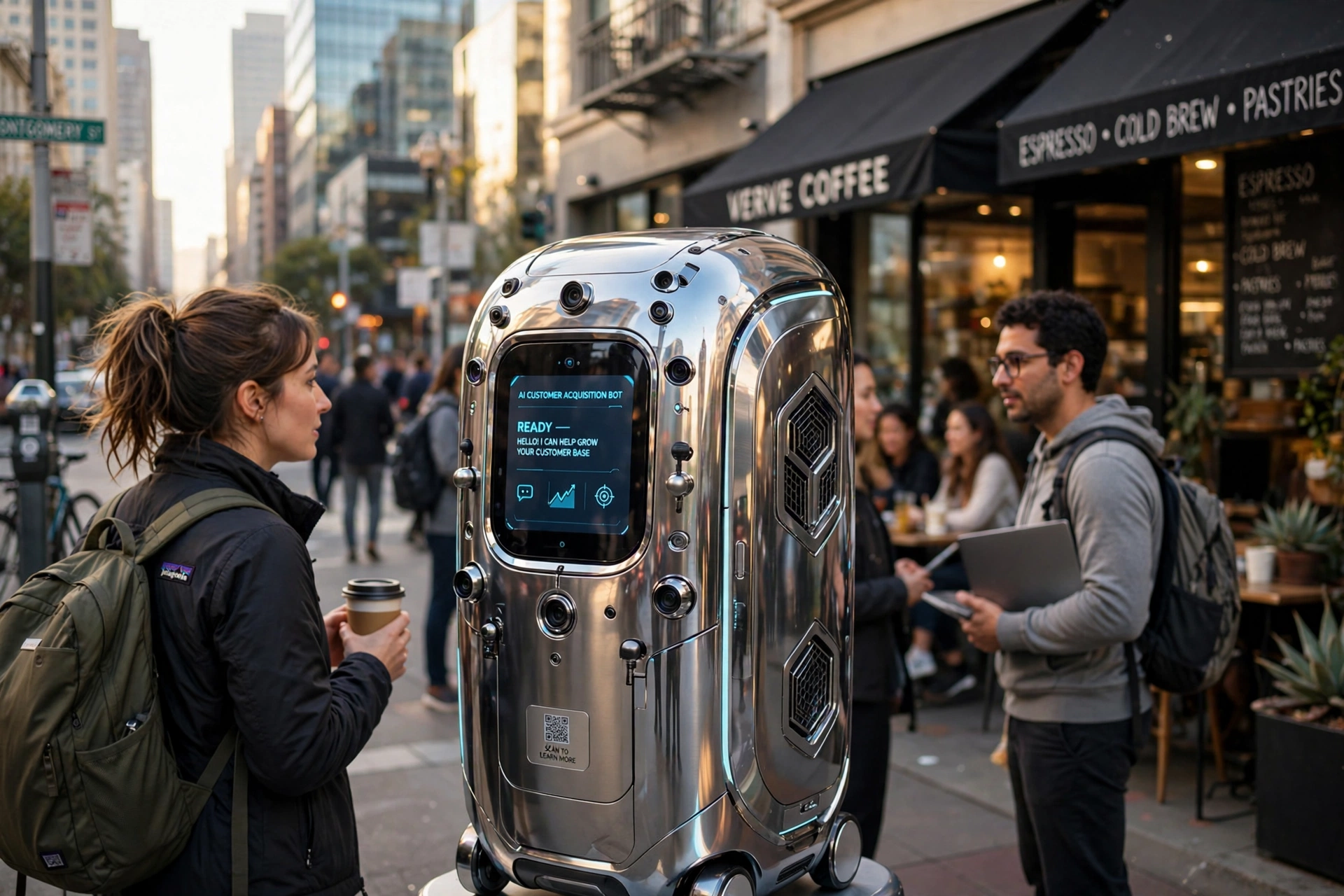
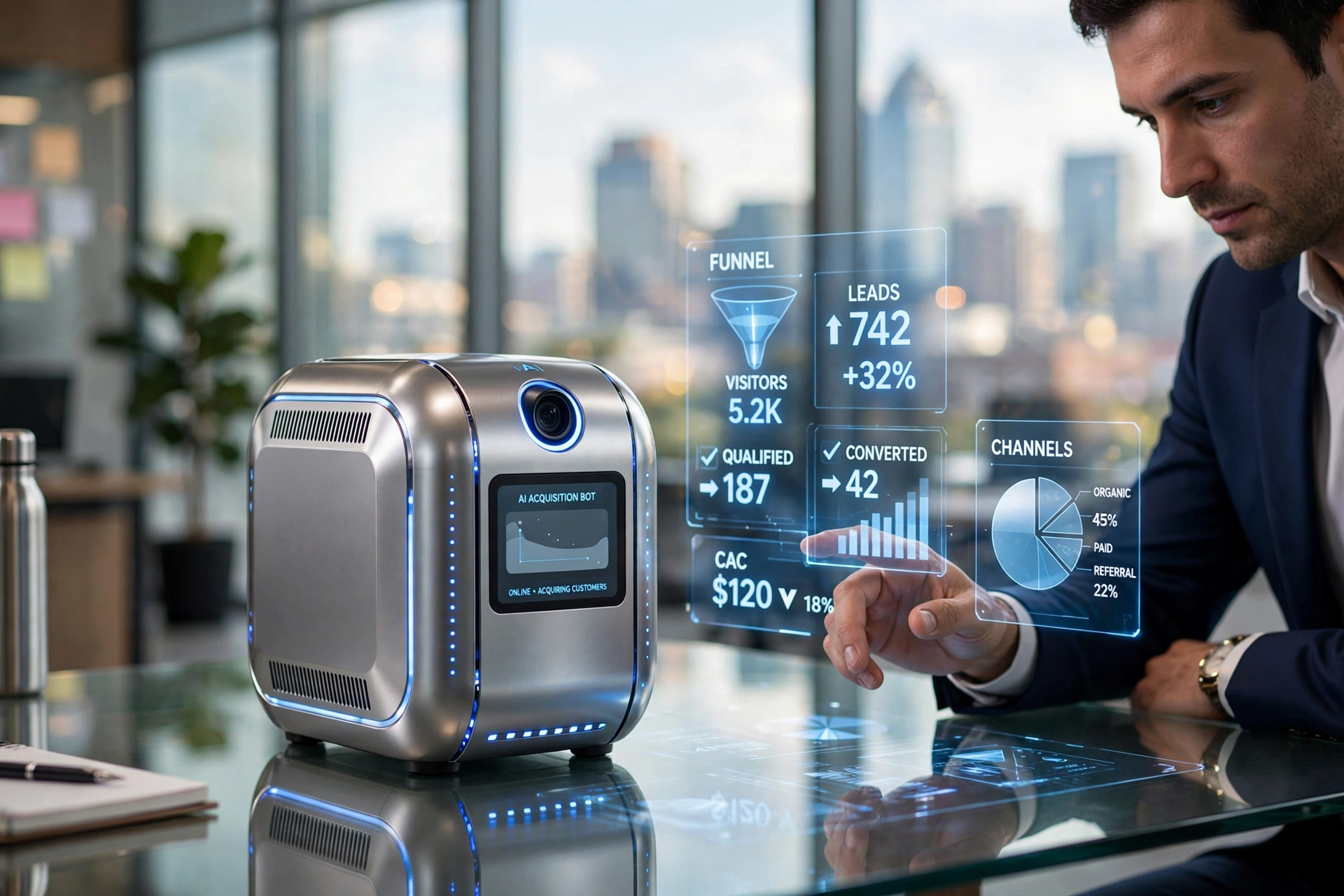
For high-ticket B2B service providers in the Research Triangle, the cost of a missed lead is no longer just a lost opportunity; it is a direct transfer of revenue to a faster competitor. An ai customer acquisition bot in raleigh is an autonomous sales engine designed to engage, qualify, and book high-intent B2B prospects 24/7 without human intervention. By integrating deep conversational intelligence with your CRM, these bots eliminate the 'lead decay' window, ensuring that a prospect searching for professional services in Wake County is qualified and scheduled for a demo in seconds, not hours.
In my experience working with B2B firms across North Carolina, the biggest bottleneck isn't traffic, it's the transition from a website visit to a qualified meeting. Many Raleigh businesses spend thousands on search ads only to let leads sit in an inbox for six hours. When we implement an automated system, we typically see a massive spike in conversion rates because the AI engages the user at the peak of their intent. For those looking to scale, understanding how to automate organic traffic and lead capture with AI is the first step toward removing the human bottleneck from the top of the funnel.
Why Raleigh B2B Businesses Are Adopting AI Acquisition Engines?
Raleigh is uniquely positioned as a global hub for healthcare, biotechnology, and enterprise software. This density of high-IQ, high-ticket B2B competition means that the standard 'Contact Us' form is now a liability. Modern buyers in the Research Triangle Park (RTP) area expect an immediate, frictionless experience. According to a Gartner report, B2B buyers now spend only 17% of their total buying journey meeting with potential suppliers, preferring to conduct the majority of their research independently. This shift means your website must act as your primary salesperson.
When a local firm implements an autonomous acquisition bot, they are not just adding a chatbot; they are deploying a digital SDR. The regional trend in 2026 is moving away from generic lead capture toward "Intent-Based Qualification." This involves tracking a user's behavior on a page and triggering a conversational screen that asks the exact qualifying questions a human salesperson would ask. For example, a law firm in downtown Raleigh wouldn't just ask for an email; the bot would ask about the specific case type, the urgency of the matter, and the potential value of the claim before offering a calendar link.
Furthermore, the adoption of Generative Engine Optimization (GEO) is becoming standard for Raleigh's tech-forward companies. As more executives use Perplexity or ChatGPT to find vendors, businesses are realizing that traditional SEO is only half the battle. Integrating an AI bot ensures that once a user is referred by an AI search engine to your site, the conversion happens instantly. This is why many growth teams are now studying GEO vs Traditional SEO to ensure they remain visible in the new AI-driven search landscape.

What Are the Key Benefits of an AI Customer Acquisition Bot?
The primary advantage of an automated acquisition system is the total elimination of lead leakage. Lead leakage occurs when a high-intent visitor leaves your site because they couldn't get an immediate answer or a confirmed appointment. An AI bot solves this by providing a synchronous path to conversion.
24/7 Autonomous Lead Qualification
Unlike a human sales team that operates on a 9-to-5 schedule, an AI acquisition bot operates at 3:00 AM on a Sunday. For a B2B firm in Raleigh, this means capturing leads from global partners or local executives who do their research after business hours. The bot doesn't just collect data; it qualifies it. By utilizing a comprehensive AI SDR and autonomous sales appointment setter, businesses can filter out low-quality leads and only push high-value opportunities to the human sales team's calendar.
Drastic Reduction in Customer Acquisition Cost (CAC)
Traditional lead generation requires a costly stack: a marketing agency for traffic, a copywriter for landing pages, and an SDR team to follow up. An AI bot collapses this stack. By automating the qualification and booking process, you reduce the number of human hours spent on "tire kickers." According to McKinsey, AI-driven sales automation can reduce operational costs by up to 30% while increasing lead conversion rates by over 20% through hyper-personalized engagement.
Instant Gratification and Improved User Experience
In the B2B world, the first company to respond usually wins the contract. An AI bot provides the "instant win." Instead of a "we will get back to you in 24-48 hours" message, the bot provides an immediate confirmation of a meeting. This shift in experience transforms your brand from a service provider into a technology leader. This is particularly effective when combined with AI appointment setters that automate B2B demo booking.
💡
Key Takeaway
The most significant benefit of an AI acquisition bot is the conversion of anonymous traffic into qualified appointments in real-time, effectively eliminating the lead-decay window that kills most B2B deals.
Comparison of Acquisition Methods
| Feature | Traditional Forms | Generic Chatbots | BizAI Intelligence Engine |
|---|---|---|---|
| Response Time | Hours to Days | Instant (but vague) | Instant & Qualified |
| Qualification | Manual / Post-submit | Basic keyword match | Dynamic Intent Scoring |
| Booking | Manual Email Back-and-Forth | Link to calendar | Integrated Auto-Booking |
| Lead Quality | Mixed/High Noise | Low (Too many bot-leads) | High (Strict Qualification) |
| Scalability | Linear (Need more staff) | High (but low quality) | Exponential & High Quality |
📚
Definition
Lead Decay is the phenomenon where the probability of converting a lead drops significantly every hour that passes between the initial inquiry and the first human response.
Real-World Examples of AI Acquisition in Action
To understand the impact of an ai customer acquisition bot in raleigh, we need to look at the delta between manual processes and autonomous systems. I have seen this pattern repeat across various B2B sectors in North Carolina.
Case Study 1: Raleigh-Based Enterprise Consulting Firm
The Before: This firm was spending $5,000/month on LinkedIn ads. Their landing page had a standard contact form. Their average lead response time was 14 hours. Out of 50 leads per month, only 10 were actually qualified, and only 3 ever made it to a discovery call. The friction was the "waiting period."
The After: We replaced the form with a BizAI Intelligence Agent. The bot was programmed to ask three qualifying questions: company size, annual revenue, and the specific pain point they were solving. If the lead met the criteria, the bot immediately presented a HubSpot calendar for booking.
The Result: Lead response time dropped to 0 seconds. Qualified meetings increased from 3 to 12 per month, a 300% increase in pipeline value without increasing the ad budget. They shifted their focus to how to connect AI sales agents to CRM and webhooks to further streamline the handoff.
Case Study 2: Specialized Medical B2B Network in Wake County
The Before: A medical equipment provider relied on an old-school website. Most visitors left after reading the services page because the "request a quote" process felt like a chore. The company was losing an estimated 60% of its mobile traffic to bounce rates.
The After: We deployed a programmatic SEO strategy combined with an AI acquisition bot. We created 50+ satellite pages targeting specific medical niches in Raleigh, each with a dedicated bot that understood the context of that specific page.
The Result: Organic traffic increased by 120% due to the PSEO architecture for SaaS and Enterprise growth, and the conversion rate from visitor to lead jumped from 1.2% to 4.8%. The AI bot acted as a 24/7 concierge, guiding physicians to the right product and booking demos instantly.

How to Get Started with AI Customer Acquisition
Implementing an autonomous system is not about "installing a plugin"; it is about engineering a conversion pipeline. Most businesses fail here because they treat the bot as a customer service tool rather than a sales tool. To succeed, you must treat the bot as your most aggressive SDR.
Step 1: Map Your Qualification Framework
Before touching any software, define what a "Qualified Lead" looks like. What are the 3-5 non-negotiable criteria? In Raleigh's competitive B2B market, you cannot afford to waste your sales team's time on unqualified leads. Your AI bot should be programmed to disqualify leads early and politely, directing them to free resources instead of a sales call.
Step 2: Deploy High-Intent Traffic Hubs
An AI bot is useless if no one sees it. You need a steady stream of high-intent visitors. This is where Programmatic SEO comes in. Instead of one generic homepage, build a network of pillar and satellite pages that answer the specific questions your buyers are asking. For more details, look into the programmatic SEO platform guide to see how to scale these pages effectively.
Step 3: Integrate the BizAI Intelligence Engine
This is where the magic happens. Rather than a basic chatbot, BizAI Intelligence provides an agent that tracks scroll velocity and engagement. When a user spends significant time on a high-value section of your page, the bot triggers a targeted qualification sequence. This ensures the bot doesn't interrupt the user but engages them at the moment of highest intent.
Step 4: Automate the CRM Handoff
Ensure your bot is connected directly to your CRM (Salesforce, HubSpot, etc.). The moment a lead is qualified and a meeting is booked, the lead's full qualification transcript should be attached to the contact record. This allows the human salesperson to enter the call with full context, increasing the closing rate. If you're unsure about the tech stack, comparing the best B2B sales automation software for inbound leads in 2026 can help you decide.
Common Objections to AI Acquisition Bots
Many business owners in Raleigh are hesitant to move toward total automation. The fear is usually rooted in a misunderstanding of how modern Large Language Models (LLMs) actually function.
Objection 1: "AI sounds too robotic and will alienate my high-ticket clients."
This is a common misconception. Most people are thinking of 2018-era chatbots. In 2026, the state of the art in AI communication is nearly indistinguishable from a professional human assistant. As long as the bot is programmed with a clear brand voice and a helpful, direct persona, users actually prefer the speed of AI over the friction of a human who takes two days to reply. The data shows that B2B buyers value efficiency over "simulated humanity" when they are in the buying phase.
Objection 2: "I'm worried about the AI hallucinating and promising things we can't deliver."
This is a valid concern if you use a generic GPT wrapper. However, the BizAI Intelligence approach uses a "Grounded Knowledge Base." The bot is restricted to a specific set of business rules and data. It is not allowed to invent facts; it is programmed to say "I don't have that specific detail, but I can book a call with our expert who does." This turns a potential hallucination into a conversion opportunity.
Objection 3: "It's too expensive to set up and maintain."
Actually, the opposite is true. The cost of a single full-time SDR in Raleigh, including benefits and base salary, can exceed $70,000 per year. An AI acquisition bot costs a fraction of that and works 24/7 without breaks, sick leave, or burnout. When you calculate the ROI based on the increase in qualified meetings, the system usually pays for itself within the first two months. For a detailed breakdown, check out the AI SDR vs Human SDR ROI calculator.
Frequently Asked Questions
How does an AI customer acquisition bot in raleigh actually improve my conversion rate?
Conversion rates improve because the bot removes the primary point of friction in the B2B buyer's journey: the wait. Most visitors leave a site if they can't get an immediate answer or an appointment. By providing an instant, interactive qualification process, the bot captures the user while their intent is at its absolute peak. In my experience, replacing a standard form with a qualification bot increases the lead-to-meeting conversion rate by 30% to 50% because it eliminates the manual follow-up gap where most leads are lost.
Can these bots integrate with my existing CRM like HubSpot or Salesforce?
Yes, a professional AI acquisition system is designed specifically to integrate with your existing tech stack. Using webhooks and native API integrations, the bot pushes every piece of captured data, including the transcript of the qualification conversation, directly into your CRM. This means your sales team doesn't have to spend time asking the same questions the bot already asked. It creates a seamless handoff from the autonomous agent to the human closer, ensuring the sales process is data-driven and efficient.
Does using an AI bot affect my SEO rankings in Google Search?
When implemented correctly, AI bots actually improve your SEO signals. Google tracks engagement metrics such as "dwell time" and "interaction rate." A visitor who engages in a multi-turn conversation with a bot stays on your page longer and interacts more deeply with your content than a user who simply scrolls and leaves. This signals to Google that your page is highly valuable and relevant to the user's query. Furthermore, combining this with how to rank on ChatGPT, SearchGPT, and Perplexity AI creates a powerful flywheel of traffic and conversion.
How do I ensure the bot doesn't capture low-quality or spam leads?
This is handled through a process called "Hard Qualification." Unlike a form that anyone can fill out, the bot can be programmed to ask specific, logic-based questions that a spam bot or an unqualified lead cannot answer convincingly. For example, it can ask for a LinkedIn profile or a specific company email domain. If the lead fails to meet the minimum criteria, the bot can politely divert them to a FAQ page or a resource guide rather than allowing them to book a meeting on your calendar, keeping your sales pipeline clean.
Is an AI acquisition bot different from a standard customer service chatbot?
Absolutely. A customer service chatbot is designed for deflection, its goal is to stop the user from talking to a human by answering common questions. An acquisition bot is designed for attraction and conversion. Its primary objective is not to solve a problem but to identify a qualified prospect and move them toward a sales call. While a service bot says "Here is the answer to your question," an acquisition bot says "Your problem is common; we've solved this for 50 other Raleigh firms, would you like to see how we do it on a 15-minute call tomorrow?"
Final Thoughts on AI Customer Acquisition Bot in Raleigh
The B2B landscape in the Research Triangle is evolving rapidly. As we move through 2026, the divide between companies that "have a website" and companies that "have an automated acquisition engine" will widen. If you are still relying on static forms and manual follow-ups, you are essentially leaving your revenue to chance and handing your competitors a massive advantage.
Deploying an ai customer acquisition bot in raleigh is the most effective way to scale your inbound pipeline without linearly increasing your headcount. By combining the power of programmatic SEO with an autonomous qualification agent, you build a machine that works while you sleep, ensuring that every high-intent visitor is identified, scored, and booked. If you're ready to stop renting traffic and start owning your niche, it's time to modernize your stack. Discover how to dominate your market at BizAI Intelligence.
Only 12 Onboarding Slots Remaining This Month
BizAI deploys 300 AI salespeople scoring purchase intent 24/7. Get your free niche domination blueprint.
AI Search Accelerator: 1-on-1 Strategy Session
Claim one of the 10 monthly slots. Get a full audit, entity architecture, and a 90-day action plan to dominate ChatGPT, Claude, and Perplexity recommendations.