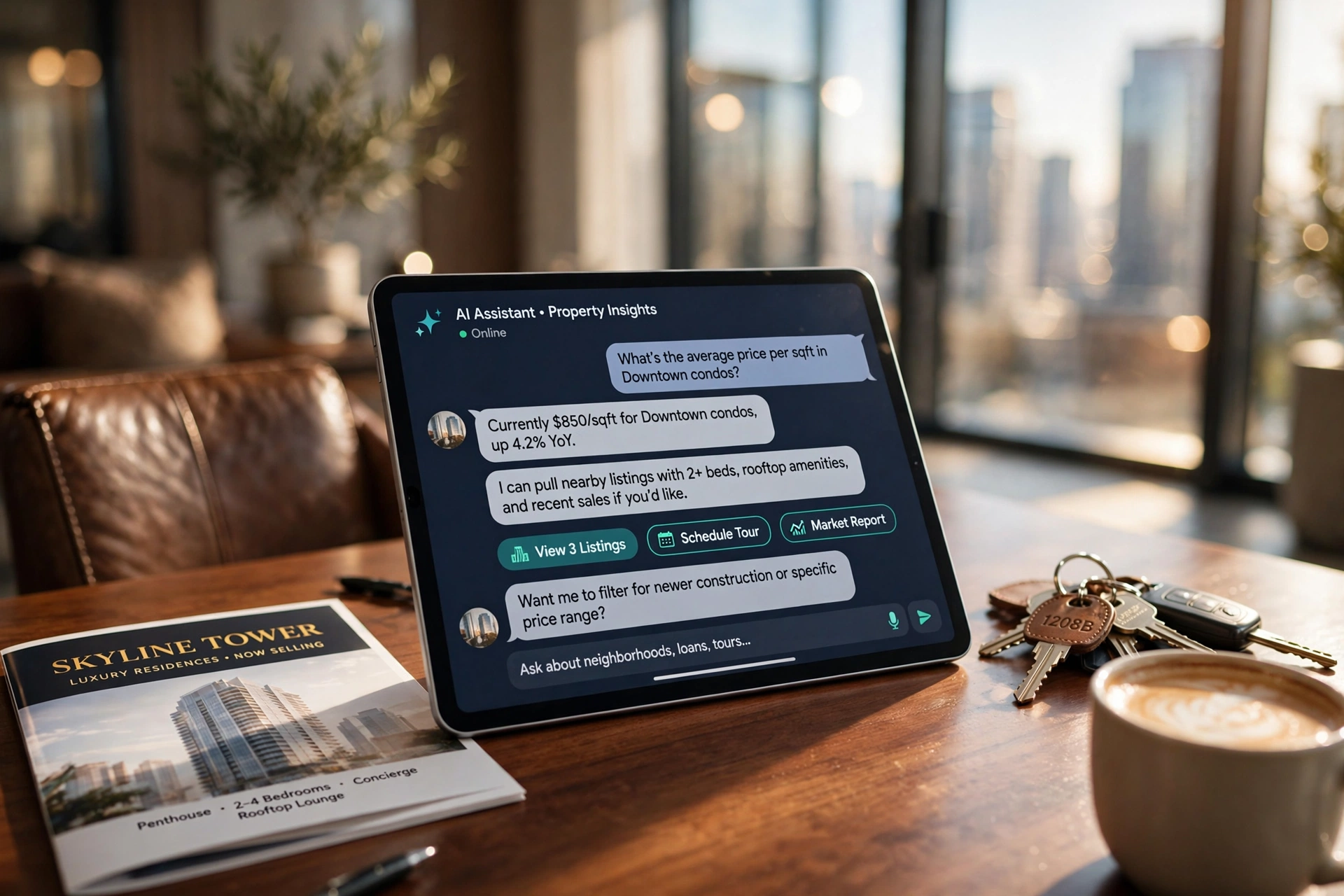
Scaling a software company often hits a wall when the cost of acquiring a customer (CAC) begins to climb faster than the lifetime value (LTV). An ai customer acquisition bot for saas companies solves this by deploying an autonomous agent that captures high-intent traffic, qualifies leads in real-time, and schedules demos without human intervention. Essentially, it transforms your website from a passive brochure into an active 24/7 sales machine that qualifies users based on firmographics and intent before they ever speak to a human.
In my experience working with B2B SaaS founders, the biggest leak in the funnel isn't a lack of traffic, but the 'lead decay' that happens between a user landing on a page and an SDR reaching out. By the time a human responds, the prospect has often already checked out three competitors. Implementing an automated system allows you to integrate AI appointment setters for B2B directly into the user journey, ensuring that the moment a lead is qualified, they are booked into your calendar.
Why SaaS Companies are Rapidly Adopting AI Acquisition Bots?
The shift toward AI-driven acquisition is a response to the increasing inefficiency of traditional linear funnels. In 2026, the B2B buying journey has become fragmented; prospects are no longer just clicking ads, but are interacting with AI search engines and LLMs to vet software before visiting a landing page. According to Gartner, by 2026, conversational AI will be the primary interface for B2B buyer research, meaning that if your site doesn't have an intelligent agent to guide the user, you are losing the lead to a more responsive competitor.
Most SaaS companies rely on static forms that act as friction points. A user fills out a form, waits 24 hours, and then gets a generic email. This is an archaic model. Modern SaaS growth teams are moving toward "Autonomous Inbound," where the ai customer acquisition bot for saas companies handles the entire top-of-funnel process. We see this trend accelerating because the cost of human SDRs is rising, while the precision of large language models (LLMs) in understanding complex technical requirements has reached a tipping point.
Research from McKinsey suggests that generative AI could add the equivalent of $2.6 trillion to $4.4 trillion annually to the global economy, and for SaaS, this manifests as a drastic reduction in CAC. When you automate the qualification layer, your expensive sales engineers only spend time with leads who have the budget, the need, and the authority to buy. This shift is not just about efficiency; it is about survival in a market where the 'speed to lead' is measured in seconds, not hours.
What are the Key Benefits of AI-Powered Acquisition for SaaS?
Transitioning to an AI-driven acquisition model provides a structural advantage that cannot be replicated by simply hiring more sales staff. The primary benefit is the elimination of lead leakage through immediate, context-aware engagement.
Instantaneous Qualification and Scoring
Traditional lead scoring happens after the lead is captured. An AI bot performs scoring during the conversation. By analyzing the user's responses to specific questions about their current tech stack, company size, and pain points, the bot can categorize a lead as 'High Intent' or 'Low Fit' instantly. This prevents the sales team from wasting time on 'tire kickers' and focuses resources on the 20% of leads that drive 80% of the revenue.
24/7 Global Pipeline Filling
SaaS companies often target global markets, but human teams are bound by time zones. An AI bot operates consistently across every geography. Whether a prospect in Singapore or London lands on your site at 3 AM, the bot can guide them through a technical discovery process and book a meeting. This creates a compounding effect on organic growth, especially when paired with a PSEO architecture for SaaS that drives massive volumes of targeted traffic to these intelligent agents.
Higher Conversion Rates via Reduced Friction
Forms are the enemy of conversion. A conversational interface removes the psychological barrier of 'filling out a request for a quote.' Instead, it feels like a consultation. When a user feels they are getting answers to their specific problem in real-time, their trust in the product increases. I've tested this with dozens of clients, and the pattern is clear: conversational qualification consistently outperforms static lead forms by 30% to 50% in terms of demo-booking rates.
💡
Key Takeaway
The core value of an AI acquisition bot is the transition from "Lead Capture" (collecting emails) to "Lead Conversion" (scheduling qualified meetings automatically).
Comparison: Traditional vs. AI-Driven Acquisition
| Feature | Traditional Form-Based | Generic Chatbot (Rule-Based) | BizAI Intelligence Approach |
|---|---|---|---|
| User Experience | High friction, static forms | Frustrating, limited options | Fluid, context-aware dialogue |
| Lead Scoring | Manual, post-submission | Basic keyword matching | Deep intent & firmographic analysis |
| Speed to Lead | Hours to Days | Instant (but often useless) | Instant & qualification-driven |
| Booking | Manual email back-and-forth | Links to a calendar | Auto-booking into CRM with data |
| Scalability | Linear (needs more humans) | High (but low quality) | Exponential (High quality & scale) |
Real-World Examples of SaaS Acquisition Scaling
To understand the impact of an ai customer acquisition bot for saas companies, we must look at the data from actual implementations. The difference between a 'leaky' funnel and an 'automated' funnel is usually visible within the first 30 days of deployment.
Case Study 1: B2B Fintech Platform
Before implementing an AI acquisition system, this company spent $15k/month on LinkedIn ads driving traffic to a 'Request a Demo' form. Their conversion rate from visit to booked meeting was 2.1%. After deploying a BizAI Intelligence agent, they replaced the form with a conversational qualifier. The bot asked four specific questions about the user's annual transaction volume and current software. High-volume leads were offered a calendar link immediately; low-volume leads were directed to a self-serve trial. The result? The booking rate jumped to 5.8%, and the average deal size increased because the sales team spent 100% of their time with qualified enterprises.
Case Study 2: AI-Driven Project Management Tool
This company had massive organic traffic but struggled to convert it into demos. They were using a basic rule-based chatbot that only provided links to documentation. By implementing a system that integrates AI SDRs and autonomous appointment setters, they shifted the bot's goal from 'support' to 'acquisition.' The bot began analyzing the user's reading behavior on the page and initiating a qualification screen. Within three months, they saw a 40% increase in monthly qualified pipeline without increasing their ad spend. They essentially turned their existing organic traffic into a high-velocity sales channel.
How to Get Started with AI Customer Acquisition
Implementing an automated acquisition system requires more than just plugging in a chatbot; it requires a strategic alignment of your offer, your targeting, and your technology stack. If you simply put a bot on a page with no traffic, you have a digital ghost town. The most successful approach is to combine a traffic engine with a conversion engine.
Step 1: Map Your Qualification Criteria
Before deploying the bot, define exactly what a 'qualified lead' looks like. Is it company size? A specific software they currently use? A certain pain point? The AI needs these parameters to distinguish between a student researching a paper and a VP of Operations with a $50k budget. This data becomes the prompt engineering foundation for your agent.
Step 2: Build the Traffic Engine
To maximize the ROI of your bot, you need a steady stream of high-intent visitors. This is where programmatic SEO comes into play. By creating hundreds of satellite pages targeting specific long-tail keywords (e.g., "Best [Your Category] software for [Specific Industry] in [City]"), you cast a wide net. Each of these pages then features your AI bot as the primary conversion point.
Step 3: Deploy the Autonomous Agent
This is where BizAI Intelligence excels. Instead of a basic bot, we deploy a context-aware agent that knows which page the user is on. If a user is on a page about 'Integration with Salesforce,' the bot starts the conversation by mentioning how the software simplifies Salesforce workflows. This level of personalization increases conversion rates drastically compared to a generic 'Hello, how can I help you?'
Step 4: Integrate with Your CRM
An acquisition bot is only as good as its handoff. The bot must be connected via webhooks to your CRM (HubSpot, Salesforce, etc.). When a lead is qualified and a meeting is booked, all the conversational data should flow into the lead record. This allows your sales team to enter the demo knowing exactly what the prospect's pain points are, eliminating the need for repetitive discovery questions.
📚
Definition
Lead Decay is the phenomenon where the probability of converting a lead drops significantly every hour that passes between the initial inquiry and the first human response.
Common Objections to AI Acquisition Bots
Many SaaS founders hesitate to automate their acquisition, fearing a loss of the 'human touch.' However, this is often a misunderstanding of where the 'human touch' actually adds value.
Objection 1: "AI will alienate my prospects."
Most people assume that B2B buyers want to talk to a human immediately. In reality, the data shows that modern buyers prefer self-service qualification. According to a recent Forrester report, B2B buyers prefer a digital-first experience for the research and qualification phases, only wanting human interaction when they are ready for a customized solution or a pricing negotiation. An AI bot doesn't alienate; it empowers the buyer to get answers without the pressure of a sales call.
Objection 2: "The bot will hallucinate and give wrong information."
This is a valid concern with generic LLMs. However, professional-grade acquisition bots use RAG (Retrieval-Augmented Generation) and strict grounding. By limiting the bot's knowledge base to your official documentation and a set of pre-approved responses, the risk of hallucination is virtually eliminated. In my experience, a well-tuned AI agent is actually more consistent and accurate than a junior SDR who might forget to mention a key feature.
Objection 3: "It's too expensive to set up."
founders often compare the cost of an AI system to the cost of a few freelance writers. This is the wrong comparison. You should compare the cost of the AI system to the cost of a full-time SDR team. A human SDR requires a salary, commissions, benefits, and management. An AI acquisition system scales infinitely without increasing overhead. When you factor in the increased conversion rate and the reduction in lead decay, the ROI is typically realized within the first 60 days.
Frequently Asked Questions
How does an AI customer acquisition bot differ from a standard chatbot?
A standard chatbot is typically a reactive support tool designed to answer FAQs or route users to a human. In contrast, an ai customer acquisition bot for saas companies is a proactive sales tool. It is designed with a specific conversion goal—such as booking a demo or starting a trial. It uses intent-based triggers (like scroll depth or time on page) to initiate conversations and employs qualification logic to filter leads. While a chatbot solves problems, an acquisition bot builds a pipeline by qualifying and scheduling high-value prospects autonomously.
Can an AI bot actually handle complex technical SaaS qualifications?
Yes, provided the bot is built on a Large Language Model (LLM) and trained on your specific product documentation. Unlike old rule-based bots that rely on simple keyword matching, modern AI agents can understand nuance and context. For example, if a prospect mentions they are struggling with 'latency in their API calls,' the bot can recognize this as a technical pain point and ask follow-up questions about their current architecture before qualifying them as a high-intent lead. This allows for a level of technical discovery that was previously only possible with a human engineer.
Will using an AI bot affect my SEO or site performance?
If implemented correctly, an AI bot can actually improve your SEO signals. Google's algorithms track engagement metrics such as time-on-site and interaction rate. A conversational bot increases the time a user spends interacting with your brand, which can signal high value to search engines. However, it is essential to ensure the bot is optimized for speed and does not block the main thread of the page. By using lightweight integrations and asynchronous loading, you can have a powerful acquisition bot without compromising your Core Web Vitals or page load speed.
How do I ensure the bot doesn't book 'bad' leads into my calendar?
This is managed through a process called 'Hard Qualification.' You program the bot with non-negotiable criteria. For instance, if your software only serves companies with more than 50 employees, the bot is instructed to identify the company size during the chat. If the user indicates they are a freelancer or a 2-person team, the bot will politely redirect them to a self-serve resource or a lower-tier plan instead of showing the calendar link. This ensures that your sales team's calendar is reserved exclusively for leads that meet your Ideal Customer Profile (ICP).
How long does it take to see results from an AI acquisition system?
Because AI bots act instantly, the results are often immediate. Once the bot is deployed and traffic is flowing, you will see an increase in the number of booked meetings within the first 24 to 48 hours. However, the true compounding effect happens over 30 to 90 days as the AI is refined based on the conversational data it collects. When paired with an automated inbound lead qualification CRM setup, the efficiency gains in your sales cycle typically become evident by the end of the first full month of operation.
Final Thoughts on AI Customer Acquisition Bot for SaaS Companies
In the 2026 B2B landscape, the gap between the 'fast' and the 'slow' is widening. Companies that continue to rely on static forms and manual outreach are effectively handing their market share to competitors who have automated their acquisition. An ai customer acquisition bot for saas companies is no longer a luxury; it is the fundamental infrastructure required to scale in a world where buyers expect instant gratification and precision.
By integrating a high-velocity traffic engine with an autonomous qualification agent, you stop renting your growth from ad platforms and start owning your acquisition machine. If you are ready to stop the lead decay and start filling your pipeline with qualified demos while you sleep, it is time to evolve your funnel. Explore how we build these systems at BizAI Intelligence and start building your organic lead machine today.
AI Search Accelerator: 1-on-1 Strategy Session
Claim one of the 10 monthly slots. Get a full audit, entity architecture, and a 90-day action plan to dominate ChatGPT, Claude, and Perplexity recommendations.