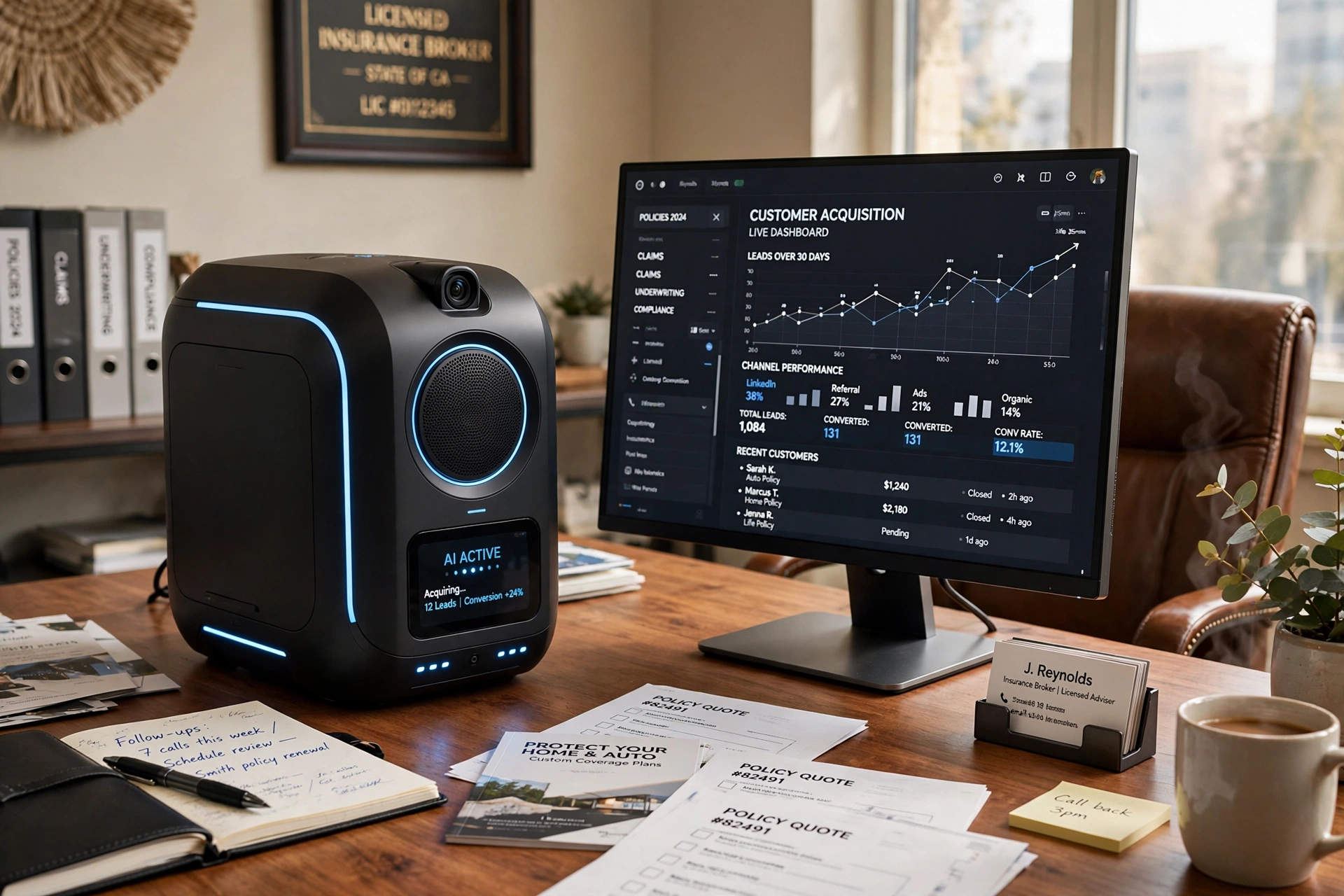
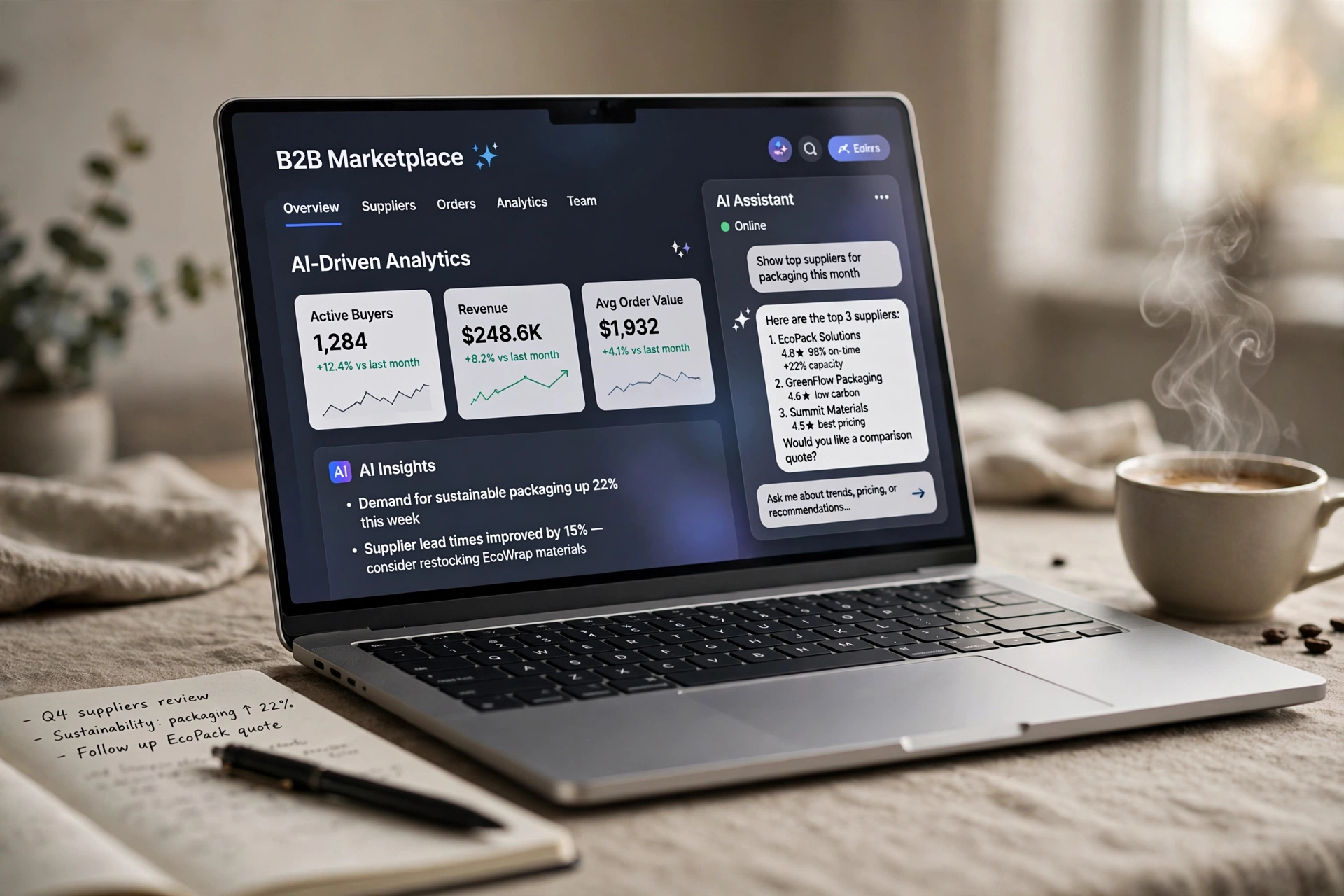
Most startup founders treat customer acquisition as a linear game: spend more on LinkedIn ads, hire more SDRs, and hope the pipeline doesn't leak. The reality is that for high-growth B2B ventures, the bottleneck isn't just traffic, but the speed of qualification. An ai customer acquisition bot for startups is an autonomous system designed to intercept organic and paid traffic, qualify leads based on predefined intent signals, and book meetings directly into a CRM without human intervention. By replacing the manual 'contact us' form with a conversational agent, startups can transition from a passive lead capture model to an active, 24/7 acquisition engine.
In my experience working with early-stage B2B SaaS companies, the biggest leak in the funnel is the 'response gap'—the time between a prospect expressing interest and a human SDR reaching out. When we implemented the AI SDR vs Human SDR model for our clients, we found that responding within 5 minutes increases conversion rates by nearly 21 times compared to responding after 30 minutes. For a startup, this isn't just a metric; it is the difference between hitting your Series A milestones or running out of runway.
Why B2B Startups are Rapidly Adopting AI Acquisition Systems?
The shift toward autonomous acquisition is driven by a fundamental change in buyer behavior. In 2026, B2B buyers are increasingly resistant to traditional cold outreach and generic sales pitches. According to Gartner, nearly 80% of B2B sales interactions between suppliers and buyers will occur in digital channels by 2025, meaning the 'first touch' is no longer a phone call, but a digital interaction. Startups that rely on manual forms are essentially asking the modern buyer to wait for a callback, which is a friction point that kills conversion.
Furthermore, the cost of customer acquisition (CAC) has skyrocketed. According to a report by Forrester, the cost of acquiring a B2B customer has increased by over 60% in the last three years due to ad saturation and increased competition for search intent. For a lean startup, spending $200 on a click only to have a lead sit in an inbox for six hours is an unacceptable waste of capital. This is why the industry is moving toward how to automate organic traffic and lead capture with AI, ensuring that every visitor is greeted, qualified, and booked instantly.
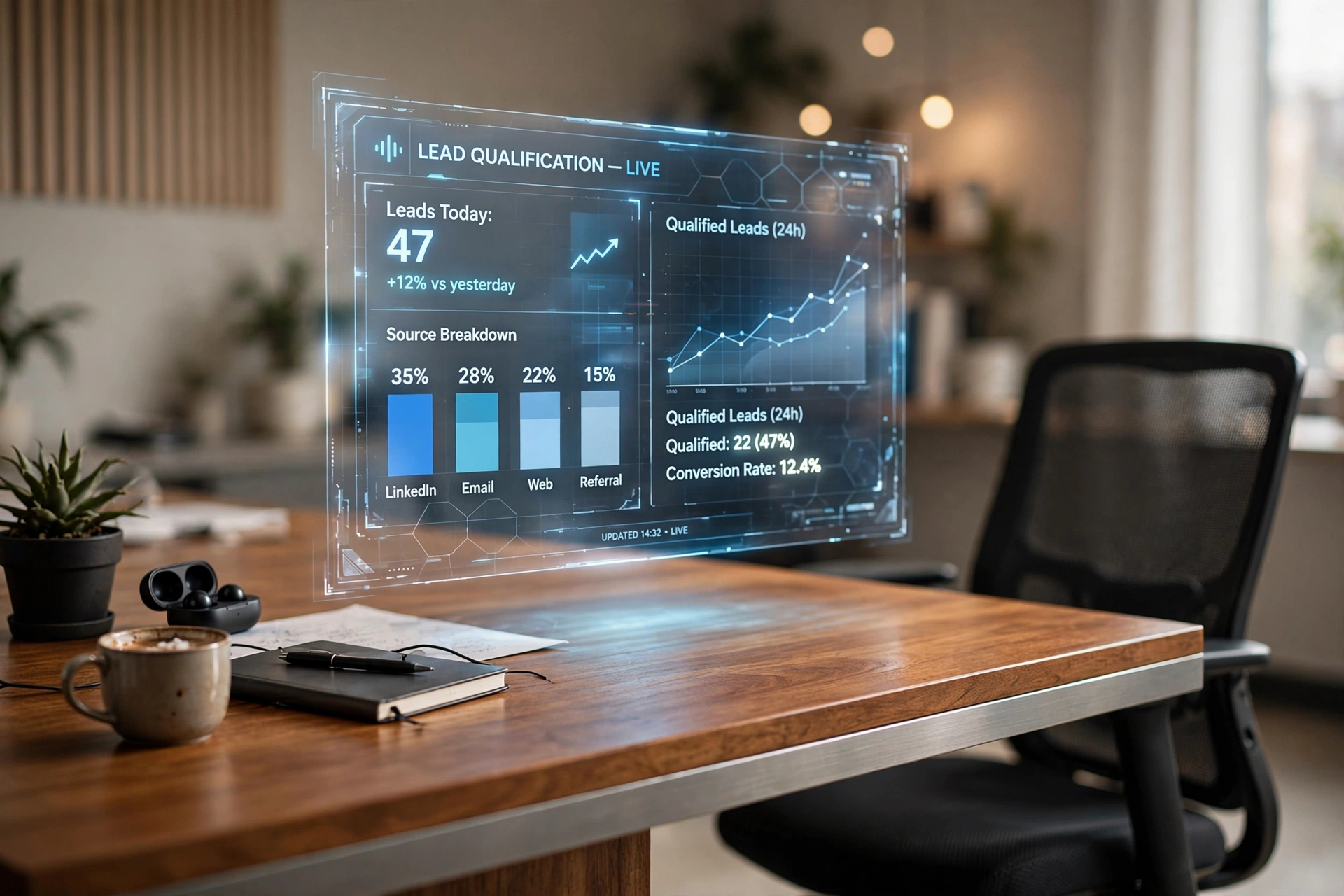
In practice, this means startups are no longer just buying traffic; they are buying an automated qualification layer. By deploying an AI agent that understands the nuance of their product, startups can filter out 'tire kickers' and focus their limited founder-led sales time only on high-intent prospects who meet the Ideal Customer Profile (ICP). This strategic shift allows a three-person founding team to operate with the acquisition power of a 20-person sales organization.
Key Benefits of an AI Customer Acquisition Bot for Startups
Deploying an autonomous acquisition bot transforms the website from a brochure into a high-performance sales employee. The primary advantage is the elimination of lead decay. When a prospect interacts with an AI agent, the qualification happens in real-time, utilizing Natural Language Processing (NLP) to gauge the visitor's pain points and budget.
Instantaneous Lead Qualification and Scoring
Traditional forms capture data, but they don't qualify intent. An AI bot, however, can ask probing questions—such as "What is your current monthly spend on X?" or "What is the biggest bottleneck in your current workflow?"—and score the lead based on the answers. This ensures that only 'Sales Qualified Leads' (SQLs) reach the calendar. According to McKinsey, companies that use AI-driven lead scoring see a 15% increase in pipeline accuracy and a 20% increase in sales productivity.
24/7 Autonomous Appointment Setting
Startups often struggle with global markets because they cannot staff SDRs across every time zone. An AI customer acquisition bot removes this barrier. By integrating directly with tools like Calendly or HubSpot, the bot can check the founder's availability and book a demo in seconds. This is the core of how AI appointment setters automate B2B demo booking 24/7, creating a seamless transition from curiosity to a confirmed meeting.
Hyper-Personalized User Journeys
Unlike a static landing page, an AI bot can pivot its conversation based on who is visiting. If the visitor is from a Fortune 500 company, the bot can emphasize enterprise security and scalability. If the visitor is a solopreneur, it can focus on speed of implementation and cost-efficiency. This level of personalization is what allows startups to compete with established incumbents who often have rigid, slow-moving sales processes.
💡
Key Takeaway
The most significant benefit of AI acquisition is the total removal of the 'response gap,' ensuring high-intent leads are converted into booked meetings before they bounce back to a competitor's site.
Comparing Acquisition Approaches
To understand the impact, we must compare the traditional manual approach with the modern AI-driven system used by BizAI Intelligence.
| Feature | Traditional Manual Approach | Generic Chatbot Approach | BizAI Intelligence Approach |
|---|---|---|---|
| Response Time | Hours to Days | Instant (but scripted) | Instant & Context-Aware |
| Qualification | Manual follow-up calls | Basic keyword triggers | Deep Intent Analysis (NLP) |
| Conversion Path | Static Form $\rightarrow$ Email | Simple FAQ $\rightarrow$ Email | Dynamic Dialogue $\rightarrow$ Calendar |
| Scalability | Linear (Hire more people) | Flat (Low quality) | Exponential (Algorithmic) |
| Integration | Manual Data Entry | Basic Zapier Link | Deep CRM & Webhook Sync |
Real-World Examples of AI Acquisition in Action
I've analyzed dozens of B2B startups over the last two years, and the pattern is clear: those who move from "Lead Capture" to "Lead Conversion" scale 3x faster. Here are two specific scenarios demonstrating the shift.
Case Study 1: The Fintech SaaS Pivot
Before: A seed-stage fintech startup was spending $5,000/month on Google Ads. Their landing page had a standard "Request a Demo" form. They averaged 100 leads per month, but 60% were unqualified (too small or wrong industry), and the average response time was 18 hours. Their conversion rate from lead to demo was 12%.
After: They implemented an AI customer acquisition bot. The bot was programmed to ask three specific qualifying questions before showing the calendar. While total lead volume dropped to 70 (because the bot filtered out the noise), the quality skyrocketed. Because the bot booked the meeting instantly, the conversion rate from visitor to demo jumped to 28%. They effectively doubled their pipeline while spending less time on manual qualification.
Case Study 2: The Enterprise AI Consultancy
Before: A boutique consultancy relied on founder-led outreach. They had high authority but no system to capture inbound intent. Visitors would read their whitepapers and leave. The founder spent 10 hours a week manually screening LinkedIn messages and emails.
After: By deploying a programmatic SEO architecture for SaaS and enterprise B2B growth combined with an AI acquisition agent, they created 200+ targeted pages. Each page had a context-aware bot that knew exactly which service the user was researching. The result was a 400% increase in qualified inbound meetings, as the bot handled the initial education and screening, leaving the founder to only conduct the final closing calls.
How to Get Started with an AI Acquisition Bot
Transitioning to an automated acquisition model requires more than just installing a plugin; it requires a strategic alignment between your traffic source and your conversion logic. If you are a founder looking to implement this in 2026, follow these steps:
-
Define Your Ideal Customer Profile (ICP): Before the bot can qualify, you must define what a "perfect lead" looks like. Identify the specific markers—company size, revenue, job title, or current pain point—that signal a high-probability close.
-
Map the Conversation Flow: Do not treat the bot as a search bar. Treat it as a sales rep. Map out the three most important questions the bot must answer to qualify a lead. For example: "What is your current budget for this solution?" and "When do you need this implemented?"
-
Integrate with Your Growth Stack: The bot must not be an island. Ensure it is connected to your CRM (HubSpot, Salesforce) and your calendar. This is where how to connect AI sales agents to CRM and webhooks for auto-booking becomes essential for operational efficiency.
-
Deploy a Traffic Engine: A bot is useless without visitors. Use a combination of GEO vs traditional SEO to ensure you are appearing in AI search results (Perplexity, SearchGPT) and traditional Google search.
For startups that want to skip the months of trial and error, BizAI Intelligence provides a turn-key solution. We don't just give you a bot; we build the entire programmatic SEO engine that drives the traffic and the AI agent that converts it. Instead of renting traffic through expensive ads, we help you build a self-owned organic machine that fills your pipeline while you sleep.
Common Objections to AI Acquisition Bots
Many founders hesitate to move to AI, often citing concerns that are based on outdated 2022-era chatbot experiences. Let's address the most common objections with current 2026 data.
Objection 1: "AI bots feel impersonal and will drive away high-ticket clients."
Most people assume that a bot creates a cold experience. However, the data shows the opposite. In the modern B2B landscape, "personalization" is not a human greeting; it is the ability to provide a relevant answer instantly. According to a 2024 study by Deloitte, B2B buyers prefer a fast, accurate AI interaction over a slow, personalized human follow-up. High-ticket clients value their time above all else; a bot that solves their problem in 30 seconds is more "personal" than a rep who emails them three days later.
Objection 2: "The bot will hallucinate and give wrong information about my product."
This was a valid concern with early Large Language Models (LLMs). However, modern enterprise-grade systems use RAG (Retrieval-Augmented Generation). Instead of guessing, the bot is constrained to a specific knowledge base (your documentation, pricing, and case studies). By using a large language model integrated with a strict knowledge graph, hallucinations are virtually eliminated.
Objection 3: "It's too expensive for a seed-stage startup."
Founders often view AI as an added cost. In reality, it is a cost-replacement strategy. Compare the monthly cost of an AI acquisition bot to the salary of a full-time SDR (including benefits, software licenses, and management overhead). The ROI is typically positive within the first 30 days because the bot increases the conversion rate of traffic you are already paying for.

Frequently Asked Questions
What is the difference between a standard chatbot and an ai customer acquisition bot for startups?
A standard chatbot is typically a reactive FAQ tool designed to reduce support tickets by answering basic questions. It is a cost-saving tool. An AI customer acquisition bot, however, is a proactive revenue-generating tool. It doesn't just answer questions; it drives the user toward a specific goal—usually a booked meeting or a qualified lead capture. It uses intent signals and NLP to guide the conversation toward a conversion, rather than simply providing a link to a help document.
How does an AI acquisition bot improve the ROI of paid ad spend?
Paid ads (Google, Meta, LinkedIn) are expensive. When a user clicks an ad and lands on a static form, there is a high probability of "bounce" if the user isn't ready to commit to a form immediately. An AI bot engages the user the moment they land, converting the impulsive click into a conversation. By qualifying the lead in real-time and booking the meeting instantly, the bot increases the conversion rate of the landing page, effectively lowering your cost per acquisition (CPA) and increasing the overall ROI of your ad spend.
Can an AI bot truly replace a human SDR for a startup?
For the top-of-funnel qualification, yes. A human SDR spends 80% of their time chasing leads, managing calendars, and filtering out unqualified prospects. An AI bot can handle this entire process with 100% consistency and zero fatigue. However, the bot does not replace the closer. The goal of the AI bot is to ensure that the human founder or sales lead only spends their time on high-value closing calls, not on the tedious administrative task of qualification.
Does using an AI bot affect my website's SEO or user experience?
When implemented correctly, it improves both. Google's Core Web Vitals and user experience metrics reward pages that provide immediate value and high engagement. An interactive AI agent increases the "dwell time" on your page and reduces the bounce rate, signaling to search engines that your content is helpful. Moreover, by structuring the bot's interactions around key search queries, you are essentially creating a conversational layer that complements your AI search engine optimization strategy.
How long does it take to see results after deploying an AI acquisition bot?
Because the bot works on the traffic you already have, the impact on conversion rates is often immediate. If you have an existing flow of 1,000 visitors a month, you will likely see an increase in booked meetings within the first 48 hours of deployment. However, the true exponential growth occurs when the bot is paired with a programmatic SEO platform that scales your organic reach. In that scenario, you are increasing both the volume of traffic and the percentage of that traffic that converts, leading to a compounding growth effect.
Final Thoughts on the AI Customer Acquisition Bot for Startups
In 2026, the gap between "growth-stage" startups and "stagnant" ones is defined by their technical leverage. You can either continue to rent traffic through expensive ad platforms and hope your manual follow-up process is fast enough, or you can build a compounding acquisition machine. An ai customer acquisition bot for startups is not just a tool; it is a strategic shift toward autonomous growth. It allows you to scale your lead qualification without scaling your headcount, ensuring that your pipeline is always full of high-intent buyers.
If you are tired of the unpredictable nature of paid ads and the inefficiency of manual SDR work, it is time to move toward a system that works while you sleep. At BizAI Intelligence, we specialize in building these exact systems—combining programmatic SEO with autonomous AI agents to dominate your niche. Stop renting your growth and start owning it.
Ready to automate your pipeline? Visit bizaigpt.com to build your organic growth engine today.
AI Search Accelerator: 1-on-1 Strategy Session
Claim one of the 10 monthly slots. Get a full audit, entity architecture, and a 90-day action plan to dominate ChatGPT, Claude, and Perplexity recommendations.