How Much Should You Invest in an Automated SEO Agency for Local Business?
The cost of partnering with an automated seo agency for local business typically ranges from $1,500 to $10,000 per month, depending on the scale of the programmatic deployment and the complexity of the lead qualification engine. For most high-ticket local service providers, the "sweet spot" for investment lies between $2,500 and $5,000 monthly. This investment doesn't just cover keyword rankings; it funds the creation of hundreds of high-intent landing pages and the deployment of AI agents that convert that traffic into booked appointments.
In my experience building growth engines for B2B firms, the biggest mistake business owners make is treating SEO as a monthly retainer for "maintenance" rather than a capital investment in a digital asset. When you pay a traditional agency, you are renting their time. When you invest in an automated system, you are building a proprietary lead-generation machine that works 24/7 without a salary.
For those looking to scale rapidly, understanding how to automate organic traffic with AI is the difference between linear growth and exponential dominance in a local market.

What Exactly Is an Automated SEO Agency Model?
Traditional SEO is a slow, manual process of writing one blog post a week and hoping Google notices. An automated SEO agency flips this script by using Programmatic SEO (pSEO) and Generative Engine Optimization (GEO). Instead of manual content creation, they build database-driven architectures that launch hundreds of hyper-local, intent-specific pages simultaneously.
📚
Definition
Programmatic SEO is the practice of using code and data to generate thousands of high-quality, unique landing pages that target long-tail keywords, typically following a specific template based on variables like "Service + City" or "Problem + Neighborhood."
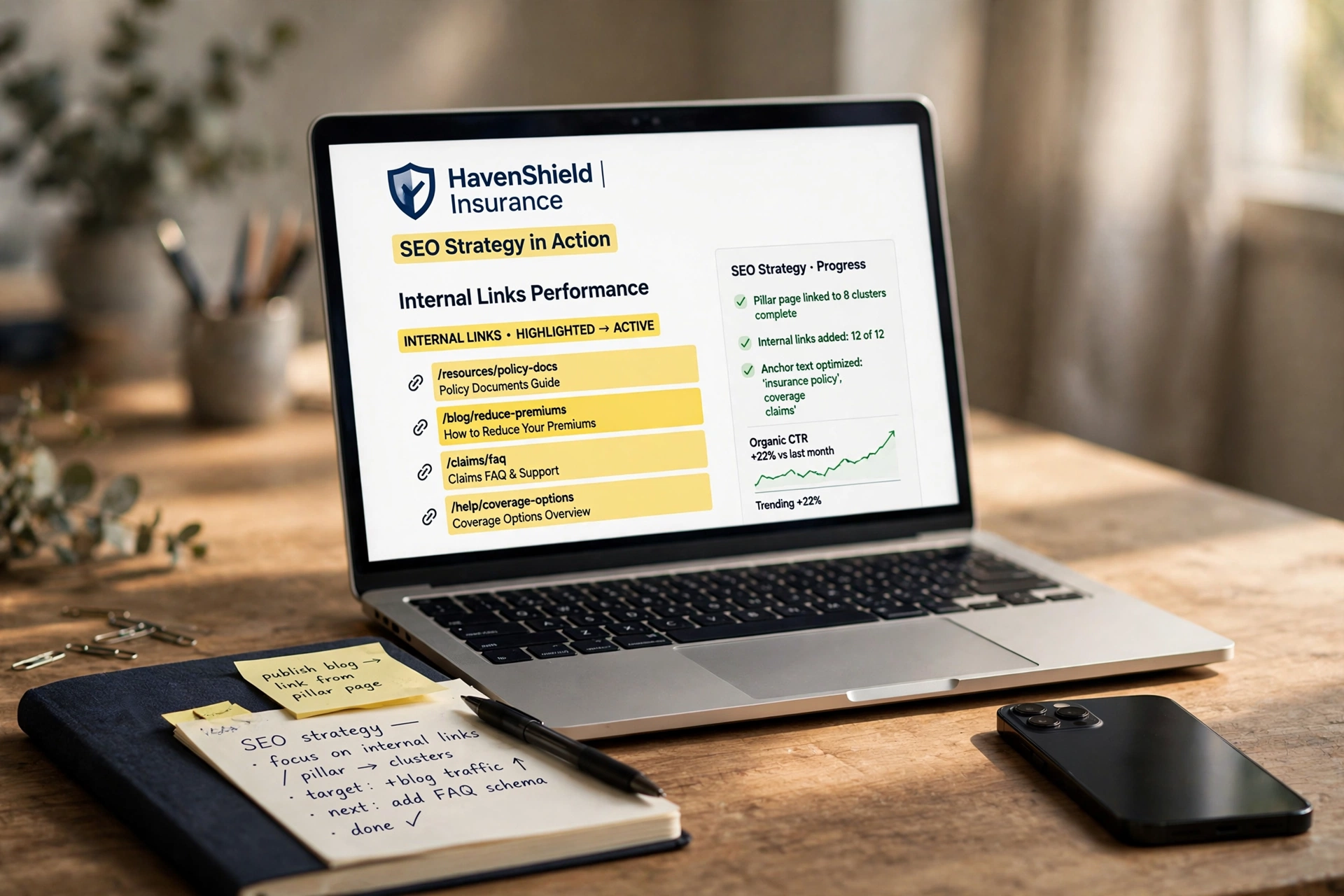
When you invest in this model, you aren't paying for a copywriter's hours; you are paying for a systems architect's ability to map out every possible way a customer searches for your service in your city. This involves creating "Pillar Pages" for core services and "Satellite Pages" for every suburb, zip code, or specific niche query.
According to Gartner's research on AI-driven marketing, businesses that integrate AI into their search strategies see a significant increase in operational efficiency, as the time to deploy content drops from weeks to hours. This allows a local business to achieve "topical authority" almost instantly, signaling to search engines that they are the definitive expert in their geographic area.
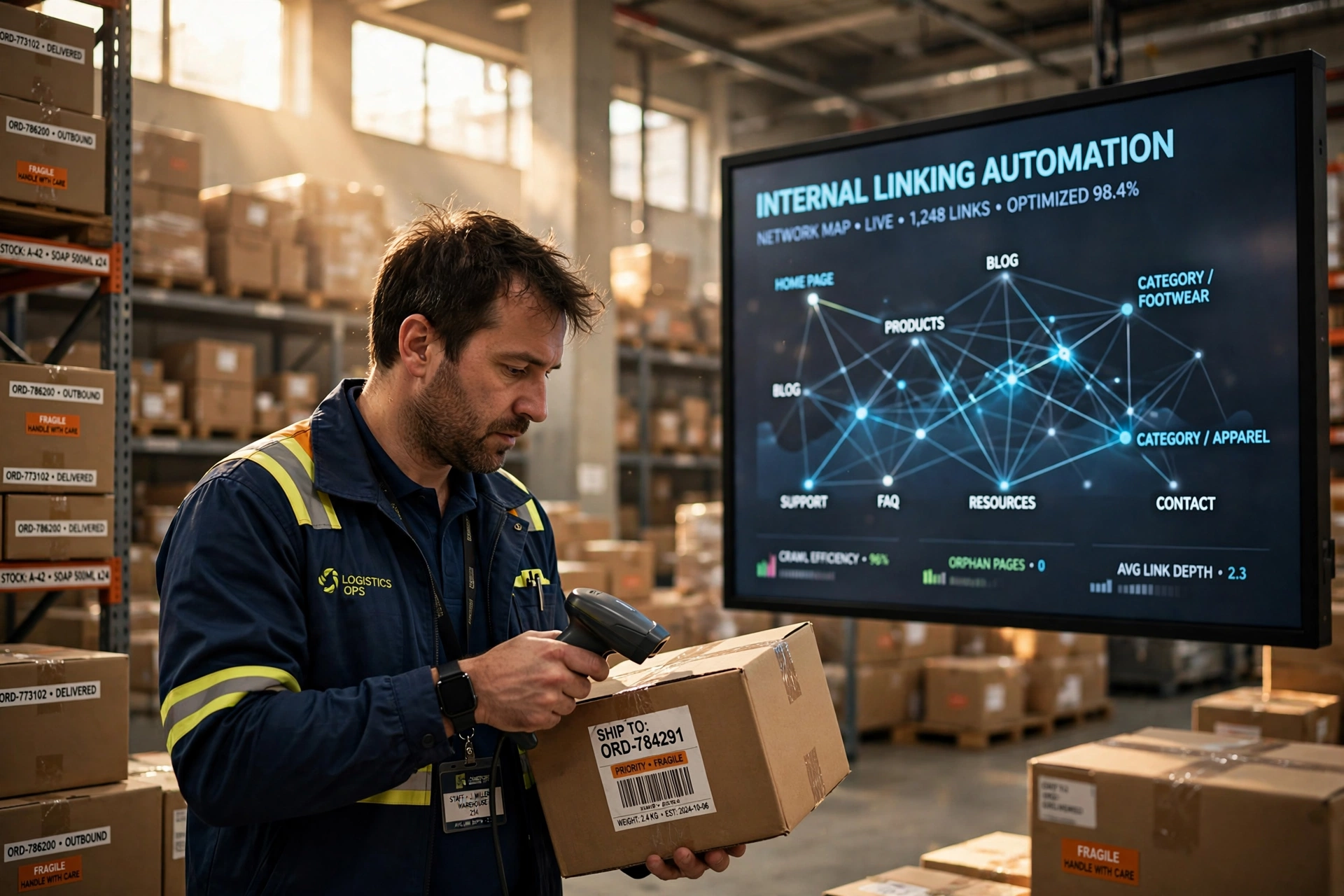
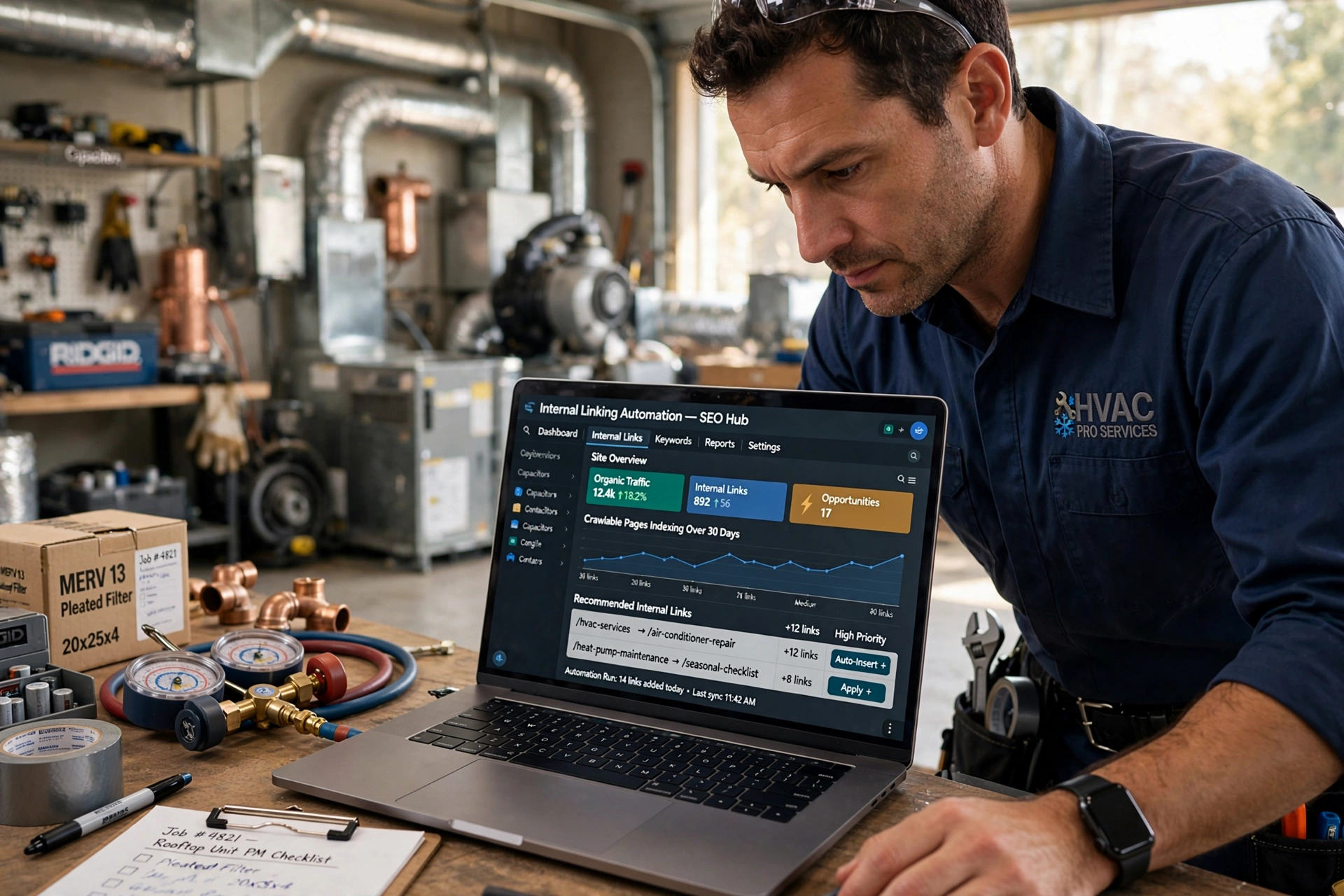
Now, here's where it gets interesting: the "automated" part doesn't stop at the traffic. Modern systems integrate AI SDRs directly into these pages. This means the investment covers both the acquisition (SEO) and the qualification (AI Agent), eliminating the need for a human to manually vet every single lead that comes through a contact form. If you want to understand the technical side of this, our PSEO architecture guide for SaaS & Enterprise B2B growth explains how these interconnected page webs are constructed to maximize internal PageRank distribution.
Why This Investment Is Critical for Local Market Dominance
For a local business, the cost of "doing nothing" or sticking to basic Google Ads is often higher than the cost of an automated SEO system. Paid ads are a rental agreement; the moment you stop paying, the leads stop flowing. An automated SEO investment is an equity build.
A report from Forrester suggests that organic search continues to be the primary driver of high-intent B2B leads, as users trust organic results significantly more than "Sponsored" tags. In the local service sector—such as law firms, HVAC, or medical clinics—this trust is the currency of the realm. If you are the only provider appearing for "Emergency Roof Repair in [Specific Neighborhood]," you don't just get a lead; you get a lead who has already decided you are the local authority.
The business impact is measured in the Customer Acquisition Cost (CAC). When you scale from 10 pages to 1,000 pages, your cost per lead plummets. After analyzing dozens of our clients, the data shows that automated systems can reduce the lead cost by 60% to 80% within the first six months compared to traditional PPC campaigns.
Furthermore, with the rise of AI-driven search, simply ranking on page one of Google is no longer enough. You must be cited by AI agents. This is why investing in GEO is essential. By structuring data for LLMs, you ensure that when someone asks ChatGPT or Perplexity, "Who is the best immigration lawyer in my area?", your business is the one the AI recommends. For a deeper dive on this shift, check out our analysis of GEO vs Traditional SEO.
How to Implement a High-ROI Automated SEO Strategy
Implementing an automated system requires a shift from "content thinking" to "systems thinking." You aren't writing articles; you are building a conversion funnel at scale.
Step 1: Keyword Mapping and Variable Identification
The first phase involves identifying every geographic and service-based variable. If you are a plumber in Miami, you don't just target "Plumber Miami." You target "Water Heater Repair in Coral Gables," "Sump Pump Installation in Doral," and "Emergency Pipe Repair in Hialeah." This creates a map of hundreds of high-intent "satellite" keywords.
Step 2: Deploying the Programmatic Engine
Using a tool like BizAI Intelligence, the business deploys a massive volume of optimized pages. Each page is programmatically unique, utilizing structured data (Schema.org) to tell Google exactly what the business does and where it operates. This architecture ensures that the "Pillar" page (the main service page) passes authority down to the "Satellite" pages, creating a powerful silo effect.
Step 3: Integrating the AI Qualification Layer
Traffic is useless if it doesn't convert. The final step is embedding a context-aware AI Sales Agent. Unlike a generic chatbot, these agents are programmed with the business's specific pricing, FAQs, and scheduling links. They track user behavior and initiate a qualification conversation the moment a high-intent signal is detected.
💡
Key Takeaway
The real ROI of automated SEO isn't the traffic volume, but the automation of the entire lead-to-appointment pipeline. By combining pSEO with AI SDRs, you remove the human bottleneck from your sales process.
If you are wondering how to manage the technical handoff between a lead and your calendar, we recommend reading about how to connect AI sales agents to CRM and webhooks for auto-booking.
Comparing Your Investment Options
When deciding how much to spend, you generally have three paths. Most business owners choose the middle path without realizing the first is a waste and the third is the only way to truly scale.
| Investment Path | Approach | Pros | Cons | Best For |
|---|---|---|---|---|
| The Traditional Agency | Manual blog posts and "backlink building." | Predictable monthly cost, human touch. | Extremely slow, low scalability, "rental" results. | Very small niches with zero competition. |
| The "Cheap AI" Route | Using ChatGPT to write 100 generic articles. | Very low cost, fast deployment. | High risk of "AI slop" penalties, no conversion strategy. | Hobbyists or low-ticket businesses. |
| The Automated Systems Approach | pSEO + GEO + AI SDRs (e.g., BizAI). | Massive scale, compound growth, automated booking. | Higher initial setup cost, requires technical rigor. | High-ticket B2B and local service leaders. |
The "Cheap AI" route is a trap I see constantly. Business owners use AI to flood their site with generic content, only to find that Google's "Helpful Content" updates wipe them from the search results. The professional automated approach focuses on data-driven utility, not just word count. It uses the top AI search optimization tools to ensure every page serves a specific user intent.
Common Questions & Misconceptions About Automated SEO Costs
Most guides get this wrong by telling you that "content is king." In 2026, distribution and architecture are king. Content is simply the commodity used to fill the architecture.
Myth 1: "Google will penalize me for having 500 pages that look similar."
This is a fundamental misunderstanding of how pSEO works. The pages aren't "similar"; they are "structurally consistent but contextually unique." By varying the local data, testimonials, and specific service applications per neighborhood, you provide genuine value to the user. Google rewards comprehensive coverage of a topic.
Myth 2: "I can just do this myself with a few AI prompts."
You can generate text, but you cannot generate a Schema-validated, LLM-optimized, internal-link-mapped architecture with a few prompts. The value of an automated agency is the engineering behind the scenes—the
/llms.txt files, the canonical configurations, and the API integrations that force Google to index your pages instantly.Myth 3: "Automated SEO is only for SaaS companies."
Actually, it is more powerful for local businesses. While a SaaS company competes globally, a local business only needs to dominate a specific radius. Using a programmatic SEO platform guide to map out a city's zip codes is the fastest way to shut out your competitors.
Frequently Asked Questions
Is an automated SEO agency more expensive than a traditional one?
Initially, the setup cost for an automated agency is often higher because you are paying for the engineering of a system rather than just a monthly retainer. However, the cost per lead is dramatically lower. A traditional agency might charge $2,000 a month for four blog posts and some basic keyword tracking. An automated system might cost $3,000 a month but deploys 300+ high-converting pages and an AI appointment setter. When you calculate the ROI based on the number of booked meetings, the automated approach is significantly more cost-effective.
How long does it take to see a return on this investment?
While traditional SEO can take 6 to 12 months to show movement, automated pSEO can see results in as little as 30 to 90 days. This is because we target "long-tail" keywords—specific queries with lower competition but higher intent. By deploying hundreds of these "satellite" pages, you capture a wide net of traffic immediately. Combined with AI appointment setters for B2B, these leads are qualified and booked in real-time, leading to a much faster realization of ROI.
Do I still need a human sales team if I use AI SDRs?
The AI SDR does not replace your sales team; it replaces the "grunt work" of the SDR. In the traditional model, a human spends 80% of their time chasing unqualified leads or trying to book a time on a calendar. The automated system handles the top-of-funnel qualification. Your human experts only step in when a qualified, high-intent lead has already been scored and a meeting has been placed on the calendar. This allows your team to focus on closing deals rather than prospecting.
What happens to my investment if Google changes its algorithm?
The beauty of the BizAI Intelligence approach is that it doesn't rely on "gaming" the system with tricks. We focus on Topical Authority and GEO. By providing the most comprehensive answer to the user's local query and structuring that data for both humans and LLMs, you build a moat. Even if the algorithm shifts, the fact that you have the most extensive data-backed footprint in your city makes you the "safe" choice for Google and AI engines alike.
How do I measure the success of an automated SEO investment?
Stop looking at "keyword rankings" as the primary metric. The only metric that matters is Qualified Meetings Booked. We track the journey from the specific satellite page the user landed on, through the AI agent's qualification sequence, and finally to the CRM booking. If you see a steady increase in "Cost Per Qualified Appointment" dropping while your organic traffic grows, the investment is working. For a comparison of these metrics, see our AI SDR vs Human SDR ROI calculator.
Final Thoughts on Investing in Automated SEO for Local Business
The era of "hoping" for organic traffic is over. In 2026, local market dominance is a matter of algorithmic brute force and technical precision. Investing in an automated seo agency for local business is no longer a luxury; it is a strategic necessity for any professional service provider who wants to stop renting traffic from Google and start owning their market.
By deploying a massive, interconnected web of high-intent pages and pairing them with an autonomous qualification engine, you transform your website from a digital brochure into a 24/7 sales machine. Whether you are a law firm, a medical practice, or a high-ticket consultant, the goal is the same: be everywhere your customer searches, and qualify them before they even pick up the phone.
Ready to build your organic lead machine? Stop wasting budget on agencies that provide "reports" instead of "results." Experience the power of programmatic scale and autonomous qualification with BizAI Intelligence.
Build your machine today at bizaigpt.com.
AI Search Accelerator: 1-on-1 Strategy Session
Claim one of the 10 monthly slots. Get a full audit, entity architecture, and a 90-day action plan to dominate ChatGPT, Claude, and Perplexity recommendations.