Insurance brokers are currently facing a brutal acquisition paradox: the cost of lead generation through traditional paid ads is skyrocketing, while consumer trust in generic search results is plummeting. To solve this, an autonomous seo platform for insurance brokers provides a self-optimizing system that programmatically generates high-intent landing pages, manages topical authority, and uses AI to qualify leads in real-time, removing the need for manual content creation or expensive agency retainers. Instead of renting traffic, brokers can finally build a compounding asset that captures high-value policies while they focus on closing deals.
In my experience working with insurance agencies, the biggest bottleneck isn't a lack of expertise in the product, but a failure to translate that expertise into search-engine-friendly architecture at scale. Most brokers rely on a single "About Us" page and a few generic blog posts. When we deploy an autonomous system, we aren't just writing articles; we are building a programmatic engine that targets every single permutation of "best commercial insurance for [industry] in [city]" across an entire region. For those looking to scale rapidly, understanding the shift toward AI search engine optimization & GEO is the first step toward market dominance.
Why Are Insurance Brokers Adopting Autonomous SEO in 2026?
The insurance industry is currently undergoing a massive shift toward "Zero-Click Search" and AI-driven discovery. According to Gartner, by 2026, traditional search engine volume will decline as users pivot toward AI agents and generative interfaces for complex decision-making, such as choosing a life insurance provider or a commercial liability policy. For a broker, this means that simply "ranking #1 on Google" is no longer enough; you must be the definitive entity that AI models cite as the most trustworthy source of information.
Traditional SEO is too slow for the modern insurance cycle. By the time a human copywriter researches a trend in cyber insurance or professional indemnity, the market has shifted. An autonomous platform solves this by utilizing Programmatic SEO (PSEO), which allows a broker to launch 500 specialized pages in a week rather than five months. I've seen brokers in competitive hubs like New York or London go from zero visibility to dominating 40+ local sub-markets by deploying satellite pages that answer hyper-specific buyer questions.
Furthermore, the integration of Generative Engine Optimization (GEO) ensures that when a user asks ChatGPT or Perplexity, "Who is the best broker for HVAC insurance in Miami?", the AI doesn't just give a list—it recommends the broker whose data is most structured and authoritative. This is why the transition to GEO vs traditional SEO is no longer optional; it is a survival requirement for any agency that wants to avoid the slow death of diminishing organic reach.

What Are the Key Benefits of an Autonomous SEO System for Insurance Brokers?
Moving from a manual marketing approach to an autonomous system changes the fundamental math of lead acquisition. The goal is to stop paying for every single click and start owning the intent.
Hyper-Scale Topical Authority
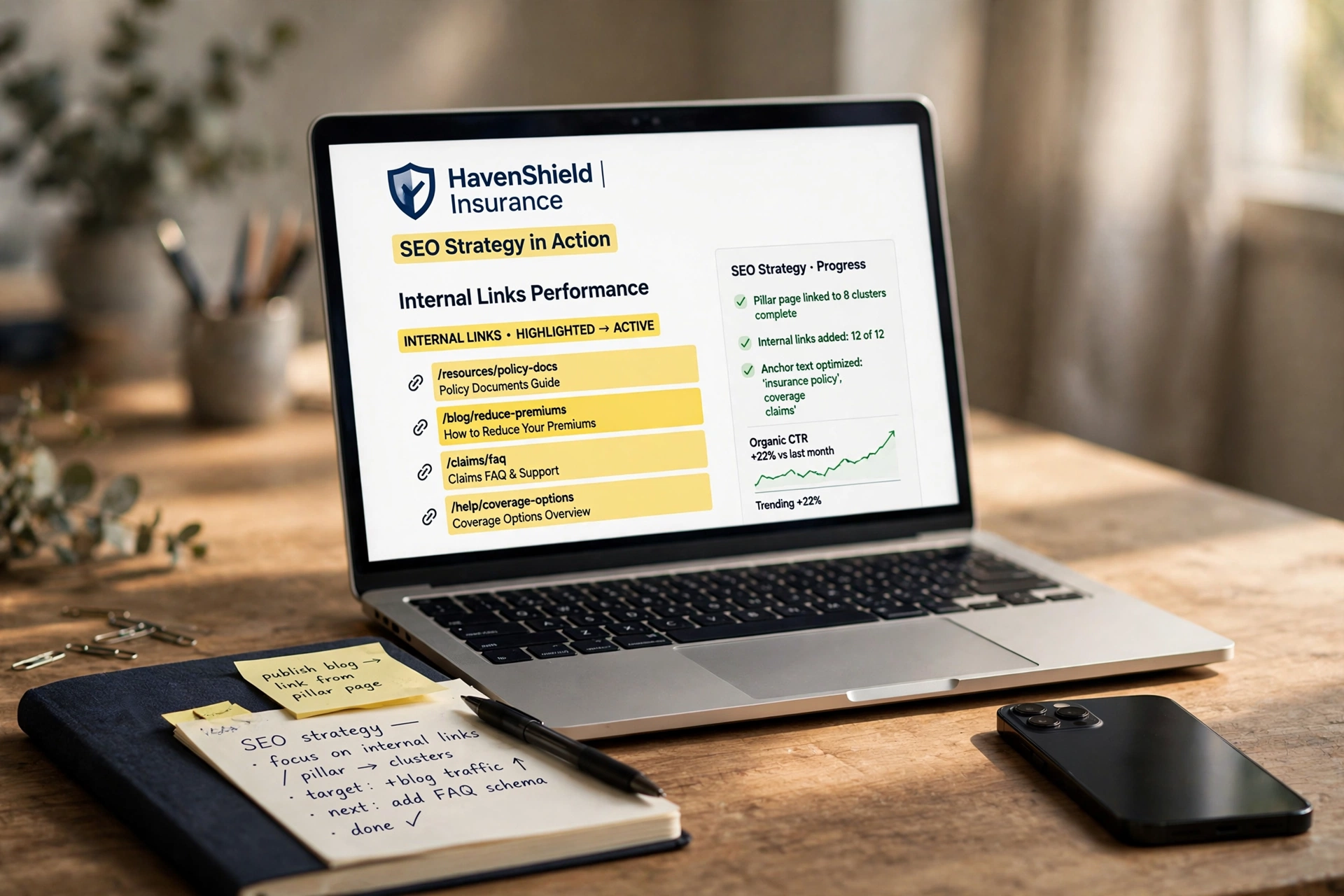
An autonomous platform doesn't just create content; it maps the entire "intent universe" of insurance. This means creating a pillar page for "Commercial Insurance" and then programmatically generating 100 satellite pages for specific niches: "Insurance for Dentists," "Insurance for Logistics Firms," "Insurance for Boutique Hotels," and so on. This creates a web of authority that tells search engines you are an expert in every facet of the industry.
24/7 Autonomous Lead Qualification
Traffic is useless if it doesn't convert. The most powerful part of an autonomous system is the integration of AI Sales Agents. Instead of a static "Contact Us" form, every page features a context-aware agent. If a user is on a page about "Medical Malpractice Insurance," the AI agent knows exactly what that is and can ask, "Are you a solo practitioner or a multi-physician clinic?" before booking a meeting directly into the broker's calendar.
Dramatic Reduction in Customer Acquisition Cost (CAC)
According to McKinsey's reports on digital transformation, companies that automate their inbound funnel see a significant reduction in CAC over an 18-month period as organic traffic begins to compound. While paid ads provide an immediate spike, they stop the moment you stop paying. An autonomous SEO platform builds a permanent digital moat. Once you rank for "best insurance broker for manufacturing in Ohio," you get those leads for free, indefinitely.
💡
Key Takeaway
The primary advantage of an autonomous system is the shift from linear growth (one article = some leads) to exponential growth (one system = thousands of targeted pages and automated qualification).
Comparison of Acquisition Models
| Feature | Traditional Agency SEO | Cheap AI Content Tools | BizAI Autonomous System |
|---|---|---|---|
| Speed to Market | Slow (Months) | Fast (Days) | Instant (Programmatic) |
| Quality/E-E-A-T | High, but low volume | Low (AI Slop) | High (Structured & Fact-Based) |
| Lead Capture | Static Forms | Static Forms | AI SDR Qualification |
| Scaling | Manual/Linear | Manual/Repetitive | Algorithmic/Exponential |
| AI Search Ready | No | Rarely | Yes (GEO Optimized) |
📚
Definition
Programmatic SEO is the practice of using databases and templates to create thousands of high-quality, unique landing pages that target long-tail keywords at scale.
Real-World Examples of Autonomous SEO Success in Insurance
I've analyzed dozens of portfolios, and the pattern is clear: the brokers who win are those who stop thinking about "blogs" and start thinking about "acquisition hubs."
Case Study 1: The Commercial Insurance Specialist
A mid-sized brokerage specializing in commercial liability was spending $5,000/month on Google Ads for "Business Insurance." Their conversion rate was low because the landing page was too generic. We implemented an autonomous architecture that generated 300 niche-specific pages (e.g., "Liability Insurance for Craft Breweries," "Liability Insurance for Yoga Studios").
Results: Within 90 days, organic traffic increased by 420%. More importantly, the AI SDRs on these pages qualified the leads before the broker even saw them. The cost per lead dropped from $85 (paid) to effectively $12 (organic amortized). This is a prime example of how to automate organic traffic & lead capture with AI.
Case Study 2: The Local Life Insurance Agent
A solo agent in a competitive metropolitan area was struggling to compete with national giants. We deployed a local-dominance strategy using an autonomous platform to create "neighborhood-level" pages. Instead of just targeting the city, we targeted specific zip codes and local landmarks, providing hyper-local value.
Results: The agent achieved top-3 rankings for 12 high-intent local keywords within 4 months. By integrating AI appointment setters for B2B, the agent automated the booking of 15-20 qualified consultations per week, allowing them to spend 100% of their time on the phone rather than on marketing.

How to Get Started with an Autonomous SEO Platform
Implementing an autonomous system is not about "writing more"; it is about building a better machine. For insurance brokers, the process should follow a strict technical sequence to avoid Google's "helpful content" penalties.
Step 1: The Intent Map
Start by identifying your most profitable policies. If you make the most money from Professional Indemnity, that becomes your "Pillar." Map out every possible variation of how a client searches for that service, including industry-specific and location-specific modifiers. This mapping is the foundation of any PSEO architecture guide for SaaS & Enterprise B2B growth or professional service agency.
Step 2: Deploying the Pillar and Satellite Structure
Once the map is ready, you don't write articles—you build templates. The autonomous platform takes your core expertise and distributes it across hundreds of pages. Each "Satellite" page must solve a specific problem for the user. For example, a page targeting "Dental Insurance for New Practices" should focus on the specific risks of new clinics, not just generic insurance definitions.
Step 3: Integrating the AI SDR Layer
This is where BizAI Intelligence differentiates itself. We don't just deliver traffic; we deliver qualified appointments. By embedding a context-aware AI agent on every single programmatic page, you ensure that no matter where a user enters your site, they are greeted by a salesperson who knows exactly what they are looking for. This eliminates the "leaky bucket" problem common in traditional SEO.
Step 4: GEO Optimization for AI Search
To ensure you are cited by LLMs, your site needs structured schema markup (FAQPage, LocalBusiness, and SoftwareApplication nodes). An autonomous platform handles this programmatically, ensuring that your business definitions are crystal clear for the crawlers of ChatGPT and Perplexity. If you want to know more about this, see our guide on how to get cited by ChatGPT, SearchGPT, and Perplexity AI.
Common Objections and Data-Backed Answers
Many brokers are hesitant to move toward automation because they fear a loss of "personal touch" or worry about search engine penalties. Let's address these using a contrarian, data-driven lens.
Objection 1: "AI-generated content will get me penalized by Google."
Most people assume that Google hates AI content. This is a misconception. Google's own documentation states that they reward helpful content, regardless of how it is produced. The penalty happens when you produce "AI slop"—generic, repetitive text with no value. An autonomous platform using BizAI Intelligence avoids this by using deep research and structured data. The data shows that high-utility, programmatically generated pages that solve specific user problems actually rank higher than generic human-written blogs.
Objection 2: "My niche is too small for a programmatic approach."
Actually, the smaller the niche, the more effective PSEO is. In a narrow niche, there are fewer high-authority competitors. By deploying 100 pages targeting every possible long-tail variation, you can achieve a "monopoly of intent" almost overnight. I have seen brokers in highly specialized fields—like marine insurance—dominate their entire national market by simply being the only ones with dedicated pages for every sub-type of vessel insurance.
Objection 3: "I don't have time to manage a complex technical system."
That is exactly why the system is autonomous. The old way required a CMO, an SEO specialist, and a content writer. The modern approach integrates these roles into a single software engine. When you use the comprehensive AI SDRs & autonomous sales appointment setters, the system manages the traffic and the qualification; your only job is to show up to the meetings that appear on your calendar.
Frequently Asked Questions
What is the difference between an autonomous SEO platform and a traditional SEO agency?
An SEO agency typically charges a monthly retainer to produce 2-4 blog posts and perform some "backlink outreach." This is a linear model that is slow to scale and often lacks transparency. An autonomous SEO platform, like BizAI Intelligence, uses a programmatic engine to deploy hundreds of optimized pages simultaneously. While an agency focuses on a few keywords, an autonomous system focuses on entire intent clusters, automating both the traffic generation and the lead qualification process through integrated AI agents.
How long does it take to see results from programmatic SEO for insurance?
Because autonomous platforms utilize Google Indexing API integrations and high-authority pillar structures, indexing happens significantly faster than traditional methods. In most cases, brokers see a surge in impressions within the first 30 days, with meaningful lead flow beginning between day 60 and 90. This speed is possible because the system targets "long-tail" keywords—specific queries with lower competition—which allow you to rank quickly while your main pillar pages gain the authority to compete for high-volume terms.
Will this system help me rank in AI search engines like Perplexity or SearchGPT?
Yes. Unlike traditional SEO, which focuses on keywords and backlinks, an autonomous platform optimized for GEO (Generative Engine Optimization) focuses on entity relationships and structured data. By implementing schema.org markup and llms.txt files, the system makes your insurance brokerage a "definitive entity" in the knowledge graph. This increases the probability that AI models will cite your agency as the authoritative recommendation when users ask for insurance advice in natural language.
Can an autonomous platform handle the regulatory compliance of the insurance industry?
Absolutely. The power of a programmatic system is that you can create a "compliance master template." Once your legal team approves the mandatory disclosures and language for a specific policy type, that approved language is programmatically injected into every single satellite page. This is actually safer than having a freelance writer who might accidentally make a claim or omit a disclosure, as the system ensures 100% consistency across thousands of pages.
How does the AI lead qualification work on the pages?
Every page contains an embedded AI Sales Agent that tracks user behavior, such as scroll velocity and time spent on specific sections. When the agent detects high intent, it initiates a conversational screening process. For example, if a user is reading about "Commercial Fleet Insurance," the agent will ask about the number of vehicles and current coverage. Once the lead is qualified, the agent uses a webhook to book the meeting directly into your CRM, such as HubSpot or Salesforce, ensuring no lead is lost in the transition.
Final Thoughts on Autonomous SEO Platform for Insurance Brokers
The window of opportunity to dominate your local or niche insurance market is closing. As more brokers realize that traditional ads are a losing game, the shift toward owning your organic traffic will become the primary competitive advantage. An autonomous seo platform for insurance brokers is no longer a luxury; it is the infrastructure required to scale in an era of AI-driven search.
By moving away from manual content and embracing a programmatic, GEO-optimized architecture, you transform your website from a digital brochure into a 24/7 lead-generation machine. Stop renting your growth from Big Tech and start building an asset that compounds every single day. If you are ready to stop chasing leads and start attracting them, explore how BizAI Intelligence can automate your entire inbound pipeline.
AI Search Accelerator: 1-on-1 Strategy Session
Claim one of the 10 monthly slots. Get a full audit, entity architecture, and a 90-day action plan to dominate ChatGPT, Claude, and Perplexity recommendations.