📖This article is part of the complete guide to Autonomous AI Sales Agents: Closing B2B Leads 24/7 on Autopilot.
When is the Right Moment to Deploy Autonomous Sales Agents Using AI?
Most B2B companies wait until their sales team is completely overwhelmed before looking for automation, but by then, they've already lost 40% of their potential pipeline to slow response times. The optimal time to integrate autonomous sales agents using AI is the moment your lead volume exceeds your team's capacity to respond within five minutes, or when your organic traffic growth begins to outpace your SDRs' ability to qualify prospects. If you are spending thousands on traffic but seeing a massive drop-off at the contact form, you aren't facing a traffic problem; you are facing a conversion timing problem.
In my experience working with high-ticket B2B service providers, the most dangerous phase is the "growth gap", that window where you've successfully scaled your inbound reach but haven't scaled your qualification process. I've seen dozens of clients implement AI lead generation tools to flood their site with visitors, only to realize their human SDRs are spending 80% of their day chasing unqualified leads. The right time to pivot is when the cost of human qualification begins to erode your profit margins.
What Exactly Are Autonomous Sales Agents and When Do They Replace Manual SDRs?
To understand the timing, we first need to define the technology. Unlike simple chatbots that follow a rigid decision tree, autonomous agents are driven by large language models (LLMs) that can reason, qualify, and persuade in real-time.
📚
Definition
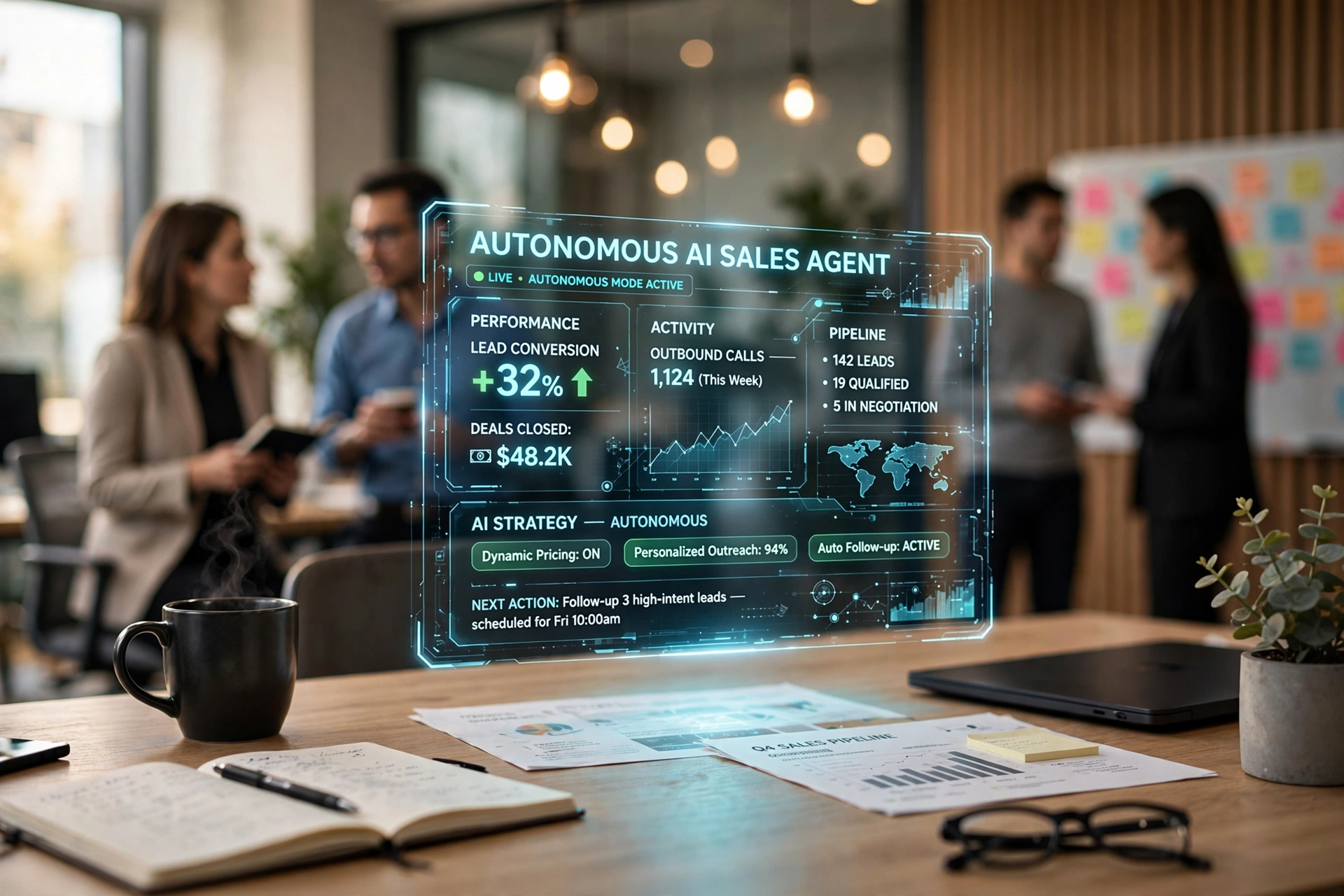
Autonomous sales agents using AI are self-correcting software entities that use natural language processing to identify buyer intent, qualify leads against specific B2B criteria, and execute goal-oriented actions, such as booking a meeting directly into a CRM.
These agents become essential when your business reaches a "complexity threshold." This happens when your product requires a specific set of qualifying questions (e.g. budget, company size, technical stack) before a human salesperson should even see the lead. If your team is manually asking the same five questions to every prospect, you are wasting expensive human capital on a task that an AI can handle with 99% accuracy.
According to Gartner, by 2026, the majority of B2B sales interactions will be mediated by AI, shifting the human role from "lead qualifier" to "deal closer." This means the "right time" to adopt is now, because the market expectation for instant gratification has evolved. B2B buyers in 2026 no longer wait 24 hours for a "discovery call" request; they expect a qualification sequence to happen the second they land on a page. When your current process involves a "Thank you, we will get back to you" message, you are creating a friction point that sends your prospects back to Google to find a competitor who responds instantly.

Why Timing Matters: The Revenue Cost of Delayed AI Integration
The financial implication of delaying the deployment of autonomous agents is staggering. In a high-ticket B2B environment, the "speed-to-lead" metric is the single biggest predictor of conversion. Research from the Harvard Business Review indicates that firms that contact prospects within an hour of a query are seven times more likely to have a meaningful conversation than those who wait even one day.
When you rely on human SDRs, you are limited by time zones, sleep schedules, and burnout. If a high-intent buyer lands on your site at 2 AM on a Sunday, a human-centric model accepts a 48-hour delay. An autonomous agent, however, captures that intent immediately. This is why the "WHEN" is often tied to your traffic patterns. If your data shows significant traffic spikes outside of your team's working hours, you are actively leaking revenue.
Furthermore, there is a compounding effect when combining AI agents with a programmatic approach. When a company manages to automate their company blog and publish daily content, the resulting surge in organic traffic can actually crash a manual sales process. I've observed a recurring pattern: a business scales its content, the leads pour in, the SDRs get overwhelmed, the lead quality drops because the SDRs start rushing through calls, and eventually, the business concludes that "SEO doesn't work." In reality, the SEO worked perfectly; it was the sales infrastructure that failed to scale.
According to McKinsey's research on generative AI in sales, organizations that integrate AI into their lead-to-cash process see an average increase in lead conversion rates of 15% to 20%. For a firm with a $10,000 LTV (Lifetime Value), missing just three leads a month due to slow response times results in a $360,000 annual revenue loss.
Practical Application: Implementing Autonomous Agents at the Right Triggers
Integrating autonomous sales agents using AI shouldn't be a random "tech upgrade"; it should be a response to specific business triggers. Here is the step-by-step framework for timing your deployment.
Trigger 1: The "Lead Leak" Threshold
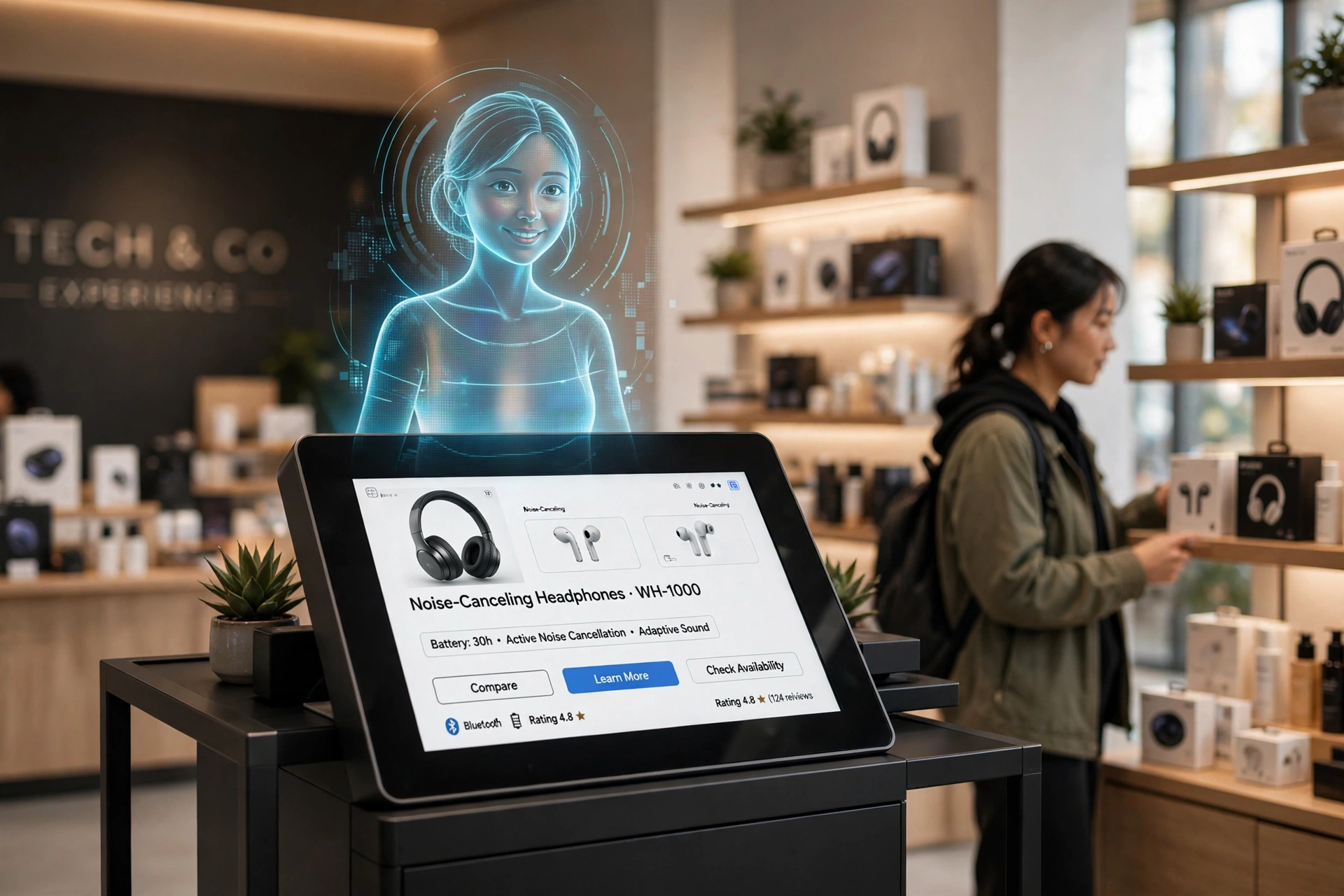
Analyze your bounce rate on your "Contact Us" or "Booking" pages. If you see a high abandonment rate, it's often because the friction of a form is too high. This is the perfect time to replace a static form with a conversational agent. By embedding a BizAI Intelligence agent, you transition from a passive data-capture method to an active qualification dialogue.
Trigger 2: The SDR Burnout Point
Track the percentage of "disqualified" leads your sales team handles. If your SDRs spend more than 50% of their time talking to people who don't have the budget or authority to buy, you have reached the burnout point. The agent should be deployed to act as a "gatekeeper," ensuring that only high-intent, qualified prospects ever reach a human calendar.
Trigger 3: The Content Scale-Up
The moment you decide to move away from expensive paid ads and toward a compounding organic strategy, you must deploy AI agents. When you stop depending on paid ads and start dominating search, you will encounter "long-tail" traffic. These are users asking very specific questions. A human cannot be on 300 different satellite pages at once, but an AI agent can, providing context-aware qualification based on the exact page the user is reading.
💡
Key Takeaway
Do not deploy AI agents to replace your best salespeople; deploy them to replace the repetitive, low-value qualification tasks that prevent your best salespeople from closing deals.
For those using the BizAI Intelligence ecosystem, this integration is seamless. Because the system handles both the programmatic SEO (Engine A) and the AI SDR (Engine B), the timing is synchronized. You don't have to worry about the "growth gap" because the qualification engine scales at the exact same millisecond as the traffic engine.

Comparison: Manual SDRs vs. Generic Bots vs. Autonomous AI Agents
Many business owners mistake a "chatbot" for an "autonomous agent." This is a fundamental error in judgment. A chatbot is a map; an autonomous agent is a guide.
| Feature | Traditional Manual SDR | Generic AI Chatbots | BizAI Autonomous Agents |
|---|---|---|---|
| Response Time | Minutes to Days | Instant | Instant |
| Reasoning Capability | High (Human) | Low (Scripted) | High (LLM-Driven) |
| Scalability | Linear (Hire more people) | Infinite | Infinite |
| Lead Qualification | Subjective/Variable | Rigid/Binary | Dynamic/Contextual |
| Cost Structure | High Salary + Commission | Low Monthly Fee | ROI-Driven Performance |
| Best For | Closing complex deals | Basic FAQs | High-volume qualification |
Here's the thing though: the a-ha moment for most CEOs happens when they realize that the "Generic AI Chatbot" is actually damaging their brand. A bot that says "I don't understand that question" creates a negative user experience. In contrast, an autonomous agent using a modern LLM can handle objections, pivot the conversation, and steer the prospect toward a booking. When you see your "Generic Bot" failing to convert more than 2% of visitors, it is time to upgrade to a professional autonomous system.
Common Questions and Misconceptions About AI Sales Timing
Most guides get this wrong by suggesting that AI is only for "Enterprise" companies with millions in revenue. That is a myth. In fact, small-to-medium B2B firms benefit more from this automation because they lack the budget to hire a 24/7 global SDR team.
Myth 1: "AI will make my brand feel cold and impersonal."
The opposite is true. A prospect feels "ignored" when they fill out a form and wait two days for a reply. They feel "valued" when their specific problem is addressed instantly by an intelligent agent that understands their industry. The "coldness" comes from silence, not from an efficient AI interface.
Myth 2: "I should wait until the technology is 'perfect' before deploying."
In the world of AI, "perfect" is a moving target. The competitive advantage in 2026 isn't having the perfect tool; it's having the most data. Every conversation your agent has is a data point that allows you to refine your sales script. If you wait, your competitors are already training their models on your potential customers.
Myth 3: "Autonomous agents are only for lead capture, not selling."
This is a outdated view. Modern agents can handle the entire "top-of-funnel" journey. They can explain pricing tiers, compare your service to competitors, and handle the "Why you?" objection. By the time the prospect reaches your human closer, they are already 70% sold.
Frequently Asked Questions
When is the best time to switch from a contact form to an autonomous AI agent?
The best time to switch is when your form-to-lead conversion rate drops below 3% or when your "speed-to-lead" response time exceeds 15 minutes. In high-ticket B2B, the friction of a form creates a psychological barrier. Prospects in 2026 prefer an interactive experience where they get immediate answers to their qualifying questions. If you are currently using a static form, you are likely losing 50-70% of your potential leads to "form fatigue." Transitioning to an autonomous agent allows you to qualify the user in real-time, ensuring that only the most viable prospects are passed to your sales team.
Does the size of my company dictate when I should use autonomous sales agents using AI?
No, company size is less important than lead volume and complexity. A two-person consultancy with a high-ticket offer can benefit from an autonomous agent just as much as a 500-person corporation. The primary trigger is the "qualification burden." If the process of determining if a lead is a "good fit" takes more than three minutes of a human's time per lead, and you have more than 20 leads a week, the automation pays for itself. Small teams, in particular, use these agents to "punch above their weight class," appearing as a larger, more responsive organization than they actually are.
How do I know if my current sales process is "ready" for AI automation?
Your process is ready if you can clearly define your "Ideal Customer Profile" (ICP) and the 3-5 qualifying questions that separate a "tire-kicker" from a high-intent buyer. If your sales team uses a consistent script or a checklist to qualify leads, that logic can be instantly ported into an autonomous agent. If your sales process is completely random and based on "gut feeling," you should first standardize your qualification criteria. Once you have a repeatable logic, an AI agent can execute that logic at a scale that no human team can match.
Can autonomous agents handle complex B2B objections, or should I wait for better tech?
Modern autonomous agents, especially those powered by the architecture at BizAI Intelligence, are fully capable of handling complex objections. They don't just provide canned responses; they use the context of the page the user is on to provide reasoned arguments. For example, if a user is on a page about "ROI for HVAC Contractors," the agent knows to pivot the conversation toward cost-savings and efficiency. Waiting for "better tech" is a losing strategy because the current LLMs are already surpassing the average human SDR in terms of consistency, patience, and data recall.
Will deploying an AI agent reduce the number of high-quality meetings my team gets?
Actually, it typically increases the quality of the meetings while potentially decreasing the quantity of low-value calls. This is a positive outcome. The goal of an autonomous sales agent is to filter out the noise. Instead of your team spending ten hours a week on "discovery calls" that lead nowhere, they spend those ten hours closing deals with prospects who have already been vetted for budget, authority, and need. By removing the "junk" leads, your closing rate typically increases because your team is focused only on high-probability wins.
Final Thoughts on Autonomous Sales Agents Using AI
The timing for adopting autonomous sales agents using AI is not determined by the calendar, but by the friction in your pipeline. If you are experiencing a gap between your organic growth and your ability to qualify leads, you are leaving money on the table. In 2026, the winner isn't the company with the most traffic, but the company that can convert that traffic into a booked meeting the fastest.
Whether you are looking to recover lost B2B revenue from high bounce rates or you want to replace freelance copywriters with an AI content engine, the integration of a qualification engine is the final piece of the puzzle. Stop letting your high-intent visitors slip through the cracks of a slow manual process.
The most efficient way to bridge this gap is through a unified system. At BizAI Intelligence, we don't just give you a bot; we give you a complete acquisition machine that generates the traffic and qualifies the leads simultaneously.
Ready to stop renting traffic and start owning your market? Visit bizaigpt.com to build your autonomous acquisition engine today.
Only 12 Onboarding Slots Remaining This Month
BizAI deploys 300 AI salespeople scoring purchase intent 24/7. Get your free niche domination blueprint.
AI Search Accelerator: 1-on-1 Strategy Session
Claim one of the 10 monthly slots. Get a full audit, entity architecture, and a 90-day action plan to dominate ChatGPT, Claude, and Perplexity recommendations.