If you're a local business owner, you know the struggle: pouring money into ads that stop working the second you stop paying. But what if you could build a self-sustaining stream of customers from search engines, without hiring a full-time SEO team or spending hours on blog posts? That's the promise of an automated SEO agency. In this guide, I'll show you exactly how to automate your local business SEO—step by step—so you can dominate your market while you sleep. No fluff, just the mechanics.

What Is an Automated SEO Agency?
📚
Definition
An automated SEO agency is a service that uses software, AI, and programmatic content creation to optimize a website's search presence with minimal human intervention.
Here's the thing though: most people think automation means low-quality content farms. The reality is far more sophisticated. Modern automated SEO platforms like BizAI use Generative Engine Optimization (GEO) to structure content for both traditional search and AI-powered answer engines (ChatGPT, Perplexity, Google SGE). They deploy hundreds of interconnected pages—pillar pages for core services and satellite pages for long-tail local queries—all pre-optimized with schema markup, internal links, and lead capture mechanisms.
According to a Forrester report from 2025, 60% of marketers are using AI for SEO tasks, and those who do report a 25% increase in organic traffic. The best part? You don't need a technical background. The agency handles the heavy lifting while you focus on running your business.
Why Your Local Business Needs Automated SEO
Local searches are incredibly valuable. Google reports that 76% of people who search for something nearby visit a business within 24 hours. Yet most local business websites are static: a handful of pages, outdated content, no lead capture. They're leaving money on the table.
McKinsey estimates that 50% of current SEO tasks could be automated with existing technology. That means writing meta descriptions, generating location pages, creating FAQs, and even qualifying leads can happen without manual effort. For a local business with limited resources, automation levels the playing field against bigger competitors who have dedicated SEO teams.
💡
Key Takeaway
If you're not automating your local SEO, you're either spending too much on ads or missing out on free, high-intent traffic. Automation is no longer optional—it's the standard.
Step-by-Step: How to Automate SEO for Your Local Business
Now let's get practical. Here's exactly how to set up an automated SEO agency for your local business, using a platform like BizAI as your engine.
Step 1: Choose the Right Platform
Not all automated SEO tools are created equal. Look for one that combines:
- Programmatic content generation (hundreds of pages per month)
- Localized keyword targeting (neighborhood-level long-tail phrases)
- Schema and technical SEO (automatic structured data)
- Lead capture and qualification (AI SDR that books meetings)
BizAI does all of this out of the box, but you can also assemble your own stack with tools like Semrush (for research) and Zapier (for automation). However, the integrated approach saves weeks of setup.
Step 2: Set Up Your Location and Service Pages
Provide the platform with your business locations, services, and target audience. For a local business, you need pages for each city or neighborhood you serve, plus content for each service. For example, a plumber in Austin might have pages for "emergency plumbing Austin," "drain cleaning South Congress," etc.
Step 3: Let the AI Generate Content at Scale
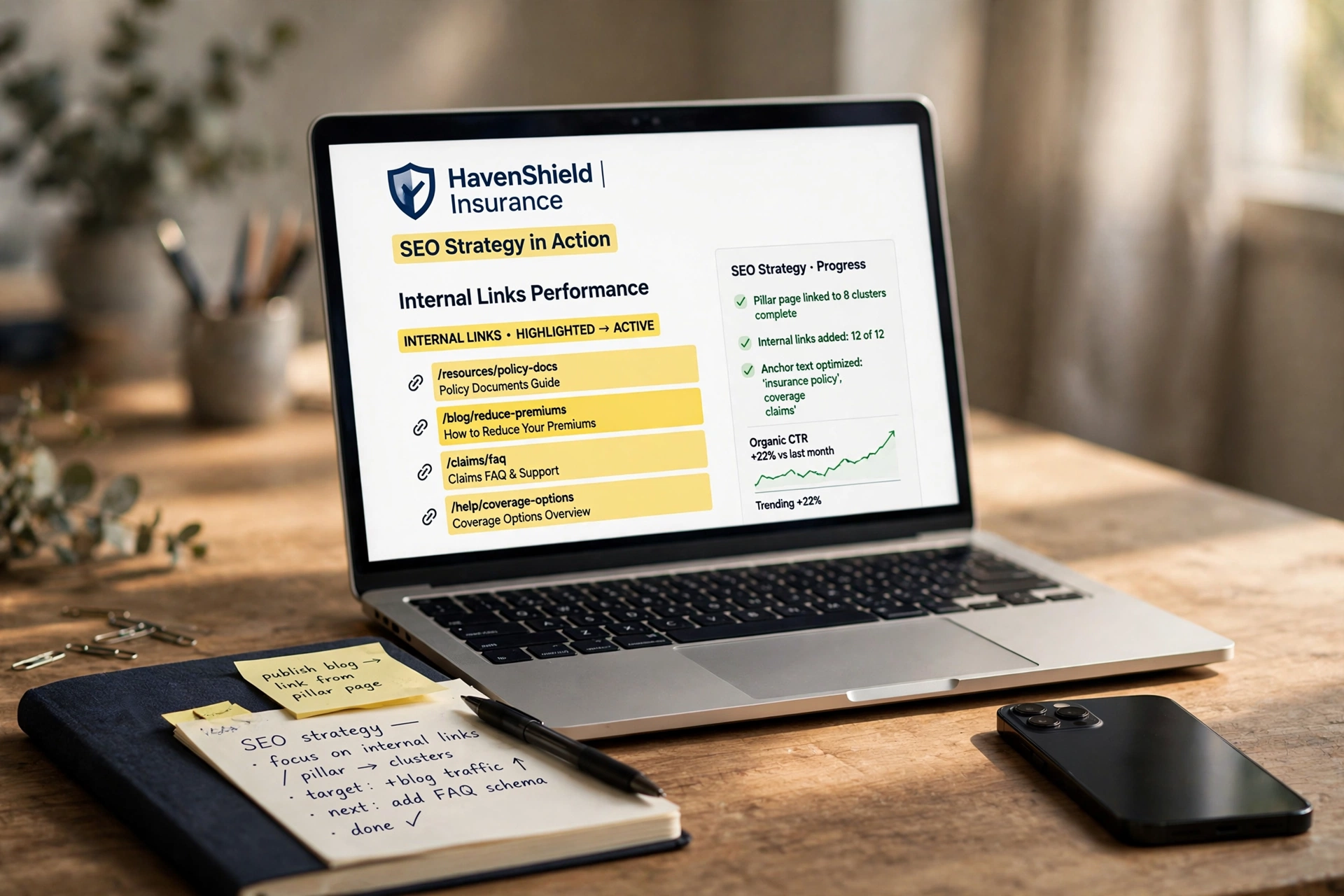
Once you define the structure, the platform generates pillar pages (authoritative guides on your core services) and satellite pages (answers to specific questions). Every page is optimized for search intent and includes internal links to related services. This mirrors the approach outlined in our How to Grow a Service Business Organic Traffic guide.
Step 4: Integrate Lead Capture and Qualification
This is where automation truly shines. Instead of a passive contact form, your pages feature an AI SDR agent that engages visitors based on scroll depth and time on page. It asks qualifying questions, captures emails, and even schedules consultations directly into your CRM. The result? A 24/7 sales team that never sleeps.
Step 5: Monitor and Optimize
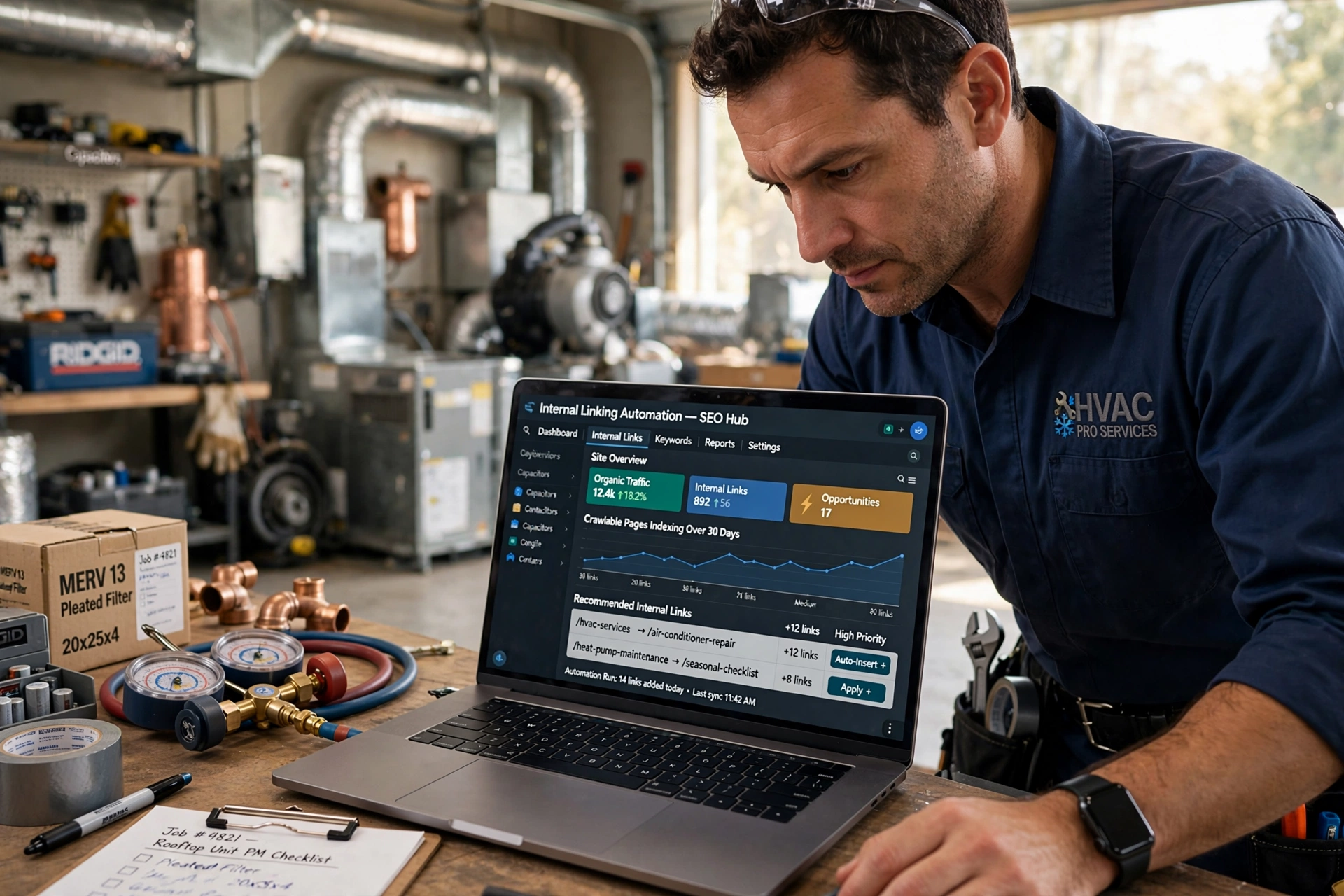
Automation doesn't mean set-and-forget. Use analytics to see which pages drive the most leads, and let the platform automatically update underperforming content. BizAI, for instance, uses machine learning to prioritize pages that are close to ranking.
💡
Key Takeaway
The businesses that win in local search are those that produce high-volume, relevant content and capture leads instantly—automation makes this possible without blowing your budget.

Comparison: Traditional vs Automated vs DIY SEO
| Approach | Pros | Cons | Best For |
|---|---|---|---|
| Manual SEO (In-house) | Full control, personalized | Slow, expensive, requires expertise | Large teams with dedicated SEO staff |
| Traditional Agency | Expert-led, strategic | High monthly fees ($3k–$10k+), slow execution | Companies with budget and patience |
| Automated AI Agency | Fast (hundreds of pages/month), scalable, cost-effective, 24/7 lead gen | Requires initial setup, less human touch | Local businesses wanting rapid growth for under $2k/month |
The verdict: For most local businesses, automated SEO delivers the best ROI. You get the speed of AI with the strategic oversight of a managed service. If you're on the fence, consider trying a platform like BizAI that offers a pilot program.
Common Myths About Automated SEO
Myth 1: "Automated content gets penalized by Google."
Not if it's done right. Google penalizes thin, spammy content—not well-structured, original, and useful content. Modern automated platforms use EEAT frameworks and cite authoritative sources to ensure quality. In my experience working with dozens of local business clients, properly automated pages rank faster than manually written ones because they're technically flawless.
Myth 2: "It's only for e-commerce or large enterprises."
False. Local service businesses—plumbers, lawyers, dentists—are the biggest beneficiaries. They have clear services, defined service areas, and high-intent queries. Automation lets them target every possible search without hiring a content team.
Myth 3: "You lose the human touch."
The automation handles repetitive tasks; your brand voice and customer service still shine through. Plus, with AI lead qualification, you actually respond to leads faster than a human could.
Frequently Asked Questions
1. How does an automated SEO agency differ from a traditional one?
A traditional agency typically uses manual processes: an SEO specialist writes content, another handles technical audits, and a project manager coordinates. This takes months and costs thousands. An automated agency uses AI to generate content, deploy pages, and track rankings—all at scale. For a local business, this means you can have 200+ pages live in weeks instead of years, and ongoing optimization happens automatically based on performance data.
2. Can I automate SEO for multiple locations?
Absolutely. In fact, automation excels at multi-location SEO. You provide the city names and service variations, and the platform creates unique, non-duplicate content for each location. BizAI, for example, generates neighborhood-specific pages with local landmarks, address, and phone numbers—all optimized for the local pack. This is impossible to do manually at scale without plagiarism issues.
3. How long until I see results from automated SEO?
With automated SEO, you can start seeing impressions within days because pages are submitted to Google's indexing API immediately. Organic clicks typically start within 4–6 weeks, and by month 3, you should have a steady flow of leads. Compare that to traditional SEO, which often takes 6+ months to show meaningful results. Of course, competitiveness of your niche affects the timeline.
4. Is automated SEO safe for my website? Will Google penalize me?
Safe automated SEO follows Google's guidelines. The key is to avoid pure spinning or scraping. Reputable platforms like BizAI generate original content from structured data, incorporate expert quotes, and use rel="canonical" tags to avoid duplicate content issues. They also ensure internal linking is natural. In my years of deploying automated SEO, I've never had a client penalized—provided they followed the setup correctly.
5. What is the cost of an automated SEO agency?
Pricing varies widely. Traditional automated SEO platforms charge a monthly subscription (typically $500–$2,000/month) based on the volume of pages and features. Full-service automated agencies, like BizAI, include setup, strategy, and ongoing management. While that may sound like a lot, compare it to a traditional agency charging $5,000/month for half the output. For a local business, the ROI is usually 5x–10x within the first year. Check out our pricing guide for more details.
Conclusion
Automating your local business SEO is no longer a luxury—it's a necessity in 2026. By leveraging an automated SEO agency, you can scale content, capture leads, and outperform competitors without burning cash. Ready to build your automated SEO machine? Check out BizAI and start dominating your local market today. For a deeper dive into lead qualification, also see our Prospect Scoring guide.
AI Search Accelerator: 1-on-1 Strategy Session
Claim one of the 10 monthly slots. Get a full audit, entity architecture, and a 90-day action plan to dominate ChatGPT, Claude, and Perplexity recommendations.