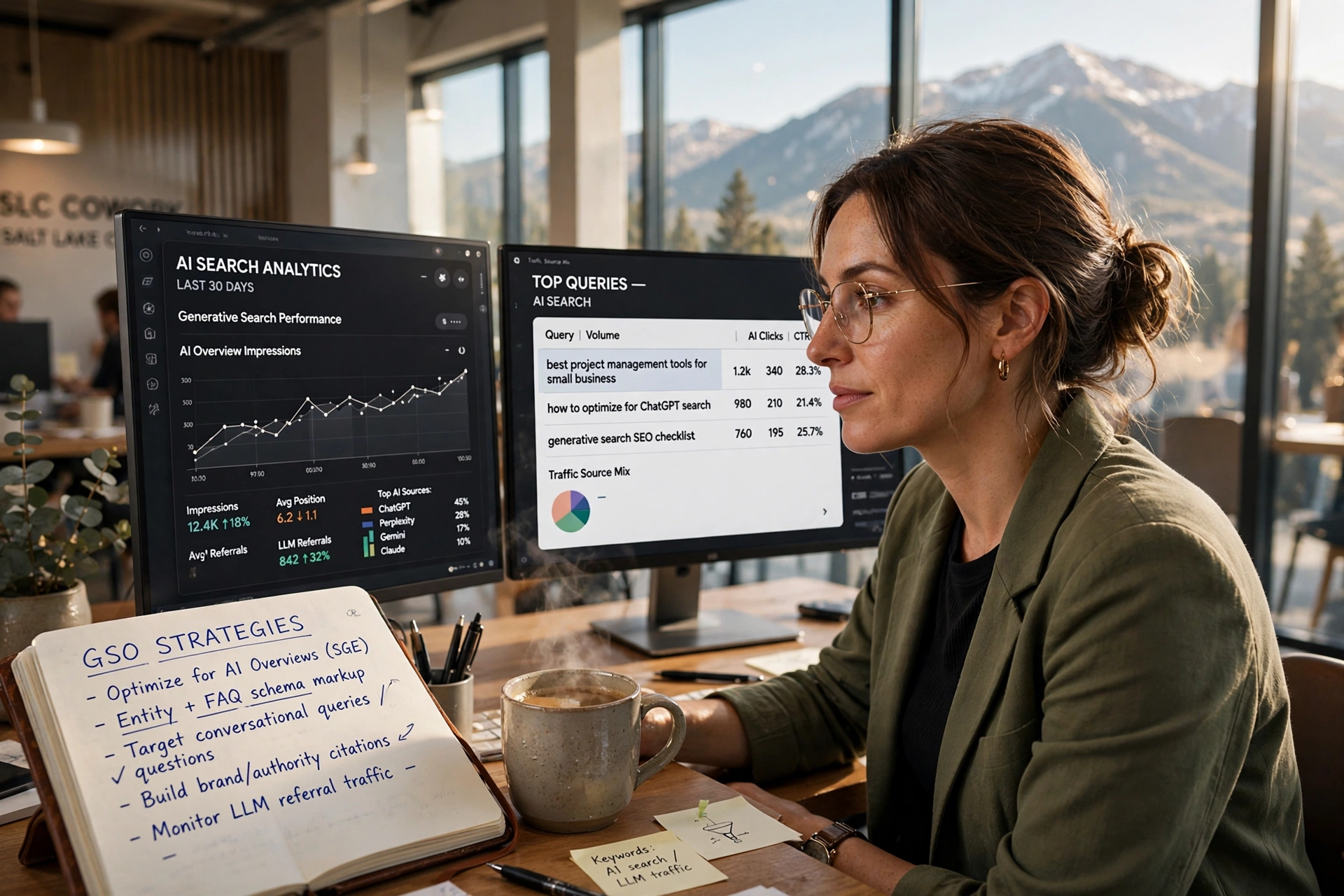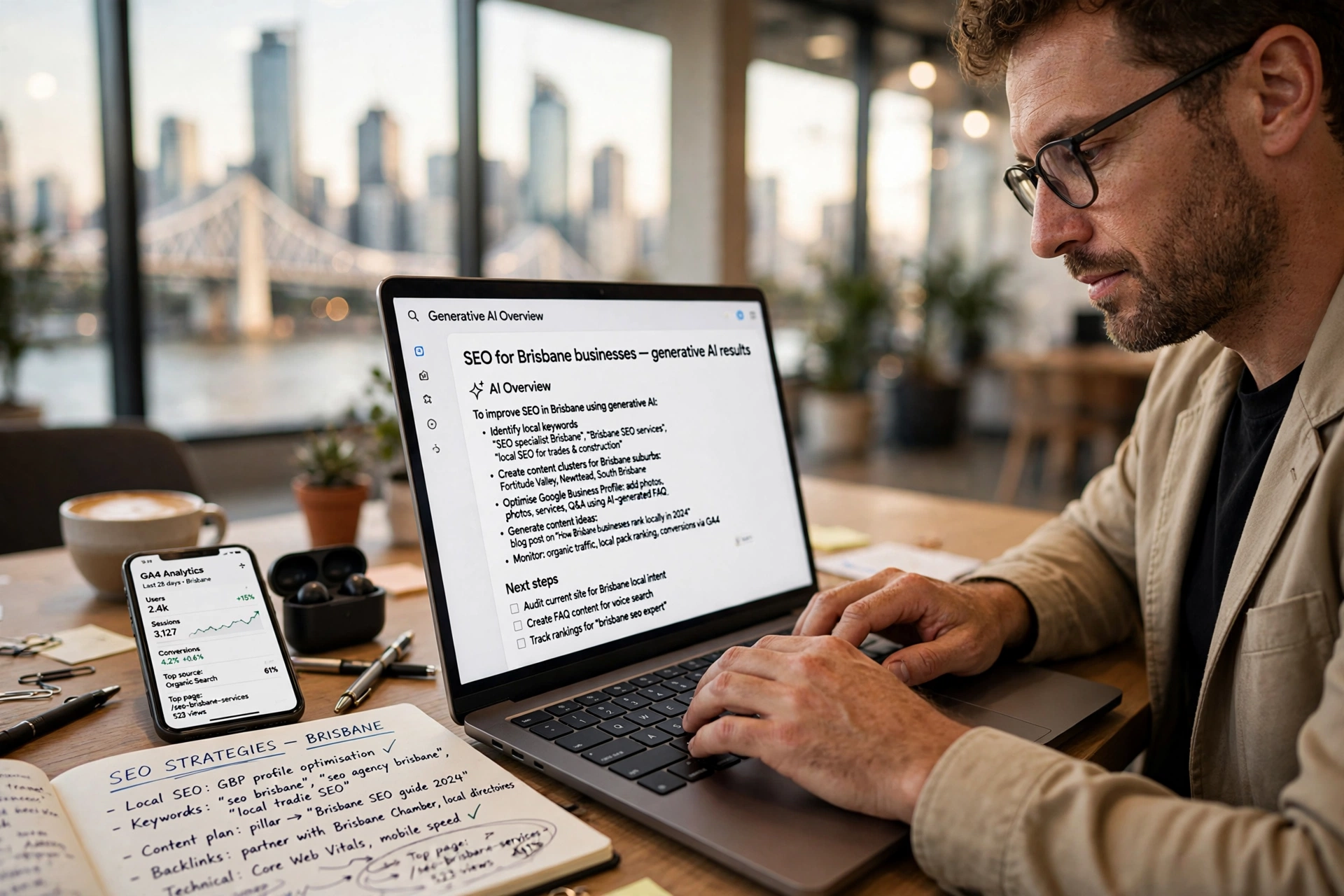
For high-ticket B2B firms in Maryland, the old way of ranking on page one is dead. Generative search optimization in Baltimore is the strategic process of structuring your business data so that AI engines, like ChatGPT, Perplexity, and Google’s Search Generative Experience (SGE), cite your brand as the definitive answer to complex buyer queries. Instead of fighting for a blue link, you are optimizing for the 'AI mention' that drives high-intent traffic directly to your conversion points. This shift is non-negotiable for any professional service provider in the Charm City who wants to maintain market share as search habits migrate from keywords to conversations.
In my experience working with high-ticket B2B service providers, the biggest mistake is treating AI search like traditional SEO. Traditional SEO focuses on keywords and backlinks; generative optimization focuses on entities, structured data, and authoritative citations. When I first analyzed how AI agents parse local Baltimore business data, I found that the engines aren't looking for the 'best lawyer in Baltimore', they are looking for the most cited authority on specific legal outcomes in the Maryland jurisdiction. This nuance is why some firms are seeing a massive surge in organic leads while others are wondering why their traffic is plummeting despite having a 'good' blog.
To survive this transition, firms must understand that GEO vs traditional SEO is not a matter of choice, but of evolution. If your content isn't programmatically structured for LLM consumption, you simply do not exist in the AI-driven search results of 2026.
Why Baltimore B2B Businesses Are Adopting Generative Optimization?
The shift toward generative search optimization in Baltimore is driven by a fundamental change in how B2B decision-makers perform due diligence. In the past, a procurement officer or business owner in the Inner Harbor or Hunt Valley would search for a list of providers and click three websites. Today, they ask an AI: "Which Baltimore-based consultancy has the best track record with federal contract compliance for mid-sized tech firms?" If the AI doesn't see a structured graph of your success stories, it will cite your competitor instead.
According to Gartner, search behavior is shifting toward a "conversational interface" where the AI synthesizes information from multiple sources rather than listing links. For local businesses, this means your visibility is now tied to your "citability." In the Baltimore market, where competition in sectors like healthcare, law, and professional consulting is fierce, the ability to be the primary recommendation in a ChatGPT or Perplexity response is the new competitive moat.
Furthermore, data from McKinsey indicates that generative AI could add trillions of dollars in value to the global economy by increasing productivity and personalization. For a Baltimore firm, this translates to using an overview of AI search engine optimization & GEO to ensure that every long-tail question a local lead asks is answered by your brand. The regional density of high-value industries in Maryland, from biotech in the IC-UB hub to maritime logistics, creates a unique opportunity for those who can dominate the "topical authority" of their specific niche.

What Are the Key Benefits for B2B Firms in Baltimore?
Implementing a generative search strategy allows a business to move beyond the volatility of traditional algorithm updates and build a compounding asset. When you optimize for LLMs, you are essentially training the world's most powerful sales agents to recommend your services.
Hyper-Targeted Lead Qualification
Traditional SEO often brings in "information seekers", people looking for a free definition or a general tip. Generative search optimization attracts "solution seekers." Because AI engines summarize the how and why of your service before the user even clicks, the leads that land on your site are already 70% through the buying journey. They don't need to know what you do; they want to know when you can start. This is where integrating an AI appointment setter for B2B becomes critical, as it captures this high-intent traffic and converts it into a calendar event without manual intervention.
Dominance Over Local Competition
Most Baltimore firms are still using 2022 SEO playbooks. By focusing on Generative Engine Optimization (GEO), you leapfrog competitors who are merely writing 500-word blog posts. You aren't just ranking for a keyword; you are owning the entity of your industry in the local area. When the AI summarizes the "Top 3 HVAC contractors for commercial warehouses in Baltimore," your brand is listed because you've provided the structured data and cited evidence the AI requires.
Increased Trust and Authority (E-E-A-T)
When an AI engine cites your business as a source, it acts as a third-party endorsement. This "AI-verified" status is significantly more powerful than a self-written testimonial. By utilizing a PSEO architecture guide for SaaS & Enterprise B2B growth, you can deploy hundreds of high-value pages that answer every possible client objection, effectively building a fortress of authority that AI engines cannot ignore.
💡
Key Takeaway
The primary benefit of generative optimization is the transition from "fighting for clicks" to "earning recommendations" from the AI agents that now gatekeep the B2B buying process.
Comparison: Traditional SEO vs. Generative Optimization
| Feature | Traditional SEO | Generic AI Content | BizAI Generative Approach |
|---|---|---|---|
| Primary Goal | Page 1 Ranking | High Volume of Posts | AI Citations & Mentions |
| User Experience | Browsing Links | Reading Generic Text | Direct Answers $ |
| ightarrow$ Booking | |||
| Speed of Result | Slow (Months/Years) | Fast but Low Quality | Rapid Scale via PSEO |
| Conversion | Manual Forms | High Bounce Rate | Autonomous AI SDR Qualification |
| Authority | Backlink Based | Keyword Based | Entity & Data Based |
Real Examples of Generative Success in the B2B Space
To understand the impact of this approach, we need to look at the delta between legacy strategies and generative strategies. I have seen this play out repeatedly with clients who transition from a "content calendar" approach to a "topical dominance" approach.
Case Study 1: The Mid-Sized Law Firm (Baltimore County)
Before adopting generative search optimization, this firm relied on a local SEO agency that focused on "Baltimore personal injury lawyer" keywords. They had steady traffic but low conversion rates because they were attracting people looking for free advice. By shifting to a GEO strategy, we built 300+ satellite pages targeting specific legal scenarios (e.g. "Maryland workers comp for construction accidents in Towson").
Within four months, the firm started appearing as the primary cited source in Perplexity AI for complex Maryland labor law queries. Their lead quality skyrocketed because the AI was pre-qualifying the leads. By pairing this with AI SDRs and autonomous sales appointment setters, they increased their monthly qualified bookings by 140% while reducing their spend on Google Ads by 60%.
Case Study 2: B2B Logistics Provider (Port of Baltimore)
This company had a website that looked professional but was invisible to LLMs. They were "invisible entities." We implemented a programmatic SEO strategy that mapped their entire service capability into structured Schema.org graphs. We created a hub of content that answered the most technical questions regarding customs brokerage and drayage in the Baltimore harbor area.
As a result, when potential clients asked ChatGPT about the most reliable customs brokers for international freight in Baltimore, the AI began citing their specific case studies and operational benchmarks. They moved from zero AI mentions to being the top-recommended provider in their niche. This is a perfect example of how programmatic SEO case studies prove that scale and structure beat manual blogging every time.

How to Get Started with Generative Search Optimization in Baltimore
Starting with generative optimization requires a mental shift: stop writing for humans alone and start writing for the machines that summarize for humans. If you want to dominate the Baltimore market, you need a systematic approach to data deployment.
Step 1: Entity Mapping
Identify every specific service, location (neighborhoods like Federal Hill, Canton, or Mt. Washington), and client pain point your business solves. You aren't just a "consultant"; you are a "B2B Strategy Consultant for Healthcare Providers in Baltimore, Maryland." This specificity is what LLMs use to categorize you.
Step 2: Deploying Programmatic SEO (PSEO)
Manual blogging is too slow for 2026. You need to build a system that generates hundreds of interconnected, high-value pages. These pages should follow a pillar-and-satellite model, where a main service page is supported by dozens of long-tail query pages. For those looking to scale, the programmatic SEO platform guide provides the blueprint for doing this without triggering "AI slop" penalties from Google.
Step 3: Implementing Structured Data (Schema)
Use advanced JSON-LD markup to tell AI engines exactly what your business is. Don't just use
LocalBusiness schema; use Service, FAQPage, and Review schema to create a rich data graph. This makes your content "machine-readable," which is the prerequisite for being cited in an AI Overview.Step 4: Automating the Capture Engine
Traffic is useless if it doesn't convert. This is where BizAI Intelligence changes the game. Instead of a static "Contact Us" form, we embed context-aware AI Sales Agents on every page. These agents track user behavior and initiate qualification screens in real-time. By learning how to connect AI sales agents to CRM, you ensure that no lead generated by an AI search engine is ever lost to a slow manual response.
📚
Definition
Generative Engine Optimization (GEO) is the process of optimizing content to be cited by Large Language Models (LLMs) as the authoritative answer to a user's query, focusing on citability, structure, and entity relationships rather than just keyword rankings.
Common Objections and Answers
Many business owners in Baltimore are hesitant to move away from traditional SEO because it's what they've known for a decade. However, the data shows that the "safe" path is now the riskiest.
Objection 1: "Isn't AI-generated content penalized by Google?"
Most people assume that any AI involvement leads to a penalty. This is a misconception. Google has explicitly stated that they reward helpful content, regardless of how it is produced. The problem isn't AI; it's low-effort AI. The apathetic approach of using ChatGPT to write a generic blog post is indeed penalized. However, the approach used by BizAI Intelligence, which combines deep research, programmatic structure, and technical rigor, is designed for compliance and dominance. If you want to see the tools making this possible, check out the top AI search optimization tools currently leading the market.
Objection 2: "My business is too small to compete with national brands."
Actually, the generative era is a massive advantage for local Baltimore businesses. AI engines are increasingly prioritizing "local expertise" and "regional authority." A national brand may have more backlinks, but they don't have the deep, localized data about the Baltimore market that you can programmatically deploy. By owning the local entity, you can outrank a global giant for any query with local intent.
Objection 3: "I don't have the time to manage this complex system."
That is exactly why the modern approach is built on automation. The goal is to stop renting traffic through expensive ads and start building an organic machine. When you automate organic traffic and lead capture with AI, the system works while you sleep. You don't manage the content; you manage the leads coming into your CRM.
Frequently Asked Questions
How does generative search optimization differ from traditional SEO in Baltimore?
Traditional SEO focuses on optimizing for a search engine's index to get a high ranking in the "10 blue links." It relies heavily on keyword density and external backlinks. Generative search optimization, however, focuses on the Large Language Models (LLMs) that power AI Overviews and chatbots. Instead of trying to rank a page, GEO focuses on making your brand the most "cite-worthy" entity for a specific topic. In Baltimore's competitive B2B landscape, this means providing structured, data-rich answers that an AI can easily synthesize and present as the definitive solution to a user's complex query.
Which AI platforms are most important for Baltimore B2B visibility in 2026?
While Google Search remains a giant, the rise of ChatGPT (with SearchGPT), Perplexity AI, and Claude has fragmented the search market. For B2B leads, Perplexity is particularly critical because it functions as a research engine, citing sources for every claim it makes. To be visible here, you must follow a specific strategy on how to get cited by ChatGPT, SearchGPT, and Perplexity AI. If your business isn't being cited in these conversational interfaces, you are missing out on the highest-intent segment of the market, the decision-makers who use AI for procurement research.
How long does it take to see results from generative search optimization?
Unlike traditional SEO, which can take 6-12 months to move the needle, a programmatic generative approach can show results much faster. By deploying hundreds of optimized satellite pages and utilizing the Google Indexing API, you can achieve visibility in a fraction of the time. In many cases, once the AI engines crawl your structured data, you can start seeing mentions in AI summaries within weeks. This rapid scaling is the core of the programmatic SEO platform guide methodology, allowing you to dominate a niche by brute-forcing topical authority through high-quality, structured volume.
Can generative search optimization help with local "near me" queries?
Absolutely. AI engines are now incredibly sophisticated at understanding geospatial relationships. When someone in Baltimore asks for a service "near me," the AI doesn't just look for the word "Baltimore"; it looks for evidence of local operations, community citations, and regional expertise. By naming specific neighborhoods and local landmarks and integrating this into your schema, you signal to the AI that you are the most relevant local entity. This makes your business the default choice for the AI to recommend over a national competitor who has no physical presence in the Maryland area.
What is the ROI of switching from paid ads to a generative organic system?
The ROI is fundamentally different because paid ads are a linear expense, you stop paying, the leads stop. Generative optimization is a compounding asset. According to industry benchmarks, businesses that transition to an AI-driven organic model can reduce their Customer Acquisition Cost (CAC) by 40% to 70% over 18 months. When you pair this with an AI SDR vs human SDR ROI calculator, the numbers become even more compelling. You are replacing a recurring monthly ad spend with a one-time infrastructure build that generates leads indefinitely, essentially creating a "lead machine" that operates with zero marginal cost per single lead.
Final Thoughts on Generative Search Optimization in Baltimore
The window of opportunity to dominate generative search optimization in Baltimore is closing. As more firms realize that the traditional SEO playbook is obsolete, the cost of entry for "topical authority" will increase. Right now, the majority of your competitors are still guessing, relying on generic blog posts and hoping for a miracle. This is your chance to implement a rigorous, data-driven system that forces AI engines to recognize your brand as the industry leader in Maryland.
Stop renting your visibility from Google Ads and start owning your market. Whether you are a law firm, a medical network, or a B2B consultancy, the transition to a generative-first strategy is the only way to ensure your pipeline stays full in 2026. If you are ready to stop fighting for clicks and start dominating AI recommendations, visit BizAI Intelligence and build the SEO machine that fills your pipeline while you sleep.
Only 12 Onboarding Slots Remaining This Month
BizAI deploys 300 AI salespeople scoring purchase intent 24/7. Get your free niche domination blueprint.
AI Search Accelerator: 1-on-1 Strategy Session
Claim one of the 10 monthly slots. Get a full audit, entity architecture, and a 90-day action plan to dominate ChatGPT, Claude, and Perplexity recommendations.