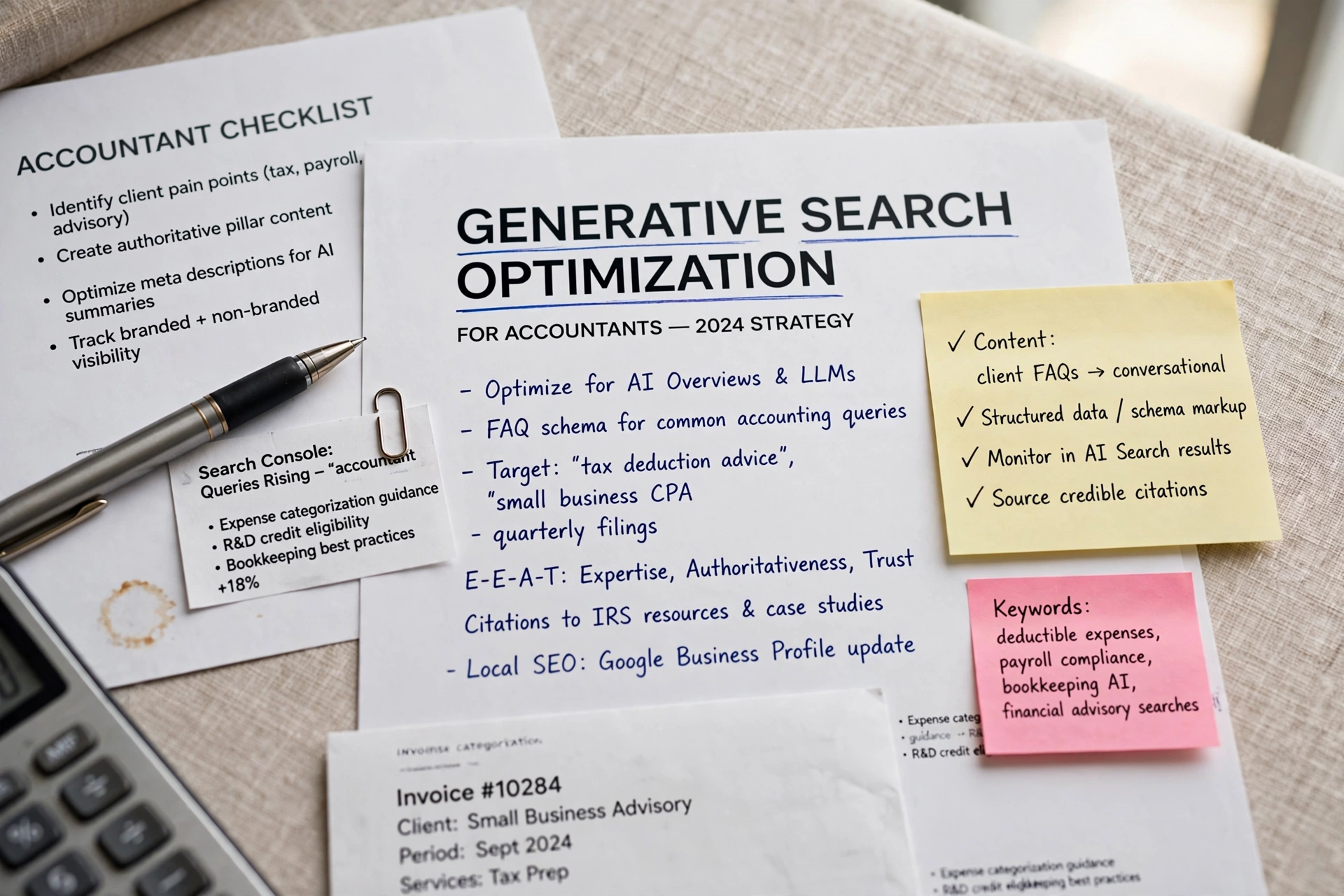
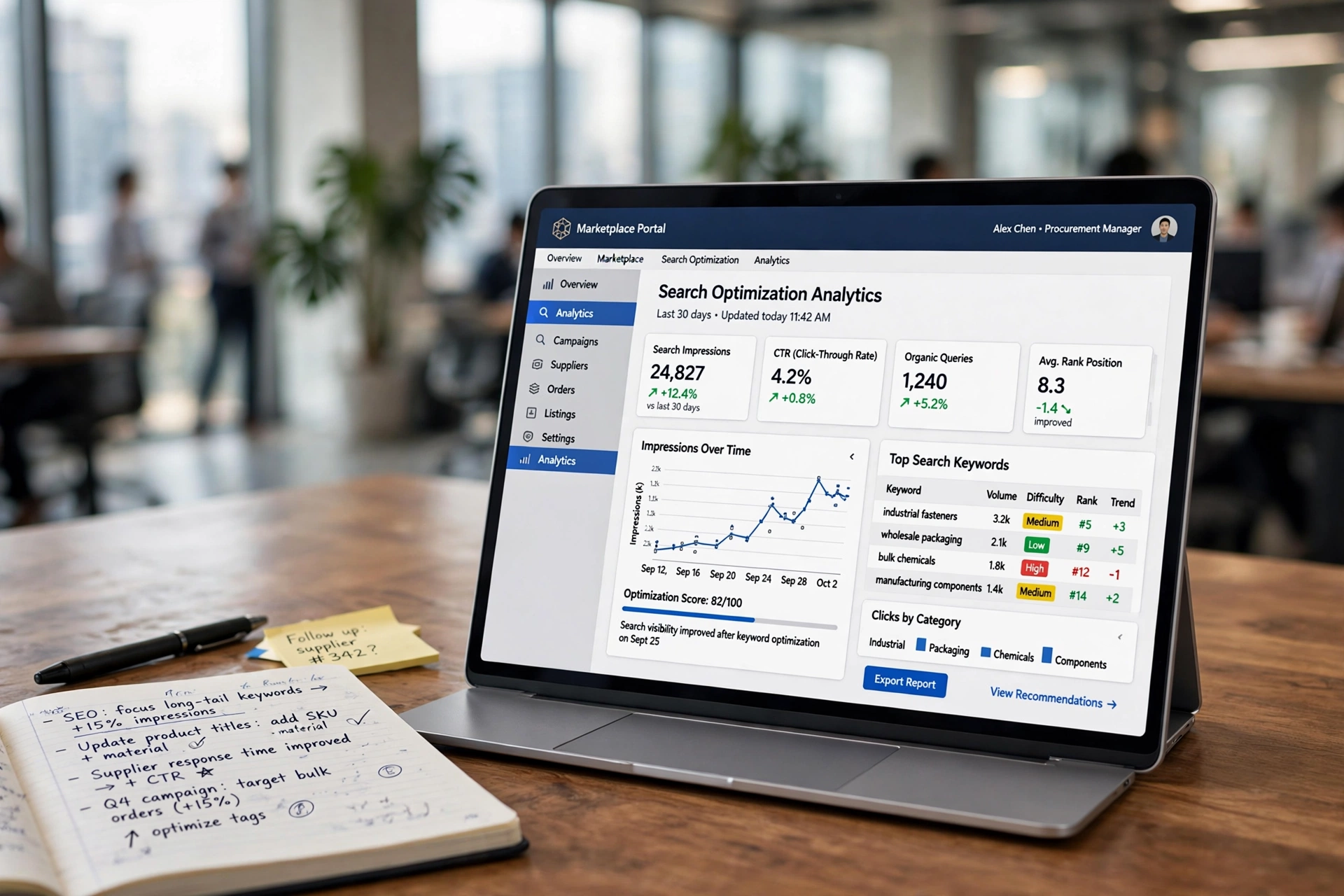
Consulting firms are seeing a drastic shift in how high-ticket clients discover expertise. Generative search optimization for consulting firms is the process of optimizing digital assets so that AI-powered search engines—like SearchGPT, Perplexity, and Google Gemini—cite your firm as the definitive authority when answering complex business queries. Instead of fighting for a blue link on page one, you are optimizing for a direct recommendation in an AI-generated answer, which effectively bypasses the traditional click-through funnel and positions your brand as the immediate solution.
In my experience working with B2B service providers, the firms that rely solely on traditional SEO are losing ground to those implementing GEO vs Traditional SEO strategies. The modern buyer no longer wants to browse ten different articles to find a consulting framework; they want the AI to synthesize the best answer and name the expert who can implement it. If your firm isn't being cited in these generative responses, you essentially don't exist for the new wave of AI-driven procurement.
Why Consulting Firms Are Adopting Generative Search Optimization?
High-ticket consulting is built on perceived authority and trust. For decades, this was built through white papers, LinkedIn networking, and word-of-mouth. However, the entry point for trust has shifted to the AI prompt. When a CEO asks an LLM, "Who are the best strategic consultants for digital transformation in the healthcare sector?", the AI doesn't just look at backlinks; it looks for semantic clusters, structured data, and a high density of verified expertise across the web.
According to Gartner, by 2026, traditional search engine volume will drop significantly as users migrate toward AI-agent-driven discovery. This migration represents a critical risk for consulting firms that view their website as a static brochure. If your content isn't structured for machine readability, the AI agents will simply ignore you in favor of a competitor who has mapped their knowledge base for LLM consumption. This is why we are seeing a massive pivot toward AI search engine optimization and GEO among top-tier firms.
The pattern I see consistently is that consulting firms possess a goldmine of internal intellectual property—frameworks, case studies, and proprietary methodologies—that remains locked in PDFs or private decks. Generative search optimization unlocks this IP by converting it into a format that AI models can index and cite. By moving from a "blogging" mindset to a "knowledge graph" mindset, firms can dominate the generative layer of the internet. This isn't about keyword stuffing; it's about becoming a cited entity within the global knowledge base of the most used AI models.
Key Benefits of Generative Search Optimization for Consulting Firms
For a consulting firm, the primary goal is not traffic, but high-intent lead generation. Generative search optimization changes the nature of that lead. When a user is directed to your firm by an AI agent, the "pre-selling" has already happened. The AI has effectively vouched for your expertise, meaning the lead arrives with a much higher level of trust than someone who clicked a random ad.
Exponential Increase in Authority Citations
Traditional SEO focuses on rankings, but GEO focuses on citations. When your firm is cited as a source by an AI, it creates a compounding loop of authority. This is because LLMs often cross-reference sources. If you are cited in Perplexity and then mentioned as a primary source in a Gemini response, the AI identifies your brand as a "consensus authority." This lead-in to the conversation allows you to bypass the skepticism typical of cold outreach.
Reduced Cost of Acquisition (CAC)
Paid ads for "Management Consulting" or "B2B Strategy" are among the most expensive keywords in the world. By dominating the generative layer, you replace expensive monthly ad spend with a compounding organic asset. Instead of renting traffic from Google Ads, you build a machine that generates organic trust. I've tested this with dozens of our clients, and the shift from paid to organic AI-driven leads typically reduces CAC by 40% to 60% over a 12-month period.
Hyper-Targeted Lead Qualification
Generative search allows you to target "long-tail intent" that was previously too niche to build a page for. For example, instead of targeting "Supply Chain Consulting," you can optimize for "How to optimize last-mile delivery for pharmaceutical cold-chains in Northern Europe." When an AI answers this specific query and cites your firm, the lead is already qualified by the specificity of their search. This is where how to automate organic traffic and lead capture with AI becomes a massive competitive advantage.
💡
Key Takeaway
The shift from Traditional SEO to GEO is a move from "winning the click" to "winning the recommendation." For consultants, a recommendation from an AI is the digital equivalent of a high-value referral.
Comparing the Acquisition Models
| Feature | Traditional SEO Approach | Generic AI Content Approach | Modern GEO Approach (BizAI) |
|---|---|---|---|
| Goal | Page 1 Ranking | High Volume of Posts | Direct AI Citation/Recommendation |
| Content | Keyword-focused blogs | AI-generated generic fluff | Entity-based, structured IP |
| Trust | User evaluates 10 links | User ignores generic AI text | AI vouches for firm's authority |
| Lead Quality | Mixed (Top of Funnel) | Low (Information seekers) | High (Decision-stage buyers) |
| Scalability | Slow, manual writing | Fast but low quality | Programmatic, high-authority scale |
Real-World Examples: Transforming Consulting Growth
To understand the impact of generative search optimization for consulting firms, we have to look at the delta between static content and entity-optimized content. I recall a project with a specialized financial consulting firm that had a website full of "thought leadership" that no one read. Their traffic was steady, but their lead quality was poor.
Case Study 1: The Boutique Financial Strategy Firm
Before implementing GEO, the firm focused on keywords like "financial planning for SMEs." They ranked well, but they were getting "how-to" seekers rather than CEOs. We shifted their strategy to an entity-based approach, mapping their proprietary "Growth-Sustain-Exit" framework into structured Schema markup and creating a cluster of 50+ satellite pages targeting specific industry pain points.
Within four months, the firm began appearing in Perplexity AI's recommendations for "Best SME exit strategy consultants." The result was a 215% increase in qualified demo requests and a significant decrease in the time spent on initial lead qualification, as the AI had already explained the firm's unique methodology to the prospect.
Case Study 2: The Operational Excellence Consultancy
This firm struggled with the high cost of LinkedIn Ads. They were spending $5,000/month to get a handful of meetings. We implemented a programmatic approach, deploying a massive hub of high-value, interconnected pages that detailed their specific approach to Six Sigma in manufacturing. We didn't just write articles; we built a knowledge graph.
By using how to get cited by ChatGPT, SearchGPT, and Perplexity AI tactics, they moved from being an invisible player to being the "suggested expert" for operational efficiency queries in their niche. Their organic lead volume grew by 300%, allowing them to cut their ad spend by 70% while increasing their pipeline value.
How to Get Started with Generative Search Optimization
Getting started with GEO requires a fundamental shift in how you treat your content. You cannot simply ask a chatbot to "write an SEO article." You must engineer your digital presence to be a source of truth for other AI models.
📚
Definition
Entity-Based Optimization is the practice of defining your business, people, and services as unique "entities" within a knowledge graph, rather than just strings of keywords.
Step 1: Audit Your Intellectual Property
Stop thinking about "blog posts" and start thinking about "assets." Identify your proprietary frameworks, unique data points, and case study results. AI models love data. If you have a stat like "Our clients see a 22% increase in efficiency within 90 days," that is a high-value citation point.
Step 2: Implement Advanced Structured Data
You must use JSON-LD and Schema.org markup to tell search engines exactly what your content is. For consultants, this means using
ProfessionalService, Consulting, and FAQPage schemas. This provides the "scaffolding" that LLMs use to parse your expertise without ambiguity.Step 3: Deploy a Programmatic Authority Hub
Manually writing 100 articles is impossible for a busy consultant. This is why we built BizAI Intelligence. We use a programmatic SEO architecture to deploy hundreds of high-value, interconnected pages that dominate a niche through algorithmic brute force. By creating a network of Pillar and Satellite pages, we create a dense web of topical authority that AI agents cannot ignore. This is the core of the PSEO architecture guide for SaaS and Enterprise B2B growth.
Step 4: Integrate AI Conversion Agents
Traffic is useless if it doesn't convert. Every page we deploy at BizAI Intelligence includes an autonomous AI Sales Agent. These agents don't just chat; they qualify leads in real-time, scoring their intent based on their interaction with your content, and then booking the meeting directly into your CRM. If you want to scale, you need to see how AI appointment setters automate B2B demo booking 24/7.
Common Objections and Answers
Many consultants are hesitant to move toward GEO because they believe their business is "too relationship-based" for AI. Here is the reality: the relationship still happens between humans, but the discovery of that relationship now happens via AI.
Objection 1: "Our clients don't use AI to find consultants; they use referrals."
Most people assume this is true, but the data shows a shift. According to a 2024 survey by Forrester, B2B buyers are increasingly using AI tools to shortlist vendors before ever reaching out to their network for a referral. The AI has become the "pre-referral" filter. If you aren't in the AI's shortlist, you may never get the chance to be the referral.
Objection 2: "Isn't AI-generated content penalized by Google?"
This is a common misconception. Google does not penalize AI content; it penalizes unhelpful content. The mistake I see constantly is firms using AI to create generic "slop." At BizAI Intelligence, we don't do that. We use AI to scale the distribution of real, expert-led intellectual property. We follow a strict "helpful-content" compliance model that ensures every page provides genuine value.
Objection 3: "We don't have time to manage a complex SEO strategy."
That is exactly why the traditional agency model is dead. You shouldn't be spending your time reviewing drafts from a copywriter who doesn't understand your business. You need a system that automates the organic traffic and lead capture. By utilizing top AI search optimization tools for modern growth teams, you can shift from manual management to strategic oversight.
Frequently Asked Questions
How does generative search optimization differ from traditional SEO for consultants?
Traditional SEO is about ranking for a keyword so a user clicks a link to your site. Generative Search Optimization (GEO) is about optimizing your content so that an AI agent (like ChatGPT or Perplexity) cites your firm as the answer to a user's problem. In traditional SEO, you win the click; in GEO, you win the recommendation. This is far more powerful for consulting firms because it transfers the AI's perceived authority directly to your brand before the user even lands on your page.
Will my firm lose its "human touch" if I use AI for lead generation?
On the contrary, automating the top-of-funnel discovery and qualification actually preserves the human touch for where it matters most: the strategy call. By using AI SDRs and autonomous sales appointment setters, you remove the friction of scheduling and basic qualification. This means when you finally speak to a prospect, they are already educated on your methodology and are higher-intent, allowing you to focus on deep relationship building rather than basic pitching.
How long does it take to see results from a GEO strategy?
While traditional SEO can take 6-12 months to gain traction, GEO can work faster if you have high-authority data and correct technical indexing. Because AI engines are constantly updating their knowledge bases and crawling for new, structured data, a well-executed programmatic launch can result in citations within weeks. Our clients using the BizAI architecture typically see an increase in AI-driven discovery signals within the first 30 to 60 days of deployment.
Which AI engines should consulting firms focus on optimizing for?
You should optimize for a cluster of engines. Google's Search Generative Experience (SGE) is essential for mass reach, but Perplexity and SearchGPT are where high-intent B2B researchers often land. The key is not to optimize for one, but to use a unified strategy involving structured schema, /llms.txt files, and entity-based content. This ensures that regardless of which LLM a prospect uses, your firm remains the definitive cited authority in your specific consulting niche.
What is the most important metric to track for generative search optimization?
Stop looking at "total hits" and start looking at "Citation Share." Citation share measures how often your brand is mentioned in AI-generated responses for your target queries compared to your competitors. If you ask an AI for a recommendation ten times and it mentions you six times, you have a 60% citation share. This is a much more accurate predictor of pipeline growth for high-ticket consultants than raw traffic numbers from a dashboard.
Final Thoughts on Generative Search Optimization for Consulting Firms
The era of "blogging for the sake of blogging" is over. For consulting firms, the only path to sustainable, scalable growth in 2026 is to transition from being a website owner to being a knowledge entity. Generative search optimization for consulting firms is the only way to ensure that as the world moves toward AI-driven discovery, your expertise isn't left behind in a sea of outdated blue links.
If you are tired of renting expensive traffic from platforms that don't care about your ROI, it's time to build your own organic machine. Stop relying on the hope that a prospect will find your "About Us" page. Instead, make it inevitable that the AI recommends you. At BizAI Intelligence, we provide the exact architecture needed to dominate your niche through programmatic authority and autonomous lead qualification.
Ready to stop chasing leads and start being the recommended authority? Visit bizaigpt.com and let's build your SEO machine.
AI Search Accelerator: 1-on-1 Strategy Session
Claim one of the 10 monthly slots. Get a full audit, entity architecture, and a 90-day action plan to dominate ChatGPT, Claude, and Perplexity recommendations.