📖This article is part of the complete guide to LLM for Business: How Large Language Models Are Transforming Companies.
When I first began architecting distributed platforms for enterprise clients, the choice of a language model was binary: you either used what was available or you didn't use AI at all. By 2026, the landscape has shifted into a sophisticated war of attrition between OpenAI, Anthropic, and Google. Choosing the wrong model today isn't just a technical mistake; it is a financial leak that manifests as high token waste, hallucination-driven customer churn, and stagnant pipeline velocity. For a comprehensive overview of this technology, explore our guide on LLM for business.
What is the GPT vs Claude vs Gemini Business Comparison?
📚
Definition
A business comparison of LLMs is a technical and economic evaluation of Large Language Models based on parameters such as context window size, reasoning capabilities, API latency, and integration ease within a corporate tech stack.
Comparing GPT, Claude, and Gemini for business use is not about finding the 'smartest' model in a vacuum, but about matching the model's specific architecture to a business's operational bottlenecks. OpenAI's GPT series typically excels in general-purpose versatility and ecosystem integration. Anthropic's Claude focuses on safety, massive context windows, and nuanced, human-like writing. Google's Gemini leverages a native multimodal architecture and deep integration with the Google Workspace ecosystem.
In my experience working with B2B service providers, the 'best' model is usually the one that minimizes the distance between a raw prompt and a qualified lead. While a developer might care about weights and biases, a CEO cares about whether the model can process a 200-page legal contract without losing the thread of the argument. This is where the divergence in these three models becomes critical. For instance, if your business relies on analyzing vast archives of historical data, Claude's approach to long-context retrieval often outperforms GPT's window management. Conversely, if you need a robust, all-in-one tool that handles voice, vision, and text seamlessly for a customer-facing agent, GPT-4o or its successors remain the industry benchmark.

Why Does Choosing the Right LLM Matter for Your Business?
Selecting the wrong model leads to what I call 'AI Friction', where the cost of correcting the AI's mistakes exceeds the cost of the manual labor it replaced. According to research from Gartner, businesses that fail to align their AI model selection with specific use-case requirements see a 40% decrease in projected ROI due to inefficient token consumption and poor output quality. When you deploy a model like Gemini into a workflow that requires extreme precision in coding or logical reasoning, you might find it more 'creative' than 'accurate,' leading to technical debt.
The primary reason this choice is fundamental is the impact on your lead generation and conversion rates. If you are using an LLM to power an automated inbound system, a slight difference in 'tone' can be the difference between a lead booking a demo or feeling like they are talking to a robotic script. Claude's constitutional AI framework makes it naturally better at maintaining a professional, empathetic tone, which is essential for high-ticket B2B sales. GPT, however, is often faster at executing complex tool-use (function calling), making it the superior choice for systems that must interact with external CRMs or scheduling software in real-time.
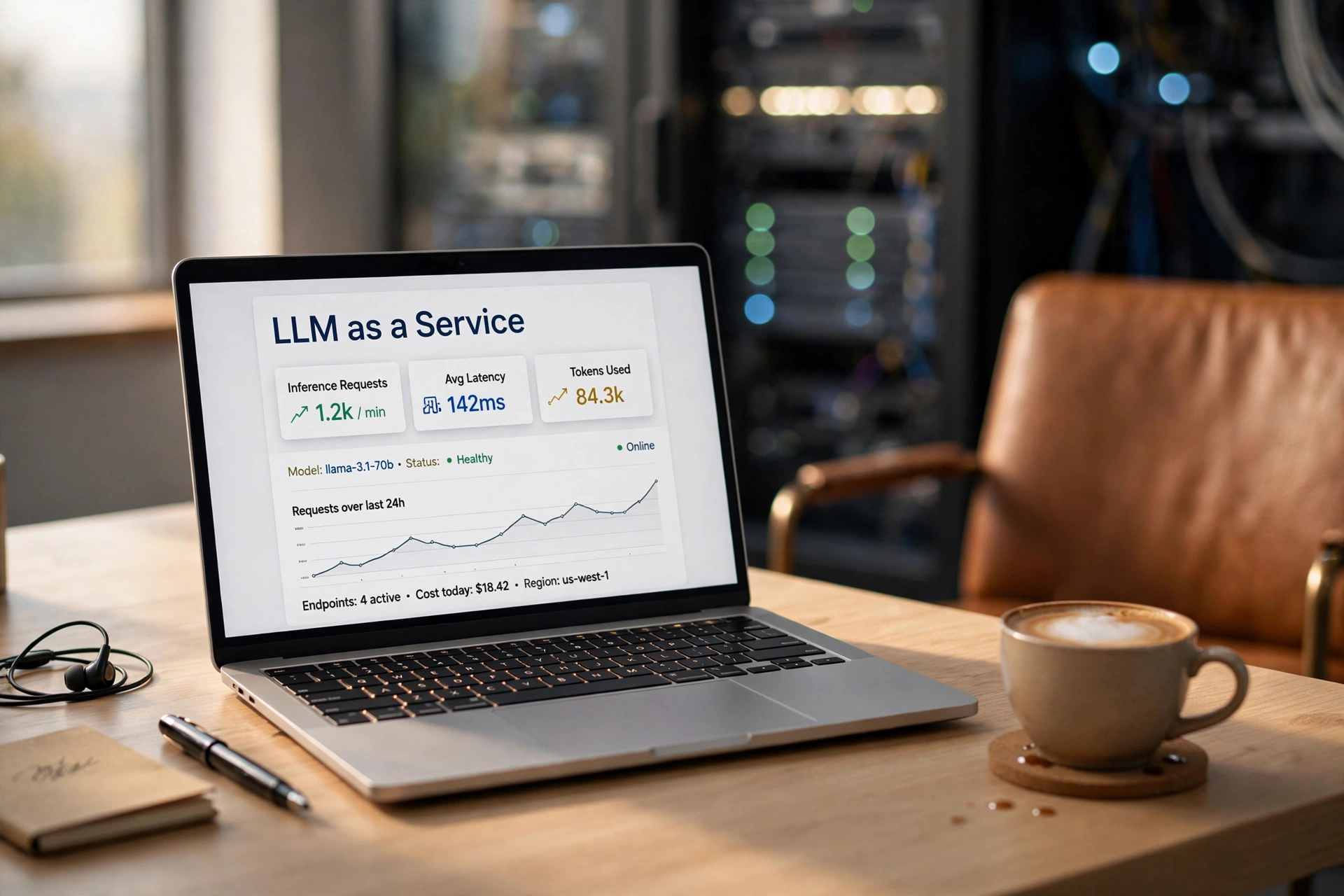
Furthermore, the economic implications are staggering. As outlined in our analysis of LLM API costs and tokens, the pricing models differ significantly. Google Gemini often provides aggressive pricing for those already embedded in the Google Cloud Platform (GCP), whereas OpenAI offers a more streamlined, 'plug-and-play' experience. If your company processes millions of tokens daily, a 10% difference in cost per thousand tokens can result in thousands of dollars in wasted monthly spend. This is why understanding the LLM as a service platform model is essential for scaling.
How to Implement the Best LLM for Specific Business Use Cases
To implement these models effectively, you must move away from the 'one-model-fits-all' mentality. The most successful enterprises I've analyzed in 2026 use a multi-model orchestrator. They don't pick one; they route specific tasks to the model best suited for that job.
Use Case 1: Complex Document Analysis and Research
For tasks involving the analysis of hundreds of pages of documentation, Claude is the clear winner. Its ability to maintain coherence over a massive context window allows businesses to upload entire product manuals or legal dossiers and ask specific questions without the model 'forgetting' the beginning of the document. To maximize this, implement a RAG (Retrieval-Augmented Generation) pipeline. As we discuss in our guide on Fine Tuning Vs RAG Vs Prompt Engineering, RAG allows the model to query a database of your company's facts before generating a response, eliminating hallucinations.
Use Case 2: Multimodal Customer Interaction
If your business requires an agent that can 'see' a user's screen and 'hear' their voice to provide technical support, GPT-4o or Gemini 1.5 Pro are the primary contenders. Google's Gemini is particularly potent here because of its native multimodality; it wasn't trained on text and then 'patched' with vision, it was built to understand all modalities from the start. This makes it incredibly fast for video analysis or analyzing complex spreadsheets.
Use Case 3: High-Volume Lead Qualification
For those scaling their inbound pipeline, the priority is speed and reliability. Integrating an AI agent into your website to qualify leads requires a model with excellent function-calling capabilities. GPT's ecosystem is currently the most mature for this. When combined with a system like BizAI Intelligence, you can automate the process of moving a lead from a website visit to a booked meeting in your CRM. If you're curious about the ROI of this approach, compare AI SDR Vs Human SDR.

GPT vs Claude vs Gemini: Comparison Analysis
To make this decision objective, we must look at the performance metrics across the three pillars of enterprise AI: Reasoning, Context, and Integration.
| Feature | OpenAI GPT-4o/o1 | Anthropic Claude 3.5 | Google Gemini 1.5 Pro |
|---|---|---|---|
| Core Strength | Versatility & Tool Use | Nuance & Context Window | Ecosystem & Multimodality |
| Reasoning | Exceptional (Especially o1) | High (Better for Writing) | High (Better for Data/Video) |
| Context Window | Large | Massive (Industry Leading) | Massive (Up to 2M tokens) |
| Integration | Best-in-Class APIs | Strong, Developer-focused | Deep GCP/Workspace integration |
| Tone | Direct, efficient | Empathetic, professional | Informative, Google-esque |
💡
Key Takeaway
Use GPT for automation and tool-heavy workflows, Claude for deep research and high-quality writing, and Gemini for multimodal data analysis and Google-integrated environments.
From a technical standpoint, the emergence of 'reasoning models' (like OpenAI's o1) has changed the game. These models use 'chain-of-thought' processing to think before they speak. In my experience, this is a game-changer for B2B consultants who need the AI to solve complex architectural problems rather than just summarize a meeting. However, this comes with higher latency. You wouldn't use a reasoning model for a simple chatbot, but you would use it to draft a 12-month strategic growth plan.
Common Mistakes When Choosing an LLM for Business
One of the most common mistakes I see is 'Model Loyalty.' Companies often stick with one provider because they have an account, even when a competitor's model is 10x more efficient for a specific task. This is a failure of leadership, not technology. In a professional environment, the goal is the outcome, not the brand of the AI.
Another critical error is ignoring the 'Context Window' trap. Many business owners believe that a larger context window is always better. While Claude and Gemini can process millions of tokens, feeding too much irrelevant data into a prompt can lead to 'lost in the middle' syndrome, where the AI ignores information located in the center of the prompt. The solution is not a bigger window, but better data curation and the use of Programmatic SEO architecture to organize how information is presented to the AI.
Finally, many businesses overlook the importance of prompt engineering and the danger of 'generic' outputs. If you use the same prompts everyone else is using, you will get the same generic results. To dominate your niche, you need to build a proprietary prompting library. This is a core part of how we scale organic traffic at BizAI Intelligence; we don't just use an LLM, we engineer a specific output machine that sounds like an industry authority, not a chatbot.
Frequently Asked Questions
Which LLM is the best for writing professional B2B content?
Claude 3.5 is generally considered the superior choice for high-end professional writing. Unlike GPT, which can sometimes fall into predictable patterns (using words like 'tapestry' or 'delve'), Claude has a more natural, human-like cadence. It is better at adhering to complex brand guidelines and maintaining a consistent tone over long documents. For businesses focusing on content marketing, Claude's ability to avoid 'AI-sounding' prose makes it the most effective tool for building trust with a high-ticket audience.
Is Google Gemini better than GPT for data analysis?
Gemini 1.5 Pro holds a significant advantage when analyzing extremely large datasets or long videos. Because it can handle up to 2 million tokens, you can feed it an entire codebase or an hour-long recording of a board meeting, and it can pinpoint a specific detail with remarkable accuracy. However, for structured data manipulation and integration with third-party apps via API, GPT-4o's ecosystem is often more stable and easier to deploy. The choice depends on whether your data is 'long' (Gemini) or 'interconnected' (GPT).
How do API costs differ between GPT, Claude, and Gemini?
Pricing varies by token volume and model size. Generally, Google Gemini provides very competitive pricing, especially for those utilizing the Vertex AI platform. OpenAI has a tiered pricing structure that rewards high-volume users but can become expensive for low-efficiency prompts. Anthropic's Claude is priced competitively with GPT, but because its context window is so large, users often spend more by sending massive amounts of data in every prompt. Understanding LLM API costs is essential to avoid unexpected monthly bills.
Can I switch between these models without rewriting all my prompts?
To a certain extent, yes, but you will lose optimization. Each model has a unique 'latent space' and responds differently to specific instructions. A prompt that works perfectly in GPT-4 might produce a hallucination in Claude. To mitigate this, I recommend using a unified AI gateway or an LLM as a service platform that allows you to swap models via a single API call. This enables you to A/B test outputs and choose the most cost-effective model for each specific task.
Which model is the most secure for sensitive corporate data?
All three providers offer enterprise-grade security, but the implementation differs. Google Gemini benefits from the existing Google Cloud security infrastructure, which is a gold standard for many corporations. Anthropic (Claude) was founded with a 'Constitutional AI' approach, focusing heavily on safety and predictability. OpenAI offers robust enterprise privacy agreements where data is not used for training. Regardless of the model, you should always use a private VPC (Virtual Private Cloud) and never send PII (Personally Identifiable Information) through a public interface.
Conclusion
There is no single 'best' LLM for business, only the best model for a specific objective. If your goal is rapid automation and tool integration, GPT is your engine. If you need deep analysis, nuanced writing, and a massive memory, Claude is your choice. If you are deep in the Google ecosystem and dealing with multimodal data at scale, Gemini is the winner.
In the 2026 economy, the real competitive advantage doesn't come from the model you use, but from how you integrate that model into a revenue-generating machine. Stop thinking about AI as a chatbot and start thinking about it as an acquisition engine. By combining these models with a strategic programmatic SEO approach, you can build a system that captures intent and converts it into revenue while you sleep.
For a deeper dive into how to integrate these technologies into your corporate strategy, read our comprehensive guide on LLM for business.
Ready to stop renting traffic and start owning your niche? Visit BizAI Intelligence and discover how our AI-powered organic traffic engine can scale your pipeline.
Only 12 Onboarding Slots Remaining This Month
BizAI deploys 300 AI salespeople scoring purchase intent 24/7. Get your free niche domination blueprint.
AI Search Accelerator: 1-on-1 Strategy Session
Claim one of the 10 monthly slots. Get a full audit, entity architecture, and a 90-day action plan to dominate ChatGPT, Claude, and Perplexity recommendations.