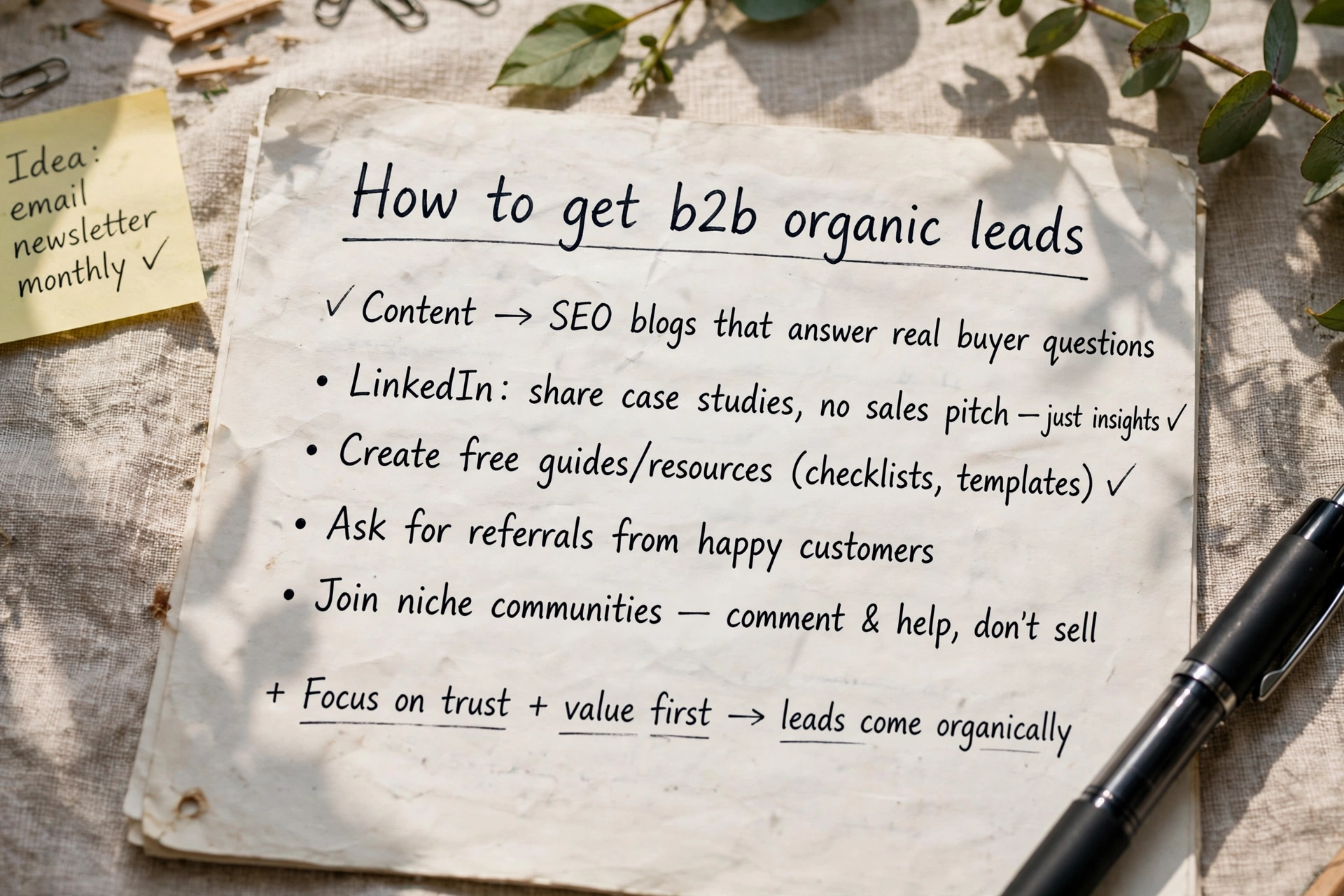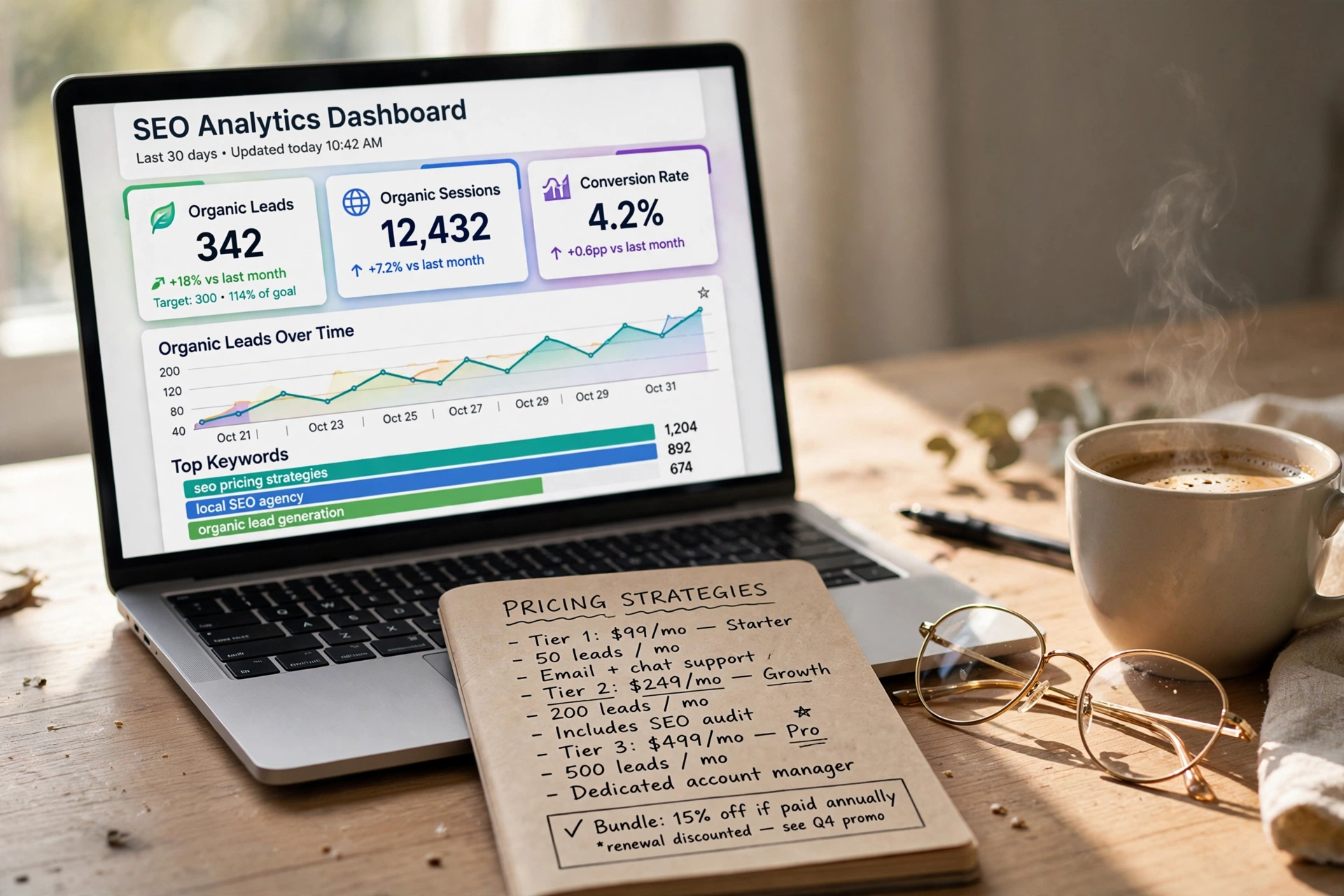
📖This article is part of the complete guide to How to Get B2B Organic Leads: The 2026 Authority Framework.
What is the Actual Cost of B2B Organic Lead Generation?
The cost to acquire a B2B organic lead varies wildly, but for a high-ticket service, you should expect an initial investment ranging from $2,000 to $15,000 per month depending on the scale of your topical authority ambitions. While the "per lead" cost eventually drops significantly compared to paid media, the upfront price reflects the engineering of a search engine asset. If you are wondering how to get B2B organic leads without bankrupting your marketing budget, the secret lies in shifting from "buying clicks" to "building equity" through a programmatic architecture that compounds over time.
In my experience working with high-ticket B2B firms, the biggest financial mistake companies make is hiring a generalist agency that charges a monthly retainer to write four generic blog posts. This approach creates a linear growth curve that rarely breaks through the noise of 2026 search algorithms. To actually move the needle, you need a system that targets hundreds of high-intent long-tail queries simultaneously. For those looking to exit the expensive cycle of PPC, understanding how to stop depending on paid ads is the first step toward sustainable profitability.

Understanding the Economics of Organic Acquisition
To grasp the pricing of organic lead generation, we must first define what we are actually paying for. You aren't paying for "articles"; you are paying for the capture of search intent.
📚
Definition
B2B Organic Lead Generation is the process of attracting high-value business decision-makers to a website via non-paid search results, utilizing topical authority and technical SEO to convert that traffic into qualified sales opportunities.
The pricing structure generally falls into three buckets: agency retainers, in-house payroll, and automated systems. An agency typically charges based on a "package" (e.g. 10 articles per month), often ranging from $3,000 to $7,000. However, the ROI is often low because the content lacks the depth required for 2026's AI-driven search landscapes. According to a Gartner research report, B2B buyers now spend only 17% of their total buying journey meeting with potential suppliers, meaning your organic content must do the heavy lifting of qualification before a human ever enters the loop.
Now, here is where it gets interesting: the "hidden cost" of organic leads is the conversion gap. Most businesses spend thousands on traffic but have a leaky bucket. They drive the lead to a page, but the lead bounces because there is no immediate way to book a call. This is why why programmatic SEO fails without embedded AI SDRs is such a critical conversation for any CEO. If you spend $5,000 on content but lose 90% of the traffic to a static "Contact Us" form, your actual cost per lead is effectively doubled.
Why Investing in Organic Infrastructure Matters for B2B ROI
The financial implication of ignoring organic growth is the "Paid Ad Tax." When you rely solely on Google Ads or LinkedIn Ads, your customer acquisition cost (CAC) is tied to a daily budget. The moment you stop paying, your leads drop to zero. In contrast, organic assets act like real estate; once you rank for a high-intent keyword, you own that traffic stream for a fraction of the maintenance cost.
According to data from McKinsey, companies that prioritize a digital-first, content-led acquisition strategy see a significant increase in lead quality because the prospect has already "self-educated" through the brand's organic assets. This reduces the sales cycle by an average of 20% to 30% because the prospect arrives at the first call already convinced of the company's authority.
If you are struggling with how to get B2B organic leads in a competitive niche, the risk of inaction is an ever-increasing CAC. As AI-generated content floods the web, the cost of "standing out" increases. This is why simply having a blog is no longer enough. You need an engine. For many small businesses, the fastest way to achieve this is to rank on Google Page 1 fast using a programmatic approach that covers entire topic clusters rather than hoping a single "viral" post works.
The business impact of a robust organic engine is measurable in two ways:
- The Compounding Effect: A page written in 2026 continues to generate leads in 2027 and 2028 without additional ad spend.
- The Trust Factor: Organic rankings are a proxy for trust. A user trusts a company that Google deems the "authority" more than a company that simply paid for the "Sponsored" tag.
Practical Application: Building Your Organic Lead Engine
If you want to optimize your budget for the highest possible ROI, you should move away from the "content calendar" model and toward a "topical dominance" model. Here is the step-by-step framework I recommend for B2B firms.
Step 1: Intent Mapping
Don't target "What is [Service]." Target "How much does [Service] cost in [City]" or "[Service] for [Specific Industry] vs [Alternative]." These are high-intent queries where the user is actively looking to buy, not just learn.
Step 2: Programmatic Deployment
Instead of writing one page for "B2B Consulting," create 50 pages for "B2B Consulting for Law Firms," "B2B Consulting for HVAC Companies," etc. This is where BizAI Intelligence changes the game. By deploying hundreds of interconnected, search-optimized pages, you create a web of authority that is nearly impossible for competitors to displace.
Step 3: The AI Qualification Layer
Since B2B leads are high-ticket, you cannot afford to let a lead wander. Every single organic page must have an AI Sales Agent. This agent tracks the visitor, qualifies them based on their reading behavior, and books the meeting directly into your CRM. This is the exact strategy used to convert website visitors into WhatsApp leads with a significantly higher ROI than traditional forms.
Step 4: Technical Indexing
Use the Google Indexing API to ensure your new pages are crawled immediately. In the B2B world, speed to market for new trends is a competitive advantage.
💡
Key Takeaway
The most cost-effective way to scale B2B leads is to combine Programmatic SEO for massive reach with AI SDRs for immediate conversion, eliminating the need for a massive manual sales team.

Comparing Your Organic Lead Options
When deciding how to allocate your budget to get B2B organic leads, you generally have three paths. Most executives choose the "Agency" route because it feels safe, but as the data shows, it is often the least efficient for scaling.
| Approach | Initial Cost | Lead Velocity | Scalability | Best For |
|---|---|---|---|---|
| Traditional Agency | Medium ($3k-$7k/mo) | Slow | Linear | Low-growth brand awareness |
| In-House Team | High ($8k-$15k/mo) | Medium | Moderate | Enterprise companies with huge budgets |
| BizAI Intelligence | Optimized/Value-Based | Very Fast | Exponential | High-ticket B2B scaling fast |
The "Traditional Agency" approach often relies on freelance writers who don't understand the technical nuances of B2B buying cycles. This results in "fluff" content that looks pretty but never ranks. I've seen this mistake constantly: companies paying $5,000 a month for 4 posts that get 10 visits each. On the other hand, using best programmatic SEO platforms allows you to dominate thousands of keywords simultaneously.
Common Questions & Misconceptions about Organic Costs
Most B2B guides get the "cost" of organic leads wrong because they ignore the conversion rate. They tell you that organic is "free," but it is absolutely not. It is an investment of time and technology.
Myth 1: "Organic leads are free."
Correction: Organic traffic is free; organic leads are the result of a paid investment in content, technical SEO, and conversion optimization. If you don't invest in the "engine," you get zero leads.
Myth 2: "I just need a few high-quality blog posts to rank."
Correction: In 2026, Google rewards "topical authority," not individual "great" posts. To rank for a competitive B2B term, you need a cluster of 50+ related pages. This is why many businesses find that AI vs SEO agency comparisons lean heavily toward AI automation for those wanting fast results.
Myth 3: "Content takes 6 months to start working."
Correction: This was true in 2020. With the Google Indexing API and programmatic deployment via BizAI Intelligence, you can see indexation and initial traffic within days, not months.
Myth 4: "Writing more content always leads to more leads."
Correction: Volume without intent is a waste of money. Writing 100 posts on "industry news" will get you traffic, but not leads. You must target "bottom of the funnel" (BoFu) keywords. If you want to see a real shift in revenue, look into how to make business show up on Google Search using a strategic, intent-first map.
Frequently Asked Questions
How long does it take to see a return on investment (ROI) from organic B2B leads?
While traditional SEO used to take 6 to 12 months, a programmatic approach utilizing AI can shorten this window to 30 to 90 days. The ROI accelerates as your "topical map" expands. Initially, you pay for the architecture, but as the cluster grows, the cost per lead drops because you are capturing a wider net of long-tail queries. According to industry benchmarks for B2B SaaS, organic channels typically provide the lowest CAC once the authority threshold is crossed.
Is it cheaper to hire a freelance writer or use an AI content engine?
Hiring freelance writers for B2B content is often a liability in 2026. To get 300 high-quality, optimized pages, you would need a massive budget and months of management. An AI content engine, specifically those designed for replacing freelance copywriters, can produce the same volume with better technical SEO in a fraction of the time. The cost difference is usually 80% to 90% lower, while the output is more consistent with search intent.
How do I calculate the "Cost Per Lead" for organic traffic?
To calculate this, divide your total monthly spend (software, agency, or payroll) by the number of qualified leads generated from organic sources. For example, if you spend $3,000/month on BizAI Intelligence and generate 30 qualified leads, your CPL is $100. Compare this to LinkedIn Ads, where a high-ticket B2B lead can easily cost $300 to $500. The goal is to drive this number down through compounding traffic.
Can a small B2B business actually compete with enterprise giants in organic search?
Yes, by using a "Silo" or "Cluster" strategy. Enterprise companies often have bloated, slow websites with generic content. A small business using automated AI blog generation tools can outmaneuver them by dominating "hyper-specific" niches. By being the definitive authority on a very specific problem, you can rank above a global brand that only speaks in generalities.
What is the difference between "Traffic" and "Organic Leads" in terms of pricing?
Traffic is a vanity metric; leads are a financial metric. You can pay for a "traffic package" that brings 10,000 visitors who are just browsing. However, "Organic Lead Generation" focuses on high-intent keywords. The price for lead generation is higher because it requires deeper research and better conversion tools. If you only focus on traffic, you are wasting your budget. This is why we focus on stopping the 90% bounce rate via AI SDRs.
Final Thoughts on How to Get B2B Organic Leads
The financial reality of 2026 is that you can no longer "dabble" in organic search. The gap between companies that own their traffic and those that rent it via ads is widening. If you continue to pay a premium for every single click, you are essentially building your business on rented land.
To truly master how to get B2B organic leads, you must move toward an automated, programmatic infrastructure. By deploying a massive network of high-intent satellite pages and pairing them with an autonomous AI qualification engine, you transform your website from a digital brochure into a 24/7 sales machine.
Stop wasting budget on generic agencies and start building an asset that grows in value every single day. If you're ready to build the SEO machine that fills your pipeline while you sleep, visit BizAI Intelligence and see how we can scale your organic acquisition.
Only 12 Onboarding Slots Remaining This Month
BizAI deploys 300 AI salespeople scoring purchase intent 24/7. Get your free niche domination blueprint.
AI Search Accelerator: 1-on-1 Strategy Session
Claim one of the 10 monthly slots. Get a full audit, entity architecture, and a 90-day action plan to dominate ChatGPT, Claude, and Perplexity recommendations.