Which Growth Strategy Should You Choose to Scale Organic Traffic for Your Service Business?
Most B2B founders treat organic growth as a lottery, hoping that a few well-written blog posts will eventually trigger a flood of leads. In my experience working with high-ticket service providers, the reality is that "hoping" is not a strategy; it is a liability. When deciding how to grow a service business organic traffic, the choice usually boils down to three distinct frameworks: the slow-burn artisanal approach, the aggressive agency-led model, or the programmatic AI-driven engine. For 2026, the definitive answer for those seeking rapid, scalable ROI is the programmatic approach, as it replaces manual guesswork with algorithmic dominance.

Understanding the Mechanics of Organic Growth for Services
Growing organic traffic for a service-based business is fundamentally different from e-commerce. You aren't selling a $20 gadget; you are selling expertise, trust, and a specific outcome. This means your content must bridge the gap between a user's vague problem and your specific professional solution.
📚
Definition
Topical Authority is the perceived expertise of a website on a specific subject, established by creating a comprehensive network of interconnected content that covers every possible question a user might have about a core topic.
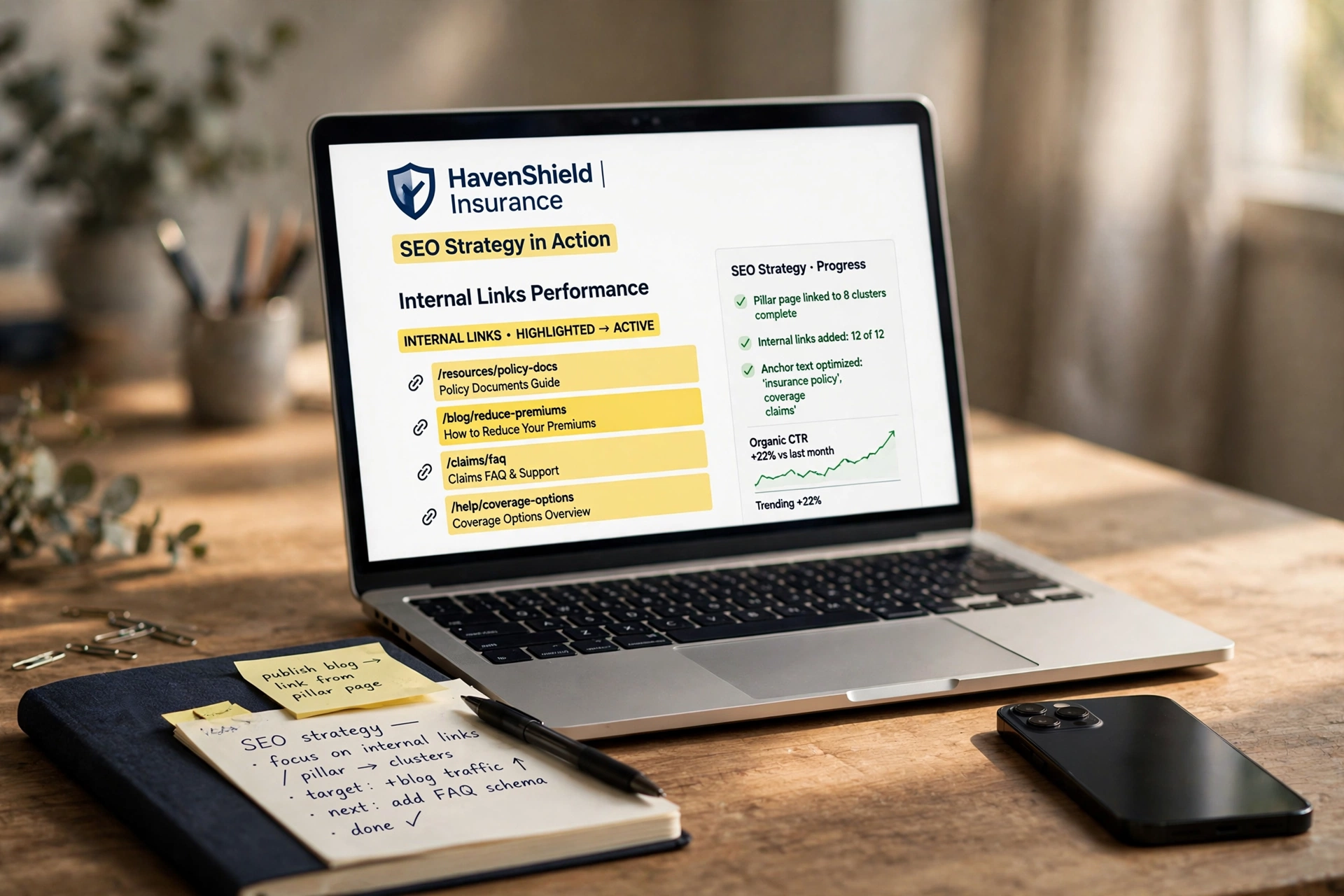
To achieve this, you cannot simply target "head terms" like "Lawyer in New York" or "Digital Marketing Agency." Those are high-competition battlegrounds where the winners are usually those with the biggest budgets, not the best services. Instead, you must deploy a "Hub and Spoke" architecture. The hub is your pillar page—a comprehensive resource that defines your category—while the spokes are satellite pages targeting long-tail, high-intent queries.
According to research from Gartner, the shift toward AI-driven search means that "informational" queries are being answered directly on the search page, forcing businesses to pivot toward "decision-stage" content. This is why simply having a blog is no longer enough. You need a structured data environment that tells search engines exactly who you are and why you are the definitive authority in your niche. If you want to understand how this evolves into the modern era, exploring the Overview of AI Search Engine Optimization & GEO provides the necessary technical context.
Why the Right Choice Impacts Your Bottom Line
The cost of choosing the wrong growth strategy is not just a lack of traffic; it is the opportunity cost of missed high-ticket contracts. When a business relies solely on paid ads, they are effectively renting their audience. The moment the ad spend stops, the leads vanish. Organic traffic, however, is an asset that compounds over time.
The financial implications are stark. A study by Forrester found that organic leads typically have a higher conversion rate than paid leads because the user has already performed a "self-qualification" process by seeking out the answer to their problem. When you dominate the search results for a specific service, you aren't just getting a click; you are inheriting the trust of the search engine.
In my experience, the most common mistake I see is the "Content Gap" fallacy. Business owners believe they need more content, but they actually need better intent mapping. If you produce 100 articles that attract a million views but none of those viewers are in a position to buy your $10k service, your organic traffic is a vanity metric. True growth is measured by the number of qualified appointments booked, not the volume of page views. This is where the integration of AI SDRs & Autonomous Sales Appointment Setters becomes essential, turning passive readers into active pipeline opportunities.
Implementing a Scalable Organic Engine
If you want to move from "hoping for traffic" to "engineering traffic," you need a repeatable system. The manual process of writing one article per week is a linear growth strategy in an exponential world. To truly scale, you must shift toward programmatic logic.
Here is the professional framework for implementing an organic growth engine:
- Intent Mapping: Identify the "money keywords." These are not the highest volume terms, but the ones used by people with a credit card in hand. Instead of "what is a divorce lawyer," target "best divorce lawyer for high-net-worth assets in [City]."
- Programmatic Deployment: Instead of writing 10 pages, build a system that generates 300+ high-quality, data-driven pages. This involves creating templates that can be populated with specific variables (location, service type, industry) while maintaining a high standard of helpful content.
- Technical Optimization: Implement Schema.org markup to ensure AI engines can parse your data. Using a PSEO Architecture Guide for SaaS & Enterprise B2B Growth helps in structuring these pages so they don't get flagged as "thin content."
- Conversion Layer: Embed an AI agent on every page. A visitor should never have to look for a "Contact Us" page. The agent should engage them based on the specific content they are reading.
BizAI Intelligence simplifies this entire process by automating the deployment of these high-authority hubs. We don't just give you a tool; we deploy a full-scale acquisition system that handles everything from the initial index to the final appointment booking.
💡
Key Takeaway
Linear content creation is a hobby; programmatic SEO is a business strategy. To scale, you must move from writing individual articles to building content systems.

Comparing Your Organic Growth Options
When deciding how to grow a service business organic traffic, you generally have three paths. Each has a different risk profile, cost structure, and time-to-value.
| Feature | Artisanal Content (Manual) | Agency-Led SEO | Programmatic AI (BizAI) |
|---|---|---|---|
| Scaling Speed | Very Slow (Linear) | Moderate | Explosive (Exponential) |
| Quality Control | High (Human-led) | Variable (Often "slop") | High (Templated Rigor) |
| Cost Structure | Low cash / High time | High Monthly Retainer | Investment in Infrastructure |
| Predictability | Low (Guesswork) | Moderate | High (Data-driven) |
| Lead Capture | Manual Forms | Basic Landing Pages | Autonomous AI SDRs |
| Best For | Solopreneurs | Mid-sized firms with patience | High-growth B2B Enterprises |
The "Artisanal" approach is a trap for many founders. While it feels safe because you control every word, it takes years to build enough topical authority to rank for competitive terms. The "Agency" approach often results in the "Content Treadmill," where you pay thousands a month for articles that look professional but don't actually drive qualified leads.
The modern approach, as pioneered by BizAI Intelligence, treats SEO as a software problem. By leveraging Programmatic SEO to scale 10,000+ high-converting pages, we remove the human bottleneck. We don't write articles; we build traffic machines that dominate niches through algorithmic force.
Common Misconceptions About Organic Growth
Most guides on organic growth are outdated, written for a pre-AI era. Here are the three biggest myths I encounter when consulting with B2B firms.
Myth 1: "You need to write long-form content to rank."
Actually, you need comprehensive content. A 3,000-word article that is 50% fluff will lose to a 600-word page that answers the user's specific question perfectly and provides an immediate solution. The goal is "time to value," not word count.
Myth 2: "Backlinks are the most important ranking factor."
While backlinks still matter, topical authority has become the dominant signal. If your site is the only one that comprehensively answers 500 different variations of a specific service-related problem, Google (and AI engines like Perplexity) will cite you as the expert, even if you have fewer backlinks than a generic corporate giant. This is the core of GEO vs Traditional SEO.
Myth 3: "AI content will get you penalized."
This is a fundamental misunderstanding of how Google works. Google doesn't penalize AI content; it penalizes unhelpful content. If an AI produces a page that is more accurate, better structured, and more useful than a human-written one, it will rank higher. The key is adding a "layer of truth" and professional expertise to the AI output.
Frequently Asked Questions
How long does it actually take to see results from organic growth strategies?
In a traditional manual setup, you might wait 6 to 12 months before seeing significant movement. However, when using programmatic methods and the Google Indexing API, this can be compressed into weeks. By deploying hundreds of high-intent satellite pages simultaneously, you create a massive "surface area" for search engines to find. This allows you to capture long-tail traffic almost immediately while your pillar pages build the authority needed for high-volume head terms.
Which is better for a service business: blogging or programmatic landing pages?
Blogging is excellent for brand awareness and nurturing leads who are in the "educational" phase. However, programmatic landing pages are far superior for lead generation. A blog post attracts someone asking "how to do X," while a programmatic page attracts someone looking for "X service in [City] for [Specific Industry]." For a service business, you need a balance, but the programmatic side is what actually fills the pipeline.
Does organic traffic actually lead to high-ticket B2B sales?
Yes, provided the intent is mapped correctly. High-ticket buyers do an immense amount of research before contacting a provider. If your brand consistently appears as the answer to their technical questions throughout their research journey, you have already won the sale before the first call. This is why integrating an AI Appointment Setter for B2B is so powerful; it captures that intent at the peak of the user's curiosity.
How do I know if my current organic strategy is failing?
If your traffic is increasing but your lead volume is flat, your strategy is failing. Many businesses fall into the "Traffic Trap," where they rank for broad terms that attract students or hobbyists rather than buyers. Check your search console for "informational" vs "transactional" queries. If 90% of your traffic comes from "what is" queries and 0% from "best [service] for [industry]" queries, you are building a library, not a business.
Can a small service business really compete with industry giants in search?
Absolutely, by using a "Silo" strategy. You cannot out-rank a national giant for a generic term like "Insurance," but you can easily out-rank them for "Commercial Liability Insurance for HVAC Contractors in North Dallas." By dominating these hyper-specific niches (Micro-Niches), you build a foundation of authority that eventually allows you to challenge the giants on a larger scale.
Final Thoughts on How to Grow a Service Business Organic Traffic
Choosing the right path for organic growth is the difference between a business that struggles for every lead and one that owns its market. Whether you choose a manual approach for a boutique feel or an aggressive programmatic engine for rapid scale, the goal remains the same: transforming your domain into a high-trust asset.
The most successful service businesses in 2026 will be those that stop viewing SEO as a marketing task and start viewing it as a technical infrastructure project. By combining topical dominance with autonomous lead qualification, you create a system that works while you sleep.
If you are ready to stop renting traffic and start owning your niche, BizAI Intelligence provides the exact architecture needed to scale from zero to 100k visits through algorithmic precision. Don't let your competitors define the narrative of your industry—take control of the search results today. To see the actual data behind this approach, check out our Programmatic SEO Case Studies.
AI Search Accelerator: 1-on-1 Strategy Session
Claim one of the 10 monthly slots. Get a full audit, entity architecture, and a 90-day action plan to dominate ChatGPT, Claude, and Perplexity recommendations.