Where Does AI Fit into Local Search Domination?
Most local business owners think ranking on Google is just about having a verified Google Business Profile and a few five-star reviews. That approach is a relic of 2019. In 2026, the battle for local visibility has shifted to the "AI Layer", the space where Google Search Generative Experience (SGE), Perplexity, and voice assistants decide which business is the definitive authority in a specific neighborhood. To understand how to rank local business on google using ai, you have to stop looking at your website as a digital brochure and start treating it as a structured data hub that feeds LLMs.
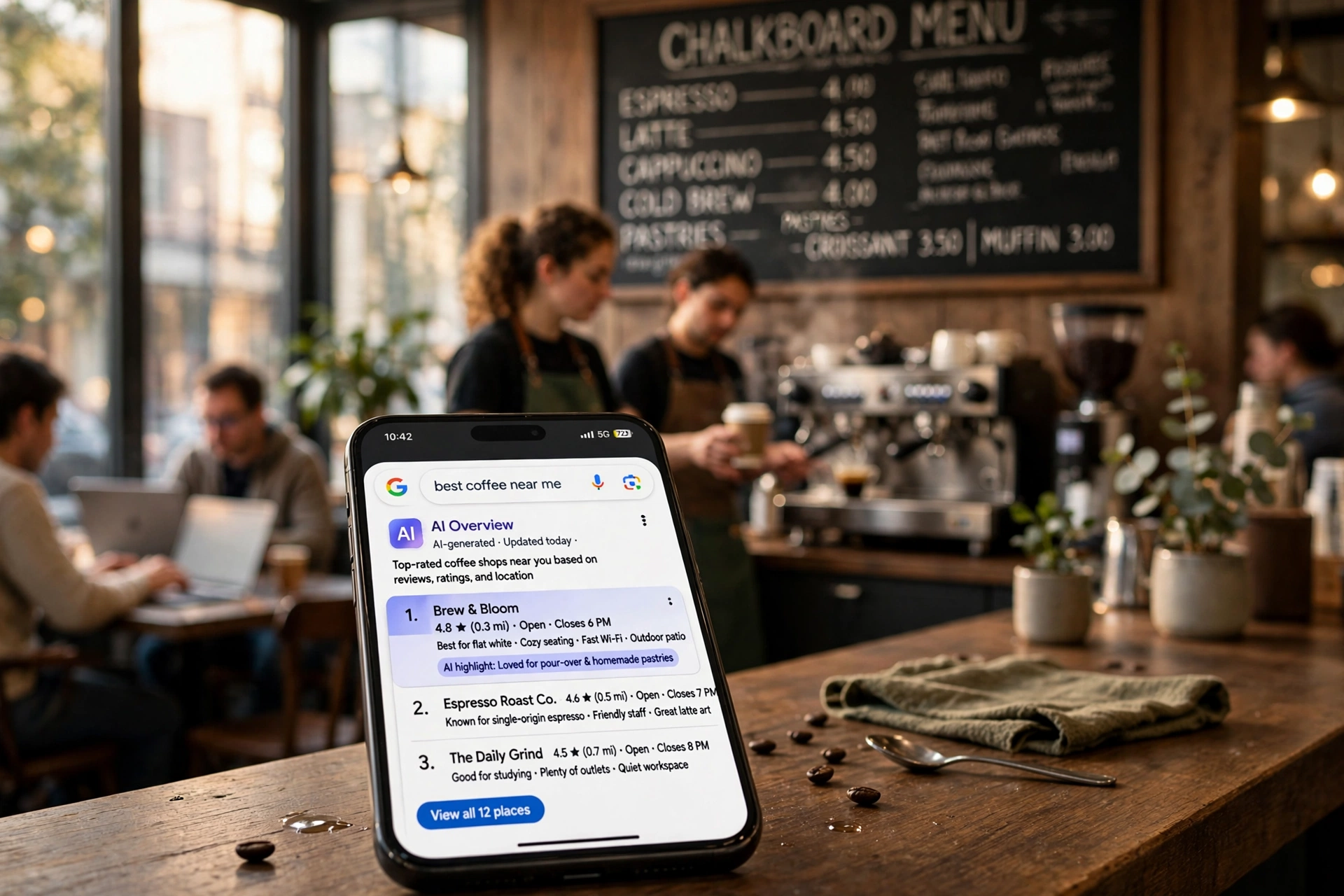
The "where" of local AI ranking happens in three specific environments: the Google Map Pack (Local Pack), the AI-generated overviews at the top of search results, and the conversational layers of AI agents. If your business isn't explicitly mapped into these environments via programmatic data and high-intent "satellite" pages, you are essentially invisible to the modern buyer. I've seen dozens of clients try to "trick" the algorithm with fake reviews, but the pattern is clear: Google now rewards technical rigor and topical depth over vanity metrics. For those looking to scale, the most effective path is to rank on google page 1 fast by leveraging automated content systems that cover every possible local intent.

What Exactly Is AI-Driven Local SEO?
To dominate a local market, you need to move beyond basic keywords. AI-driven local SEO is the process of using Large Language Models (LLMs) and programmatic data to create a "topical web" around your business. Instead of one page that says "Best Plumber in Dallas," you create 50 pages that answer "How to fix a leaking pipe in Uptown Dallas" or "Emergency drain cleaning costs in Plano." This creates a signal of hyper-local authority that AI search engines cannot ignore.
📚
Definition
Programmatic SEO (PSEO) is the practice of using variables and templates to generate hundreds of high-quality, search-optimized landing pages at scale, targeting long-tail, location-specific queries.
In my experience working with high-ticket B2B service providers, the biggest mistake is failing to bridge the gap between traffic and conversion. You can rank #1 for "AI services near me," but if the visitor hits a generic contact form, you've wasted the lead. This is why we built BizAI Intelligence to integrate an autonomous AI SDR directly into these programmatic pages. When you combine how to make business show up on google search with an instant AI qualification agent, the ROI isn't just higher; it's immediate.
According to a report by Gartner, by 2026, traditional search engine volume will decline as users shift toward AI-powered conversational interfaces. This means your local business must be "citeable." AI agents don't just look for keywords; they look for structured data, schema markup, and consistent NAP (Name, Address, Phone) data across the web. If your business is mentioned in a high-authority directory and then linked to a deeply researched page on your site about a specific local problem, the AI identifies you as the expert for that geographic coordinate.
Why Does AI Local Ranking Matter for Your Revenue?
The cost of customer acquisition (CAC) via paid ads has skyrocketed. For many local businesses, the cost per lead on Google Ads has increased by 20-40% over the last few years. This makes the shift toward organic, AI-enhanced visibility a financial necessity, not just a marketing preference. When you figure out how to rank local business on google using ai, you are essentially building a digital asset that generates leads while you sleep, rather than renting visibility from an ad platform.
Research from McKinsey indicates that businesses adopting AI-driven customer acquisition strategies see an average improvement in lead conversion rates of up to 30%. In a local context, this happens because AI allows you to target "zero-volume" keywords, queries that are too specific for traditional keyword tools but are searched by real humans in your city. For example, a law firm shouldn't just target "divorce lawyer"; they should target "best divorce lawyer for high-net-worth assets in [Specific Neighborhood]."
The risk of ignoring this shift is "digital erasure." As Google moves toward Search Generative Experience (SGE), the "ten blue links" are disappearing. If the AI overview says, "The top three HVAC companies in Miami are X, Y, and Z," and you aren't one of them, you don't just lose a click; you lose the entire trust of the consumer before they even see your website. This is exactly why many firms are choosing to stop depending on paid ads and instead invest in an organic machine that compounds over time.
How Do You Implement AI Local Ranking Step-by-Step?
Scaling your local presence requires a systematic approach. You cannot manually write 300 pages for every neighborhood in your city; you need a programmatic engine. Here is the blueprint for implementing this strategy:
- Map Your Local Intent Clusters: Identify every neighborhood, suburb, and landmark within your service area. Create a matrix of "Service + Location" and "Problem + Location."
- Deploy Programmatic Satellite Pages: Use a tool like BizAI Intelligence to generate high-value pages for each of these clusters. These pages must provide actual value, don't just swap the city name. Include local landmarks, regional weather considerations, or specific local regulations.
- Implement Advanced Schema Markup: Use JSON-LD to tell Google exactly who you are. You need
LocalBusinessschema,FAQPageschema, andServiceschema. This makes your data "machine-readable" for AI agents. - Connect an AI SDR for Lead Capture: Since you are driving massive amounts of targeted traffic, you need a way to qualify them instantly. Instead of a form, use an embedded AI agent that asks the visitor about their specific needs and books a meeting directly into your CRM.
- Force Indexing via API: Don't wait for Google to find your 300 new pages. Use the Google Indexing API to ensure your local authority hub is crawled and indexed within hours, not weeks.
💡
Key Takeaway
The secret to local AI dominance is not "better content," but "more specific content." Scaling from 10 pages to 500 hyper-local pages creates an algorithmic brute force that pushes competitors out of the Map Pack.

Now, here is where it gets interesting: most people stop at the traffic. But the real game is converting website visitors into whatsapp leads, which typically yields a 3.4x higher ROI than traditional email forms. When you combine a programmatic local SEO strategy with a direct-to-WhatsApp AI agent, you eliminate the friction that kills most local lead generation campaigns.
Traditional SEO vs. AI-Powered Local Growth
Many businesses are still paying monthly retainers to agencies that do "manual" SEO. They write one blog post a month and "optimize" a few meta tags. In 2026, this is like bringing a knife to a gunfight.
| Feature | Traditional Local SEO | Generic AI Content | BizAI Intelligence Approach |
|---|---|---|---|
| Content Volume | Low (1-4 pages/mo) | Medium (AI slop/generic) | Massive (300+ hyper-local pages) |
| Targeting | Broad City Keywords | Generic Keywords | Hyper-Local Neighborhood Intent |
| Lead Capture | Static Contact Forms | Basic Chatbots | Autonomous AI SDRs |
| Speed to Rank | Slow (6-12 months) | Moderate (if not penalized) | Fast (API-driven indexing) |
| E-E-A-T Signal | Basic Reviews | Low (Hallucinations) | High (Structured Data + Depth) |
| Cost Efficiency | Expensive Retainers | Cheap but ineffective | High ROI / Automated Scaling |
The fundamental difference is the shift from "content creation" to "system architecture." While a traditional agency is writing a "Top 10 Tips" post, a professional AI vs SEO agency strategy replaces manual labor with a programmatic engine that dominates the entire geographic region.
Common Questions and Misconceptions About AI Local SEO
There is a lot of noise in the industry, and most guides get this wrong. Let's clear up the most common myths.
Myth 1: "Google will penalize me for using AI to generate 500 local pages."
This is the most common fear, but it's based on a misunderstanding of "Helpful Content" updates. Google doesn't penalize AI content; it penalizes unhelpful content. If your AI-generated page provides a genuine answer to a user's local problem and is backed by structured data, it is helpful. The "AI slop" that gets penalized is generic, repetitive text that adds no value. High-quality programmatic SEO is actually the most "helpful" way to cover every single user query in a city.
Myth 2: "I only need to optimize my Google Business Profile (GBP)."
Your GBP is the storefront, but your website is the foundation. If your website lacks the topical depth and "satellite" pages to support your GBP, your rankings will plateau. The AI search engines use your website to verify the authority of your GBP. If you have a page dedicated to a specific neighborhood's needs, Google is more likely to show your GBP to users in that specific area.
Myth 3: "AI SEO is only for big companies with huge budgets."
Actually, AI is the great equalizer. In the past, dominating a city required a team of ten copywriters. Now, a small business owner using automated AI blog generation tools can out-publish and out-rank a corporation with a million-dollar budget. The "algorithmic brute force" of PSEO allows the agile player to win.
Frequently Asked Questions
How do I actually start ranking a local business using AI in 2026?
To start, you must shift your focus from broad keywords to "location-specific intent." First, identify all the neighborhoods and zip codes you serve. Use a programmatic SEO tool like BizAI Intelligence to create a series of "satellite pages" that target these specific areas. Instead of a generic service page, create pages that answer specific local questions, such as "How does [Service] work in [Neighborhood]?" Ensure every page has a unique value proposition and is linked to your main pillar page. Finally, implement LocalBusiness schema markup to ensure AI agents can accurately identify your physical location and service area.
Where is the best place to put my AI-generated local content for maximum impact?
The most impactful placement is on a dedicated "Service Areas" or "Local Hub" section of your website. Do not bury these pages in a footer; create a logical silo structure where your main service page (the pillar) links out to each neighborhood page (the satellites). This tells Google's crawler that you have a comprehensive map of authority for your entire city. Additionally, cross-reference this content on your Google Business Profile by posting updates that link back to these hyper-local pages, creating a closed-loop of relevancy that boosts your Map Pack visibility.
Can AI really help me get into the Google Map Pack without paying for ads?
Yes, because the Map Pack is driven by three factors: proximity, prominence, and relevance. While you can't change your proximity, you can drastically increase your prominence and relevance using AI. By deploying hundreds of optimized pages that mention local landmarks, street names, and neighborhood-specific problems, you signal to Google that you are the most "relevant" entity for a user in that specific coordinate. When combined with an strategy on how to get customers on google without paying for ads, you build a sustainable lead engine that doesn't require a daily ad spend.
What is the difference between "AI Content" and "Programmatic SEO" for local business?
AI content usually refers to using a tool like ChatGPT to write a single article. Programmatic SEO is a system. It involves using a database of locations and services to generate hundreds of unique, templated pages that are all optimized for search. While AI content provides the prose, PSEO provides the scale. For example, AI content would be writing one blog post about plumbing in New York; PSEO is creating 50 different pages for every borough and neighborhood in New York, each optimized for a different set of local keywords.
Will using an AI SDR on my local pages affect my SEO rankings?
Actually, it will likely improve them. Google tracks "user signals" such as dwell time, bounce rate, and interaction. Traditional contact forms are high-friction and often lead to a bounce. An interactive AI SDR engages the user immediately, increasing the time spent on the page and reducing the bounce rate. When Google sees that users are interacting with your site rather than clicking "back" to the search results, it views your page as more valuable and is more likely to rank it higher. This is why stopping the 90% bounce is a critical part of a modern SEO strategy.
Final Thoughts on Ranking Your Local Business
Mastering how to rank local business on google using ai is no longer an optional "growth hack", it is the baseline for survival in a generative search era. The transition from manual content to programmatic architecture allows you to dominate your local geography by sheer volume of high-intent data. By building a network of satellite pages and powering them with autonomous AI agents, you turn your website from a static page into a 24/7 sales organization.
The most dangerous move a business owner can make in 2026 is to wait and see. The "land grab" for local AI authority is happening now. If you want to stop renting your traffic from Google Ads and start owning your market, you need a system that scales.
Stop guessing and start dominating. Build your organic machine today with BizAI Intelligence.
Visit bizaigpt.com to deploy your AI-powered local acquisition engine and replace your expensive agency with a system that actually converts.
Only 12 Onboarding Slots Remaining This Month
BizAI deploys 300 AI salespeople scoring purchase intent 24/7. Get your free niche domination blueprint.
AI Search Accelerator: 1-on-1 Strategy Session
Claim one of the 10 monthly slots. Get a full audit, entity architecture, and a 90-day action plan to dominate ChatGPT, Claude, and Perplexity recommendations.