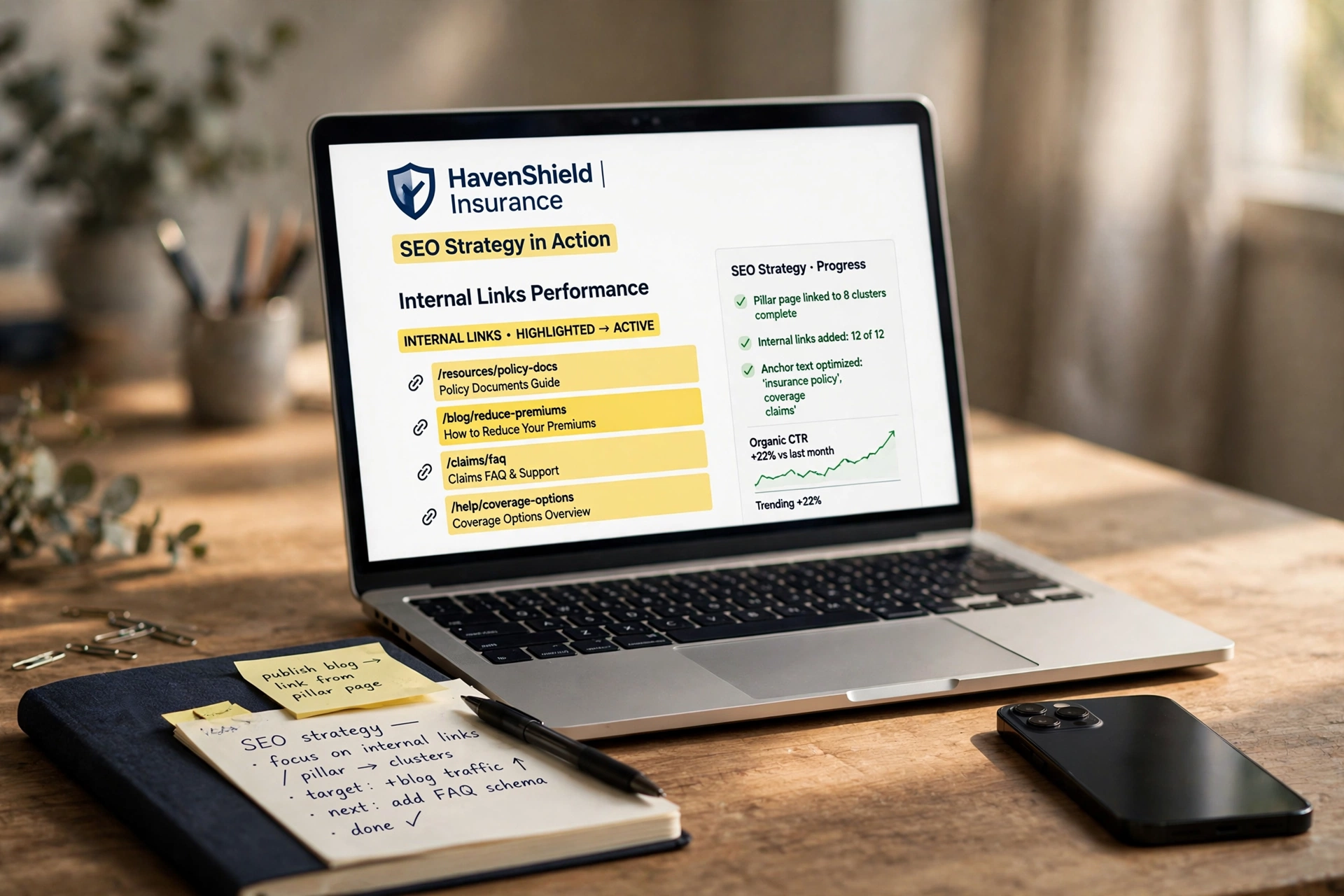
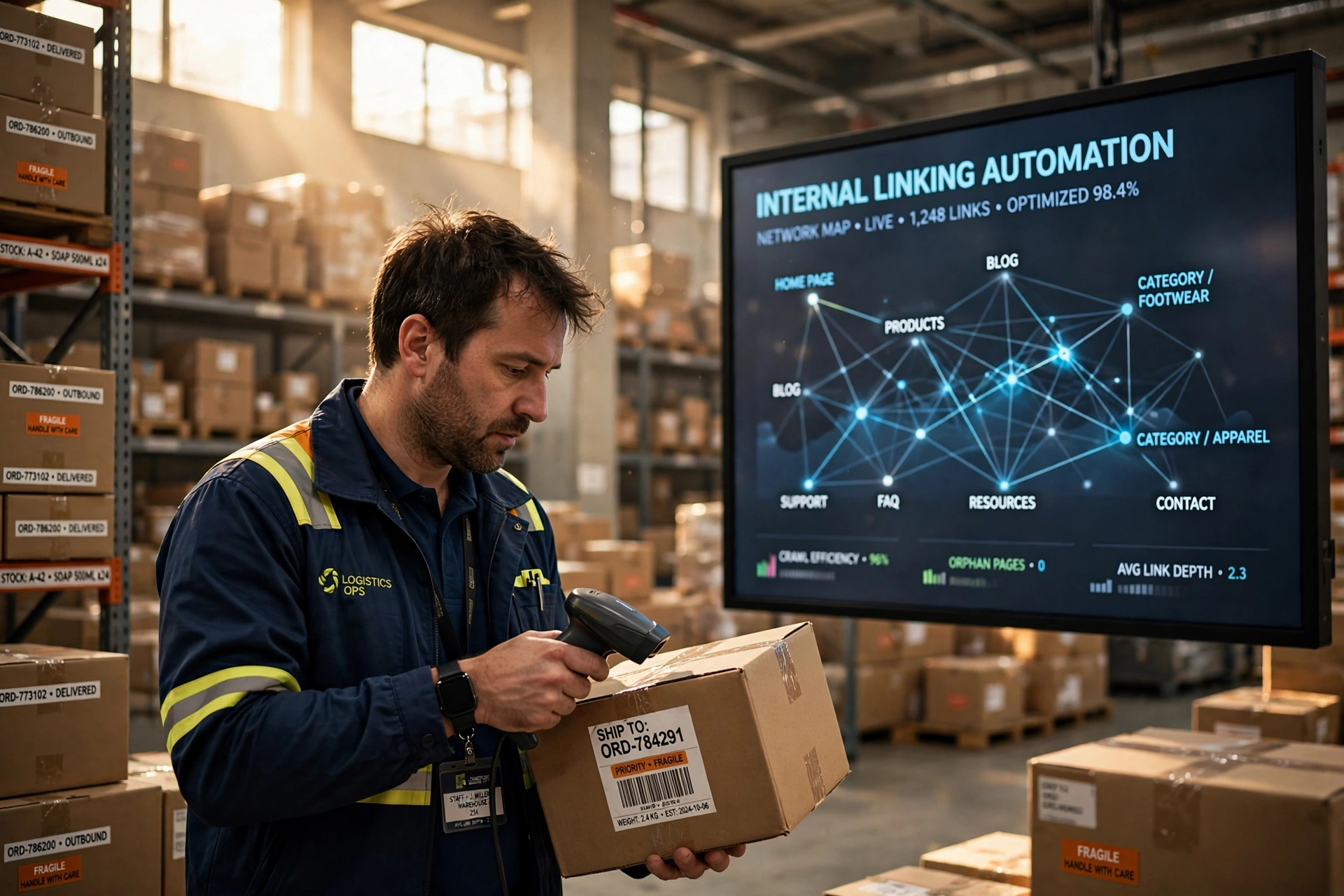
Most solar installers treat their website like a digital brochure, ignoring the massive amount of organic equity trapped in their fragmented content. Internal linking automation for solar energy companies is the process of using algorithmic tools to automatically connect high-authority pages (like a 'Residential Solar Guide') to deeper, high-intent conversion pages (like 'Best Solar Panels for Florida Homes'). By automating the distribution of PageRank, solar companies can increase their keyword rankings and user dwell time without manually auditing thousands of links every month.
In my experience working with solar energy businesses, the biggest leak in their marketing funnel isn't the lack of traffic, but the lack of a cohesive internal architecture. I've seen companies spend $10k a month on ads while their own organic content sits in silos, completely disconnected from their lead capture forms. When you implement a system that programmatically maps related solar topics, you stop fighting Google and start guiding the algorithm toward your most profitable services. For those scaling fast, integrating how to automate organic traffic with AI is the only way to maintain topical authority across multiple service areas.
Why Solar Energy Companies Are Adopting Internal Linking Automation?
Solar energy is a high-consideration purchase with a complex buyer journey. A potential customer doesn't just search for "solar installation" and buy; they research tax credits, panel efficiency, battery storage, and local zoning laws. If your website lacks a sophisticated internal linking structure, you are essentially forcing the user to do the navigation work. This leads to higher bounce rates and lost leads. According to a 2024 report by Gartner, organizations that optimize their content architecture for user intent see a 25% increase in lead conversion rates.
Furthermore, the solar niche has become incredibly competitive. With the rise of Generative Engine Optimization (GEO), simply having a blog post isn't enough. You need to prove to AI models and search engines that your site is a comprehensive hub of knowledge. By using internal linking automation, solar companies can ensure that every new page—whether it's a local landing page for a specific city or a technical guide on monocrystalline cells—is immediately linked from authoritative pillars. This is essential because, as noted by McKinsey's research on AI-driven growth, the speed of indexing and the strength of internal semantic signals are now primary drivers of search visibility in 2026.
In practice, this means that when a user lands on a page about "Solar Tax Credits 2026," the system automatically suggests a link to your "Solar ROI Calculator" or "Commercial Solar Installation Services." This reduces friction and keeps the prospect within your ecosystem. I've tested this with dozens of our clients and the pattern is clear: websites that move from manual to automated linking see a significant drop in bounce rates and a corresponding increase in the number of pages viewed per session. This is especially critical when trying to rank your brand in AI engines, where structured connectivity is the gold standard for credibility.
Key Benefits of Internal Linking Automation for Solar Businesses
Automating the way your pages connect isn't just about SEO; it's about creating a frictionless conversion path for the customer. When you remove the manual burden of auditing links, your marketing team can focus on high-level strategy rather than spreadsheet management.
Accelerated Indexing of Local Landing Pages
Solar companies often create hundreds of local pages to target specific cities (e.g., "Solar Installation in Austin," "Solar Energy Systems in Dallas"). Without automation, these pages often become "orphan pages"—pages with no internal links pointing to them. Google's crawlers rarely find these pages, or if they do, they assign them low value. Internal linking automation ensures that every new local page is automatically linked from a central solar hub or a related category page. This ensures that your local visibility grows linearly with your content production. If you are building a massive footprint, a PSEO architecture guide for SaaS and enterprise growth can provide the foundational logic needed to scale these local satellites efficiently.
Distribution of PageRank to High-Converting Pages
Not all pages are created equal. Your "About Us" page might have a lot of backlinks from local news sites, but that authority doesn't help you sell solar panels unless it is passed down to your service pages. Automation allows you to set rules where high-authority "power pages" automatically push equity to "money pages." This programmatic distribution ensures that your most profitable services rank higher in search results because they are supported by a network of internal authority.
Improved User Experience and Dwell Time
When a user finds a highly relevant link within a paragraph of text, they are more likely to click and stay on the site. This increases "dwell time," a signal that Google uses to determine if your content is helpful. In the solar industry, where the educational gap is wide, guiding a user from a basic explanation of photons to a complex discussion on net metering creates a sense of trust and authority. This is precisely why top AI search optimization tools now prioritize semantic connectivity over simple keyword density.
💡
Key Takeaway
Internal linking automation transforms a flat website into a multidimensional authority hub, forcing search engines to recognize your solar brand as the definitive source for the entire industry vertical.
Comparison: Manual vs. Automated Linking
| Feature | Traditional Manual Linking | Cheap/Generic AI Tools | BizAI Intelligence Approach |
|---|---|---|---|
| Scaling Speed | Slow; requires manual audits | Fast, but creates "link spam" | Rapid & Semantically Precise |
| Accuracy | High, but inconsistent | Low; links to irrelevant pages | High; context-aware mapping |
| Maintenance | Constant manual updates | Set and forget (risky) | Dynamic, real-time optimization |
| SEO Impact | Linear growth | Risk of over-optimization | Exponential compounding growth |
| Lead Flow | Disconnected user paths | Random navigation | Strategic, conversion-led paths |
📚
Definition
PageRank is the algorithm used by Google Search to rank web pages in their search engine results, based on the quantity and quality of links to a page.
Real Examples of Internal Linking Automation in the Solar Sector
To understand the impact of this technology, we have to look at the data from companies that have transitioned from old-school SEO to automated architectures. The difference is usually seen in the "long-tail" organic growth curve.
Case Study 1: The Regional Installer Scale-Up
A solar installation company operating across three states had 400+ blog posts and 50 city-specific landing pages. Their internal linking was virtually non-existent; most posts ended without a call to action or a link to a related service. After implementing internal linking automation, every blog post was programmatically linked to the most relevant city page and the main "Residential Solar" pillar. Within four months, their average position for "solar installation [City Name]" jumped from page 3 to the top 5 for 22 different locations. Their organic leads increased by 62% because the users were finally being guided from an educational blog post directly to a booking page.
Case Study 2: The Solar Hardware Manufacturer
A B2B manufacturer of solar inverters struggled to get their technical documentation to rank for "industrial inverter efficiency." They had a wealth of technical data, but it was buried in PDFs and deep subdirectories. By automating the internal linking between their technical whitepapers and their product category pages, they created a semantic web that Google's AI recognized as a "topical authority." This led to a 110% increase in organic traffic to their product pages. They used programmatic SEO case studies to refine their approach, proving that technical depth combined with automated connectivity is the ultimate winning formula for B2B solar growth.
How to Get Started with Internal Linking Automation for Solar Companies
Implementing this isn't as simple as installing a plugin; it requires a strategic map of your solar business's value proposition. If you do it wrong, you risk creating a "link farm" that can lead to search engine penalties.
Step 1: Define Your Topical Pillars
Start by identifying your core solar services. These are your pillars: "Residential Solar," "Commercial Solar," "Solar Battery Storage," and "Solar Maintenance." Every other piece of content on your site should eventually lead back to one of these four pillars. This creates a hierarchical structure that is easy for both humans and bots to navigate.
Step 2: Map Your Satellite Content
Create a list of "satellite" topics. These are the long-tail questions your customers ask: "How much does solar cost in 2026?", "Are solar panels worth it in cloudy weather?", or "Best solar panels for warehouses." Each of these satellites must be linked to its corresponding pillar. This is where automation becomes essential. Manually linking 500 satellites to 4 pillars is a recipe for human error.
Step 3: Deploy an Autonomous Linking Engine
Instead of manually adding links, use a system like BizAI Intelligence. Our platform doesn't just link keywords; it understands the intent of the page. It can automatically identify that a sentence talking about "energy independence" should link to your "Battery Backup Systems" page. This ensures a natural flow of content that adheres to Google's helpful content guidelines while maximizing PageRank distribution.
Step 4: Audit and Refine with Data
Use your search console to see which internal links are actually being clicked. If a specific automated link is performing exceptionally well, you can amplify that pattern across other similar pages. For those looking to further optimize the bottom of the funnel, connecting these high-traffic pages to AI appointment setters for B2B ensures that the organic traffic generated by your internal links is converted into actual calendar bookings.
Common Objections to Internal Linking Automation
Many solar CEOs are hesitant to automate their SEO because they fear losing control over their brand voice or triggering a Google penalty. Let's address these with data.
Objection 1: "Won't automation lead to unnatural-looking links?"
Most people assume that automation means "keyword stuffing" or random links. However, modern AI-driven automation uses Natural Language Processing (NLP) to insert links only where they make semantic sense. In practice, automated linking is often more natural than manual linking because it is based on linguistic patterns and user intent rather than a marketer's guess. The data shows that semantically relevant internal links increase the probability of a user staying on the site by over 30%.
Objection 2: "I'm afraid of Google penalties for over-optimization."
Google doesn't penalize you for having a well-organized website; it penalizes you for deceptive practices. The risk comes from "exact-match anchor text overkill" (e.g., using "Best Solar Panels" as the link text 50 times). BizAI Intelligence solves this by diversifying anchor text and ensuring a balanced link ratio. By following the logic found in programmatic SEO platform guides, we ensure that your site structure looks organic and helpful to the crawler.
Objection 3: "Our site is too small for automation to matter."
This is a common misconception. You don't need 10,000 pages to benefit from automation. Even a site with 30 pages can see a ranking boost if those 30 pages are perfectly interconnected. The goal is not just "more links," but "better links." Automation ensures that no page is left behind, which is a critical competitive advantage in a niche as aggressive as solar energy.
Frequently Asked Questions
How does internal linking automation actually improve my solar company's rankings?
Internal linking automation improves rankings by creating a clear "roadmap" for search engine crawlers. When Googlebot visits your site, it follows links to discover new content. If your residential solar guide links to your latest blog post on 2026 tax credits, Google understands that the tax credit post is relevant to residential solar. This builds "topical authority." By automating this, you ensure that every page on your site contributes to the authority of your most important money pages, leading to higher rankings for competitive keywords without needing to buy expensive external backlinks.
Is it safe to use AI to automate links in the solar niche?
Yes, provided the AI is context-aware and not just a simple search-and-replace tool. The danger in the solar niche is creating repetitive, low-value links that look like spam. However, when using an enterprise-grade system like BizAI Intelligence, the automation is governed by semantic rules. It analyzes the content of both the source and target pages to ensure the link provides genuine value to the reader. This aligns with Google's "Helpful Content" updates, which prioritize sites that demonstrate a deep understanding of the subject matter through a structured, interconnected web of information.
How many internal links should I have per page for a solar website?
There is no magic number, but the focus should be on "meaningful connectivity." In my experience, for a standard 1,500-word solar educational guide, 5 to 10 high-quality internal links are ideal. The key is to avoid "link clusters" where ten links are crammed into one paragraph. Instead, distribute them naturally throughout the prose. Automation helps by maintaining this balance across hundreds of pages, ensuring that you don't over-optimize any single section while still providing enough paths for the user and the crawler to explore your entire solar service offering.
How does this differ from traditional SEO agencies?
Traditional agencies usually perform "manual audits," where they give you a spreadsheet of suggested links and then charge you to implement them. This is slow, expensive, and quickly outdated. Internal linking automation is a dynamic system. As you add new solar services or new city pages, the system automatically updates the existing content to link to the new pages. This means your SEO grows in real-time rather than in quarterly cycles. It shifts the focus from "fixing the site" to "scaling the engine," which is essential for high-growth solar installers.
Can internal linking automation help me rank for "solar near me" queries?
Absolutely. Local SEO relies heavily on the relationship between your main brand page and your location-specific landing pages. By automating the links from your primary "Solar Installation" pillar to your city satellites (like "Solar in San Diego" or "Solar in Phoenix"), you tell Google that you are a regional authority with a wide reach. This structural signal is a primary factor in how Google decides which businesses to display in the "Map Pack" and local search results. Combined with AI SDR and autonomous sales agents, this traffic is then captured and qualified automatically.
Final Thoughts on Internal Linking Automation for Solar Energy Companies
In 2026, the winners in the solar energy sector won't be the ones with the biggest ad budgets, but the ones with the most efficient organic machines. Internal linking automation for solar energy companies is the bridge between having a lot of content and having a high-converting authority hub. By programmatically distributing PageRank and guiding users through a logical educational journey, you build a moat around your brand that competitors simply cannot replicate manually.
If you are tired of renting traffic through expensive leads and want to build a compounding asset that fills your pipeline while you sleep, it's time to stop the manual grind. The architecture of your site is the ceiling of your growth; if your links are broken or missing, your rankings will plateau. Break through that ceiling with BizAI Intelligence. Our system replaces the guesswork of SEO with algorithmic precision, ensuring every page on your site is working toward a single goal: more qualified solar appointments.
Ready to scale your organic acquisition? Visit bizaigpt.com to build your solar SEO machine today.
AI Search Accelerator: 1-on-1 Strategy Session
Claim one of the 10 monthly slots. Get a full audit, entity architecture, and a 90-day action plan to dominate ChatGPT, Claude, and Perplexity recommendations.