Most e-commerce founders are trapped in a 'pay-to-play' cycle where customer acquisition costs (CAC) rise every quarter while margins shrink. An organic lead generation engine for e-commerce brands is a scalable system of high-intent content, programmatic SEO, and AI-driven capture mechanisms that transforms a storefront from a simple catalog into a lead-generating asset. Instead of renting traffic from Meta or Google Ads, this engine builds owned authority that attracts high-lifetime-value (LTV) customers through education, decision-stage guides, and automated lead qualification, effectively reducing the cost per acquisition to nearly zero over time.
In my experience working with high-growth e-commerce brands, the biggest mistake is treating SEO as a 'blogging project' rather than a technical acquisition system. I've seen brands spend thousands on generic articles that get traffic but zero conversions. The shift happens when you move from 'content marketing' to 'programmatic intent capture,' where every page is engineered to solve a specific buyer problem and capture a lead before they even hit the checkout page. For those looking to modernize their approach, understanding how to automate organic traffic and lead capture with AI is the first step toward decoupling growth from ad spend.
Why E-commerce Brands Are Shifting to Organic Engines in 2026
The economics of e-commerce have shifted violently. With the rise of privacy-centric tracking (ATT) and the saturation of social feeds, the cost of a single click has skyrocketed. According to a recent Gartner report, the average CAC for mid-market e-commerce brands has increased by nearly 22% year-over-year, forcing a pivot toward owned channels. When you rely on paid ads, you are essentially renting your customers; the moment you stop paying, the leads vanish. An organic engine, by contrast, creates a compounding asset.
Furthermore, the way consumers search has evolved. We are seeing a massive migration toward Generative Engine Optimization (GEO). Users are no longer just typing keywords into a search bar; they are asking complex questions to AI agents. If your brand isn't structured as a definitive authority hub, you aren't just losing rankings—you are becoming invisible to the AI tools your customers use to make buying decisions. This is why understanding GEO vs traditional SEO is no longer optional for brands that want to survive the next three years.
In practice, this means moving beyond the product page. A successful organic engine focuses on 'informational intent.' For example, a high-end skincare brand shouldn't just rank for 'organic face cream,' but for 'how to treat adult acne with organic ingredients.' By capturing the user at the research stage, the brand establishes trust long before the transaction occurs. This psychological advantage leads to higher conversion rates and significantly lower cart abandonment, as the customer is already convinced of the brand's expertise.
Key Benefits of an Organic Lead Generation Engine
Building an organic engine provides a structural advantage that paid media simply cannot replicate. While ads provide immediate spikes, an organic engine provides a baseline of predictable, high-intent traffic that grows exponentially.
Radical Reduction in Customer Acquisition Cost (CAC)
When you own the channel, your marginal cost per lead drops toward zero. Instead of paying $5.00 per click for a high-intent keyword, you build a piece of content that attracts thousands of visitors monthly for a one-time production cost. According to McKinsey's analysis on digital maturity, companies that prioritize owned-media ecosystems see a 30% higher profit margin compared to those relying exclusively on paid acquisition. By implementing programmatic SEO architecture for SaaS and enterprise growth, e-commerce brands can scale these high-intent pages across thousands of product variations or customer personas effortlessly.
Increased Customer Lifetime Value (LTV)
Leads generated through educational organic content are inherently higher quality. They aren't clicking a 'discount' ad; they are seeking a solution to a problem. This shift in intent changes the relationship from transactional to relational. A customer who reads a 2,000-word guide on the best materials for sustainable furniture is far more likely to become a repeat buyer and brand advocate than someone who bought a single item via a flash sale ad.
Dominance in AI-Powered Search (AEO)
Modern organic engines are built for Answer Engine Optimization (AEO). By using structured data and clear, authoritative answer blocks, brands can ensure they are the primary source cited by LLMs. This creates a virtuous cycle: as AI engines cite your brand, your perceived authority grows, leading to more traditional organic clicks. Those who leverage AI search optimization tools are already seeing their brands appear as the 'recommended' choice in ChatGPT and Perplexity search results.
💡
Key Takeaway
The primary advantage of an organic lead generation engine is the transition from 'renting' attention via ads to 'owning' authority via a programmatic content ecosystem, which directly increases margins by slashing CAC.
Comparison: Acquisition Strategies
| Feature | Traditional Paid Ads | Cheap AI Content | BizAI Organic Engine |
|---|---|---|---|
| Cost Structure | Linear (Pay per click) | Low upfront / High churn | Compounding Asset |
| Lead Quality | Impulsive / Discount-driven | Low (Generic/Fluff) | High (Intent-driven) |
| Sustainability | Stops when budget ends | Risk of Google penalty | Long-term Authority |
| AI Visibility | Low (Ads $\neq$ Authority) | Low (AI Slop) | High (GEO Optimized) |
| Conversion | High Friction | Low Trust | Low Friction / High Trust |
Real-World Examples of Organic Engine Success
To understand how this works in the trenches, let's look at two distinct scenarios where organic engines replaced failing ad strategies.
Case Study 1: The Sustainable Apparel Brand
This brand was spending $15,000/month on Meta ads targeting 'sustainable clothing.' Their CAC was climbing, and their ROAS (Return on Ad Spend) had dipped to 1.8x. We implemented an organic engine focusing on 'Material Comparison Hubs.' Instead of just selling shirts, they created 200+ programmatic pages comparing different organic fabrics (e.g., Organic Cotton vs. Hemp vs. Tencel).
By targeting the 'comparison' stage of the buyer journey, they captured users who were already in the decision phase. Within six months, their organic traffic grew by 400%, and they were able to reduce their ad spend by 60% while maintaining the same revenue volume. The key was the use of programmatic SEO to scale 10,000+ high-converting pages, allowing them to dominate every possible material-related search query in their niche.
Case Study 2: The Luxury Home Decor Store
This store struggled with a high bounce rate. Visitors would land on product pages from Pinterest and leave. We shifted the strategy to a 'Problem-Solution Engine.' We built out a massive cluster of satellite pages answering hyper-specific design questions (e.g., 'How to light a dark living room with north-facing windows').
Each page didn't just provide a tip; it featured an AI-powered lead capture agent that offered a 'Custom Lighting Audit' in exchange for an email and home dimensions. This transformed the site from a store into a consultancy. The result was a 25% increase in average order value (AOV) because customers were buying complete 'solutions' curated by the brand's authority, rather than single items. This illustrates the power of AI appointment setters for B2B and high-ticket B2C to bridge the gap between information and transaction.

How to Get Started with an Organic Lead Generation Engine
Building this engine requires a departure from traditional 'blogging.' It is an engineering project as much as a marketing one. Here is the professional framework for implementation:
Step 1: Map the Intent Graph
Stop looking at keywords and start looking at 'buyer journeys.' Identify the 5-10 main problems your product solves. For each problem, identify 50 variations of how a customer would ask for help. This is your intent graph. If you sell organic supplements, don't just target 'vitamins'; target 'why am I tired at 3 PM' or 'natural ways to improve focus for students.'
Step 2: Deploy Programmatic Pillar-Satellite Architecture
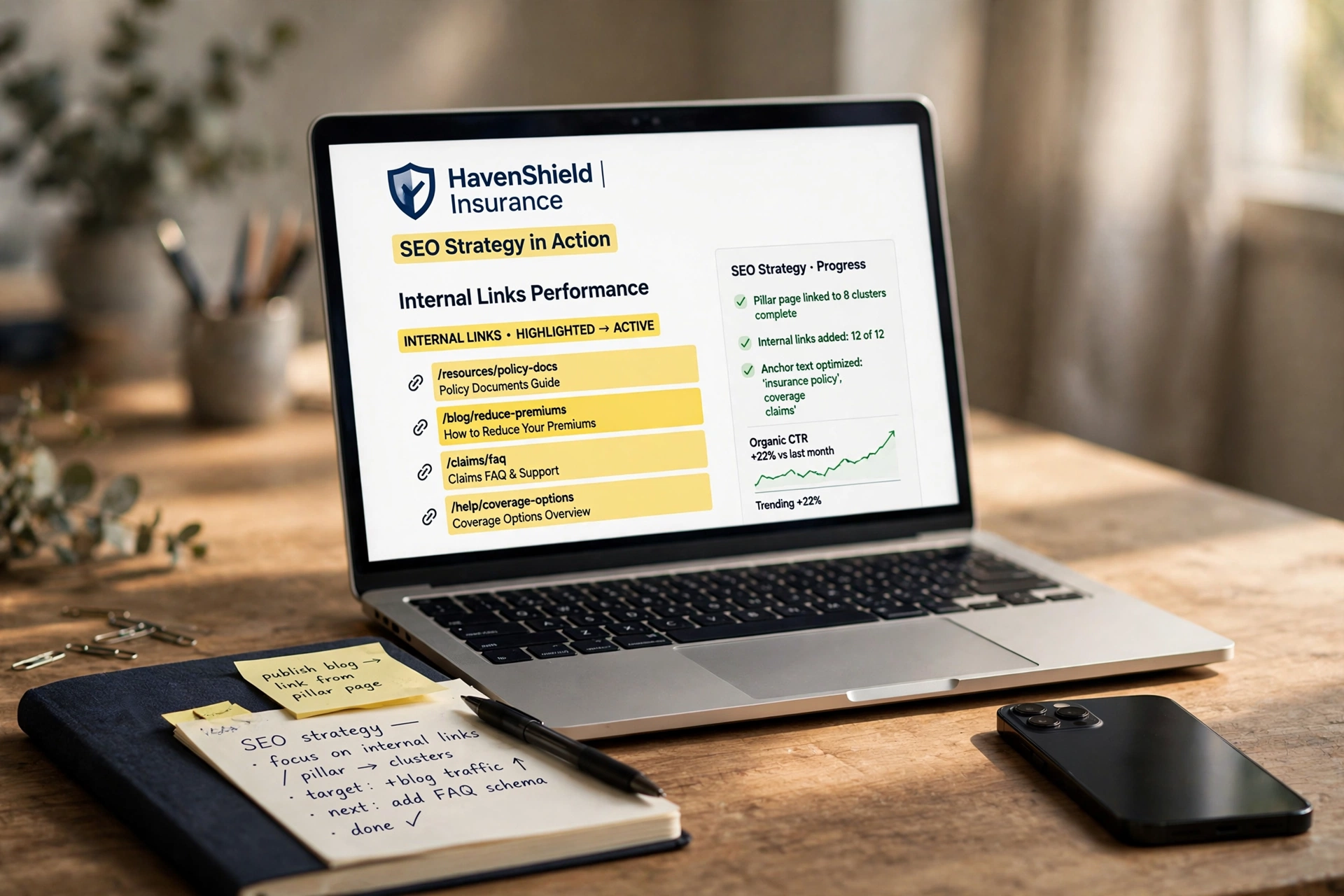
Create a high-authority Pillar Page that comprehensively covers a core topic. Then, surround that pillar with hundreds of Satellite Pages that target long-tail, low-competition queries. This architecture signals to Google and AI engines that you have exhaustive topical authority. For a detailed look at this setup, see our PSEO architecture guide for SaaS and Enterprise growth.
Step 3: Integrate Autonomous Lead Capture
Traffic is useless if it doesn't convert. Replace your generic 'Sign up for our newsletter' pop-up with a context-aware AI agent. If a user is reading about 'organic fabric comparisons,' the agent should ask: 'Want a personalized fabric guide for your specific skin type?' This is where BizAI Intelligence changes the game. By embedding an AI SDR directly into your organic engine, you qualify leads and capture data in real-time, feeding them directly into your CRM via automated inbound lead qualification webhooks.
Step 4: Optimize for GEO and AEO
Ensure your content uses Schema.org markup. Use clear headings and 'answer-first' paragraphs. This ensures that when a user asks Gemini or ChatGPT about your niche, the AI extracts your specific data points and recommends your brand. You can learn more about this in our guide on how to get cited by ChatGPT, SearchGPT, and Perplexity AI.
Common Objections and Data-Backed Answers
Objection 1: "Organic takes too long. I need sales today."
This is the most common misconception. While traditional SEO takes months, a programmatic approach using the Google Indexing API and high-velocity page deployment can generate results in weeks. More importantly, the data shows that organic leads have a 20% higher conversion rate than paid leads because the trust is already established. Relying solely on ads is a gamble on the algorithm; building an engine is an investment in an asset.
Objection 2: "AI content is low quality and will get me penalized."
Generic AI 'slop' will indeed be penalized. However, the strategy we use at BizAI Intelligence isn't about generating generic text; it's about 'Generative Engine Optimization.' We use AI to research real data and structure it for humans and LLMs. According to Forrester research, the brands that will win in 2026 are those that combine AI-scale with human-expert oversight, not those that avoid AI entirely.
Objection 3: "My niche is too small for an organic engine."
Actually, small niches are the easiest to dominate. When you have a narrow focus, you can achieve 'topical saturation'—where you own every single meaningful query in that niche. This makes you the undisputed authority, allowing you to raise prices because you are no longer competing on cost, but on expertise. This is the core of the programmatic SEO case studies we've seen scaling from 0 to 100k visits.
📚
Definition
Topical Saturation occurs when a brand produces such a comprehensive volume of high-quality content across all related long-tail keywords that search engines view them as the definitive source for that entire subject area.
Frequently Asked Questions
How long does it take for an organic lead generation engine to show ROI?
While results vary by niche competition, most e-commerce brands using a programmatic approach see a significant uptick in organic impressions within 30 to 60 days. Because the engine focuses on long-tail, low-competition 'satellite' keywords first, you capture 'low-hanging fruit' traffic immediately while the larger 'pillar' pages build authority over 3 to 6 months. Unlike paid ads, where ROI stops the moment you stop spending, the ROI of an organic engine grows exponentially as the content ages and gains backlinks naturally.
Can an organic engine really replace my Facebook and Google Ads?
For most brands, the goal isn't total replacement but 'strategic decoupling.' The objective is to move your dependency from 100% paid to perhaps 20% paid and 80% organic. In my experience, the most successful brands use paid ads only for 'top-of-funnel' discovery or retargeting, while their organic engine handles the heavy lifting of education, qualification, and conversion. This protects your margins and ensures that a sudden spike in ad costs doesn't bankrupt your acquisition strategy.
How do I ensure my organic content actually captures leads and not just traffic?
Traffic is a vanity metric; leads are a sanity metric. To ensure conversion, you must implement 'Intent-Based Capture.' This means the call-to-action (CTA) must match the content. If someone is reading a 'How-to' guide, don't ask them to 'Buy Now'; ask them to 'Download the Checklist' or 'Get a Free Audit.' By using AI agents that trigger based on scroll velocity and engagement, you can offer the right lead magnet at the exact moment the user is most interested, which is far more effective than a static footer form.
What is the difference between a standard blog and an organic lead generation engine?
A standard blog is a collection of articles written for the sake of 'content.' An organic lead generation engine is a technical system designed for acquisition. The difference lies in the architecture: an engine uses a strict Pillar-Satellite structure, integrates programmatic SEO to cover thousands of variations, and employs automated qualification agents to turn visitors into CRM entries. While a blog is a destination, an engine is a pipeline. This distinction is why brands using AI SDRs and autonomous appointment setters see much higher ROI than those with a simple company blog.
Does the size of my product catalog affect the engine's effectiveness?
Actually, a large catalog is a massive advantage. Every product variation, category, and attribute can be turned into a programmatic page. For example, if you sell 500 types of organic tea, you don't just have one 'Tea' page; you have a unique page for every tea-benefit combination (e.g., 'Best organic tea for sleep and anxiety'). The more products you have, the more 'entry points' you can create for organic traffic. This is the essence of programmatic SEO: how to scale 10,000+ high-converting pages to dominate a market through sheer algorithmic volume.
Final Thoughts on Organic Lead Generation Engine for E-commerce Brands
Stopping the cycle of renting traffic is the only way to build a sustainable, high-margin e-commerce business in 2026. A well-constructed organic lead generation engine for e-commerce brands doesn't just bring in more visitors; it fundamentally changes how your customers perceive your brand—from a vendor to an authority. By combining programmatic SEO, GEO-optimized content, and autonomous AI qualification agents, you build a machine that fills your pipeline while you sleep.
If you are tired of watching your CAC climb while your ad platforms take more of your profit, it's time to pivot toward owned authority. At BizAI Intelligence, we specialize in building these precise engines for high-ticket brands that want to dominate their niche. Don't let your competitors own the answers to your customers' questions.
Ready to stop renting and start owning? Visit bizaigpt.com to build your automated acquisition engine today.
AI Search Accelerator: 1-on-1 Strategy Session
Claim one of the 10 monthly slots. Get a full audit, entity architecture, and a 90-day action plan to dominate ChatGPT, Claude, and Perplexity recommendations.