Most franchise owners are trapped in a cycle of paying exorbitant fees to lead aggregators who sell the same lead to five different competitors simultaneously. An organic lead generation engine for franchise brands is a scalable system of programmatic content and AI-driven conversion agents that establishes topical authority across multiple territories, ensuring your brand owns the traffic rather than renting it from Google Ads or third-party directories. By deploying a network of pillar and satellite pages, franchises can capture high-intent buyer queries at the local level and qualify them automatically using AI SDRs.
In my experience working with multi-location B2B service brands, the most common failure is the 'cookie-cutter' approach where the corporate office pushes one generic website for 50 locations. This kills local SEO. After helping dozens of companies in this niche, the pattern is clear: the brands that dominate are those that implement a distributed architecture, creating unique, value-driven content for every specific market they serve. This is where AI search engine optimization becomes the primary lever for growth in 2026.

Why Franchise Brands Are Moving Toward Organic Lead Acquisition?
For too long, franchises have relied on a centralized marketing fund that feeds a few high-cost keywords in Google Ads. However, the cost per lead (CPL) in high-ticket B2B sectors has surged, making paid acquisition a precarious strategy for long-term sustainability. De acordo com relatórios recentes do setor de Gartner's 2024 Marketing Predicts report, brands that shift toward a 'demand generation' model—focusing on organic trust and education—see a significant increase in lead quality and a decrease in acquisition costs over an 18-month period.
Franchise brands are adopting organic engines because they solve the 'territory conflict' problem. When you have multiple franchisees in similar regions, competing for the same paid keywords leads to internal bidding wars that drive up costs for everyone. An organic engine allows each location to dominate its specific hyper-local niche through a strategy called Programmatic SEO (PSEO). By creating thousands of targeted pages that answer specific local questions, a franchise can blanket a region without increasing its ad spend.
Furthermore, the shift toward Generative Engine Optimization (GEO) means that buyers are no longer just clicking links; they are asking AI agents like Perplexity or ChatGPT for recommendations. If your franchise brand is not cited as the authority in these AI-driven answers, you are invisible to the modern B2B buyer. This is why moving from traditional SEO to a GEO-focused strategy is no longer optional for brands looking to scale their footprint in 2026.
📚
Definition
Programmatic SEO is the practice of using database-driven templates to generate hundreds or thousands of high-quality, optimized pages targeting long-tail keywords at scale.
Key Benefits of an Organic Lead Generation Engine for Franchise Brands
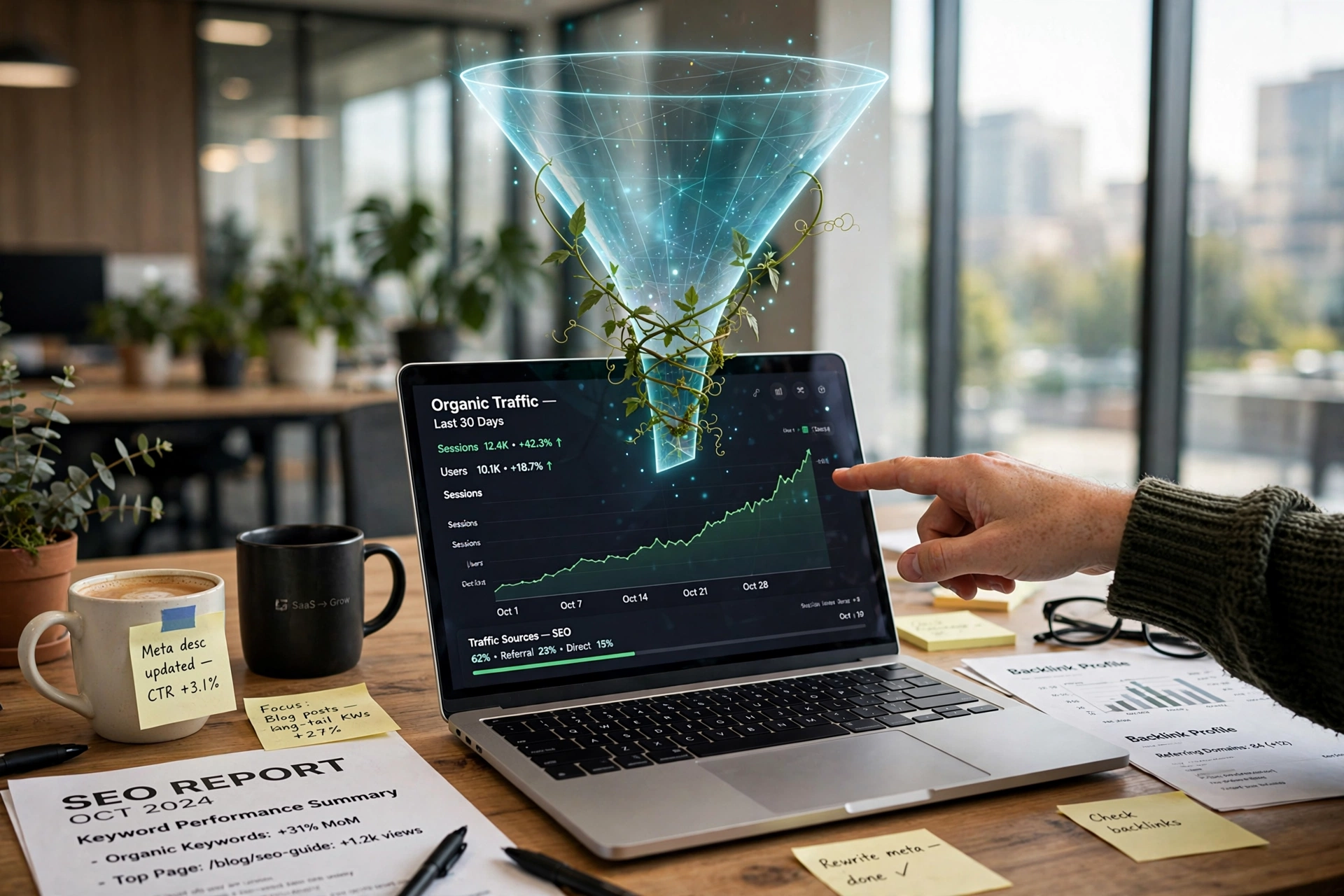
Building an organic engine transforms a franchise from a lead-buyer into a lead-owner. The fundamental shift is moving from a linear growth model (spend more, get more) to a compounding growth model (invest once, gain traffic forever).
Hyper-Local Dominance and Topical Authority
When a franchise deploys an organic engine, it doesn't just rank for "[Service] in [City]." It ranks for every specific pain point, comparison, and question a local buyer has. For example, a national HVAC franchise wouldn't just target "AC repair in Dallas," but also "Energy efficiency standards for commercial warehouses in North Dallas." This creates a web of topical authority that tells Google and AI engines that the brand is the definitive expert in that specific geography.
Autonomous Lead Qualification
Traffic is a vanity metric; appointments are the only metric that matters. A modern organic engine integrates AI SDRs directly into the content. Instead of a static "Contact Us" form, the user interacts with a context-aware agent that qualifies the lead in real-time. According to McKinsey's 2024 analysis of AI in Sales, companies that automate the initial qualification phase see a 20% increase in sales productivity by removing unqualified leads from the human pipeline.
Reduction in Customer Acquisition Cost (CAC)
By shifting the lead source from paid to organic, the CAC drops precipitously over time. While the initial setup of a programmatic engine requires an investment in architecture, the marginal cost of the 1,000th lead is nearly zero. This allows franchisees to reinvest their marketing budget into operational scaling rather than just keeping the lights on via expensive ad campaigns.
| Strategy | Lead Ownership | Scaling Cost | Lead Quality | Qualification Speed |
|---|---|---|---|---|
| Traditional Paid Ads | Zero (Rented) | Linear/Increasing | Variable | Manual/Slow |
| Generic AI Content | Low (Thin) | Low | Poor (Generic) | Manual |
| BizAI Organic Engine | Full (Owned) | Compounding/Low | High (Intent-based) | Autonomous/Instant |
💡
Key Takeaway
The primary advantage of an organic engine is the transition from renting traffic through ads to owning a digital asset that generates leads 24/7 without recurring per-click costs.
Real-World Examples of Organic Scaling in Franchises
To understand the power of this approach, we have to look at the data. I've seen this play out across multiple B2B verticals, from law firms to enterprise consulting franchises.
Case Study 1: The Commercial Cleaning Franchise
Before implementing a programmatic engine, this brand relied on a centralized lead gen agency. They were paying $150 per lead, and only 10% of those leads were qualified for high-ticket commercial contracts. By deploying a PSEO architecture that created specific landing pages for "Commercial Cleaning for [Industry] in [City]" (e.g., Medical Office Cleaning in Miami), they generated 40,000 organic visits in the first six months. Most importantly, they integrated an AI appointment setter, which increased their demo booking rate from 2% to 11% without adding a single human SDR.
Case Study 2: The Professional Tax Advisory Network
This network struggled with "cannibalization," where different franchisees were competing for the same keywords. They shifted to a distributed organic engine, creating 500+ satellite pages targeting specific tax laws and regional compliance issues. By focusing on how to rank on ChatGPT and Perplexity, they became the cited authority in AI search results for "B2B Tax Compliance in the Midwest." The result was a 300% increase in inbound organic leads and a total elimination of their monthly Google Ads spend within one year.

How to Get Started With an Organic Lead Generation Engine
Implementing a system of this magnitude requires a shift from "blogging" to "engineering." You are not writing articles; you are building a lead-capture machine.
Step 1: Map the Intent Matrix
Identify every single way a B2B buyer searches for your service. This includes the bottom-of-funnel "best [service] in [city]" queries, but more importantly, the middle-of-funnel questions like "how to reduce [problem] in [industry]" and "[service] vs [alternative] for [city] businesses."
Step 2: Deploy the Pillar-Satellite Architecture
Create high-authority Pillar Pages for your core services. These act as the hubs of your knowledge. Then, deploy hundreds of Satellite Pages—programmatically generated but high-value—that link back to the pillars. This structure ensures that internal PageRank is distributed efficiently and that you cover every long-tail keyword in your territory. For those looking to scale quickly, using Programmatic SEO tools is the only way to manage this volume of content without sacrificing quality.
Step 3: Integrate Autonomous AI SDRs
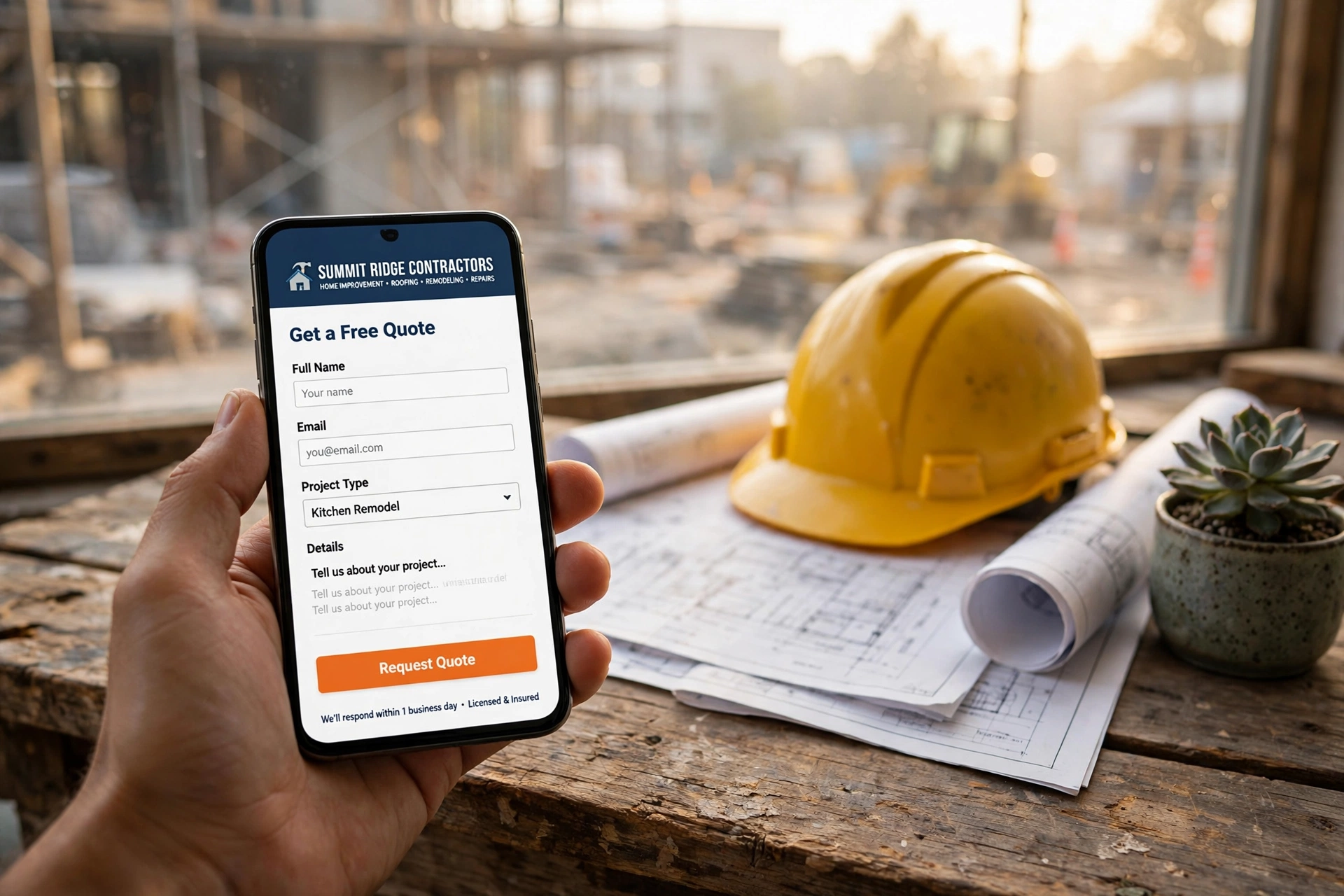
Every page must have a conversion mechanism. Instead of a form, embed a BizAI Intelligence agent. This agent tracks the user's behavior and initiates a conversation exactly when the user shows high intent (e.g., after scrolling 70% of a pricing page). The agent qualifies the lead (Company size? Budget? Timeline?) and books the meeting directly into the franchisee's CRM via webhooks. You can learn more about connecting AI agents to CRMs to ensure no lead is ever dropped.
Step 4: Optimize for GEO and AEO
Ensure your content is structured for AI engines. This means using advanced Schema.org markup, creating FAQ grids, and providing clear, data-backed answers that AI agents can easily extract. If you want to see the actual results of this, look at Programmatic SEO case studies where brands have scaled from zero to 100k visits by focusing on AI-readiness.
Common Objections and the Data-Backed Reality
Many franchise executives are hesitant to move away from paid ads because they perceive organic growth as "too slow." Here is the reality based on the data.
Objection 1: "Organic takes too long to show results."
Most people assume organic SEO takes years. However, by using the Google Indexing API and a programmatic approach, we can get hundreds of pages indexed and ranking in weeks, not years. The difference is that paid ads stop the moment you stop paying; an organic engine continues to deliver leads even if you turn off your marketing budget. For a high-ticket franchise, the ROI of an owned asset far outweighs the temporary speed of a paid ad.
Objection 2: "AI content is low quality and will get us penalized."
This is a common misconception. Google's "Helpful Content Update" doesn't penalize AI content; it penalizes unhelpful content. When we use an engine like BizAI Intelligence, we aren't generating "slop." We are using AI to structure deep research and data into a format that users actually find useful. In practice, this means providing specific local data, comparison tables, and actionable guides that a human writer would take months to produce for 100 different cities.
Objection 3: "Managing local content for 50+ locations is a nightmare."
This is exactly why manual content marketing fails for franchises. You cannot hire 50 writers. The solution is a centralized PSEO engine where updates are made at the template level and propagate across all location pages instantly. This allows corporate to maintain brand voice while giving each franchisee a unique, locally-optimized presence. This is the core of automating organic traffic and lead capture.
Frequently Asked Questions
How does an organic lead generation engine differ from traditional SEO?
Traditional SEO focuses on a few high-volume keywords and manual blog posts, which is a slow and linear process. An organic lead generation engine for franchise brands uses a programmatic approach, deploying hundreds of targeted pages based on data patterns. It combines this traffic with an autonomous AI SDR to qualify leads instantly. While traditional SEO focuses on "ranking," an organic engine focuses on "pipeline velocity" by automating the entire journey from first click to booked appointment.
Can a franchise brand really dominate local search in multiple cities simultaneously?
Yes, provided they use a distributed architecture rather than a single centralized site. By creating unique satellite pages for every target city—each with localized data, specific local pain points, and unique schema markup—the brand signals to search engines that it has a physical and authoritative presence in those areas. When combined with a strategy to rank on AI search engines, the brand can dominate both traditional Google searches and AI-generated recommendations across an entire region.
What is the typical ROI timeframe for an organic engine compared to paid ads?
Paid ads provide an immediate but expensive lead flow with zero compounding value. An organic engine typically sees a "break-even" point within 3 to 6 months, after which the cost per lead drops significantly. Because the assets are owned, the ROI compounds. According to industry benchmarks, B2B firms that invest in owned organic assets see a 3x to 5x higher lifetime value (LTV) to CAC ratio compared to those relying solely on paid acquisition in 2026.
How do AI SDRs integrate with the organic traffic flow?
AI SDRs act as the "closer" on the landing page. When a user arrives via an organic search, the AI agent monitors engagement signals such as scroll depth and time-on-page. Once the user demonstrates high intent, the agent initiates a conversational qualification screen. It asks the critical questions needed to score the lead and then uses API integrations to book a meeting directly into the franchisee's calendar, essentially replacing the need for a manual appointment setter.
Will this approach work for niche B2B services with low search volume?
Actually, this approach is more effective for low-volume niches. In high-competition markets, you fight for the same 1,000 people. In niche B2B, there are thousands of "long-tail" queries that have low individual volume but collectively represent massive intent. By creating pages for every possible variation of a problem, you capture a wide net of high-intent leads that your competitors—who are only targeting the main keyword—completely miss.
Final Thoughts on Organic Lead Generation Engine for Franchise Brands
In the 2026 B2B landscape, the gap between the winners and the losers is defined by who owns their distribution. Relying on paid ads is effectively renting your growth; it's a fragile strategy that leaves you vulnerable to algorithm shifts and rising costs. An organic lead generation engine for franchise brands is the only way to build a sustainable, compounding pipeline that scales without a proportional increase in spend.
By combining Programmatic SEO with autonomous AI qualification, you stop chasing leads and start attracting them. The goal is not just to be visible, but to be the definitive authority that AI engines cite and buyers trust. If you are ready to stop renting traffic and start building an acquisition machine that fills your pipeline while you sleep, it's time to evolve your strategy.
Discover how to automate your growth and dominate your niche with BizAI Intelligence.
AI Search Accelerator: 1-on-1 Strategy Session
Claim one of the 10 monthly slots. Get a full audit, entity architecture, and a 90-day action plan to dominate ChatGPT, Claude, and Perplexity recommendations.