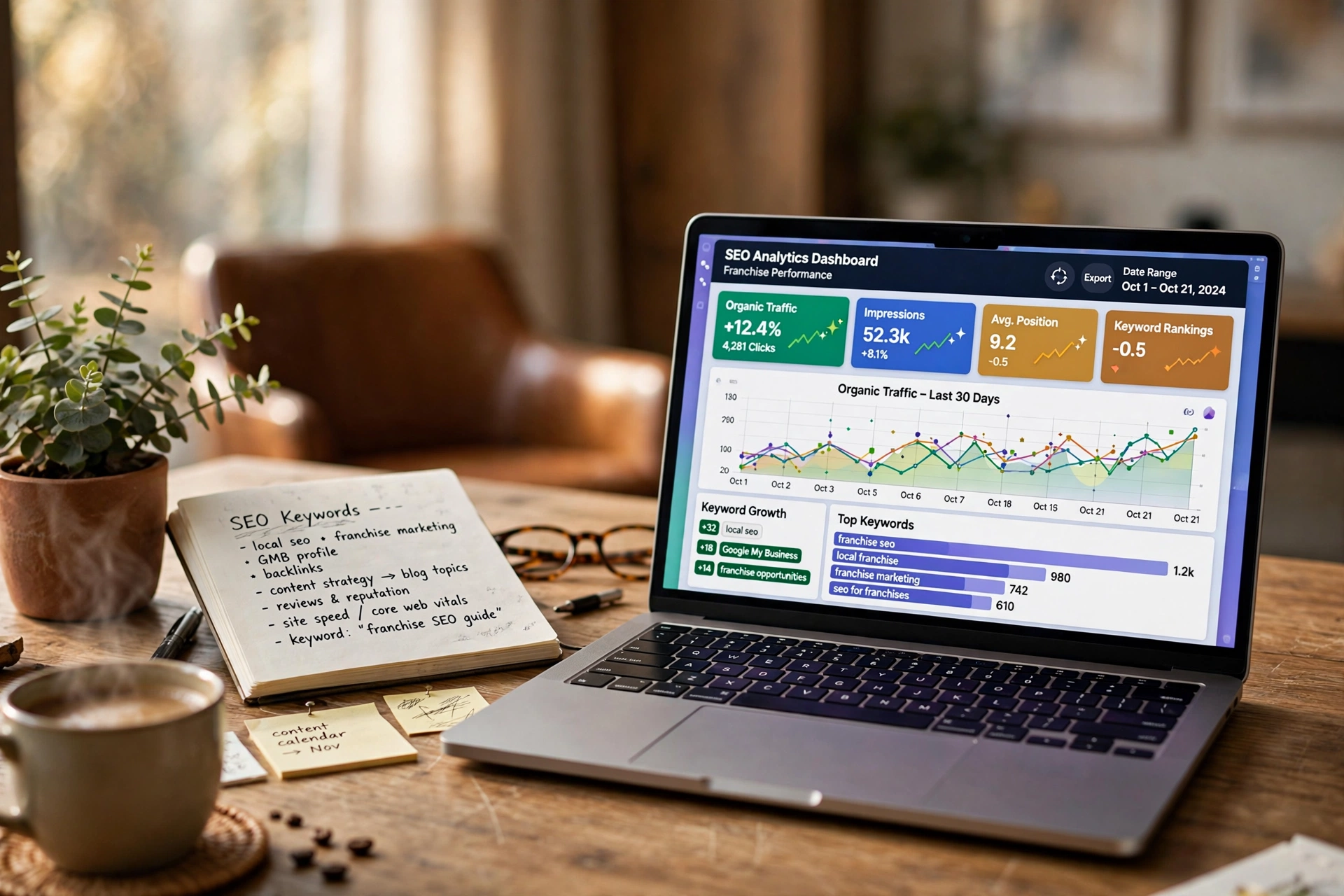
The biggest failure in most SaaS growth strategies is the over-reliance on paid acquisition, which creates a linear growth curve where leads stop the moment the budget dries up. To break this cycle, founders need an organic lead generation engine for SaaS companies: a systematic architecture of high-intent content hubs and AI-driven qualification agents that transform your domain into a compounding asset. This engine doesn't just attract traffic; it programmatically captures intent and converts anonymous visitors into qualified demos without manual SDR intervention.
In my experience working with high-growth B2B software companies, the pattern is always the same: companies that treat SEO as a 'blogging exercise' fail, while those that treat it as a technical acquisition engine dominate. When we developed the architecture for BizAI Intelligence, we discovered that the most effective way to scale is to replace generic content with a programmatic approach that targets decision-stage queries at scale. For those scaling their acquisition, understanding the PSEO Architecture Guide for SaaS & Enterprise B2B Growth is the first step toward decoupling growth from ad spend.

Why SaaS Companies are Transitioning to Organic Engines in 2026
The cost of customer acquisition (CAC) in the SaaS sector has reached an unsustainable peak. According to a recent Gartner report, B2B marketing costs have risen significantly as the 'pay-to-play' model of LinkedIn and Google Ads becomes saturated. SaaS companies are now pivoting toward organic engines because they offer a compounding return on investment; while a paid ad is a rental, a high-authority page is an owned asset. In 2026, the shift is even more pronounced due to the rise of Generative Engine Optimization (GEO).
Most SaaS brands are realizing that traditional keyword stuffing is dead. The new frontier is building 'Topical Authority'—the process of proving to both humans and AI models that your software is the definitive solution for a specific problem. According to McKinsey's analysis of digital transformation trends, companies that leverage AI-integrated content strategies see a significantly higher conversion rate because they answer the user's problem before the user even reaches the pricing page. This is why the modern organic engine isn't just about ranking; it's about being the cited source in AI-driven search results.
Furthermore, the shift toward AI-led search means that if your brand isn't structured for LLMs to find, you are invisible. This has led to a surge in the adoption of GEO Vs Traditional SEO: Rank Your Brand in AI Engines in 2026, allowing SaaS companies to capture leads from Perplexity, Claude, and SearchGPT. When you own the organic space, you control the narrative, the timing of the lead's entry, and the cost of the acquisition.
Key Benefits of an Organic Lead Generation Engine for SaaS
Building a systematic organic engine provides a competitive moat that cannot be replicated overnight by a competitor with a larger ad budget. Unlike paid leads, which are often 'window shoppers,' organic leads are typically deeper in the buying cycle. They are searching for a solution to a specific pain point, making them far more likely to convert into high-LTV (Lifetime Value) customers.
Drastic Reduction in Long-Term CAC
The primary advantage is the collapse of the blended CAC. By generating a steady stream of inbound leads, you reduce the need for expensive outbound cold-calling and high-CPC keywords. When a SaaS company moves from 100% paid to a 60/40 organic split, the efficiency of the sales team skyrockets because they are dealing with 'warm' leads who already trust the brand's authority. This is often achieved by implementing How to Automate Organic Traffic & Lead Capture with AI, which ensures no lead falls through the cracks.
Establishing Instant Market Authority
When a prospect finds your software via a detailed, high-value guide that solves their problem, the perceived value of your software increases. You are no longer just a vendor; you are a thought leader. This authority simplifies the closing process. According to Forrester research, B2B buyers are 70% through their journey before they ever contact a sales representative. If your organic engine has provided the answers they need during that 70%, the final 30% (the demo) is nearly guaranteed.
Predictable and Compounding Pipeline Growth
Paid ads have a linear relationship: more money equals more leads. Organic engines have an exponential relationship. A page created today continues to generate leads for years. This compounding effect allows SaaS founders to predict their pipeline growth based on traffic trends rather than budget fluctuations. To maximize this, many are now using Top AI Search Optimization Tools for Modern Growth Teams to identify gap keywords that competitors are ignoring.
💡
Key Takeaway
The ultimate goal of an organic engine is to transform your website from a digital brochure into a 24/7 automated salesperson that attracts, educates, and qualifies leads without human intervention.
Comparison of Lead Acquisition Approaches
| Feature | Traditional Paid Ads | Generic AI Content | BizAI Organic Engine |
|---|---|---|---|
| Cost Scalability | Linear (Costs rise with leads) | Low (Cheap but low quality) | Exponential (Cost drops per lead) |
| Lead Intent | Mixed (High noise) | Low (Informational only) | High (Decision-stage intent) |
| Longevity | Zero (Stops with budget) | Short (AI-slop gets penalized) | Permanent (Compounding authority) |
| Conversion | Manual SDR Follow-up | High Bounce Rate | Autonomous AI SDR Qualification |
Real-World Examples of Organic Scaling in SaaS
To understand the power of this approach, we can look at two distinct scenarios. The first is a Series A Fintech SaaS that was spending $15,000/month on LinkedIn Ads with a declining conversion rate. They had a high-quality product but were fighting for visibility in a crowded market. By deploying a programmatic SEO strategy focusing on "Comparison" and "Alternative to [Competitor]" pages, they built a massive satellite network of high-intent landing pages. Within six months, their organic lead volume surpassed their paid volume, and their blended CAC dropped by 42%. They stopped renting traffic and started owning it.
The second example is a niche HR-Tech SaaS that focused on very specific regulatory pain points. Instead of targeting generic keywords like "HR Software," they built an organic lead generation engine for SaaS companies that targeted long-tail queries related to specific labor laws and compliance updates. By creating 200+ highly technical pages that answered specific compliance questions, they became the go-to authority for HR directors. This resulted in a 300% increase in demo requests. The magic happened when they integrated an AI Sales Agent that qualified the lead's company size and urgency before the meeting was even booked. This is the exact result seen in several Programmatic SEO Case Studies: Scaling 0 to 100k Organic Visits.

How to Build Your Organic Lead Generation Engine Step-by-Step
Building an organic engine is a technical endeavor, not a creative one. If you treat it like a blog, you will fail. You must treat it like a product. The process involves mapping the buyer's journey and creating a technical infrastructure that mirrors that journey.
Step 1: Intent Mapping and Keyword Clustering
You must move beyond "high volume" keywords. Focus on "high intent" keywords. In the SaaS world, these are terms like "best [category] software for [use case]" or "how to solve [specific problem] with [software type]." Group these into clusters: Pillar pages for the broad category and Satellite pages for the specific long-tail queries. This creates a silo effect that tells Google and AI models you have exhaustive coverage of the topic.
Step 2: Deploying Programmatic Infrastructure
Writing 500 pages manually is impossible. You need a programmatic approach where a single high-quality template is populated with structured data. This allows you to launch hundreds of optimized pages in weeks rather than years. This is the core of the Programmatic SEO: How to Scale 10,000+ High-Converting Pages strategy. Ensure your pages include structured schema markup (FAQ, SoftwareApplication) to increase the chances of winning a featured snippet or being cited by a chatbot.
Step 3: Integrating the AI Qualification Layer
Traffic is a vanity metric; leads are a sanity metric. Every page in your organic engine must have a conversion mechanism. Instead of a static "Contact Us" form, use an autonomous AI SDR. These agents track user behavior—such as how long they spend on a specific feature section—and initiate a conversation to qualify the lead. For the best results, you should learn How to Connect AI Sales Agents to CRM & Webhooks for Auto-Booking, ensuring that qualified leads land directly on your sales team's calendar.
Step 4: The BizAI Intelligence Advantage
For most SaaS founders, the technical overhead of building this is too high. This is where BizAI Intelligence changes the game. We don't just give you a tool; we deploy the entire engine. We handle the programmatic page generation, the GEO optimization for AI search engines, and the deployment of the autonomous AI SDR. We effectively replace the need for a content agency and a manual lead-qualification team with a single, automated system that scales your organic footprint while you sleep.
📚
Definition
Programmatic SEO (PSEO) is the practice of creating high-quality, template-based pages at scale to target thousands of low-competition, high-intent long-tail keywords.
Common Objections to Organic Lead Generation Engines
Many SaaS executives hesitate to move away from paid ads because of a few common misconceptions. Let's address them with data.
Objection 1: "Organic takes too long to see results."
Most people assume SEO takes years. This is true for old-school blogging. However, using the Google Indexing API and programmatic architecture, we can get hundreds of pages indexed and ranking for long-tail keywords in weeks. In practice, this means you start seeing a trickle of high-intent leads almost immediately, which then snowballs into a flood as the domain authority grows.
Objection 2: "AI content is low quality and will get penalized."
Google doesn't penalize AI content; it penalizes unhelpful content. The mistake most companies make is using generic LLM output. A professional organic engine uses a "Human-in-the-Loop" or data-driven approach where AI is used to structure and scale proven, high-value frameworks. When content is grounded in real data and solved problems, it ranks regardless of how it was produced.
Objection 3: "We don't have the internal resources to manage 500+ pages."
This is precisely why you automate. An organic engine is designed to be a "set and forget" system. Once the architecture is established and the AI SDR is handling the qualification, the only maintenance required is high-level strategic oversight. Comparing the ROI of a one-time engine setup versus a permanent monthly ad spend makes the decision obvious. For a deeper look at cost-efficiency, see AI SDR Vs Human SDR: Which Delivers Better ROI in 2026?.
Frequently Asked Questions
How long does it actually take for an organic lead generation engine for saas companies to generate a positive ROI?
While organic growth is traditionally seen as a long game, a programmatic approach accelerates this timeline. Typically, you will see an increase in indexation and initial lead flow within 30 to 60 days. However, the "hockey stick" growth usually occurs between months 3 and 6, as Google recognizes the topical authority of your pillar-and-satellite structure. Because the cost of lead acquisition drops significantly compared to paid ads, the ROI often becomes positive much faster than traditional content marketing, especially when paired with an AI SDR that increases the lead-to-demo conversion rate.
Does a programmatic SEO approach risk getting my site penalized by Google?
Only if you produce "thin" or duplicate content. The key to a successful organic engine is providing unique value on every page. By using structured data and solving specific user problems (e.g., creating a page for every possible integration your SaaS offers), you are providing a better user experience. Google's 2024 and 2025 core updates focused heavily on "Helpful Content." As long as your programmatic pages answer a specific query and provide a clear path to a solution, they are rewarded, not penalized. This is why technical rigor in the architecture is essential.
How do AI SDRs integrate with my existing SaaS sales funnel?
Modern AI SDRs act as a bridge between the organic traffic and your CRM. They are embedded directly into the pages of your organic engine. When a visitor shows high engagement (e.g., reading a technical guide for 3 minutes), the AI initiates a qualification sequence. It asks 3-5 targeted questions to determine budget, authority, and need. Once qualified, the AI uses an API connection to book a meeting directly into your team's HubSpot or Salesforce calendar. This eliminates the "lead leakage" that occurs when a human SDR takes 24 hours to respond to a form fill.
What is the difference between a lead generation engine and traditional content marketing?
Traditional content marketing is often about "awareness"—writing blog posts and hoping they drive traffic. A lead generation engine is about "acquisition." It is built on a strict architecture of intent-based clusters. Every piece of content is a calculated move to capture a specific type of user at a specific stage of the buying journey. While content marketing is a cost center, a lead generation engine is a revenue driver. It integrates the traffic source (SEO/GEO) directly with the conversion mechanism (AI SDR), creating a closed-loop system for growth.
Can an organic engine help me rank on AI search engines like Perplexity or SearchGPT?
Absolutely. In fact, it is the most effective way to do so. AI search engines do not look for keywords; they look for entities and authoritative relationships. By building a dense network of interconnected pages with clear schema markup and cited data, you make it easy for LLMs to identify your SaaS as the definitive solution. This is the essence of Generative Engine Optimization (GEO). When your organic engine is built correctly, AI engines will not just list your website; they will actively recommend your software as the answer to the user's prompt.
Final Thoughts on Organic Lead Generation Engine for SaaS Companies
In 2026, the gap between the SaaS companies that own their traffic and those that rent it will become an insurmountable divide. Relying on paid ads is a fragile strategy that leaves your growth at the mercy of platform algorithm changes and rising costs. Building a robust organic lead generation engine for SaaS companies is the only way to ensure sustainable, compounding growth and a dominant market position.
By combining programmatic SEO, GEO for AI search engines, and autonomous AI SDRs, you can transform your domain into a powerhouse that captures high-intent leads and books demos 24/7. The transition from linear to exponential growth starts with the architecture you build today. If you are ready to stop wasting your budget on overpriced clicks and start building a self-sustaining acquisition machine, the solution is already here.
Stop renting your growth. Build your engine with BizAI Intelligence and dominate your niche through algorithmic authority.
AI Search Accelerator: 1-on-1 Strategy Session
Claim one of the 10 monthly slots. Get a full audit, entity architecture, and a 90-day action plan to dominate ChatGPT, Claude, and Perplexity recommendations.