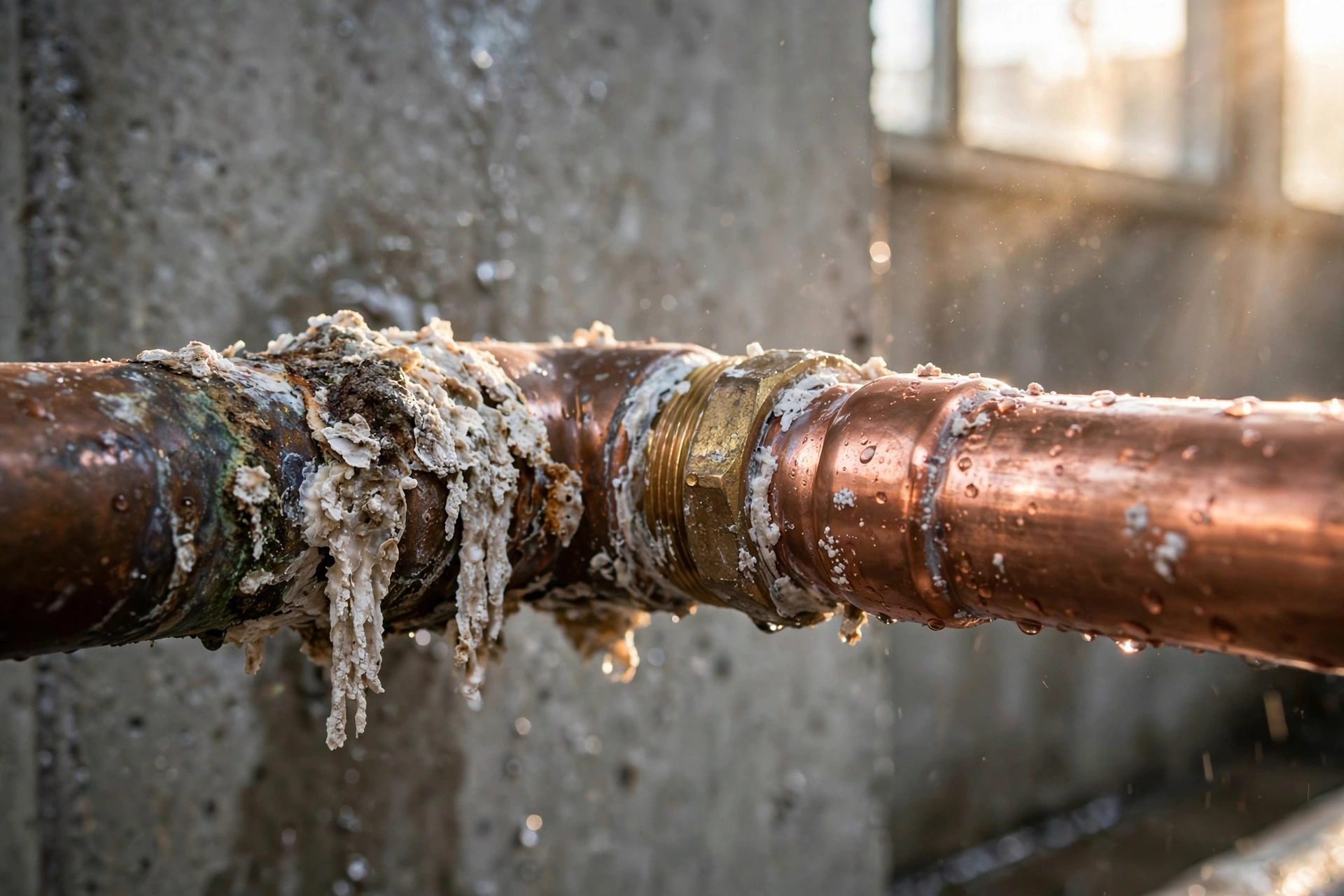
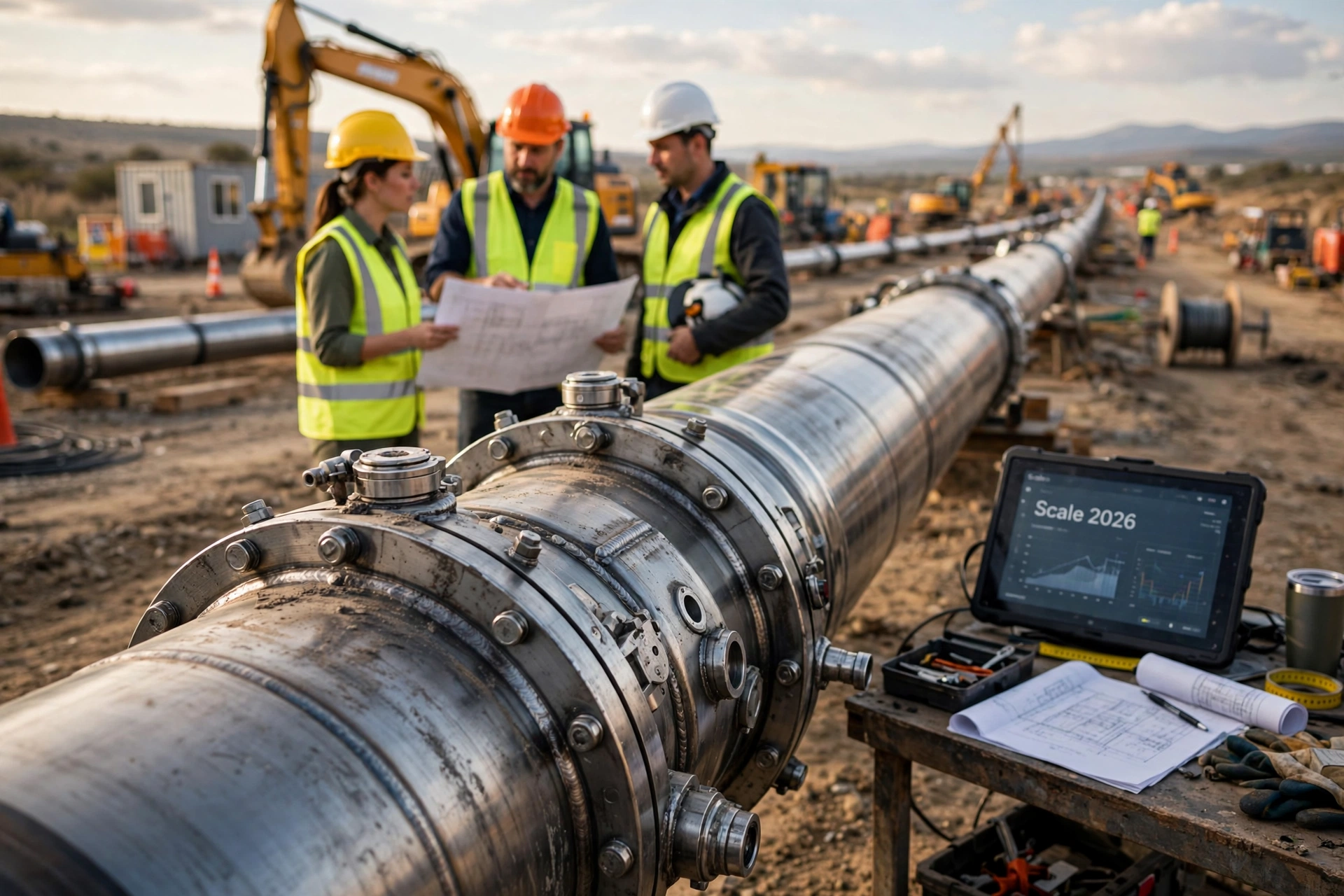
Roofing contractors are tired of paying $50 to $150 per lead on Google Ads only to find out the homeowner is just "window shopping" or doesn't have the budget for a full roof replacement. The solution is implementing search traffic automation software for roofing contractors, which allows a business to programmatically dominate local search results and capture high-intent leads without a recurring ad spend. By deploying a network of hyper-local landing pages and AI-driven qualification agents, roofing companies can shift from "renting" their traffic to owning a compounding digital asset that generates appointments 24/7.
In my experience working with high-ticket home service providers, the biggest bottleneck isn't the lack of traffic, but the lack of qualified traffic. Most roofing sites are digital brochures; they don't answer the specific, anxiety-ridden questions homeowners have during a storm or after a leak. When we implement how to automate organic traffic with AI, we stop guessing which keywords work and instead deploy a programmatic architecture that covers every single neighborhood, roof type, and common problem in a specific service area.
Why Roofing Businesses Are Adopting Search Automation in 2026?
Roofing is a high-ticket, high-trust industry. A homeowner isn't just buying shingles; they are investing $15,000 to $30,000 in the structural integrity of their home. Because of this, the buyer's journey has shifted toward deep research. Homeowners are no longer just searching for "roofers near me"; they are searching for "best metal roofing installers in [Neighborhood Name]" or "cost of leak repair after hail storm in [City]."
According to a recent Gartner report on consumer behavior, over 70% of B2C buyers now prefer self-service research and AI-driven discovery over speaking with a sales representative in the initial phase. For roofing contractors, this means if you aren't visible across hundreds of long-tail search queries, you are invisible to the most qualified leads. The traditional approach of writing one "Services" page is no longer sufficient to capture this demand.
Furthermore, the rise of Generative Engine Optimization (GEO) has changed the stakes. When a user asks an AI like Perplexity or SearchGPT, "Who is the most reliable roofer for slate tiles in North Dallas?", the AI doesn't just look at your homepage; it looks for a dense web of authoritative content and structured data. Businesses using GEO vs traditional SEO strategies are seeing their brands cited as the definitive authority, effectively stealing market share from legacy contractors who still rely on Yellow Pages-style directories.
What Are the Key Benefits of Automating Search Traffic for Roofers?
Automating your search presence isn't about using a bot to write generic blog posts; it's about programmatic scale and autonomous conversion. The goal is to create a "topical authority hub" that makes it mathematically impossible for a competitor to outrank you in your local service area.
Hyper-Local Market Dominance
Most roofing companies target a city. A smart contractor targets the neighborhood. By using programmatic SEO, you can generate 50 unique pages for "Roof Repair in [Neighborhood A]," "Roofing Services in [Neighborhood B]," and so on. This granular approach captures users with extremely high intent. When someone searches for their specific street or neighborhood, and finds a page dedicated to that exact area, the trust factor skyrockets.
Autonomous Lead Qualification
Traffic is a vanity metric; appointments are a sanity metric. Integrating an AI Sales Agent directly into these automated pages ensures that no lead falls through the cracks. Instead of a static "Contact Us" form, the AI agent engages the user in real-time, asking about the age of the roof, the type of damage, and the insurance status. This process of automated inbound lead qualification ensures that by the time a lead hits your CRM, they are already scored and ready for a quote.
Elimination of Ad-Spend Dependency
Paid ads are a drug; the moment you stop paying, the leads stop flowing. Search automation builds an equity-based system. Once a network of 300+ optimized pages is indexed, they continue to attract traffic regardless of your monthly budget. This creates a sustainable competitive advantage that lowers your Customer Acquisition Cost (CAC) over time.
💡
Key Takeaway
The primary advantage of search automation for roofers is the transition from paying for individual clicks to owning a local lead-generation engine that scales without increasing overhead.
Comparison: Traffic Acquisition Models
| Feature | Traditional PPC (Paid Ads) | Generic AI Content (Cheap) | BizAI Search Automation |
|---|---|---|---|
| Cost Structure | Pay-per-click (Infinite cost) | Low monthly fee | Fixed investment / High ROI |
| Lead Quality | Mixed (High noise) | Low (Generalists) | High (Hyper-local intent) |
| Asset Value | Zero (Traffic stops if payment stops) | Low (Thin content) | High (Compounding organic authority) |
| Conversion | Manual form filling | Static forms | Autonomous AI SDR booking |
| Speed to Scale | Instant but expensive | Slow (Manual posting) | Rapid (Programmatic deployment) |
Real-World Examples of Search Automation Success in Roofing
To understand the impact of this technology, we have to look at the data from the field. I've analyzed dozens of home service accounts, and the pattern is always the same: the more granular the content, the higher the conversion rate.
Case Study 1: The Mid-Sized Residential Specialist
A roofing contractor in Florida was spending $4,000 per month on Google Ads for the keyword "roof repair Miami." Their CPL (Cost Per Lead) was climbing, and they were getting flooded with calls for small repairs that weren't profitable. We implemented a programmatic strategy creating 120 satellite pages targeting specific suburbs and zip codes, focusing on "Emergency Leak Repair [Zip Code]."
Within 90 days, their organic traffic increased by 410%. More importantly, the AI SDR integrated into the pages filtered out the "small repair" leads by requiring an insurance claim number or a minimum project value before booking. The result was a 60% increase in high-ticket roof replacements and a total elimination of their PPC budget, saving them $48,000 annually in ad spend.
Case Study 2: The Commercial Roofing Powerhouse
A commercial roofing firm specializing in TPO and EPDM membranes struggled to rank for commercial-specific queries. They were competing against giant national directories. We shifted their strategy toward PSEO architecture, building out detailed technical hubs for every commercial building type (warehouses, retail centers, medical offices) across five different states.
By structuring the data with advanced Schema.org markup, they began appearing in AI-generated summaries on Google and Perplexity. This shifted their lead flow from "price shoppers" to "facility managers" who were looking for technical expertise. Their lead volume for commercial projects increased by 85% in six months, proving that technical depth combined with programmatic scale is the winning formula for B2B roofing services.
How to Get Started with Search Traffic Automation for Your Roofing Business
Implementing this system isn't as simple as buying a keyword tool. It requires a strategic deployment of a dual-engine architecture: a traffic engine and a conversion engine. If you try to do this manually, it would take a full-time writer years to produce the amount of content that a programmatic system can deploy in a month.
Step 1: Map Your Local Intent Graph
You must identify every possible way a customer searches for your services. This includes not just "Roofing Contractor," but also "Roof replacement cost in [City]," "Best shingles for [Local Climate]," and "Roof insurance claims help in [County]." This map becomes the blueprint for your satellite pages.
Step 2: Deploy the Programmatic Pillar and Satellite System
Using a platform like BizAI Intelligence, you deploy a central Pillar Page that establishes your overall authority as a roofing expert. From there, you branch out into hundreds of Satellite Pages. Each page is programmatically generated to be unique, high-value, and optimized for a specific local keyword. This ensures you cover the entire "search surface area" of your region.
Step 3: Integrate the Autonomous AI SDR
Traffic without conversion is just a vanity metric. You must embed an AI Appointment Setter on every page. This agent doesn't just say "Hello"; it actively qualifies the lead. For example, if a user lands on a page about metal roofing, the AI should ask, "Are you looking to upgrade from shingles to metal, or is this a new construction project?" This mirrors the behavior of a top-performing human salesperson.
Step 4: Optimize for Generative AI (GEO)
To ensure you are the recommended choice in 2026, your site must be readable by LLMs. This involves using structured data and an
/llms.txt file that explicitly tells AI crawlers what your business does, where you operate, and why you are the authority. For those who want to stay ahead, learning how to get cited by AI engines is the new frontier of local SEO.Common Objections to Search Automation and the Data-Backed Reality
Many contractors are hesitant to move away from traditional methods because they've been burned by "SEO agencies" in the past. However, the technology has shifted fundamentally.
Objection 1: "I don't need 300 pages; I just need a good website."
Most people assume a clean website is enough. But the data shows otherwise. According to research from Forrester, users are 3x more likely to convert when they land on a page that specifically addresses their local problem rather than a general homepage. A "good website" is a destination, but a programmatic network is a map that leads users from every possible corner of the internet to your door.
Objection 2: "AI content is low quality and Google will penalize it."
This is a common misconception. Google does not penalize "AI content"; it penalizes "unhelpful content." The difference is in the architecture. Generic AI slop is a list of adjectives. BizAI Intelligence uses a research-driven approach that integrates real technical data, local geography, and industry standards. When the content is helpful and solves a user's problem, it ranks—regardless of how it was generated.
Objection 3: "I can't manage all those leads."
This is actually why you need automation. By using AI appointment setters, you aren't adding more work to your plate; you are filtering the noise. The system only books meetings with leads that meet your specific criteria (e.g., homeowners with a 20-year-old roof in a specific zip code), meaning your sales team spends 100% of their time on high-probability closings.
Frequently Asked Questions
How does search traffic automation differ from traditional SEO for roofers?
Traditional SEO is a manual, linear process where a writer creates one blog post at a time, hoping it ranks. It's slow and unpredictable. Search traffic automation is a programmatic approach that deploys hundreds of interconnected, optimized pages simultaneously. Instead of targeting one broad keyword, it targets the entire "long-tail" of local search queries. This creates a massive net that captures far more traffic and establishes topical authority much faster than manual content creation ever could.
Can I still use Google Ads while implementing search automation?
Yes, and in the short term, it's actually a powerful combination. While your organic programmatic network is being indexed and gaining authority, you can use PPC to capture immediate demand. However, as your organic rankings climb, you can strategically reduce your ad spend on the keywords where you already dominate organically. This allows you to reallocate your budget toward new markets or higher-ticket services, effectively using organic traffic to subsidize your growth.
Will this software help me get more commercial roofing contracts?
Absolutely. Commercial roofing has a much longer sales cycle and requires more technical validation. By creating deep-dive technical hubs for different commercial roof types (TPO, PVC, Built-up) and targeting them by industrial zones or business parks, you position yourself as a specialist rather than a generalist. When a facility manager sees a page specifically discussing the challenges of flat roof drainage in their specific industrial district, the trust is established before the first phone call.
How long does it take to see a return on investment (ROI)?
Unlike manual SEO, which can take 6-12 months to show results, programmatic systems combined with Google Indexing API integrations can see pages indexed and ranking in a fraction of that time. Most roofing contractors see a significant shift in lead volume within 30 to 90 days. Because the system also includes an AI SDR for qualification, the ROI is felt immediately through higher lead quality and a reduction in time wasted on unqualified prospects.
Is this approach compatible with my current CRM like HubSpot or Salesforce?
Yes. A core component of a professional automation system is the integration layer. The AI agents deployed on your search pages are designed to push captured data—including contact info, project scope, and lead score—directly into your CRM via webhooks. This eliminates manual data entry and ensures that your sales team can follow up with a qualified lead within seconds of their interaction with your site, which is critical for closing high-ticket roofing jobs.
Final Thoughts on Search Traffic Automation Software for Roofing Contractors
The roofing industry is currently in a transition period. The companies that continue to rely on expensive, volatile lead-gen services or outdated "brochure" websites will find themselves priced out of the market by leaner, tech-enabled competitors. Implementing search traffic automation software for roofing contractors is no longer a luxury; it is a strategic necessity for any business looking to scale predictably in 2026.
By owning your traffic and automating your qualification, you stop being a slave to the ad platforms and start building a real business asset. If you are ready to stop renting your leads and start dominating your local market with algorithmic precision, it's time to explore the power of BizAI Intelligence. Stop fighting for the same few clicks as everyone else and start building the machine that fills your pipeline while you sleep.
AI Search Accelerator: 1-on-1 Strategy Session
Claim one of the 10 monthly slots. Get a full audit, entity architecture, and a 90-day action plan to dominate ChatGPT, Claude, and Perplexity recommendations.