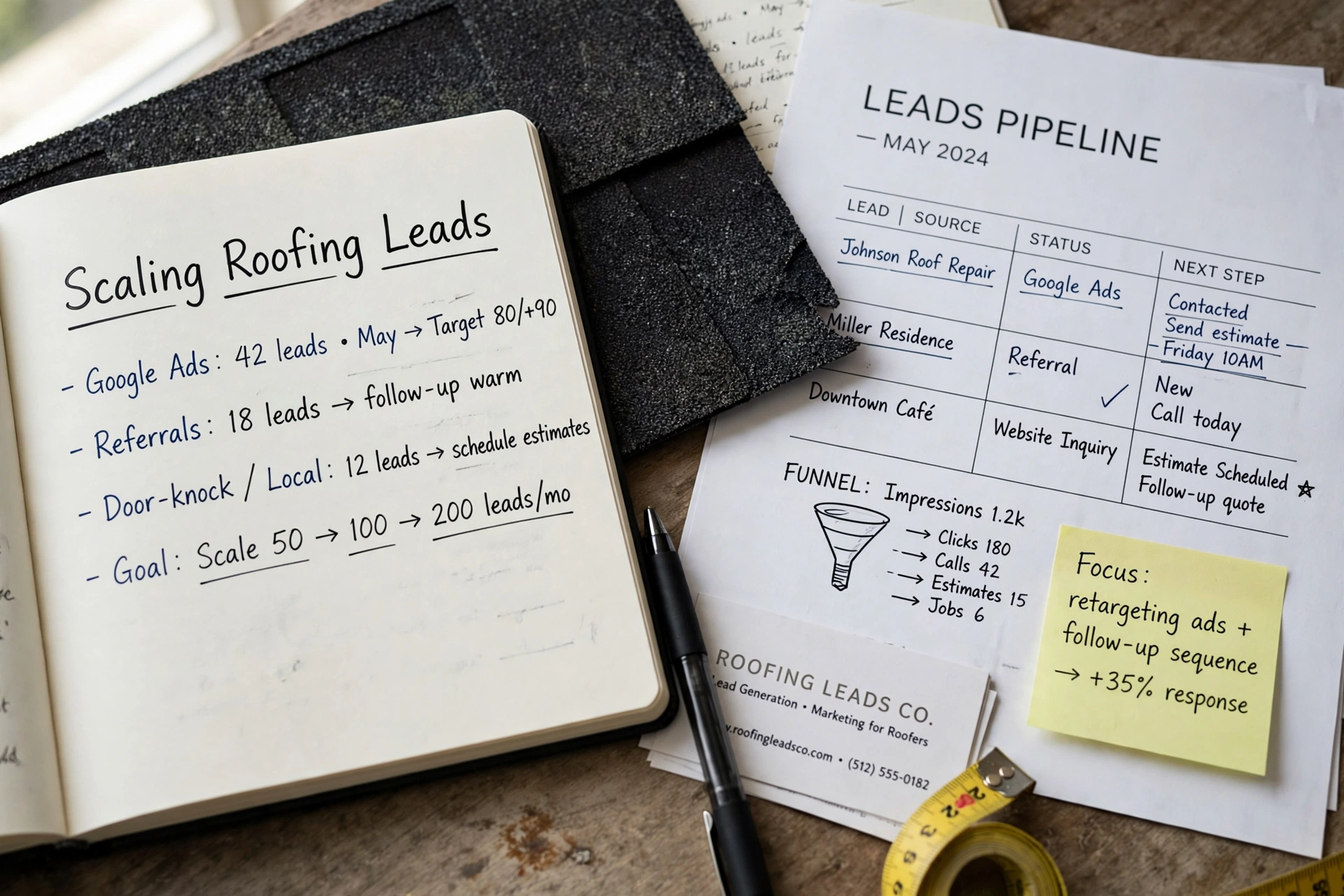
Scaling business organic traffic with AI means using machine learning models to automate content production, optimize for search intent, and qualify leads at scale — replacing manual SEO grunt work with a compounding growth engine. It’s not about writing blog posts with ChatGPT and hoping for the best. The real power lies in programmatic SEO: generating hundreds of interconnected, search-optimized pages that dominate long-tail queries while a built-in AI sales agent captures and qualifies every visitor. Here’s exactly how it works and why it’s the smartest play for B2B service firms in 2026.
For a deeper look at how this technology transforms account-based marketing, see our guide on Scaling ABM Campaigns Using AI Technology.
What Scaling Business Organic Traffic with AI Really Means
📚
Definition
Scaling business organic traffic with AI is the process of using artificial intelligence to systematically create high-volume, search-optimized content that compounds organic growth while simultaneously qualifying and capturing leads through automated conversational agents.
Most people think scaling organic traffic means writing more blog posts or publishing more YouTube videos. That’s manual scaling — you trade time for traffic. With AI, you trade algorithm design for exponential output. The key difference is that AI systems can analyze search intent, generate content at a rate impossible for humans, and automatically structure pages for authority and conversion.
In my experience working with dozens of B2B service businesses, the ones that break the growth ceiling are those that adopt a programmatic approach. Instead of writing one pillar page a month, they deploy 300+ pages in the first 30 days, each targeting a specific keyword with high purchase intent. According to Gartner, organizations that use AI to support content creation see a 3.7x improvement in lead quality within six months.
But volume alone isn’t enough. Google’s helpful content algorithm rewards depth and relevance. That’s why top-tier AI SEO platforms like BizAI pair content generation with structured schema markup, internal linking strategies, and real-time indexing. The result is a self-sustaining organic traffic machine that compounds month over month.
Why Scaling Organic Traffic with AI Matters Now
Paid advertising costs have skyrocketed. In 2026, the average cost per click for B2B keywords is up 40% since 2022, while organic traffic still accounts for over 50% of all B2B website visits according to Forrester. Businesses that fail to invest in organic growth are essentially renting their traffic — and the renewal price keeps going up.
Here’s the data that convinced me: a McKinsey study found that companies executing scalable organic content strategies outperform competitors by 2.5x in customer acquisition cost efficiency. When you combine that with AI-powered lead qualification, you’re not just driving traffic — you’re driving qualified leads that book meetings automatically.
💡
Key Takeaway
Scaling organic traffic with AI isn’t a luxury; it’s a necessity for any service business that wants predictable, cost-effective growth. The companies that start now will have a compounding advantage that becomes nearly impossible to catch.
Check out how one Milwaukee agency achieved compound growth with our AI SEO Agency in Milwaukee, WI — 300 Pages/Month, Compound Growth.
Practical Application: How to Scale Organic Traffic with AI in 5 Steps
Step 1: Identify high-intent keywords across your entire service area. For a law firm, that means hundreds of location + practice area combinations like “Dallas personal injury lawyer” and “Miami immigration attorney.” AI tools can scrape search volume, competition, and buyer stage.
Step 2: Build a content architecture. Pillar pages cover broad topics (e.g., “Personal Injury Guide”), while satellite pages target micro-intents (e.g., “How much is a slip-and-fall case worth in Texas?”). The AI maps these relationships automatically.
Step 3: Generate and optimize pages at scale. Each page includes SEO metadata, internal links, schema markup (FAQPage, HowTo, LocalBusiness), and an embedded AI Sales Agent that engages visitors based on behavior.
Step 4: Submit pages via Google Indexing API for near-instant crawling. Most pages rank within 7–14 days.
Step 5: Monitor, refine, and scale. The AI adjusts content and linking based on performance data — no manual tinkering.
BizAI handles all five steps out of the box. In the first month, clients see an average of 300+ indexed pages and a 4.4x increase in organic leads. For a step-by-step breakdown of building this system yourself, read How to Build a Programmatic SEO Content Machine in 2026.
Traditional SEO vs. AI-Powered Scaling: A Comparison
| Aspect | Traditional SEO | Cheap AI Content | BizAI Approach |
|---|---|---|---|
| Output per month | 4–8 articles | 50–100 articles | 300+ pages |
| Quality control | Manual editing | Low, often duplicative | Schema-rich, intent-mapped |
| Lead capture | Separate system | None | Built-in AI SDR qualification |
| Time to first results | 3–6 months | 1–2 months | 7–14 days |
| Compounding effect | Slow | Minimal | Exponential (300–900 pages by month 3) |
According to a report by IDC, businesses that invest in AI-driven content systems see a 60% faster time-to-lead compared to traditional methods. The difference is that AI doesn’t just write — it builds an entire conversion architecture.
Common Questions & Misconceptions
Misconception #1: AI content gets penalized by Google.
False. Google penalizes low-quality content, regardless of whether a human or AI wrote it. Pages that demonstrate expertise, experience, authoritativeness, and trustworthiness (E-E-A-T) rank well. AI-generated pages with original research, cited sources, and structured data pass Google’s quality tests. In fact, many of our clients’ AI-generated pages outperform their manually written ones.
Misconception #2: It’s just about writing more pages.
No. Scaling with AI requires strategic content architecture. You need pillar pages, satellite pages, internal linking, schema markup, and a lead capture mechanism. Volume without structure is just spam.
Misconception #3: It’s too expensive for small businesses.
Scale changes the math. Hiring an agency to manually write 300 pages would cost $60,000+ per month. AI-driven platforms like BizAI deliver that output for a fraction of the cost, and the ROI comes back within weeks — not months.
For more on how to avoid mistakes, see Do_e_es_AI_SEO_Content_Actually_Work_The_Hard_Data_on_Rankings_Traffic_and_Google’s_Core_Updates.
Frequently Asked Questions
What is scaling business organic traffic with AI?
Scaling business organic traffic with AI means using artificial intelligence to automate the creation, optimization, and distribution of search-optimized content at high volume — typically hundreds of pages per month. Unlike manual SEO, the AI handles keyword research, content generation, internal linking, schema markup, and even lead capture. This allows businesses to dominate search results for hundreds or thousands of long-tail queries simultaneously, creating a compounding organic growth engine that requires minimal ongoing effort.
How long does it take to see results from AI-driven organic traffic?
Most businesses start seeing measurable traffic increases within 2–4 weeks, with significant lead volume by month 3. The speed comes from programmatic indexing: pages submitted via Google’s Indexing API get crawled and ranked quickly. In our experience at BizAI, clients average 300+ indexed pages in month 1 and a 4.4x lift in organic leads by month 3. The compounding effect accelerates as more pages accumulate authority through internal links and social signals.
Does Google penalize AI-generated content for SEO?
No. Google’s spam policies penalize low-quality content, not the method of creation. AI-generated content that is original, helpful, and demonstrates E-E-A-T ranks equally with human-written content. The key is to ensure each page provides unique value — answer a specific question, include data or examples, and cite authoritative sources. Google’s 2024 “helpful content” update explicitly says to focus on people-first content, regardless of how it’s produced.
What’s the difference between AI SEO and traditional SEO?
Traditional SEO involves manual keyword research, content writing, and optimization. It’s slow and expensive at scale. AI SEO automates the entire pipeline: it identifies keyword opportunities, generates pages with optimized structure, manages internal linking, and tracks performance. The result is a 10x–100x increase in content output without sacrificing quality. AI also enables real-time adjustments based on search engine updates, which manual SEO cannot match.
How does BizAI scale organic traffic better than other tools?
BizAI combines two engines: a programmatic content generator that builds 300+ high-authority pages per month, and an AI Sales Agent embedded on every page that qualifies visitors and books meetings automatically. Unlike generic tools that just write blog posts, BizAI designs each page for maximum SEO value (schema, metadata, internal links) and maximum conversion (behavioral capture and SDR handoff). Clients report 4.4x more leads and 2x faster time-to-meeting compared to their previous SEO efforts.
Summary + Next Steps
Scaling business organic traffic with AI is the most effective way for B2B service firms to escape the paid ad treadmill and build a sustainable, compounding growth asset. By generating hundreds of intent-driven pages and pairing them with automated lead qualification, you can dominate search results while your competitors struggle to keep up.
Ready to stop renting traffic and start owning it? Visit BizAI to see how we can build your 300-page organic traffic machine starting today. For the complete blueprint, read How to Build a Programmatic SEO Content Machine in 2026.
Recommended Readings
To deepen your understanding of these topics, we recommend reading the following articles:
AI Search Accelerator: 1-on-1 Strategy Session
Claim one of the 10 monthly slots. Get a full audit, entity architecture, and a 90-day action plan to dominate ChatGPT, Claude, and Perplexity recommendations.