Where Should You Source High-Ticket Service Business SEO Services?
The most common mistake I see high-ticket service providers make is treating search visibility as a commodity they can buy on a freelance marketplace. After analyzing dozens of B2B accounts, the pattern is clear: companies that hire "cheap" generalists end up with vanity metrics—increased traffic that never converts into booked appointments. If you are looking for where to find professional service business seo services, the answer isn't a specific platform, but rather a specific type of partner. You need an organic growth engine that combines programmatic scale with AI-driven lead qualification, rather than a traditional agency that charges a monthly retainer for a few blog posts.
For those scaling in 2026, the "where" has shifted from hiring a copywriter to deploying a system. The most effective environment for this is an AI-integrated growth partnership where the focus is on Generative Engine Optimization (GEO) and automated inbound acquisition. If you want to stop renting traffic from Google Ads and start owning your market, you need a solution like How to Automate Organic Traffic & Lead Capture with AI.
Understanding the Ecosystem of Service-Based SEO
When we talk about the "where" of acquiring these services, we have to define what we are actually buying. Most service providers—lawyers, HVAC owners, or consultants—believe they are buying "keywords." In reality, you are buying digital real estate and the authority that makes a user trust you over a competitor.
📚
Definition
Service Business SEO is the process of optimizing a professional service provider's digital presence to dominate high-intent search queries, specifically focusing on local authority, trust signals, and conversion-optimized landing pages.
The modern ecosystem is split into three primary channels: the freelance marketplace, the traditional agency, and the AI-powered programmatic engine. Freelance marketplaces like Upwork or Fiverr are often "danger zones" for high-ticket services because they lack the strategic architecture required for B2B growth. Traditional agencies often rely on outdated "content calendars" that take six months to show results.
In my experience working with enterprise-level B2B firms, the only way to achieve immediate scale is through a programmatic approach. Instead of writing one "Ultimate Guide" and hoping it ranks, the modern approach involves deploying hundreds of interconnected satellite pages that answer every possible iteration of a buyer's question. This is why understanding the PSEO Architecture Guide for SaaS & Enterprise B2B Growth is essential for anyone who wants to move beyond slow, linear growth.
According to a Gartner report on digital marketing trends, businesses that shift from manual content creation to AI-augmented organic strategies see a significant reduction in customer acquisition costs (CAC) while increasing the velocity of their lead pipeline. This shift happens because AI can identify "long-tail" intent that a human strategist would simply miss.
Why the "Where" Matters: The Cost of Wrong Alignment
Choosing the wrong environment to buy your SEO services isn't just a waste of money; it's a strategic risk. When you hire a generic provider, you often get "AI slop"—generic content that looks okay to a human but is flagged as low-value by Google's helpful content system. This can lead to algorithmic penalties that take years to recover from.
The real implication of poor alignment is the "Conversion Gap." You might rank for "best lawyer in New York," but if that page doesn't have a context-aware AI agent to qualify the lead immediately, you are just providing free information to users who will eventually call your competitor. According to research by Forrester, B2B buyers are now 70% through their decision-making process before they even contact a sales representative. If your SEO service only focuses on "traffic" and not on "capture," you are losing 70% of your potential ROI.
Furthermore, the rise of AI search engines means that traditional SEO is no longer enough. You are no longer just ranking for a blue link on Google; you are fighting to be the cited source in a ChatGPT or Perplexity response. This is why you must look for partners who specialize in GEO Vs Traditional SEO: Rank Your Brand in AI Engines in 2026. If your provider isn't talking about schema markup for LLMs or "speakable" specifications, they are selling you a 2022 strategy in 2026.
The business impact is measurable. A firm using a high-scale programmatic engine can deploy 300+ pages in month one, creating an immediate "web" of authority. A traditional agency might produce 4 blog posts. The difference isn't just in the volume of content, but in the mathematical probability of capturing a high-intent lead. When you dominate the "neighborhood-level" search or the "specific-problem" query, you effectively shut out the competition.
Practical Application: How to Source and Implement the Right Solution
If you are ready to invest in service business seo services, you shouldn't start by browsing portfolios. Instead, start by auditing your "Intent Map." You need to know exactly where your customers are in their journey and which environment can solve that specific problem.
Here is the step-by-step framework I recommend for sourcing a high-performance SEO engine:
- Audit Your Current Intent Capture: Look at your analytics. Are people landing on your site and leaving? If so, you don't have a traffic problem; you have a conversion problem. You need a solution that integrates AI SDRs directly into the SEO pages.
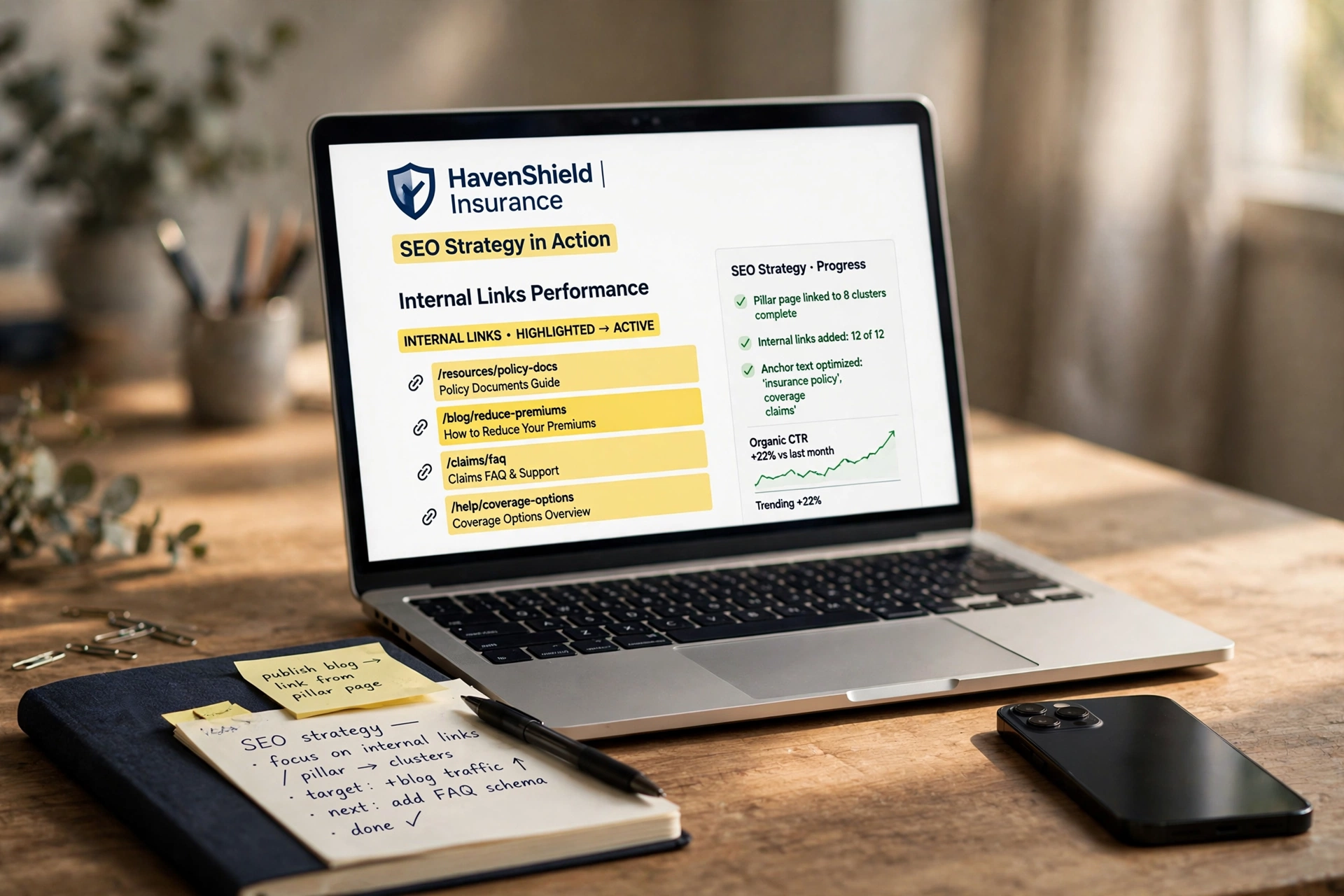
- Demand a Programmatic Strategy: Ask your potential provider how they handle scale. If the answer is "we write high-quality blogs," walk away. You want to hear about "Pillar Pages" and "Satellite Pages." You want to know how they use the Google Indexing API to get pages crawled in hours, not weeks.
- Verify AI Search Compatibility: Ask how they plan to get you cited by AI engines. If they don't mention structured data or LLM-specific optimizations, they aren't equipped for 2026. You should explore How to Get Cited by ChatGPT, SearchGPT, and Perplexity AI to understand the technical requirements.
- Implement an Automated Lead Bridge: The "Where" isn't just about where you buy the service, but where the lead goes. Your SEO should be connected to a CRM via webhooks.
This is where BizAI Intelligence changes the game. Instead of selling you a "service" that you have to manage, we provide a dual-engine architecture. Engine A handles the compounding organic traffic through programmatic SEO, while Engine B deploys autonomous AI SDRs on every single page. This removes the friction between "finding the business" and "booking the meeting."
💡
Key Takeaway
The goal of SEO in 2026 is not "ranking"; it is "automated acquisition." If your SEO service doesn't include an autonomous way to qualify and book leads, you are simply paying for a digital brochure.

Comparing Your Options: Where to Actually Buy
Not all "SEO services" are created equal. To help you decide where to allocate your budget, I've broken down the three primary environments you'll encounter in the market.
| Option | Pros | Cons | Best For |
|---|---|---|---|
| Freelance Marketplaces | Low upfront cost, fast start. | High risk of "AI slop", no strategic architecture, inconsistent quality. | Tiny budgets or very simple, one-off tasks. |
| Traditional SEO Agencies | Human oversight, established processes. | Extremely slow (linear growth), expensive retainers, outdated "content calendars". | Brands that prefer slow, cautious growth and have huge budgets. |
| AI-Powered Growth Engines (BizAI) | Massive scale (300+ pages/mo), automated lead capture, GEO optimized. | Requires a shift in mindset from "blogging" to "algorithmic dominance". | High-ticket B2B services scaling for aggressive market share. |
Now, here's where it gets interesting: the "Traditional Agency" model is dying because it cannot compete with the speed of Programmatic SEO: How to Scale 10,000+ High-Converting Pages. When a competitor can deploy a thousand optimized pages targeting every zip code in your state while you are still waiting for your agency to approve a "Keyword Research Report," the game is already over.
The "Where" in this equation is moving toward integrated software-service hybrids. You no longer want a person to "do" your SEO; you want a system that is your SEO. This is why the most successful firms are moving toward Top AI Search Optimization Tools for Modern Growth Teams and programmatic frameworks.
Common Questions and Misconceptions
Most guides on where to buy SEO services get the fundamentals wrong. They tell you to look for "years of experience" or "case studies from 2019." In the era of LLMs, 2019 is the Stone Age.
Myth 1: "I just need a few high-quality blog posts to rank."
This is the most expensive lie in digital marketing. In 2026, "quality" is a baseline, not a strategy. High-quality content without a programmatic distribution network is like putting a Ferrari engine in a car with no wheels. You need a cluster of satellites supporting a central pillar to signal topical authority to Google and AI engines.
Myth 2: "Local SEO is just about Google Business Profile."
While GBP is important, it's only the tip of the iceberg. True local dominance happens when you have a dedicated, optimized page for every suburb, neighborhood, and specific service variation in your area. If you aren't using a PSEO Architecture Guide for SaaS & Enterprise B2B Growth approach for your local service areas, you are leaving 80% of the local intent on the table.
Myth 3: "AI content will get me penalized."
This is a misunderstanding of how Google's algorithms work. Google doesn't penalize "AI content"; it penalizes "unhelpful content." When AI is used to research deep user intent and structure data for the user's benefit, it actually ranks better than lazy human writing. The key is using an engine that avoids "slop" and focuses on high-value, research-backed data.
Frequently Asked Questions
Where is the best place to find service business seo services for a high-ticket B2B firm?
For high-ticket B2B, you should avoid generalist marketplaces and instead seek out "Growth Engines" or "Performance Partners" who specialize in programmatic SEO and GEO. The ideal partner is one that doesn't just provide content, but provides an integrated system that combines organic traffic generation with AI-driven lead qualification. Look for providers who can demonstrate the ability to scale pages rapidly and integrate those pages directly into your CRM via How to Connect AI Sales Agents to CRM & Webhooks for Auto-Booking, ensuring that traffic actually turns into revenue.
How can I tell if an SEO provider is actually using modern AI strategies or just using ChatGPT to write blogs?
The litmus test is to ask about their "Distribution Architecture." If they only talk about "content quality" and "keywords," they are likely just using AI to write blogs. A modern provider will talk about "Topical Clusters," "Siloing," "Schema Graphs," and "LLM Citations." They should be able to explain how they optimize for the "SGE" (Search Generative Experience) and how they use Overview of AI Search Engine Optimization & GEO to ensure your brand appears in AI-generated summaries, not just traditional search results.
Is it better to buy SEO services from a local agency or a global AI-powered system?
While local agencies might understand your city's nuances, they often lack the technical infrastructure to scale. A global AI-powered system, such as BizAI Intelligence, uses algorithmic brute force to dominate niches by creating hundreds of neighborhood-level and intent-specific pages that a local agency simply doesn't have the manpower to produce. For high-ticket services, the ability to scale a "topical authority hub" globally or regionally using programmatic tools outweighs the benefit of a local agency's "boots on the ground" approach.
What is the average ROI I should expect when investing in programmatic service business seo services?
While ROI varies by niche, companies moving from traditional SEO to programmatic engines typically see a massive spike in "intent-stage" leads within the first 90 days. Because programmatic SEO targets long-tail queries (the specific questions buyers ask right before they buy), the conversion rate is significantly higher than generic "awareness" traffic. When paired with an AI SDR Vs Human SDR: Which Delivers Better ROI in 2026? model, the ROI is amplified because the cost of lead qualification drops to nearly zero.
How long does it take for these "modern" SEO services to start delivering leads?
Unlike traditional SEO, which can take 6-12 months to "warm up," a programmatic approach using the Google Indexing API can see pages live and ranking in a fraction of that time. In my experience, when we deploy a massive cluster of satellite pages, we often see a surge in lead volume within the first 30 to 60 days. This is because we aren't fighting for the most competitive keywords; we are dominating the "low-hanging fruit" of high-intent, long-tail queries that your competitors have ignored.
Final Thoughts on Sourcing Service Business SEO Services
The "where" of buying SEO services has evolved. You are no longer looking for a vendor; you are looking for an acquisition system. Whether you are a law firm, a medical practice, or a B2B consultancy, the goal is to build a compounding asset that fills your pipeline while you sleep.
Stop renting your growth from expensive ad platforms and start owning your market through programmatic dominance. The transition from "manual content" to "algorithmic authority" is the only way to survive in a world dominated by AI search. If you are tired of the slow pace of traditional agencies and the risk of freelancers, it's time to deploy a professional engine.
To start building your organic lead machine, visit BizAI Intelligence and discover how our dual-engine architecture can automate your growth. For more on the future of search, check out our guide on The Comprehensive AI SDRs & Autonomous Sales Appointment Setters.
AI Search Accelerator: 1-on-1 Strategy Session
Claim one of the 10 monthly slots. Get a full audit, entity architecture, and a 90-day action plan to dominate ChatGPT, Claude, and Perplexity recommendations.