

Which Automated SEO Agency for Local Business is Best?
Most local business owners treat SEO as a "set it and forget it" expense, only to find their rankings stagnate while competitors leapfrog them using algorithmic advantages. The best automated seo agency for local business is not a traditional agency with a few software tools, but a programmatic engine that combines high-scale content deployment with autonomous lead qualification. For businesses scaling in 2026, the answer lies in systems that replace manual copywriting and slow-motion reporting with Programmatic SEO (PSEO) and Generative Engine Optimization (GEO).
In my experience working with high-ticket B2B services, the mistake I see constantly is the reliance on "managed" SEO services that deliver three blog posts a month and a PDF report. That model is dead. To dominate a local market, you need a system that can deploy hundreds of intent-optimized landing pages across various neighborhoods and service variations simultaneously. This is how you transition from hoping for traffic to owning the local digital real estate. To understand the technical shift occurring, you should explore the Overview of AI Search Engine Optimization & GEO.
What Exactly is an Automated SEO Agency and How Does it Work?
Traditional agencies rely on human labor—account managers, writers, and SEO specialists—to manually research keywords and draft pages. An automated agency, specifically one utilizing a programmatic approach, flips this model. Instead of writing one page for "Plumber in Dallas," they build a data-driven architecture that generates 500 pages for every neighborhood, specific zip code, and niche service variation (e.g., "Emergency Water Heater Repair in Uptown Dallas") in a fraction of the time.
📚
Definition
Programmatic SEO is the practice of using code and datasets to generate thousands of high-quality, landing pages at scale, targeting long-tail keywords that manual content creation would take years to cover.
This process involves creating a "Pillar" page—the core authority hub—and surrounding it with "Satellite" pages. These satellites target hyper-specific, low-competition queries that local buyers actually type into their phones. When these pages are indexed via the Google Indexing API, the business achieves immediate topical dominance. According to Gartner, the shift toward AI-driven search is forcing a move away from generic keywords toward "intent-based" clusters, where the quality of the specific answer matters more than the total word count of a blog.
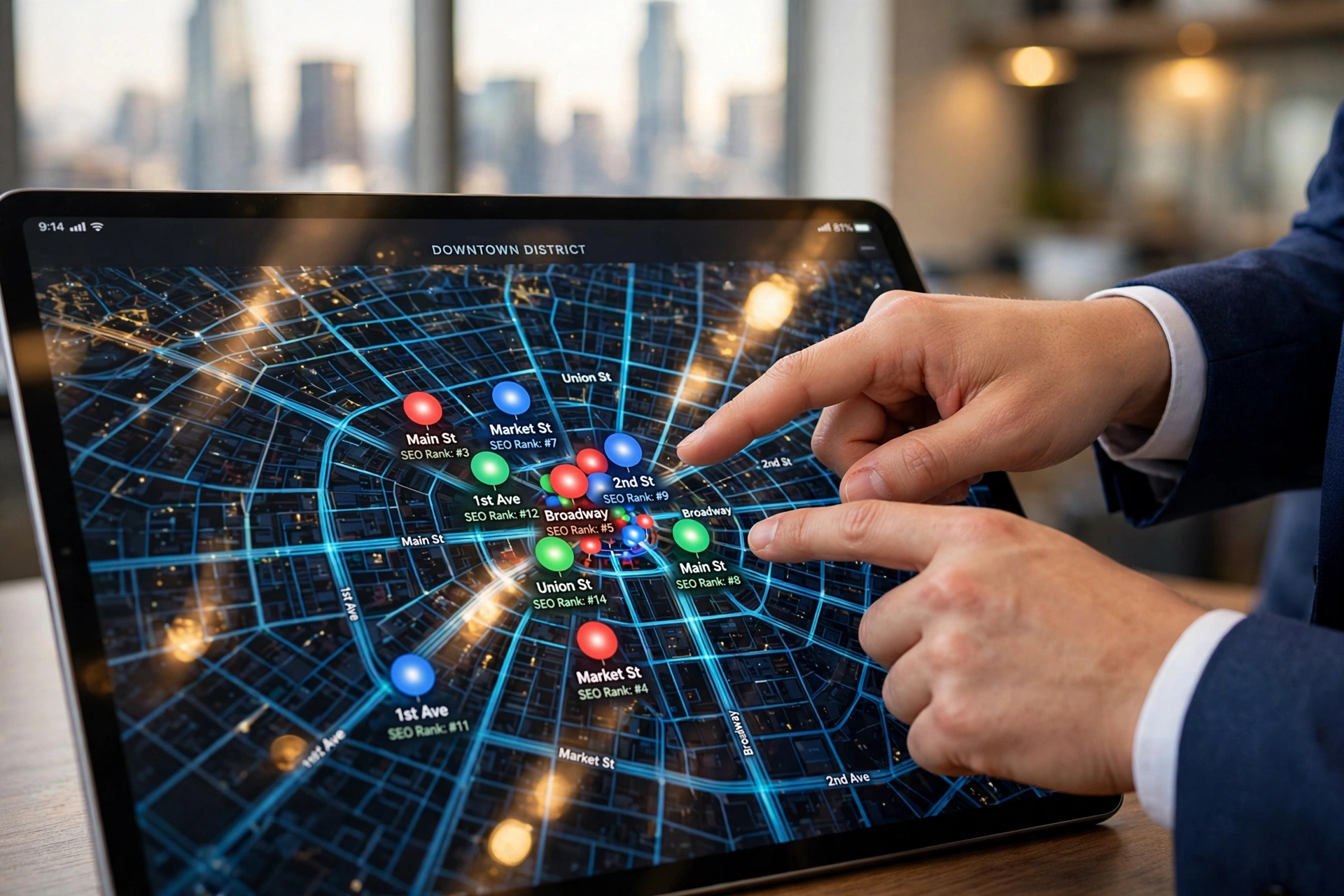
Now, here is where it gets interesting: the automation doesn't stop at traffic. A modern automated system integrates an AI SDR (Sales Development Representative) directly into these pages. This means the moment a user lands on a programmatic page for a specific local service, an autonomous agent qualifies them based on their behavior and books a meeting. This integration of How to Automate Organic Traffic & Lead Capture with AI is what separates a simple traffic generator from a revenue engine.
Why Local Businesses Must Automate SEO in 2026
The cost of customer acquisition via paid ads (Google Ads, Meta Ads) has reached a breaking point for many local service providers. As bidding wars drive CPL (Cost Per Lead) higher, organic traffic becomes the only way to maintain a healthy margin. However, manual SEO is too slow to keep up with the volatility of search algorithms and the rise of AI Overviews.
According to a report by McKinsey, businesses that integrate AI into their marketing and sales workflows see an average increase in lead conversion rates of over 20% due to the speed of response and the precision of targeting. For a local law firm or medical clinic, a 20% increase in conversion doesn't just mean more calls; it means a fundamental shift in market share.
When you don't automate, you are fighting a war of attrition. Your competitor who uses an automated system is launching 300 pages while you are still editing your second blog post. This creates a "compounding authority" effect. The more satellites you have linking back to your pillar page, the higher your overall domain authority climbs, making it easier to rank for the most competitive "head" terms in your city.
Moreover, the rise of AI Search (SGE, Perplexity, SearchGPT) means that if your business isn't structured as a data-rich entity, you won't be cited. These engines don't look for "good writing"; they look for structured data, schema markups, and a wide breadth of cited facts across your domain. If you aren't using a system designed for GEO Vs Traditional SEO, you are essentially invisible to the next generation of searchers.
How to Implement an Automated SEO Strategy for Your Local Business
Implementing an automated SEO system is not about buying a cheap tool; it is about architecting a lead-capture machine. If you are choosing an automated agency or building the system yourself, the workflow must follow a specific technical sequence to avoid being flagged as "AI slop" by Google.
Step 1: Database Construction
You must start by identifying every possible variation of your service. For a dental network, this isn't just "Dentist in Miami." It is "Invisalign in Brickell," "Emergency Root Canal in Coral Gables," and "Teeth Whitening in Wynwood." You build a database of these entities, including neighborhood names, landmarks, and specific pain points.
Step 2: The Pillar and Satellite Architecture
Create one massive authority guide (the Pillar) that covers the entire service. Then, use a PSEO engine to deploy the satellites. Each satellite page must be unique, providing actual value to the local user, and internally linked to the pillar. For a deep dive into this structure, see the PSEO Architecture Guide for SaaS & Enterprise B2B Growth.
Step 3: Generative Engine Optimization (GEO)
Apply Schema.org markup (LocalBusiness, FAQPage, and Service nodes) to every page. This tells LLMs exactly who you are, where you are, and what you do. This is essential for How to Get Cited by ChatGPT, SearchGPT, and Perplexity AI.
Step 4: Autonomous Qualification
Embed a context-aware AI agent on every page. Instead of a static "Contact Us" form, the agent should engage the user: "I see you're looking for emergency plumbing in [Neighborhood]. We have a technician 10 minutes away. Would you like to book a 15-minute diagnostic call now?"
Step 5: CRM Integration
Connect the AI agent to your CRM (HubSpot, Salesforce) via webhooks. The goal is zero-latency lead movement. This is the core of How to Connect AI Sales Agents to CRM & Webhooks for Auto-Booking.
💡
Key Takeaway
The most effective automated SEO isn't about "ranking"—it's about building a programmatic net that captures every single local search variation and converts it into a booked appointment without human intervention.
BizAI Intelligence specializes in this exact architecture. We don't just "do SEO"; we deploy the dual-engine system (Programmatic Traffic + AI SDRs) that allows high-ticket B2B and local services to dominate their niche through algorithmic brute force.
Comparing Your Options: Manual vs. Cheap AI vs. Professional Automation
When deciding which approach to take, you must look past the pricing page and look at the "Time to Authority." A manual agency might charge less per month, but the time it takes to reach the first page of Google is often measured in years.
| Feature | Traditional Manual Agency | Cheap AI "Content" Tools | Professional Automation (BizAI) |
|---|---|---|---|
| Scale | Low (2-4 pages/month) | High (but low quality) | Massive (300-900+ pages/month) |
| Speed to Rank | Slow (6-12 months) | Unpredictable (Risk of penalty) | Rapid (via Indexing API & GEO) |
| Lead Capture | Static Forms (High Friction) | None (Just Traffic) | Autonomous AI SDRs (Low Friction) |
| AI Search Ready | No (Traditional SEO only) | No (Generic text) | Yes (Structured for LLMs/GEO) |
| ROI Predictability | Low (Hope-based) | Low (Churn-heavy) | High (Data-driven scale) |

Most "automated" services you find today are just wrappers for ChatGPT that spit out generic articles. That is not automation; that is noise. True automation is the programmatic generation of high-intent pages backed by a technical framework that ensures they are indexed and converted. If you are comparing tools, look for those that offer actual programmatic capabilities, as detailed in our Top Programmatic SEO Tools & Software Compared for 2026.
Common Questions and Misconceptions about Automated SEO
There is a prevailing myth in the industry that "automated" means "low quality." This is a misunderstanding of how modern LLMs and PSEO work.
Myth 1: Google penalizes automated content.
Most guides get this wrong. Google does not penalize automated content; it penalizes unhelpful content. If a programmatic page provides a specific, accurate answer to a user's local query (e.g., providing the exact pricing and availability for a service in a specific zip code), Google rewards it. The penalty comes from "AI slop"—generic text that says nothing of value.
Myth 2: You only need one "Contact Us" page.
This is a fatal error in local SEO. Users want to feel that you are local to them. A page specifically dedicated to their neighborhood, with a tailored AI agent that recognizes their location, will always convert at a higher rate than a generic corporate contact page.
Myth 3: SEO is just about keywords.
In 2026, SEO is about Entities. Google and AI engines are no longer just matching words; they are connecting entities (your business) to locations (your city) and services (your offering). If your site doesn't have a structured graph of these entities, you are just guessing. This is why Programmatic SEO Case Studies: Scaling 0 to 100k Organic Visits show such dramatic results—they aren't just targeting keywords; they are building entity authority.
Frequently Asked Questions
How long does it take for an automated SEO agency to show results?
Unlike traditional agencies that may take six months to see a "trend" in traffic, a professional automated system using PSEO and the Google Indexing API can see pages indexed and ranking for long-tail keywords within days. Because you are targeting low-competition, hyper-local queries first, you capture "low-hanging fruit" immediately. While the main pillar page takes longer to dominate, the satellite pages create an immediate influx of high-intent leads. In my experience, the "compounding" effect usually hits a tipping point between day 30 and day 90.
Is programmatic SEO risky for my brand's reputation?
It is only risky if you use a "cheap AI" approach that generates hallucinations. When you use a professional framework like BizAI Intelligence, the content is based on a structured database of facts, not random AI guesses. By using templates that ensure accuracy and adding a layer of human oversight for the core pillar pages, you actually improve your reputation. You appear as the absolute authority in every neighborhood you serve, which builds trust with the consumer before they even pick up the phone.
Can I use a generic AI writer instead of an automated agency?
A generic AI writer is a tool, not a strategy. Using ChatGPT to write a few blogs is like buying a hammer and hoping a house builds itself. An automated SEO agency provides the architecture—the database, the internal linking structure, the schema markup, and the AI lead capture. Without the architecture, your AI-written content is just a collection of pages with no strategic connection, making it nearly impossible to rank for competitive local terms in 2026.
How does an AI SDR differ from a standard chatbot?
Standard chatbots are decision trees; they are frustrating and often lead users to abandon the site. An AI SDR is an autonomous agent trained on your specific business data. It doesn't just answer questions; it proactively qualifies the lead, scores their intent based on their scroll depth and reading speed, and pushes them toward a booking. For a detailed comparison, see AI SDR Vs Human SDR: Which Delivers Better ROI in 2026?.
Do I still need a human sales team if I have an automated agency?
Yes, but their role changes. Instead of having your team spend 80% of their time chasing "cold" leads or qualifying "tire kickers," the AI SDR does the heavy lifting. Your humans move from "hunting" to "closing." They only step in once a lead has been programmatically attracted, qualified by the AI, and booked into the calendar. This optimizes your payroll and allows your best sales people to focus only on high-probability deals.
Summary and Next Steps
Choosing the best automated seo agency for local business requires a shift in mindset. You must stop looking for a "service provider" and start looking for a "growth engine." The winner in 2026 will not be the business with the best copywriter, but the business with the best data architecture. By deploying a system of pillars and satellites and integrating an autonomous qualification layer, you stop renting traffic and start owning your market.
If you are tired of the slow pace of traditional agencies and want to deploy a massive, AI-powered inbound acquisition system, it's time to move beyond the basics. Explore how we can scale your organic footprint at BizAI Intelligence. To start your transition, you might also find our guide on The Comprehensive AI SDRs & Autonomous Sales Appointment Setters helpful for understanding how to close the leads your new traffic will bring.
AI Search Accelerator: 1-on-1 Strategy Session
Claim one of the 10 monthly slots. Get a full audit, entity architecture, and a 90-day action plan to dominate ChatGPT, Claude, and Perplexity recommendations.



