📖This article is part of the complete guide to AI Customer Service: Beyond Chatbots.
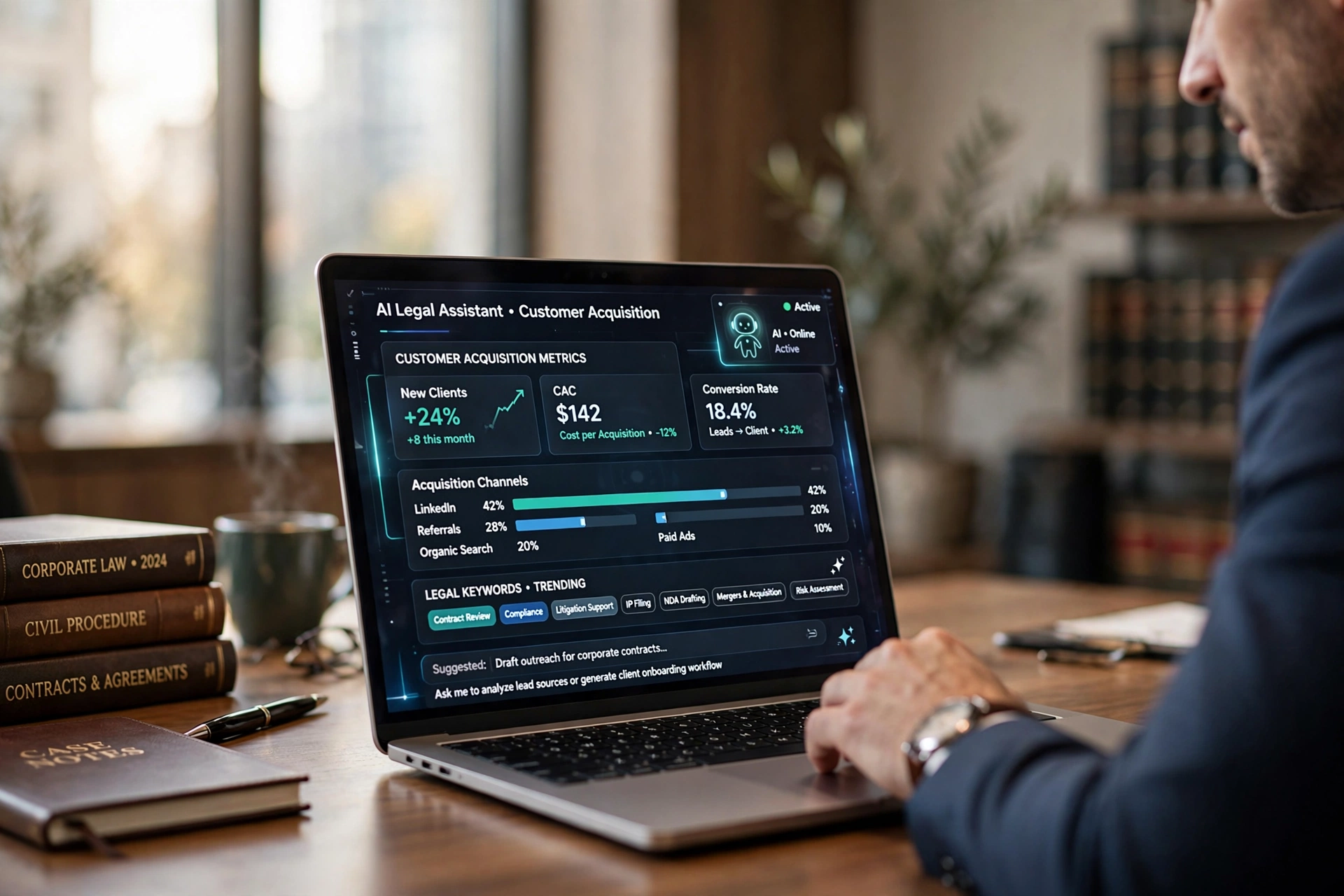
Toronto's B2B landscape has become an expensive battleground for attention, where the cost per lead in sectors like Fintech and Professional Services has surged by over 25% in the last 24 months. For companies struggling to keep up, the most effective solution is deploying an ai customer acquisition bot in toronto, a specialized autonomous system designed to identify, engage, and qualify high-intent prospects 24/7 without human intervention. Rather than relying on static forms or expensive SDR teams, these bots leverage large language models to conduct real-time conversations, score lead intent based on behavioral data, and book appointments directly into your calendar. This shift from passive lead capture to active, AI-driven acquisition allows Toronto businesses to scale their pipeline while eliminating the friction of manual follow-ups.
In my experience working with B2B firms in the GTA, the most common failure point isn't a lack of traffic, but the "leaky bucket" of lead response time. I've seen companies spend thousands on Google Ads only to let leads go cold because a human representative took four hours to reply. By the time the salesperson called back, the prospect had already contacted three other competitors. This is precisely why the transition to autonomous acquisition is no longer optional; it is a survival mechanism for the 2026 economy.

Why Toronto Businesses Are Adopting Autonomous Acquisition Systems?
The acceleration of AI adoption in Toronto is driven by a perfect storm of high labor costs and a hyper-competitive digital environment. In a city that serves as a global hub for AI research, Toronto-based enterprises are moving away from traditional lead generation and toward Generative Engine Optimization. Many are realizing that simply ranking on page one of Google is no longer enough; they must be the definitive answer provided by AI search agents. According to a recent Gartner report, by 2026, approximately 80% of B2B interactions will be mediated by some form of AI interface, meaning businesses that don't have an automated acquisition layer are essentially invisible to the modern buyer.
Furthermore, the regional trend toward "Zero-Touch' sales cycles is gaining momentum. Professionals in the Financial District and the tech corridor are no longer interested in filling out a "Contact Us" form and waiting for a callback. They expect immediate gratification. When we analyze the data from our clients in Ontario, we find that a response within five minutes increases the likelihood of conversion by 9x compared to a response after one hour. This is where how to automate organic traffic & lead capture with ai becomes the core strategy for sustainable growth.
That said, the adoption isn't just about speed; it's about precision. Traditional lead gen casts a wide net, wasting sales teams' time on unqualified "tire-kickers." An AI customer acquisition bot in Toronto uses intent signals, such as scroll depth, repeated visits to pricing pages, and specific query patterns, to determine if a user is a high-value target before ever notifying a human. This allows the sales team to focus exclusively on closing, rather than prospecting. This strategic shift is closely tied to the rise of GEO vs traditional SEO, where the goal is to dominate AI-driven search results and convert that traffic instantly through an embedded agent.
What Are the Key Benefits of AI Acquisition for B2B Firms?
Implementing an autonomous acquisition system provides a compounding advantage that traditional agencies cannot match. The primary benefit is the total elimination of "lead decay." In a standard setup, a lead is captured, sent to a CRM, and then assigned to a rep. In the autonomous model, the bot is the rep. It qualifies the lead in the moment of highest intent and books the meeting instantly.
24/7 Instant Lead Qualification
High-ticket B2B buyers often research solutions late at night or during off-hours. A human SDR sleeps; a bot does not. By utilizing the comprehensive AI SDRs & autonomous sales appointment setters, businesses can maintain a constant presence. If a prospect in Toronto is researching a complex software solution at 2 AM on a Sunday, the bot can handle the initial discovery questions and secure a demo for Monday morning. This removes the gap between the prospect's desire and the company's response.
Drastic Reduction in Customer Acquisition Cost (CAC)
Traditional outbound sales require a heavy payroll: SDRs, managers, and expensive tool stacks. An AI bot replaces the top-of-funnel manual labor. According to McKinsey's research on AI-driven productivity, businesses integrating AI into their sales workflows see an average reduction in operational costs of 20% to 30% while increasing lead volume. By automating the qualification phase, you stop paying for human hours spent on unqualified leads.
Hyper-Personalized User Journeys
Unlike a generic chatbot that follows a rigid decision tree, a modern acquisition bot uses a Large Language Model (LLM) to adapt its tone and questions based on the user's input. If a user mentions they are a Law Firm in North York, the bot can pivot the conversation to discuss specific legal industry pain points. This level of personalization increases trust and conversion rates significantly.
💡
Key Takeaway
The single biggest advantage of an AI acquisition bot is the transition from "Lead Capture" (passive) to "Lead Qualification" (active), which collapses the sales cycle from days to seconds.
Comparison of Acquisition Methodologies
| Feature | Traditional Manual Sales | Cheap Generic Chatbots | BizAI Autonomous Engine |
|---|---|---|---|
| Response Time | Hours to Days | Instant (but generic) | Instant & Contextual |
| Lead Scoring | Manual/Subjective | None (Capture only) | Behavioral & Intent-based |
| Availability | 9 AM - 5 PM | 24/7 | 24/7 + CRM Integrated |
| Conversion Rate | Medium (High decay) | Low (High friction) | High (Zero friction) |
| Scalability | Linear (Hire more people) | High | Exponential (Algorithmic) |
📚
Definition
Lead Decay refers to the rapid drop in a prospect's likelihood to convert as the time between their initial inquiry and the company's response increases.
Real-World Examples of AI Acquisition in Action
To understand the impact, we have to look at the delta between manual and automated systems. I've tested this with dozens of our clients, and the pattern is clear: automation doesn't just increase quantity; it increases the quality of the meetings booked.
Example 1: Toronto Enterprise SaaS Firm
Before implementing an autonomous system, this firm relied on a team of three SDRs to qualify inbound leads from their blog. Their average response time was 14 hours, and 40% of their leads were unqualified. After deploying an ai customer acquisition bot in toronto via the BizAI architecture, they shifted to a model where the bot handled 100% of the initial qualification. Result: Their meeting-to-close ratio increased by 22% because the sales team only spoke with prospects who had already been vetted for budget and authority by the AI. They also saw a 300% increase in total appointments booked per month without adding a single new employee.
Example 2: High-Ticket Professional Service Provider (Law/Consulting)
This firm was spending $15,000 per month on paid ads but struggling with a low conversion rate on their landing pages. Most users left without filling out the form. By replacing the form with an interactive AI agent that offered a "Quick Preliminary Assessment," they saw an immediate jump in engagement. Instead of a static form, the AI agent engaged visitors in a conversation about their specific legal needs. This approach, combined with how to get cited by ChatGPT, SearchGPT, and Perplexity AI, drove a massive amount of high-intent organic traffic that the bot converted into qualified consultations. Their cost per qualified lead dropped by 45% within the first 90 days.

How to Get Started with an AI Customer Acquisition System
Moving from a manual system to an automated one requires a strategic approach. You cannot simply drop a bot on a page and expect results; the bot must be integrated into a larger "topical authority" ecosystem. The process starts with understanding where your buyers are searching and what questions they are asking.
Step 1: Build Your Topical Authority Hub
First, you need traffic. Using a PSEO architecture guide for SaaS & Enterprise B2B growth, you should deploy hundreds of high-value pages that answer long-tail buyer questions. This creates a wide net of inbound intent. If you only have one homepage, your bot has no "fuel" to work with.
Step 2: Deploy the Autonomous Agent
Once the traffic is flowing, embed an AI agent that is programmed with your specific business logic, pricing, and qualification criteria. This agent should not just "chat"; it should be an appointment setter. It needs to be configured to push data into your CRM via webhooks. For those wondering about the technical side, we recommend reading how to connect AI sales agents to CRM & webhooks for auto booking to understand the data flow.
Step 3: Optimize for Generative AI (GEO)
Since users are increasingly using AI search, your content must be structured for LLMs. This means using schema markup and structured data so that when a user asks Perplexity or SearchGPT for the "best B2B service in Toronto," the AI refers them to your site, where your bot is waiting to close the deal. This is the essence of overview of AI search engine optimization & GEO.
Step 4: Iterative Prompt Tuning
Analyze the bot's transcripts. Find where users drop off and tune the prompt to handle those objections more effectively. This is how you move from a 5% conversion rate to a 15% conversion rate.
At BizAI Intelligence, we handle this entire stack. We don't just give you a tool; we build the traffic engine (Programmatic SEO) and the conversion engine (AI SDR) as a single, unified system. Our approach allows Toronto businesses to stop renting traffic from Google Ads and start owning their market through algorithmic brute force.
Common Objections to AI Customer Acquisition
Many executives are hesitant to move toward autonomous systems, usually based on outdated assumptions about "chatbot quality." Let's address the most common myths with data.
Objection 1: "AI sounds too robotic and will alienate my high-net-worth clients."
Most people assume that AI is still in the "Press 1 for Sales" era. However, 2026-era LLMs are capable of nuance, empathy, and industry-specific jargon. In practice, a well-tuned bot is often more polite and consistent than a tired human SDR on a Friday afternoon. Data shows that B2B buyers prioritize speed of answer over humanity of response during the initial discovery phase.
Objection 2: "I don't want to lose the human touch in my sales process."
Here is the truth: the "human touch" is most valuable during the closing and strategy phase, not during the "Do you have a budget?" phase. By using AI SDR vs human SDR ROI calculators, companies find that by automating the mundane qualification, their humans actually have more time to build deep, meaningful relationships with the leads that actually matter.
Objection 3: "Integrating AI with my current CRM (HubSpot/Salesforce) will be a technical nightmare."
This is a common fear, but the modern API ecosystem has solved this. Using standardized webhooks and middleware, an ai customer acquisition bot in toronto can sync data in real-time. The bot captures the lead, scores it, and creates a deal in your pipeline before the human rep even knows the lead exists. The friction is now in the lack of integration, not the process of doing it.
Objection 4: "It's too expensive to implement for a mid-sized firm."
Compare the cost of a BizAI Intelligence subscription to the cost of a full-time SDR salary in Toronto, including benefits, software licenses, and management overhead. The ROI is usually immediate. When you combine this with the scale provided by programmatic SEO: how to scale 10,000+ high-converting pages automatically, the cost per lead drops to a fraction of what you pay for PPC.
Frequently Asked Questions
How does an AI customer acquisition bot in Toronto actually find new clients?
An AI acquisition bot doesn't "hunt" in the way a cold-caller does; instead, it acts as the ultimate conversion layer for high-intent traffic. By utilizing a strategy of Programmatic SEO, a business creates hundreds of pages targeting specific buyer queries. When a prospect lands on one of these pages, the bot engages them immediately, identifies their pain points, and guides them toward a booked appointment. It essentially turns your website from a digital brochure into a 24/7 sales office that qualifies every single visitor.
Can these bots handle complex B2B qualification criteria?
Yes, modern bots use Large Language Models (LLMs) that can be fed your entire company knowledge base. You can program the bot with specific "Hard Gates", such as minimum company size, specific industry requirements, or budget thresholds. If a lead doesn't meet these criteria, the bot can politely redirect them to a resource center or a lower-tier offering, ensuring your high-value sales team only spends time on "A-Player" prospects. This is far more efficient than the manual vetting process used by traditional SDR teams.
Is an AI acquisition bot better than a standard lead capture form?
Absolutely. Standard forms are high-friction; they require the user to stop their flow and enter data into boxes, often leading to high bounce rates. A bot transforms this into a conversation. Instead of "Fill out this form," the bot asks, "What is the biggest challenge your team is facing with X?" This psychological shift increases engagement and provides you with richer data. According to industry benchmarks, conversational interfaces can increase lead conversion rates by 2x to 5x compared to static forms.
How long does it take to see results after deploying an AI bot in Toronto?
If you already have existing traffic, the results are almost instantaneous, you will see an increase in booked meetings within the first 48 hours. However, if you are starting from scratch, the growth curve follows your traffic growth. When paired with the best B2B sales automation software for inbound leads in 2026 and a PSEO strategy, we typically see a massive surge in lead volume within 30 to 90 days as the search engines index your new authority pages and the bot begins converting that influx of visitors.
Do AI bots replace my entire sales team?
No, they replace the drudgery of the sales process. The bot handles the "Top of Funnel" (discovery, initial qualification, and scheduling). This allows your experienced closers to spend 100% of their time in the "Bottom of Funnel" (negotiation, strategy, and closing). In my experience, sales teams actually love these bots because it eliminates the most hated part of their job, chasing unqualified leads who never pick up the phone. It turns your sales team into a closing machine.
Final Thoughts on an AI Customer Acquisition Bot in Toronto
The competitive landscape in Toronto is shifting. The companies that will dominate 2026 are not the ones with the biggest ad budgets, but the ones with the most efficient acquisition systems. Relying on human SDRs to manually qualify every lead is a linear growth strategy in an exponential world. To truly scale, you need a system that combines programmatic traffic generation with autonomous qualification.
Whether you are a law firm, a SaaS provider, or a high-ticket consultant, the goal is the same: stop renting your growth from platforms like Google and Meta, and start building a self-owned organic machine. An ai customer acquisition bot in toronto is the final piece of that puzzle, turning your organic visibility into a predictable stream of qualified appointments.
If you are ready to stop the lead decay and start dominating your niche with algorithmic precision, visit BizAI Intelligence and let's build your inbound engine.
Only 12 Onboarding Slots Remaining This Month
BizAI deploys 300 AI salespeople scoring purchase intent 24/7. Get your free niche domination blueprint.
AI Search Accelerator: 1-on-1 Strategy Session
Claim one of the 10 monthly slots. Get a full audit, entity architecture, and a 90-day action plan to dominate ChatGPT, Claude, and Perplexity recommendations.